

 In echtem Maßstab anzeigen
 Versenden als Grußkarte
 Teilen
 Details anzeigen
 Leitfaden öffnen

 Herunterladen
 Ähnliche Objekte
 Röntgenaufnahme
 Diashow
 Besucherstatistiken
Cloud Study with Horizon
 Oil On Canvas
- WallArt
- Romanticism
 1832
1832 25.0 x 28.0 cm
 Nationalgalerie
 Mehr anzeigen
Handgefertigte Ölreproduktion
Handgemaltes Ölgemälde auf Leinwand in Ihrer Wunschgröße und mit Rahmen, auf Bestellung von unseren Künstlern angefertigt. ( Zum Druck wechseln Zum digitalen Bild wechseln)




P118B €10

P118H €10

P118W €10

P438Z €10

P508JH €12

P508YH €12

P805H €10

P805Z €10

P919BZ €10

P919G €10

P919XJ €10

P959ZH €10

P968JZ €12

W106C €8

W218G €10

W218JH €8

W218Y €10

W307PJ €10

W316G €10

W316PJ €8

W316Y €10

W398PJ €8

W4111J €10

W500HY €15

W500JH €15

W692G €12

W849H €8

W940BG €15

W953PJ €8




Wählen Sie aus unseren vordefinierten Formaten, die den ursprünglichen Proportionen des Kunstwerks entsprechen.

Geben Sie die Breite und die Höhe an, die Sie für Ihren Rahmen oder Ihre Wand benötigen. Da dieses Werk handgemalt ist, kann der Künstler bei einer anderen Form etwas mehr um das Bild herum malen oder etwas abschneiden – Sie entscheiden. Wir senden Ihnen ein digitales Mockup zur Freigabe, bevor mit dem Malen begonnen wird. Das auf dieser Seite gezeigte Bild stellt nicht das tatsächliche Ergebnis dar – dies tut nur das Mockup.
Nach der Bestellung wird das OriginalUniqueArt.com-Team dem Kunden Anweisungen per E-Mail zusenden und eine Mockup-Vorschau bereitstellen.
Weltweiter Versand () in nur 3 bis 4 Wochen statt der üblichen 5 Wochen. (25 Oktober). Keine Kompromisse bei der Qualität.

Kostenloser weltweiter Expressversand

Hochwertige Leinenleinwand

Vollständiger Versicherungsschutz beim Versand

Zollgebühren-Rückerstattungsgarantie

Garantie für exakte Farbtreue

100-tägiges Rückgaberecht (nur bei Mängeln)

100% Geld-zurück-Garantie

Angebot für Mengenrabatt
 Die Glasoption ist nur für Größen unter 110 cm verfügbar.

Cloud Study with Horizon
Reproduktionsmedium
Format der Reproduktion
-


Gesamtpreis
€ 263
A Study in Azure: Johan Christian Dahl’s “Cloud Study with Horizon”
Johan Christian Dahl's "Cloud Study with Horizon," painted in 1832, isn’t merely a depiction of a landscape; it’s a profound meditation on the sublime—a concept central to the Romantic movement and deeply rooted in the Norwegian psyche. This work, rendered in oil on cardboard measuring 25 x 28 cm, transcends simple observation, inviting the viewer into a realm where nature's power and beauty converge with an almost palpable sense of melancholy and awe. Dahl, often hailed as Norway’s “father of landscape painting,” masterfully captures the dramatic interplay of light and shadow across a vast, brooding sky, establishing himself as a pivotal figure in shaping Norwegian artistic identity.
Dahl's artistic journey began humbly, working as a decorative painter in Bergen. However, his exposure to the works of Jens Juel and Christoffer Wilhelm Eckersberg ignited within him a passion for capturing the essence of nature. He sought not just to replicate what he saw, but to convey the *feeling* of being immersed in the Norwegian wilderness—a landscape imbued with both grandeur and vulnerability. This pursuit led him to meticulously study the techniques of Dutch masters like Allaert Everdingen, who had previously documented the stark beauty of the Nordic region, laying a crucial foundation for Dahl’s own style.
The Language of Light and Shadow
The painting's power resides in its masterful manipulation of light and shadow. The dark, almost bruised sky dominates the composition, punctuated by swirling clouds that seem to writhe with an inner energy. These aren’t static formations; they are dynamic entities, constantly shifting and transforming under the unseen influence of the elements. Dahl employs a technique known as *sfumato*, blurring the edges of forms and creating a hazy atmosphere—a characteristic often associated with the Venetian Renaissance masters but brilliantly adapted to evoke the ruggedness and remoteness of the Norwegian mountains. Notice how the light catches on the distant peaks, lending them an ethereal glow while simultaneously deepening the shadows that cling to the valleys below.
The horizon line itself is deliberately ambiguous, receding into a misty distance that suggests both limitlessness and profound mystery. The placement of the trees in the foreground—dark, skeletal forms reaching upwards—further emphasizes this sense of scale and isolation. They are not merely decorative elements; they serve as anchors, grounding the viewer within the scene while simultaneously drawing their gaze towards the infinite expanse above.
Symbolism and the Romantic Sublime
“Cloud Study with Horizon” is deeply intertwined with the concept of the “sublime”—a term coined by Edmund Burke to describe an aesthetic experience characterized by awe, terror, and a sense of insignificance in the face of overwhelming natural forces. Dahl’s painting doesn't offer a comforting or idyllic view of nature; instead, it confronts the viewer with its raw power and inherent unpredictability. The dark clouds, the vastness of the landscape, and the subtle hints of danger all contribute to this unsettling yet captivating effect.
The recurring motif of cloud formations in Dahl’s work—as seen also in his “Winter Landscape near Vordingborg”—represents more than just atmospheric conditions. They symbolize mortality, transience, and the cyclical nature of life and death. The shifting clouds mirror the ephemeral quality of human existence against the backdrop of an enduring natural world. This symbolic depth elevates the painting beyond a simple landscape depiction, transforming it into a profound meditation on the human condition.
A Legacy in Color and Form
Dahl’s “Cloud Study with Horizon” stands as a cornerstone of Norwegian Romanticism—a movement that sought to capture the spirit of the nation through its landscapes. His work profoundly influenced subsequent generations of Norwegian artists, establishing a distinct national style characterized by dramatic lighting, evocative color palettes, and an unwavering commitment to portraying the beauty and power of the natural world. The painting’s enduring appeal lies not only in its technical brilliance but also in its ability to evoke a powerful emotional response—a sense of wonder, melancholy, and ultimately, a deep connection to the sublime forces that shape our planet.
Fragen & Antworten
Welche Farbe sticht in "Cloud Study with Horizon" am meisten hervor?
Die Farbe, die in „Cloud Study with Horizon“ am stärksten hervorsticht, ist Black (#180b10). Die dominante Farbe ist hilfreich, um ein Kunstwerk auf eine Inneneinrichtung abzustimmen.
Wie harmonisch sind die Farben von "Cloud Study with Horizon" von Johan Christian Clausen Dahl?
Die Farben von "Cloud Study with Horizon" von Johan Christian Clausen Dahl zeigen eine Softly Mixed Palette Harmonie. Harmonie beschreibt, wie die Farben zueinander in Beziehung stehen.
Wie ist die Farbkomposition von "Cloud Study with Horizon" von Johan Christian Clausen Dahl aufgebaut?
Die Farbanalyse von "Cloud Study with Horizon" von Johan Christian Clausen Dahl zeigt einen Statement Kontrast und eine Softly Mixed Palette Harmonie auf.
Biografie des Künstlers
Johan Christian Claussen Dahl: Der Vater der Norwegischen Landschaftsmalerei
Johan Christian Claussen Dahl, geboren am 24. Februar 1788 in Bergen, Norwegen, war weit mehr als nur ein Maler; er war eine treibende Kraft in der Entwicklung der norwegischen Kunst und gilt weithin als ihr erster großer romantischer Künstler sowie als Begründer des „Goldenen Zeitalters“ der norwegischen Malerei. Seine Bedeutung reicht über die bloße Darstellung von Landschaften hinaus, denn Dahl schuf Werke, die das Herz Norwegens widerspiegelten und eine tiefe Verbundenheit mit seiner Heimat demonstrierten. Seine frühen Jahre waren geprägt von einer Mischung aus familiären Herausforderungen – sein Vater war Fischer und Fährmann, seine Mutter verstarb früh – und dem Wunsch nach künstlerischer Entfaltung. Nach einer Lehre als Dekorationsmaler in Bergen suchte er die akademische Ausbildung an der Kunstakademie Kopenhagen, wo er die Grundlagen des Malens erlernte und seinen eigenen Stil zu entwickeln begann. Diese Zeit legte den Grundstein für seine spätere Reise und sein Verständnis von Komposition und Farbe.Von Dresden nach Italien: Die Formung eines Romantikers
Ein entscheidender Wendepunkt in Dahls künstlerischer Entwicklung war sein Umzug nach Dresden im Jahr 1818. Diese Stadt, ein Zentrum der Kunstszene des frühen 19. Jahrhunderts, bot ihm die Möglichkeit, sich mit anderen Künstlern auszutauschen und von den neuesten Strömungen der Romantik zu profitieren. Seine Freundschaft mit Caspar David Friedrich, einem der bedeutendsten Vertreter dieser Epoche, war von immenser Bedeutung. Sie teilten nicht nur ein Atelier, sondern auch eine ähnliche Sensibilität für die Darstellung der Natur und ihre spirituelle Dimension. Dahls Reise nach Italien im Jahr 1820, initiiert durch den dänischen Kronprinzen Christian Frederik, erweiterte seinen Horizont zusätzlich. Die Begegnung mit der italienischen Landschaft, dem Licht und der Kunstgeschichte prägte seine Palette und sein Verständnis von Perspektive. Er lernte, die Schönheit des Südens einzufangen, während er gleichzeitig seine norwegische Identität bewahrte. Das Gemälde „Vesuv“ zeugt von dieser Zeit, ein kraftvolles Bild vulkanischer Gewalt und romantischer Erhabenheit.Norwegens Seele auf der Leinwand: Landschaft als Spiegelbild der Nation
Dahls Werk ist untrennbar mit dem Aufkommen des norwegischen Nationalbewusstseins verbunden. Er sah in der Landschaft nicht nur ein Motiv, sondern eine Verkörperung der nationalen Identität und des kulturellen Erbes Norwegens. Seine Gemälde wie „Winterlandschaft bei Vordingborg“ oder „Harnham Church, near Salisbury“ sind mehr als bloße Darstellungen; sie sind Fenster in die Seele Norwegens, eingefangen mit einer seltenen Kombination aus technischer Meisterschaft und emotionaler Tiefe. Dahl verstand es meisterhaft, Licht und Farbe einzusetzen, um eine Atmosphäre der Ruhe, des Geheimnisvollen oder der Erhabenheit zu erzeugen. Seine Landschaften sind oft von einem melancholischen Ton durchzogen, der die raue Schönheit der norwegischen Natur widerspiegelt. Er war ein Pionier in der Darstellung von Winterlandschaften, einer Thematik, die bis dahin in der Kunst wenig Beachtung gefunden hatte.Vermächtnis und Einfluss: Ein Wegbereiter für Generationen
Johan Christian Claussen Dahl hinterließ ein bleibendes Erbe, das weit über seine eigenen Gemälde hinausgeht. Er war maßgeblich an der Gründung des Nasjonalgalleriet in Oslo beteiligt, einer Institution, die bis heute eine zentrale Rolle bei der Bewahrung und Förderung norwegischer Kunst spielt. Sein Engagement für die Restaurierung historischer Gebäude wie der Stabkirche Wang unterstreicht sein tiefes Verantwortungsbewusstsein gegenüber dem kulturellen Erbe seines Landes. Dahl beeinflusste zahlreiche nachfolgende Generationen von Künstlern, darunter Thomas Fearnley und Knud Baade, und trug maßgeblich zur Etablierung der norwegischen Landschaftsmalerei als eigenständige Kunstform bei. Sein Werk steht exemplarisch für die Romantik des 19. Jahrhunderts und inspiriert bis heute Künstler und Kunstliebhaber gleichermaßen. Er starb am 14. Oktober 1857 in Dresden, doch sein künstlerischer Geist lebt weiter in seinen Gemälden und im Herzen der norwegischen Kunstgeschichte.Vergleich mit anderen Künstlern
Obwohl Dahl fest in der Tradition der Romantik verwurzelt war, unterschied er sich von seinen Zeitgenossen wie John Constable und Caspar David Friedrich durch seine einzigartige Perspektive auf die Natur. Während Constable sich vornehmlich der Darstellung englischer Landschaften widmete und Friedrich eine tiefere spirituelle Dimension in seine Werke einbrachte, konzentrierte sich Dahl auf die norwegische Landschaft und ihre spezifischen Charakteristika. Er schuf eine Malweise, die sowohl von der Detailgenauigkeit Constables als auch von der emotionalen Tiefe Friedrichs inspiriert war, aber dennoch seinen eigenen unverwechselbaren Stil entwickelte – einen Stil, der die Schönheit und das Wesen Norwegens auf einzigartige Weise einfing.
Johan Christian Clausen Dahl
1788 - 1857 , Norwegen
Eckdaten zum Künstler
- Beeinflusste Künstler:
- John Constable
- Caspar David Friedrich
- Bemerkenswerte Werke:
- Winterlandschaft bei Vordingborg
- Harnham Church, Salisbury
- Geburtsdatum: 24. Februar 1788
- Geburtsort: Bergen, Norwegen
- Künstlerische Richtung: Romantik
- Nationalität: Norwegisch
- Sterbedatum: 14. Oktober 1857
- Vollständiger Name: Johan Christian Claussen Dahl
- Von Künstlern Beeinflusst: ['Knud Baade']
Verwandte Artikel

Romantische Landschaften: Die 10 Meisterwerke, die eine Epoche prägten | OriginalUniqueArt
Entdecken Sie die 10 Meisterwerke der Romantischen Landschaftsmalerei! Von Caspar David Friedrich bis Turner – erleben Sie die Kunst, Emotion & Natur. Hochwertige Reproduktionen auf OriginalUniqueArt.com

John Constable: Die 25 Meisterwerke des englischen Landschaftsgenies – OriginalUniqueArt
Entdecken Sie die 25 Meisterwerke von John Constable! Erleben Sie englische Landschaftsmalerei vom Hay Wain bis zur Stour Valley. Hochwertige Reproduktionen & Kunst für Ihr Zuhause auf OriginalUniqueArt.com.

Johan Christian Dahl: Pioneering Norwegian Romantic Landscape Painting
Explore the life & art of Johan Christian Dahl, Norway's first great Romantic painter. Discover his iconic landscapes, cultural impact, and lasting legacy with OriginalUniqueArt.
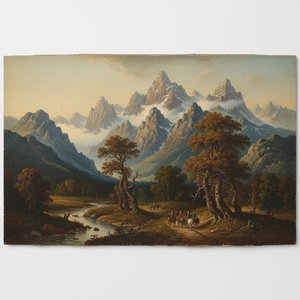
Majestic Peaks on Canvas: A Historical & Artistic Exploration of Mountains in Fine Art
Explore the history of mountain painting! Discover Romantic masterpieces & key artists like Dahl & Calame. Learn about the Sublime & Picturesque aesthetics and find your perfect artwork at OriginalUniqueArt.

Evocations of Place: A Historical Journey Through Landscape Art
Explore the rich history of landscape art with OriginalUniqueArt. Discover renowned artists, movements like Impressionism & Romanticism, and expert guidance for collecting timeless pieces. Find your perfect serene escape today!


