
 Vorschau anzeigen
 Versenden
 Teilen
 Details anzeigen
 Leitfaden

 Herunterladen
 Ähnliche Objekte
 Röntgenaufnahme
 Diashow
 Fragen & Antworten
 Statistiken
The happy day

- 83.0 x 116.0 cm


 Weiterlesen
Giclée / Kunstdruck
Giclée- oder Leinwanddruck in Museumsqualität mit schneller Produktion und flexiblen Veredelungsoptionen. ( Handgemalte Reproduktion bestellen Zum digitalen Bild wechseln)




P118B €10

P118H €10

P118W €10

P438Z €10

P508JH €12

P508YH €12

P805H €10

P805Z €10

P919BZ €10

P919G €10

P919XJ €10

P959ZH €10

P968JZ €12

W106C €8

W218G €10

W218JH €8

W218Y €10

W307PJ €10

W316G €10

W316PJ €8

W316Y €10

W398PJ €8

W4111J €10

W500HY €15

W500JH €15

W692G €12

W849H €8

W940BG €15

W953PJ €8




Wählen Sie aus unseren vordefinierten Formaten, die den ursprünglichen Proportionen des Kunstwerks entsprechen.

Geben Sie die benötigte Breite und Höhe an, damit der Druck perfekt in Ihren Rahmen oder an Ihre Wand passt. Ein Druck kann nur beschnitten, aber niemals größer als das Originalbild angefertigt werden; daher verliert ein Format mit anderen Proportionen einen Teil des Bildes. Wir senden Ihnen ein digitales Mockup zur Freigabe, bevor wir den Druck ausführen. Das auf dieser Seite gezeigte Bild zeigt nicht den tatsächlichen Beschnitt – dies ist nur im Mockup ersichtlich.
Weltweiter Versand () innerhalb von 2 Wochen statt der üblichen 4/5 Wochen. (8 November)

Kostenloser weltweiter Expressversand

Hochwertige Leinenleinwand

Umfassender Versicherungsschutz beim Versand

Zollgebühren-Rückerstattungsgarantie

Garantie für exakte Farbtreue

100 Tage Rückgaberecht (nur bei Mängeln)

100% Geld-zurück-Garantie

Mengenrabatt verfügbar
 Die Glasoption ist nur für Größen unter 110 cm verfügbar.

The happy day
Giclée / Kunstdruck
Format der Reproduktion
-


Endpreis
€ 72
A Celebration of Light and Camaraderie: Exploring Joaquín Sorolla’s “The Happy Day”
Joaquín Sorolla y Bastida (1863 – 1923), a Valencian painter whose canvases shimmer with the golden hues of Mediterranean summers, remains one of Spain’s most beloved artistic figures. His oeuvre is characterized by an unwavering devotion to capturing fleeting moments of joy and connection—a philosophy that finds its purest expression in “The Happy Day,” completed in 1892.
- Subject Matter: The painting depicts a group of nine individuals engaged in collaborative boat repair work within a workshop setting. This seemingly mundane activity becomes imbued with significance through Sorolla’s masterful portrayal of human interaction and shared experience.
- Style: Sorolla's style is firmly rooted in Impressionism, yet he transcends mere replication of visual sensations. Instead, he seeks to convey an emotional resonance—a palpable sense of warmth, optimism, and communal spirit.
Sorolla’s technique is remarkable for its ability to render light with unparalleled accuracy. He employs loose brushstrokes layered upon one another to create a luminous surface that mimics the dappled sunlight filtering through foliage. The artist meticulously observes how light transforms color, capturing subtle variations in tone and hue that contribute to the painting's overall atmosphere.
- Technique: Sorolla utilized oil paints on canvas, applying them with rapid, expressive strokes—a hallmark of Impressionist practice. He skillfully blended colors to achieve a velvety texture and create an illusion of depth, drawing viewers into the scene’s vibrant environment.
- Color Palette: The painting's dominant color palette consists of warm yellows, oranges, and reds—colors that evoke associations with sunshine, warmth, and vitality. These hues are juxtaposed against cooler greens and blues to create a harmonious balance and heighten the sense of tranquility.
“The Happy Day” resides at the Galleria d’Arte Moderna di Udine in Udine, Italy, where it continues to captivate audiences with its timeless beauty. Beyond its aesthetic merits, the painting speaks to broader themes of human connection and the transformative power of shared endeavor. Sorolla's intention was not merely to depict a workshop scene; he sought to encapsulate the essence of happiness—a moment frozen in time, radiating warmth and inviting contemplation.
Historical Context:
Painted during the Belle Époque, “The Happy Day” reflects the optimism and dynamism of the era. Sorolla’s work aligns with a broader artistic movement that championed realism alongside expressive color—a deliberate departure from academic conventions that prioritized meticulous detail over emotional impact.
Symbolism:
The boat itself serves as a potent symbol—representing not only practical labor but also aspiration, progress, and the pursuit of collective goals. The figures surrounding it embody camaraderie and cooperation—values celebrated throughout Sorolla’s oeuvre.
Ultimately, “The Happy Day” transcends its formal elements to convey an enduring message: that true joy resides in embracing life's simple pleasures and fostering meaningful connections with others. It remains a testament to Sorolla’s artistic genius—a masterpiece of Impressionism that continues to inspire admiration and wonder.
Fragen & Antworten
Wo kann ich das Original von "The happy day" von Joaquín Sorolla y Bastida sehen?
Das Originalwerk „The happy day“ können Sie im Galleria d’Arte Moderna di Udine, Udine, Italia bewundern.
Welches Format hat "The happy day"?
"The happy day" von Joaquín Sorolla y Bastida hat ein Querformat-Format. Das Format beschreibt die Proportionen der Komposition.
Wie schafft "The happy day" das Gleichgewicht zwischen Hell und Dunkel?
"The happy day" von Joaquín Sorolla y Bastida weist eine Helligkeit von Schattenhaft mit einer Luminanz von Sanfter Schatten auf.
Künstlerbiografie
Frühes Leben und Ausbildung
Joaquín Sorolla y Bastida, ein renommierter spanischer Maler, wurde am 27. Februar 1863 in Valencia, Spanien, geboren. Er war der älteste Sohn von Joaquín Sorolla, einem Kaufmann, und Concepción Bastida. Nach dem frühen Verlust seiner Eltern im Alter von zwei Jahren wuchs er bei seiner Tante und ihrem Ehemann auf. Seine künstlerische Reise begann in seiner Heimatstadt, wo er bereits mit neun Jahren eine erste Kunstausbildung erhielt. Später studierte er unter der Leitung von Cayetano Capuz, Salustiano Asenjo und José Benlliure in Rom. Ein viereinhalbjähriges Stipendium ermöglichte ihm ein Studium des Malens in Rom, Italien, wo er stark von Francisco Pradilla beeinflusst wurde.Künstlerische Entwicklung und Stil
Sorollas Werk zeichnet sich durch einen einzigartigen Realismus aus, der Elemente des Impressionismus aufgreift. Er war bekannt für seine Fähigkeit, Licht und Farbe meisterhaft einzusetzen, um lebendige und atmosphärische Szenen zu schaffen. Seine frühen Werke zeigten Einflüsse des etablierten spanischen Malstils, während er später seinen eigenen unverwechselbaren Stil entwickelte, der sich durch eine lockere Pinselführung und eine strahlende Farbpalette auszeichnete. Er bevorzugte das Malen im Freien (plein air), um die natürlichen Lichtverhältnisse optimal zu nutzen. Sein Fokus lag oft auf Alltagsszenen, Porträts und insbesondere Strandbildern, die er mit großer Detailtreue und Lebendigkeit festhielt.Wichtige Werke und Errungenschaften
Sorolla schuf eine beeindruckende Anzahl von Werken, die seine künstlerische Meisterschaft demonstrieren. Zu seinen bekanntesten Gemälden gehören:- Italienisches Mädchen mit Blumen (Öl auf Leinwand), das Sorollas Fähigkeit zeigt, die Essenz seiner Motive einzufangen.
- Badezeit (Realismus, Öl), ein Beispiel für seine Balance aus Licht und Farbe.
- Der Sklavenhandel (Sorolla Museum, Madrid, Spanien, Öl auf Leinwand), ein seltenes Beispiel für sozialrealistische Kunst in Sorollas Werk.
Einfluss und Vermächtnis
Joaquín Sorolla gilt als einer der bedeutendsten spanischen Maler des 19. und frühen 20. Jahrhunderts. Sein Werk trug maßgeblich zur Entwicklung des spanischen Realismus und Impressionismus bei. Seine Fähigkeit, das Licht der mediterranen Sonne einzufangen und in seinen Gemälden wiederzugeben, machte ihn zu einem international gefeierten Künstler. Sorolla beeinflusste zahlreiche nachfolgende Maler und seine Werke werden heute in renommierten Museen auf der ganzen Welt ausgestellt. Das Sorolla Museum in Madrid, das sein ehemaliges Haus und Atelier beherbergt, ist ein zentraler Ort für die Bewahrung und Präsentation seines Werkes. Sein Vermächtnis lebt fort als Inspiration für Künstler und Kunstliebhaber gleichermaßen.Spätere Jahre und Tod
Obwohl Sorolla im Alter von 60 Jahren am 23. August 1923 in Cercedilla, Spanien, verstarb, hinterließ er ein beeindruckendes Œuvre und einen bleibenden Eindruck in der Kunstgeschichte. Seine Werke werden bis heute für ihre Lebendigkeit, Detailtreue und die meisterhafte Darstellung des Lichts geschätzt.
Joaquín Sorolla y Bastida
1863 - 1923 , Spanien
Kurzinfos
- Bemerkenswerte Werke:
- Italienisches Mädchen mit Blumen
- Badezeit (Realismus)
- Der weiße Sklavenhandel
- Strand bei Biarritz
- Das Gelbe Rosenbusch
- Einflussreiche Künstler: ['Francisco Pradilla']
- Geburtsdatum: 27. Februar 1863
- Geburtsort: Valencia, Spanien
- Künstlerische Richtung: Realismus, Luminismus
- Nationalität: Spanisch
- Sterbedatum: 1923
- Vollständiger Name: Joaquín Sorolla y Bastida
Ähnliche Artikel
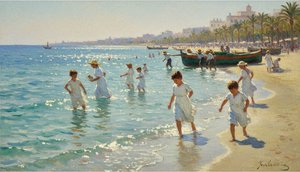
Joaquín Sorolla y Bastida: Meister des Lichts – Ein spanischer Impressionist im Fokus
Entdecken Sie das faszinierende Werk von Joaquín Sorolla y Bastida, dem Meister des spanischen Impressionismus! Erfahren Sie mehr über seine Technik, sein Leben und seine ikonischen Gemälde. Jetzt lesen!

Manuel Benedito Vives: A Study of Light, Color & Emotional Resonance in Contemporary Spanish Painting
Explore the captivating world of Manuel Benedito Vives, a celebrated Spanish painter influenced by Sorolla. Discover his masterful portraits, luminous landscapes & enduring legacy – a favorite of the Spanish Royal Family. Art collectors will appreciate this in-depth study.
Evocations of Open Air: A Comprehensive Exploration of Outdoor Scenes in Art History
Explore the rich history of outdoor painting! Discover Impressionism, en plein air techniques & renowned landscape artists. Learn about light, color & enduring artistic legacies with OriginalUniqueArt.

Impressionismus Meisterwerke: Die Top 10 Kunstwerke für Ihr Zuhause | OriginalUniqueArt
Entdecken Sie die Top 10 Meisterwerke des Impressionismus! Von Monet bis Renoir – erfahren Sie die Geschichten hinter berühmten Gemälden, Techniken & Farben. Hochwertige Kunstdrucke auf OriginalUniqueArt.com.

Boote in der Kunst: Die 10 schönsten Meisterwerke & ihre Geschichten | OriginalUniqueArt
Entdecken Sie die 10 schönsten Bootsgemälde der Kunstgeschichte! Von Monet bis Van Gogh – erfahren Sie die Geschichten hinter ikonischen Werken, Techniken & Marinemalerei. Hochwertige Reproduktionen auf OriginalUniqueArt.com.


