In echtem Maßstab anzeigen
 Versenden als Grußkarte
 Teilen
 Details anzeigen
 Leitfaden öffnen

 Herunterladen
 Ähnliche Objekte
 Röntgenaufnahme
 Diashow
 Besucherstatistiken
Para David Fernández Miró 1


 Mehr anzeigen
Giclée / Kunstdruck
Giclée- oder Leinwanddruck in Museumsqualität mit schneller Produktion und flexiblen Veredelungsoptionen. ( Handgemalte Reproduktion kaufen Zum digitalen Bild wechseln)




P118B $10

P118H $10

P118W $10

P438Z $10

P508JH $12

P508YH $12

P805H $10

P805Z $10

P919BZ $10

P919G $10

P919XJ $10

P959ZH $10

P968JZ $12

W106C $8

W218G $10

W218JH $8

W218Y $10

W307PJ $10

W316G $10

W316PJ $8

W316Y $10

W398PJ $8

W4111J $10

W500HY $15

W500JH $15

W692G $12

W849H $8

W940BG $15

W953PJ $8




Wählen Sie aus unseren vordefinierten Formaten, die den ursprünglichen Proportionen des Kunstwerks entsprechen.

Sie können Ihre eigenen Maße eingeben, um ein bestimmtes Format oder einen speziellen Platz einzupassen. Wenn das von Ihnen gewählte Format nicht den Proportionen des Originalbildes entspricht, werden wir das Kunstwerk entweder beschneiden oder das Bild mit einem gespiegelten oder einfarbigen Rand erweitern. Ein digitaler Entwurf wird Ihnen zur Genehmigung zugesandt, bevor die Produktion beginnt.
Bitte beachten Sie, dass die Vorschau auf dem Bildschirm nicht den tatsächlichen Zuschnitt oder die Erweiterung widerspiegelt. Nur der Entwurf zeigt die endgültige Komposition präzise an.
Obwohl Sondermaße verfügbar sind, empfehlen wir die Auswahl eines Maßes aus der vordefinierten Liste, um die ursprünglichen Proportionen zu bewahren.
Weltweiter Versand () innerhalb von 2 Wochen statt der üblichen 4/5 Wochen. (27 September)

Kostenloser weltweiter Expressversand

Hochwertige Leinenleinwand

Vollständiger Versicherungsschutz beim Versand

Zollgebühren-Rückerstattungsgarantie

Garantie für exakte Farbtreue

100-tägiges Rückgaberecht (nur bei Mängeln)

100% Geld-zurück-Garantie

Angebot für Mengenrabatt
 Die Glasoption ist nur für Größen unter 110 cm verfügbar.

Para David Fernández Miró 1
Giclée / Kunstdruck
Format der Reproduktion
-


Gesamtpreis
$ 80
A Symphony of Dreams: The Ethereal World of Joan Miró
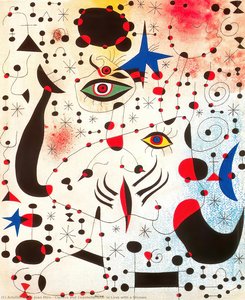
To encounter Joan Miró's “Para David Fernández Miró 1” is to step through a portal into the very architecture of the subconscious. Painted in 1964, this masterpiece transcends the boundaries of mere visual representation, offering instead a profound exploration of Catalan identity and the intangible essence of human experience. The canvas immediately envelops the viewer in a dominant expanse of azure, a hue so deep and resonant that it evokes the sun-drenched Mediterranean Sea. This choice of color is not merely aesthetic; it serves as a soulful tribute to Miró's lifelong fascination with the natural beauty and folklore of his beloved homeland. In this work, the landscape dissolves, leaving behind a realm where reality is replaced by a poetic, dreamlike fluidity.
The composition functions as a delicate dance of biomorphic forms—organic, undulating shapes that defy rigid categorization. At the heart of this celestial arrangement sits a stylized fish, a recurring motif in Miró’s vast oeuvre that acts as an anchor for the eye. This central figure is accompanied by smaller, drifting fish that appear like constellations scattered across a midnight sky, symbolizing a profound sense of interconnectedness and the harmonious rhythm of nature. The artist's signature technique—a masterful blend of bold, gestural brushstrokes and precise, whimsical lines—creates a dynamic interplay of intense blues, vibrant yellows, and striking reds. This rhythmic use of color ensures that the painting does not merely sit upon the wall but seems to pulse with a life of its own.
Symbolism and the Flight of the Spirit
Beyond the aquatic depths, Miró introduces a layer of spiritual transcendence through the inclusion of a soaring bird. Positioned towards the right side of the composition, the bird’s outstretched wings suggest an upward trajectory, providing a breathtaking contrast to the stillness of the deep blue sea below. In the context of Catalan culture and Miró's personal worldview, such imagery often represents aspiration, freedom, and the liberation of the soul from earthly constraints. The deliberate asymmetry of the piece further enhances this sense of movement, guiding the viewer’s gaze in a continuous loop of discovery, from the depths of the ocean to the infinite reaches of the sky.
For the discerning collector or interior designer, this artwork offers more than just visual splendor; it provides an emotional anchor for a space. The painting's ability to balance tranquility with energy makes it a versatile centerpiece for high-end decor, capable of inspiring contemplation in a quiet study or adding a sophisticated, avant-garde edge to a modern living area. Owning a reproduction of such a significant work allows one to invite the whimsical, much-loved spirit of Miró into the home—a constant reminder of the beauty found when we allow our imaginations to roam free.
Biografie des Künstlers
**frühes Leben und Karriere**
joan miró, ein renommierter spanischer Maler, Bildhauer und Keramiker, wurde am 20. April 1893 in Barcelona, Spanien, geboren. Seine Familie, von jüdischen (Marrano oder Konverso) Wurzeln, hatte einen bedeutenden Einfluss auf sein frühes Leben. Mirós Vater, Miquel Miró Adzerias, war Goldschmied und Uhrmacher, was möglicherweise der Künstlersein Interesse an komplizierten Details inspirierte.**Künstlerische Entwicklung**
Miró begann mit sieben Jahren mit Zeichenunterricht in einer privaten Schule in Barcelona. Später nahm er am Kunstakademie La Llotja auf, trotz Ablehnung durch seinen Vater. Dies markierte den Beginn von Mirós künstlerischer Reise, die schließlich zu seiner Pionierarbeit im Surrealismus und abstrakter Kunst führte.**Bekannte Werke und Kooperationen**
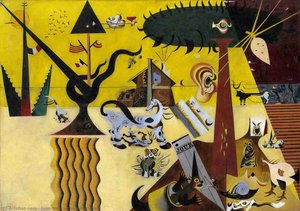
* The Farm (1922), ein Gemälde, das Mirós Übergang zu einem individuelleren Stil zeigt, mit nationalistischen Zügen. * Zusammenarbeit mit Max Ernst bei der Gestaltung von Sergei Diaghilews Ballett 1926, die die Technik des Grattage begründete. * The Dutch Interiors (1928), eine Reihe von Gemälden, inspiriert von Hendrik Martenszoon Sorth und Jan Steen, die Mirós einzigartigen Stil zeigt.**Museen und Vermächtnis**
* Die Fundació Joan Miró in Barcelona, gegründet 1975, die Mirós Werke präsentiert. * Die Fundació Pilar i Joan Miró in Palma de Mallorca, gegründet 1981, festigte Mirós Vermächtnis weiter.**Wichtige Werke und ihre Bedeutung**
- Painting (1933), ein abstraktes Ölgemälde, das Mirós surrealistische Vision veranschaulicht.
- Pintura 11, ein weiteres bemerkenswertes abstraktes Werk, das Mirós einzigartigen Stil zeigt.
- The Ear of Corn (37 x 46 cm), ein surrealistisches Werk, das komplizierte Details zeigt.
- The Birth of Day, ein abstraktes Kunstwerk, das Mirós Beiträge zur abstrakten Kunst weiter festigt.
**Fazit**
Mirós Vermächtnis als Pionier des Surrealismus und der abstrakten Kunst ist unbestreitbar. Seine Werke, die in verschiedenen Museen ausgestellt werden, darunter die Fundació Joan Miró, inspirieren weiterhin Künstler und Kunstliebhaber gleichermaßen. Für weitere Informationen über Mirós Werke besuchen Sie [https://OriginalUniqueArt.com/@/joan-miro](https://OriginalUniqueArt.com/@/joan-miro) oder erkunden Sie seine bemerkenswerten Werke unter [https://OriginalUniqueArt.com/@@/8ewky5-joan-miro-painting](https://OriginalUniqueArt.com/@@/8ewky5-joan-miro-painting).- Mehr Kunstwerke von Joan Miró auf OriginalUniqueArt.com
- Entdecken Sie das Museum Fundació Joan Miró in Barcelona, Spanien
- Erkunden Sie die Biografie und bemerkenswerten Werke des Künstlers unter [https://en.wikipedia.org/wiki/joan_mir%c3%b3](https://en.wikipedia.org/wiki/joan_mir%c3%b3)
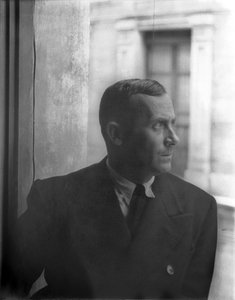
Joan Miró
1893 - 1983 , Spanien
Eckdaten zum Künstler
- Beeinflusste Künstler:
- Vincent van Gogh
- Paul Cézanne
- Bemerkenswerte Werke:
- Die Farm (1922)
- Dutch Interiors (1928)
- Gemälde (1933)
- Geburtsdatum: 20. April 1893
- Geburtsort: Barcelona, Spanien
- Künstlerischer Stil: Surrealismus, abstrakte Kunst
- Nationalität: Spanisch
- Todatum: 1983
- Vollständiger Name: Joan Miró i Ferrà
Verwandte Artikel
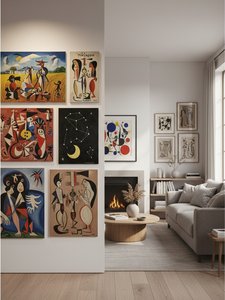
Joan Mirós Meisterwerke: Die Top 25 für Kunstliebhaber & stilvolles Wohnen
Entdecken Sie die Top 25 Gemälde von Joan Miró! Tauchen Sie ein in die Welt des Surrealismus, abstrakter Kunst & katalanischer Farben. Hochwertige Kunstdrucke & Reproduktionen für Ihr Zuhause – jetzt auf OriginalUniqueArt.com!

Contemporary Abstract Art: A Professional Buyer's Guide to Large-Scale Modern Decor for Hospitality and Corporate Interiors
A professional procurement guide for hotel designers and architects. Discover how to integrate large-scale contemporary abstract art into hospitality projects through high-volume, custom-sized oil reproductions, multi-panel layouts, and reliable global logistics.

Designing Your Forever Space: An Expert Guide to Elevating Your New Home with Neo-Abstract Art
Elevate your first home with the bold energy of Neo-Abstract Art. Our expert guide helps newlyweds master modern geometric compositions, textures, and color palettes. Discover how custom hand-painted oils and multi-panel designs can transform your new space into a curated masterpiece.

Abstrakter Expressionismus: Die 10 Meisterwerke, die eine Kunstbewegung prägten |
Entdecken Sie die 10 Meisterwerke des Abstrakten Expressionismus! Von Jackson Pollock bis Mark Rothko – erfahren Sie die Geschichten hinter ikonischen Gemälde und finden Sie hochwertige Reproduktionen für Ihr Zuhause. Jetzt bei entdecken!

Kandinsky: Die 25 Meisterwerke des Abstrakten – Kunst für Ihr Zuhause | OriginalUniqueArt
Entdecken Sie die 25 bedeutendsten Gemälde von Wassily Kandinsky! Tauchen Sie ein in die Welt der abstrakten Kunst, des Expressionismus und der Farbkomposition. Hochwertige Kunstdrucke & Inspiration für Ihr Zuhause auf OriginalUniqueArt.com.