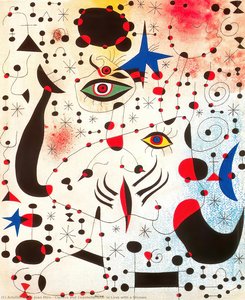
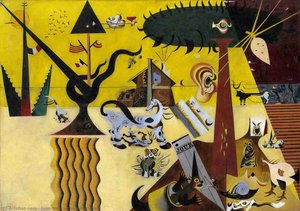
In echtem Maßstab anzeigen
 Versenden als Grußkarte
 Teilen
 Details anzeigen
 Leitfaden öffnen

 Herunterladen
 Ähnliche Objekte
 Röntgenaufnahme
 Diashow
 Besucherstatistiken
Paisaje ''La liebre''


 Mehr anzeigen
Giclée / Kunstdruck
Giclée- oder Leinwanddruck in Museumsqualität mit schneller Produktion und flexiblen Veredelungsoptionen. ( Handgemalte Reproduktion kaufen Zum digitalen Bild wechseln)




P118B $10

P118H $10

P118W $10

P438Z $10

P508JH $12

P508YH $12

P805H $10

P805Z $10

P919BZ $10

P919G $10

P919XJ $10

P959ZH $10

P968JZ $12

W106C $8

W218G $10

W218JH $8

W218Y $10

W307PJ $10

W316G $10

W316PJ $8

W316Y $10

W398PJ $8

W4111J $10

W500HY $15

W500JH $15

W692G $12

W849H $8

W940BG $15

W953PJ $8




Wählen Sie aus unseren vordefinierten Formaten, die den ursprünglichen Proportionen des Kunstwerks entsprechen.

Sie können Ihre eigenen Maße eingeben, um ein bestimmtes Format oder einen speziellen Platz einzupassen. Wenn das von Ihnen gewählte Format nicht den Proportionen des Originalbildes entspricht, werden wir das Kunstwerk entweder beschneiden oder das Bild mit einem gespiegelten oder einfarbigen Rand erweitern. Ein digitaler Entwurf wird Ihnen zur Genehmigung zugesandt, bevor die Produktion beginnt.
Bitte beachten Sie, dass die Vorschau auf dem Bildschirm nicht den tatsächlichen Zuschnitt oder die Erweiterung widerspiegelt. Nur der Entwurf zeigt die endgültige Komposition präzise an.
Obwohl Sondermaße verfügbar sind, empfehlen wir die Auswahl eines Maßes aus der vordefinierten Liste, um die ursprünglichen Proportionen zu bewahren.
Weltweiter Versand () innerhalb von 2 Wochen statt der üblichen 4/5 Wochen. (27 September)

Kostenloser weltweiter Expressversand

Hochwertige Leinenleinwand

Vollständiger Versicherungsschutz beim Versand

Zollgebühren-Rückerstattungsgarantie

Garantie für exakte Farbtreue

100-tägiges Rückgaberecht (nur bei Mängeln)

100% Geld-zurück-Garantie

Angebot für Mengenrabatt
 Die Glasoption ist nur für Größen unter 110 cm verfügbar.

Paisaje ''La liebre''
Giclée / Kunstdruck
Format der Reproduktion
-


Gesamtpreis
$ 80
A Dance of Dreams: Exploring Joan Miró’s “La Liebre”
Joan Miró's "La Liebre" (The Hare) is more than just a colorful depiction of animals; it’s an immersion into the artist’s intensely personal and profoundly imaginative world. Painted in his signature abstract style, this vibrant canvas pulsates with life, inviting viewers to decipher its layered meanings and experience the raw emotion that fueled Miró's artistic vision. The painting immediately captivates with a dynamic composition – two dogs, a cat, and a bird are scattered across an orange background, each rendered in bold, expressive strokes and playful shapes. This isn’t a realistic representation of nature; it’s a distillation of dreams, memories, and the Catalan spirit that defined Miró's oeuvre.
- Subject Matter: The central figures – a hare (hence the title), two dogs, and a cat – are archetypal symbols often associated with instinct, loyalty, and mystery. Their seemingly random arrangement contributes to the painting’s dreamlike quality.
- Color Palette: Miró masterfully employs a vibrant palette dominated by oranges, yellows, and blues. The orange background isn't merely decorative; it acts as an energetic force, amplifying the movement and vitality of the animal forms.
- Technique: Miró’s technique is characterized by loose, gestural brushstrokes and a deliberate avoidance of precise detail. This approach allows for a sense of spontaneity and encourages viewers to engage their own imaginations in filling the gaps.
The Catalan Visionary and the Influence of Gaudí
Born in Barcelona in 1893, Joan Miró’s artistic journey was inextricably linked to his homeland. The city's architectural legacy, particularly the organic forms of Antoni Gaudí, profoundly influenced Miró’s aesthetic sensibilities. This influence is subtly evident in "La Liebre," where the curving lines and fluid shapes evoke a sense of naturalism while simultaneously rejecting traditional representational techniques. Miró’s upbringing amidst the traditions of Barcelona – including his father's goldsmithing profession – instilled within him a deep appreciation for craftsmanship and meticulous detail, which he then channeled into his abstract explorations. The rugged Catalan landscape served as a constant source of inspiration, informing the painting’s dynamic composition and symbolic resonance.
Decoding the Symbolism: Instinct, Memory, and Catalan Identity
Miró's work is rich in symbolism, often drawing upon personal memories, subconscious imagery, and cultural references. The hare itself represents fertility, speed, and instinct – primal qualities that Miró sought to capture on canvas. The dogs and cat further contribute to this symbolic tapestry, representing loyalty, protection, and domesticity. Beyond these specific figures, the painting can be interpreted as a meditation on memory and the subconscious mind, reflecting Miró’s own struggles with illness and his desire to express the intangible. The vibrant colors and dynamic composition also evoke a sense of Catalan identity – a nation fiercely proud of its heritage and traditions.
Emotional Impact and Artistic Legacy
"La Liebre" is a powerfully evocative artwork that continues to resonate with viewers today. Its dreamlike quality, combined with Miró’s masterful use of color and form, creates an immersive experience that transcends mere visual representation. This painting exemplifies Miró's unique ability to translate inner emotions into tangible forms, solidifying his place as one of the most important artists of the 20th century. A reproduction of “La Liebre” offers a window into this extraordinary mind and allows you to bring a touch of Miró’s vibrant imagination into your own space.
Biografie des Künstlers
**frühes Leben und Karriere**
joan miró, ein renommierter spanischer Maler, Bildhauer und Keramiker, wurde am 20. April 1893 in Barcelona, Spanien, geboren. Seine Familie, von jüdischen (Marrano oder Konverso) Wurzeln, hatte einen bedeutenden Einfluss auf sein frühes Leben. Mirós Vater, Miquel Miró Adzerias, war Goldschmied und Uhrmacher, was möglicherweise der Künstlersein Interesse an komplizierten Details inspirierte.**Künstlerische Entwicklung**
Miró begann mit sieben Jahren mit Zeichenunterricht in einer privaten Schule in Barcelona. Später nahm er am Kunstakademie La Llotja auf, trotz Ablehnung durch seinen Vater. Dies markierte den Beginn von Mirós künstlerischer Reise, die schließlich zu seiner Pionierarbeit im Surrealismus und abstrakter Kunst führte.**Bekannte Werke und Kooperationen**
* The Farm (1922), ein Gemälde, das Mirós Übergang zu einem individuelleren Stil zeigt, mit nationalistischen Zügen. * Zusammenarbeit mit Max Ernst bei der Gestaltung von Sergei Diaghilews Ballett 1926, die die Technik des Grattage begründete. * The Dutch Interiors (1928), eine Reihe von Gemälden, inspiriert von Hendrik Martenszoon Sorth und Jan Steen, die Mirós einzigartigen Stil zeigt.**Museen und Vermächtnis**
* Die Fundació Joan Miró in Barcelona, gegründet 1975, die Mirós Werke präsentiert. * Die Fundació Pilar i Joan Miró in Palma de Mallorca, gegründet 1981, festigte Mirós Vermächtnis weiter.**Wichtige Werke und ihre Bedeutung**
- Painting (1933), ein abstraktes Ölgemälde, das Mirós surrealistische Vision veranschaulicht.
- Pintura 11, ein weiteres bemerkenswertes abstraktes Werk, das Mirós einzigartigen Stil zeigt.
- The Ear of Corn (37 x 46 cm), ein surrealistisches Werk, das komplizierte Details zeigt.
- The Birth of Day, ein abstraktes Kunstwerk, das Mirós Beiträge zur abstrakten Kunst weiter festigt.
**Fazit**
Mirós Vermächtnis als Pionier des Surrealismus und der abstrakten Kunst ist unbestreitbar. Seine Werke, die in verschiedenen Museen ausgestellt werden, darunter die Fundació Joan Miró, inspirieren weiterhin Künstler und Kunstliebhaber gleichermaßen. Für weitere Informationen über Mirós Werke besuchen Sie [https://OriginalUniqueArt.com/@/joan-miro](https://OriginalUniqueArt.com/@/joan-miro) oder erkunden Sie seine bemerkenswerten Werke unter [https://OriginalUniqueArt.com/@@/8ewky5-joan-miro-painting](https://OriginalUniqueArt.com/@@/8ewky5-joan-miro-painting).- Mehr Kunstwerke von Joan Miró auf OriginalUniqueArt.com
- Entdecken Sie das Museum Fundació Joan Miró in Barcelona, Spanien
- Erkunden Sie die Biografie und bemerkenswerten Werke des Künstlers unter [https://en.wikipedia.org/wiki/joan_mir%c3%b3](https://en.wikipedia.org/wiki/joan_mir%c3%b3)
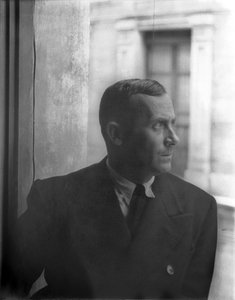
Joan Miró
1893 - 1983 , Spanien
Eckdaten zum Künstler
- Beeinflusste Künstler:
- Vincent van Gogh
- Paul Cézanne
- Bemerkenswerte Werke:
- Die Farm (1922)
- Dutch Interiors (1928)
- Gemälde (1933)
- Geburtsdatum: 20. April 1893
- Geburtsort: Barcelona, Spanien
- Künstlerischer Stil: Surrealismus, abstrakte Kunst
- Nationalität: Spanisch
- Todatum: 1983
- Vollständiger Name: Joan Miró i Ferrà
Verwandte Artikel

Katsushika Hokusai: Die 25 Meisterwerke des Ukiyo-e – Kunst für Ihr Zuhause | OriginalUniqueArt
Entdecken Sie die 25 Meisterwerke von Katsushika Hokusai! Tauchen Sie ein in die Welt des Ukiyo-e, berühmte Holzschnitte wie 'Die große Welle' & Fuji-Ansichten. Hochwertige Kunstdrucke für Ihr Zuhause – jetzt auf OriginalUniqueArt.com!

Kandinsky: Die 25 Meisterwerke des Abstrakten – Kunst für Ihr Zuhause | OriginalUniqueArt
Entdecken Sie die 25 bedeutendsten Gemälde von Wassily Kandinsky! Tauchen Sie ein in die Welt der abstrakten Kunst, des Expressionismus und der Farbkomposition. Hochwertige Kunstdrucke & Inspiration für Ihr Zuhause auf OriginalUniqueArt.com.
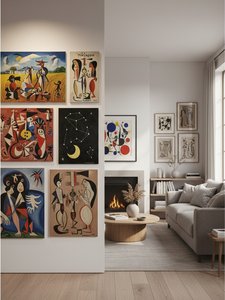
Joan Mirós Meisterwerke: Die Top 25 für Kunstliebhaber & stilvolles Wohnen
Entdecken Sie die Top 25 Gemälde von Joan Miró! Tauchen Sie ein in die Welt des Surrealismus, abstrakter Kunst & katalanischer Farben. Hochwertige Kunstdrucke & Reproduktionen für Ihr Zuhause – jetzt auf OriginalUniqueArt.com!

Abstrakter Expressionismus: Die 10 Meisterwerke, die eine Kunstbewegung prägten |
Entdecken Sie die 10 Meisterwerke des Abstrakten Expressionismus! Von Jackson Pollock bis Mark Rothko – erfahren Sie die Geschichten hinter ikonischen Gemälde und finden Sie hochwertige Reproduktionen für Ihr Zuhause. Jetzt bei entdecken!
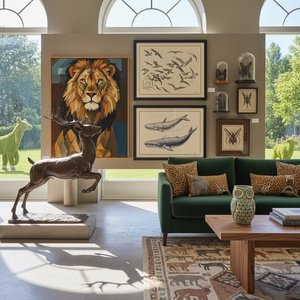
Animalia: Die bleibende Präsenz von Tieren in Kunst und Innenarchitektur
Entdecken Sie die faszinierende Welt der Animalia! Von historischen Tierdarstellungen bis zur modernen Innenarchitektur – wir bieten Expertise, hochwertige Reproduktionen & Kunstberatung.