

 Preview
 Druck bestellen Bild kaufen
 Versenden
 Teilen
 Details anzeigen
 Zu Favoriten hinzufügen

 Herunterladen
 Ähnliche Objekte
 Röntgenaufnahme
 Diashow anzeigen
Paganini


 Weiterlesen
Handgefertigte Öl-Reproduktion
Handgemaltes Ölgemälde auf Leinwand in Ihrer Wunschgröße und mit Rahmen, auf Bestellung von unseren Künstlern angefertigt.




































Wählen Sie aus unseren vordefinierten Größen, die den ursprünglichen Proportionen des Kunstwerks entsprechen.

Sie können Ihre eigenen Maße eingeben, um einen bestimmten Rahmen oder Platz auszufüllen. Wenn die gewählte Größe nicht den Proportionen des Originalbildes entspricht, werden wir das Kunstwerk entweder beschneiden oder das Gemälde durch zusätzliche, handgemalte Elemente erweitern. Ein digitales Mockup wird Ihnen zur Genehmigung zugesandt, bevor die Produktion beginnt.
Bitte beachten Sie, dass die Bildschirmvorschau nicht die tatsächliche Beschneidung oder Erweiterung widerspiegelt. Nur das Mockup zeigt die endgültige Komposition exakt an.
Obwohl Sondermaße verfügbar sind, empfehlen wir, eine Größe aus der vordefinierten Liste zu wählen, um die ursprünglichen Proportionen beizubehalten.
Nach der Bestellung wird das OriginalUniqueArt.com-Team dem Kunden Anweisungen per E-Mail zusenden und eine Mockup-Vorschau bereitstellen.
Weltweiter Versand () in nur 3 bis 4 Wochen statt der üblichen 5 Wochen. (27 Juli). Keine Kompromisse bei der Qualität.

Kostenloser weltweiter Expressversand

Hochwertige Leinenleinwand

Umfassender Versicherungsschutz beim Versand

Zollsteuer-Rückerstattungsgarantie

Garantie für echte Farbtreue

60-Tage-Rückgaberecht (nur bei Mängeln)

100% Geld-zurück-Garantie

Mengenrabatt verfügbar
 Die Glasoption ist nur in Größen unter 110 cm verfügbar.

Paganini
Art der Reproduktion
Größe der Reproduktion
-


Endpreis aller Optionen
-
Beschreibung des Kunstwerks
Jean-Pierre Dantan’s “Paganini”: A Portrait of Passion and Virtuosity
The sculpture "Paganini," executed by Jean-Pierre Dantan in 1832, is more than a mere likeness; it's a vibrant distillation of the violinist’s legendary persona – a man simultaneously captivating audiences with his extraordinary skill and shrouded in an aura of intense, almost unsettling, magnetism. This remarkable bronze bust, now housed within the Musée Carnavalet in Paris, offers a rare glimpse into the Romantic era’s fascination with both musical genius and the darker aspects of human emotion. Dantan, a master of caricature and portraiture, skillfully captures not just Paganini's physical features but also the very essence of his celebrated performance style – a blend of theatricality, technical brilliance, and an undeniable sense of dramatic intensity.
Dantan’s approach to this commission reveals a deliberate departure from the rigid formality often associated with official portraiture. He eschews a purely academic rendering, instead opting for a dynamic pose that immediately draws the viewer in. Paganini is not presented as a static subject; rather, he leans forward intently, his head tilted downwards towards the violin as if lost within its music. His posture exudes a palpable sense of urgency and concentration, suggesting an almost obsessive dedication to his craft. The slight bend of his legs further contributes to this feeling of movement and energy, mirroring the frenetic pace of Paganini’s performances.
A Study in Form and Texture
The sculpture's technical execution is both meticulous and expressive. Dantan demonstrates a remarkable command of bronze, skillfully rendering the intricate details of Paganini’s face – the furrowed brow, the intense gaze, the subtle lines etched around his eyes. The artist employs a masterful use of hatching and cross-hatching to build up volume and texture, particularly in the depiction of hair and clothing folds. These techniques not only create a sense of realism but also subtly enhance the sculpture’s three-dimensionality, inviting viewers to explore its surface and appreciate the artist's meticulous attention to detail.
The choice of bronze itself is significant. Bronze, with its inherent durability and ability to capture fine details, was the material of choice for portrait sculptures during this period, lending an air of permanence and authority to the subject. The patina – the natural oxidation that develops on bronze over time – adds another layer of richness and depth to the sculpture’s appearance, subtly altering its color and texture with each passing year.
Symbolism and the Romantic Spirit
“Paganini” is deeply rooted in the artistic and intellectual currents of the Romantic era. The figure embodies many of the key themes associated with this movement – passion, emotion, individualism, and a fascination with the exotic and the sublime. Paganini’s reputation as a virtuoso performer was inextricably linked to tales of his extraordinary abilities, including claims of supernatural talent and even demonic possession. Dantan cleverly taps into these myths, imbuing the sculpture with an air of mystery and intrigue.
The pose itself is laden with symbolic meaning. Paganini’s downward gaze suggests a deep immersion in his music, while his outstretched hand gripping the violin symbolizes both mastery and vulnerability. The overall effect is one of intense concentration and emotional engagement – a portrait not just of a musician but of a man consumed by his art.
A Legacy of Artistic Influence
Jean-Pierre Dantan’s “Paganini” stands as a testament to the sculptor's remarkable talent and his ability to capture the spirit of his subject. It is a work that continues to resonate with viewers today, offering a compelling glimpse into the world of Romantic music and the enduring allure of artistic genius. The sculpture’s influence can be seen in subsequent portraiture, particularly in its emphasis on capturing not just physical likeness but also the inner life and emotional intensity of the subject. Reproductions of this iconic piece offer an accessible way to appreciate Dantan's skill and the captivating story of Niccolò Paganini.
Biografie des Künstlers
Frühes Leben und Familiärer Hintergrund
- Jean-Pierre Dantan, bekannt als Dantan der Jüngere, wurde am 28. Dezember 1800 in Paris, Frankreich geboren.
- Er stammte aus einer Familie von Bildhauern; sein Vater war ein Holzschnitzer, der ihm die erste Ausbildung gab.
- Antoine-Laurent Dantan, sein älterer Bruder (bekannt als Dantan der Ältere), war ebenfalls Bildhauer und trat vor Jean-Pierre in die École nationale supérieure des beaux-arts in Paris ein.
- Beide Brüder studierten unter François-Joseph Bosio an der renommierten Kunstschule, begannen ihre formale künstlerische Ausbildung im Jahr 1823.
- Eine spätere Generation sah seinen Neffen, Édouard Joseph Dantan (1848–1897), einige Anerkennung als Maler erlangen, obwohl er heute als ein geringfügiger Künstler gilt.
Künstlerische Entwicklung und Stil
- Während sich Antoine-Laurent auf großformatige akademische Skulpturen konzentrierte und 1828 den Prix de Rome gewann, entwickelte Jean-Pierre einen einzigartigen Stil, der sich um Porträtbüsten und Karikaturen drehte.
- Er begann diesen besonderen Ansatz früh in seiner Karriere zu erforschen und erregte Aufmerksamkeit für seine Büste des Malers César Ducornet, dargestellt als ein „verfluchter Poet“.
- Dantans Talent lag darin, ausdrucksstarke Emotionen in seinen Porträts einzufangen, indem er klassische Ausbildung mit aufkommenden romantischen Empfindlichkeiten verband.
- Ihm wird oft die Erfindung der skulpturalen Karikatur zugeschrieben, einer Form, die es ihm ermöglichte, die zeitgenössische Gesellschaft zu verspotten und zu kommentieren.
- Seine Arbeit wurde von Theorien der Phrenologie und dem Schwerpunkt des Romanticismus auf Ausdruck beeinflusst. Er wollte nicht nur das physische Aussehen darstellen, sondern auch das innere Wesen seiner Motive.
Hauptwerke und Anerkennung
- Dantans berühmteste Werke sind seine Karikatur-Büsten und kleinere Statuetten, die prominente Persönlichkeiten aus Politik, Musik, Literatur und Kunst darstellen.
- Er schuf Porträts von Personen wie Victor Hugo, Paganini, Liszt, Berlioz, Talleyrand und William Douglas-Hamilton.
- Seine Büsten enthielten oft ein Rätsel auf der Basis, das ein Element des intellektuellen Spiels hinzufügte und das Motiv in codierter Form identifizierte. Zum Beispiel enthielt seine Büste von Victor Hugo Symbole, die die Buchstaben seines Namens darstellten.
- Er stellte im Salon aus und erhielt 1831 eine Zweitklassmedaille.
- Seine Verbindung zu Persönlichkeiten wie Pierre-Luc-Charles Cicéri und Prinzessin Belgiojoso führte ihn in einflussreiche Kreise von Künstlern, Schriftstellern und politischen Radikalen, was zu zahlreichen Aufträgen führte.
Einfluss und historische Bedeutung
- Obwohl er zu Lebzeiten weniger offizielle Anerkennung erhielt als sein Bruder, gewann Jean-Pierre Dantans Werk eine Anhängerschaft unter der Intelligenzija und gilt heute als einflussreicher.
- Er inspirierte maßgeblich Honoré Daumier, einen renommierten Karikaturisten und Bildhauer selbst.
- Dantans Skulpturen geben wertvolle Einblicke in die französische Gesellschaft des 19. Jahrhunderts und erfassen die Persönlichkeiten und kulturellen Trends seiner Zeit.
- Seine Fähigkeit, Porträtkunst mit Karikatur zu verbinden, etablierte ihn als eine einzigartige Stimme in der Kunstwelt und schloss die Kluft zwischen traditioneller Skulptur und moderner Satire.
- Beide Brüder sind gemeinsam auf dem Père Lachaise Friedhof begraben, ihr Grab ist mit Reliefmedaillons geschmückt, die von jedem von ihnen geschaffen wurden, was ihre künstlerische Partnerschaft und familiäre Bindung symbolisiert.

Jean-Pierre Dantan
1800 - 1869 , Frankreich
Kurzinfos
- Beeinflusste Künstler: ['Honoré Daumier']
- Bemerkenswerte Werke:
- Hugo
- Liszt
- Paganini
- Geburtsdatum: 28. Dezember 1800
- Geburtsort: Paris, Frankreich
- Künstlerische Bewegung: Romantik, Karikatur
- Nationalität: Französisch
- Sterbedatum: 6. September 1869
- Vollständiger Name: Jean-Pierre Dantan
Ähnliche Artikel

The Enduring Legacy of Bronze Sculpture: Technique, Symbolism & Cultural Impact
Explore the rich history & enduring appeal of bronze sculpture with expert insights for collectors. Learn about casting techniques, iconic artists, collecting tips & contemporary interpretations at OriginalUniqueArt.
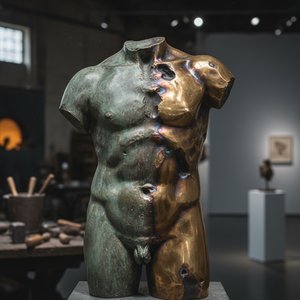
Das bleibende Erbe der Bronzeskulptur: Geschichte, Techniken und zeitgenössische Interpretationen
Entdecken Sie die faszinierende Geschichte der Bronzeskulptur – von den Anfängen bis zur modernen Kunst. Expertenwissen, Techniken & Tipps für Sammler.

The Enduring Legacy of Bronze Sculpture: A Collector's Guide to Form & Cultural Significance
Explore the rich history & enduring appeal of bronze sculpture with expert insights for collectors at OriginalUniqueArt. Learn about casting techniques, iconic artists, and collecting tips to build a discerning art collection.

Daniel Maclise: Historische Erzählungen und romantische Ideale der britischen Kunst des 19. Jahrhunderts
Entdecken Sie das Werk von Daniel Maclise und die faszinierende Welt der Historienmalerei im viktorianischen England. Analysen, Hintergrundinformationen & Expertenwissen auf OriginalUniqueArt.

Richard Westall: Romantische Visionen und der Aufstieg der britischen Landschafts- und Porträtmalerei
Entdecken Sie Richard Westalls Romantik und seinen Einfluss auf die britische Landschafts- und Porträtmalerei. Expertenanalyse, Biografien & hochwertige Reproduktionen bei OriginalUniqueArt.

