
 Vorschau anzeigen
 Versenden
 Teilen
 Details anzeigen
 Leitfaden

 Herunterladen
 Ähnliche Objekte
 Röntgenaufnahme
 Diashow
 Fragen & Antworten
 Statistiken
Six Fish and Bird

- 122.0 x 202.0 cm


 Weiterlesen
Die auf dieser Seite dargestellten Kunstwerke sind urheberrechtlich geschützt, was bedeutet, dass wir keine identische Reproduktion rechtmäßig erstellen oder verkaufen dürfen. Dieser Schutz wird durch internationale Abkommen wie die Berner Übereinkunft und durch nationale Gesetze, einschließlich derer, die von den US-Urheberrecht – Titel 17.
Diese Methode entspricht vollumfänglich den Urheberrechtsbestimmungen, da sie keine Kopie oder Vervielfältigung des geschützten Kunstwerks darstellt. Stattdessen handelt es sich um eine kreative Neuinterpretation – ein neues Gemälde, das vom Original inspiriert, aber nicht identisch mit ihm ist.
Giclée / Kunstdruck
Giclée- oder Leinwanddruck in Museumsqualität mit schneller Produktion und flexiblen Veredelungsoptionen. ( Handgemalte Reproduktion bestellen Zum digitalen Bild wechseln)




P118B €10

P118H €10

P118W €10

P438Z €10

P508JH €12

P508YH €12

P805H €10

P805Z €10

P919BZ €10

P919G €10

P919XJ €10

P959ZH €10

P968JZ €12

W106C €8

W218G €10

W218JH €8

W218Y €10

W307PJ €10

W316G €10

W316PJ €8

W316Y €10

W398PJ €8

W4111J €10

W500HY €15

W500JH €15

W692G €12

W849H €8

W940BG €15

W953PJ €8




Wählen Sie aus unseren vordefinierten Formaten, die den ursprünglichen Proportionen des Kunstwerks entsprechen.

Geben Sie die benötigte Breite und Höhe an, damit der Druck perfekt in Ihren Rahmen oder an Ihre Wand passt. Ein Druck kann nur beschnitten, aber niemals größer als das Originalbild angefertigt werden; daher verliert ein Format mit anderen Proportionen einen Teil des Bildes. Wir senden Ihnen ein digitales Mockup zur Freigabe, bevor wir den Druck ausführen. Das auf dieser Seite gezeigte Bild zeigt nicht den tatsächlichen Beschnitt – dies ist nur im Mockup ersichtlich.
Weltweiter Versand () innerhalb von 2 Wochen statt der üblichen 4/5 Wochen. (5 November)

Kostenloser weltweiter Expressversand

Hochwertige Leinenleinwand

Umfassender Versicherungsschutz beim Versand

Zollgebühren-Rückerstattungsgarantie

Garantie für exakte Farbtreue

100 Tage Rückgaberecht (nur bei Mängeln)

100% Geld-zurück-Garantie

Mengenrabatt verfügbar
 Die Glasoption ist nur für Größen unter 110 cm verfügbar.

Six Fish and Bird
Giclée / Kunstdruck
Format der Reproduktion
-


Endpreis
€ 72
A Vibrant Symphony of Life: Jean Philippe Arthur Dubuffet’s “Six Fish and Bird”
This captivating artwork, "Six Fish and Bird," produced in 1943 by the pioneering French artist Jean Philippe Arthur Dubuffet, offers a compelling glimpse into the burgeoning world of 20th-century art. Measuring 122 x 202 cm, this piece immediately draws the eye with its exuberant palette and dynamic composition – a testament to Dubuffet’s radical departure from traditional academic painting. The scene unfolds as a lively tableau populated by six fish and four birds, each rendered with a raw, almost primal energy that would come to define Dubuffet's signature style of “Art Brut.” The work speaks to a desire for authenticity and an embrace of the unrefined, qualities that resonated deeply within the artist’s own explorations.
The Roots of Art Brut: A Rejection of Convention
- Dubuffet's Philosophy: Dubuffet emerged as a key figure in the movement known as “Art Brut,” or raw art. This artistic current, championed by artists like Jean Arp and André Masson, sought to liberate painting from the constraints of established academies and bourgeois tastes. “Art Brut” valued direct expression, often utilizing unconventional materials and techniques – a stark contrast to the polished realism favored by many contemporary artists.
- Influence of Surrealism: While distinct from Surrealism’s dreamlike imagery, Dubuffet's work shares a similar impulse toward spontaneity and subconscious exploration. The seemingly random arrangement of fish and birds reflects a desire to tap into primal instincts and unfiltered emotions.
- The Importance of Process: Dubuffet prioritized the act of painting itself over the finished product. His technique involved applying paint with his hands, sticks, or other improvised tools, resulting in textured surfaces and gestural marks that convey a sense of immediacy and energy.
Subject Matter and Composition – A Study in Movement
The composition of “Six Fish and Bird” is deliberately chaotic yet carefully balanced. The six fish, depicted in varying sizes and orientations, create a dynamic flow across the canvas, while the four birds introduce an element of aerial movement. The artist’s focus on everyday subjects – animals found in nature – elevates them to symbolic significance. The fish, often associated with fertility, abundance, and transformation, alongside the birds representing freedom, spirituality, and transcendence, contribute to a layered narrative. The placement of the figures within cramped spaces, reminiscent of Dubuffet's later work, adds a psychological dimension, suggesting a confrontation with the raw realities of human existence.
Historical Context and Emotional Impact
Created in 1943 during World War II, “Six Fish and Bird” reflects the anxieties and uncertainties of the era. The artwork’s bold colors and unrestrained style can be interpreted as a defiant response to the imposed order and control of the time. Dubuffet's focus on simple subjects – animals – offers a grounding element amidst the chaos of war, suggesting an enduring connection to nature and the fundamental rhythms of life. The painting evokes a sense of vitality and primal energy, inviting viewers to contemplate themes of survival, freedom, and the beauty found in the natural world. This reproduction captures that raw emotion and vibrant spirit perfectly.
Fragen & Antworten
Wie intensiv sind die Farben von "Six Fish and Bird" von Jean Philippe Arthur Dubuffet?
Die Farbsättigung von „Six Fish and Bird“ ist Vivid. Die Intensität beschreibt, wie kräftig die Farben wirken.
Welche Druckgröße wird für "Six Fish and Bird" von Jean Philippe Arthur Dubuffet empfohlen?
Die empfohlene Druckgröße für "Six Fish and Bird" von Jean Philippe Arthur Dubuffet ist Large.
Mit welcher Technik wurde "Six Fish and Bird" erstellt?
"Six Fish and Bird" wurde in Acrylic On Canvas ausgeführt.
Künstlerbiografie
Frühes Leben und Werdegang
Jean Philippe Arthur Dubuffet, ein französischer Maler und Bildhauer, wurde am 31. Juli 1901 in Le Havre, Frankreich, geboren. Seine Familie, Großhändler für Wein, gehörte dem wohlhabenden Bürgertum an. Im Jahr 1918 zog Dubuffet nach Paris, um die Malerei an der Académie Julian zu studieren, wo er Freundschaften mit bedeutenden Künstlern wie Juan Gris, André Masson und Fernand Léger schloss.Künstlerische Evolution
Nach einem kurzen Aufenthalt an der Akademie setzte Dubuffet seinen künstlerischen Weg auf eigenständige Weise fort. Er entwickelte ein tiefes Interesse für Musik, Poesierung und antike Sprachen. Im Jahr 1934 nahm er die Malerei wieder auf und schuf eine Serie von Porträts, die sich an kunsthistorischen Moden orientierten. Dennoch unterbrach er seine Arbeit erneut, um sich während der deutschen Besatzung Frankreichs auf sein Weinhandelsgeschäft zu konzentrieren.Die Gründung der Art Brut
Im Jahr 1942 widmete sich Dubuffet der Kunst erneut mit vollkommener Hingabe. Er schöpfte Inspiration aus dem alltäglichen Leben und stellte oft Menschen in beengten Räumen dar, was eine tiefgreifende psychologische Wirkung auf die Betrachter ausübte. Seine erste Einzelausstellung in der Galerie René Drouin in Paris im Jahr 1944 markierte seinen dritten Versuch, als etablierter Künstler anerkannt zu werden.Bedeutende Werke und Techniken
Die Gemälde von Jean Fautrier (1945) beeinflussten Dubuffet maßgeblich dazu, dicke Ölfarben mit Materialien wie Schlamm, Sand und Kohlenstaub zu mischen. Seine Serie Hautes Pâtes (starke Impasto-Arbeiten), die 1946 in der Galerie René Drouin ausgestellt wurde, präsentierte seine innovative Impasto-Technik auf eindrucksvolle Weise.Internationale Anerkennung
Die Verbindung Dubbuffets mit Pierre Matisse, einem bedeutenden Händler für zeitgenössische europäische Kunst in Amerika, führte zu einem raschen Erfolg auf dem amerikanischen Kunstmarkt. Seine Werke wurden im Rahmen der Galerieausstellung gemeinsam mit Künstlern wie Picasso, Braque und Rouault präsentiert.Vermächtnis
Die Pionierrolle Dubbuffets innerhalb der Art Brut-Bewegung hat die Kunstwelt unauslöschlich geprägt. Sein Einsatz unkonventioneller Materialien und Techniken inspiriert Künstler auf der ganzen Welt bis heute.- Betrachten Sie die Kunstwerke von Jean Philippe Arthur Dubuffet auf OriginalUniqueArt: https://OriginalUniqueArt.com/@/jean-philippe-arthur-dubuffet
- Erkunden Sie das Musée Maurice Denis, ein französisches Museum für Postimpressionismus, auf OriginalUniqueArt: https://OriginalUniqueArt.com/@@/d3aue3
- Entdecken Sie mehr über den Einfluss von Jean Fautrier auf Dubbuffets Werk: https://OriginalUniqueArt.com/@@/7z9rsr-fernand-leger-the-baluster
- 31. Juli 1901: Geboren in Le Havre, Frankreich
- 12. Mai 1985: Verstorben
- Art Brut, gegründet von Jean Philippe Arthur Dubuffet

Jean Philippe Arthur Dubuffet
1901 - 1985 , Frankreich
Kurzinfos
- Artistic Movement Or Style: École de Paris, Art Brut
- Artists Or Movements Influenced By This Artist: ['Pierre Matisse']
- Artists Who Influenced This Artist:
- Juan Gris
- André Masson
- Fernand Léger
- Date Of Birth: 31 Juli 1901
- Full Name: Jean Philippe Arthur Dubuffet
- Nationality: Französisch
- Notable Artworks:
- Weaver's vision
- Comings and goings
- Scenic triplex
- Place Of Birth: Le Havre, Frankreich
Ähnliche Artikel

Die 25 besten Kunstwerke von Fernand Léger: Meister des Maschinenzeitalters
Entdecken Sie die 25 besten Werke von Fernand Léger und den Tubismus. Erleben Sie Meisterwerke auf OriginalUniqueArt.com.

Abstrakter Expressionismus: Die 10 Meisterwerke, die eine Kunstbewegung prägten |
Entdecken Sie die 10 Meisterwerke des Abstrakten Expressionismus! Von Jackson Pollock bis Mark Rothko – erfahren Sie die Geschichten hinter ikonischen Gemälde und finden Sie hochwertige Reproduktionen für Ihr Zuhause. Jetzt bei entdecken!

Meister der Abstraktion: Die 25 ikonischsten Werke von Wassily Kandinsky
Entdecken Sie die 25 Meisterwerke Kandinskys und die Magie der Abstraktion. Erleben Sie die volle Sammlung auf OriginalUniqueArt.com.

Geometrische Abstraktion: Die 10 Meisterwerke, die Kunstgeschichte prägten | OriginalUniqueArt.com
Entdecken Sie die 10 Meisterwerke der geometrischen Abstraktion! Von Kandinsky bis Mondrian – erleben Sie die Geschichte, Farben & Formen dieser revolutionären Kunstrichtung. Hochwertige Kunstreproduktionen auf OriginalUniqueArt.com
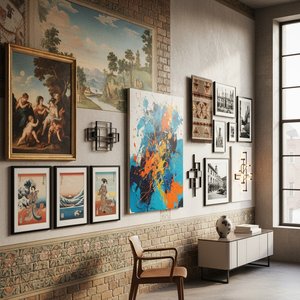
Transforming Spaces: A Comprehensive Exploration of Wall Decor Through Art History & Contemporary Practice
Explore the art of transforming spaces with our comprehensive guide to wall decor. From historical movements to contemporary trends, discover how to curate impactful interiors and commission bespoke artwork for a truly personalized aesthetic.


