 In echtem Maßstab anzeigen
 Versenden als Grußkarte
 Teilen
 Details anzeigen
 Leitfaden öffnen

 Herunterladen
 Ähnliche Objekte
 Röntgenaufnahme
 Diashow
 Besucherstatistiken
Pyrmalion und Galatea (Studie)
 Öl auf Leinwand
- Wandkunst
- Academic Historical Painting
 1890
1890 94.0 x 74.0 cm
 Metropolitan Museum of Art
 Mehr anzeigen
Giclée / Kunstdruck
Giclée- oder Leinwanddruck in Museumsqualität mit schneller Produktion und flexiblen Veredelungsoptionen. ( Handgemalte Reproduktion kaufen Zum digitalen Bild wechseln)




P118B €10

P118H €10

P118W €10

P438Z €10

P508JH €12

P508YH €12

P805H €10

P805Z €10

P919BZ €10

P919G €10

P919XJ €10

P959ZH €10

P968JZ €12

W106C €8

W218G €10

W218JH €8

W218Y €10

W307PJ €10

W316G €10

W316PJ €8

W316Y €10

W398PJ €8

W4111J €10

W500HY €15

W500JH €15

W692G €12

W849H €8

W940BG €15

W953PJ €8




Wählen Sie aus unseren vordefinierten Formaten, die den ursprünglichen Proportionen des Kunstwerks entsprechen.

Geben Sie die Breite und die Höhe an, die Sie benötigen, damit der Druck perfekt in Ihren Rahmen oder an Ihre Wand passt. Ein Druck kann nur beschnitten werden und niemals größer als das Originalbild gemacht werden; daher verliert ein Format mit einer anderen Proportion einen Teil des Bildes. Wir senden Ihnen ein digitales Mockup zur Freigabe, bevor wir den Druck ausführen. Das auf dieser Seite gezeigte Bild zeigt nicht den tatsächlichen Beschnitt – dies ist nur im Mockup ersichtlich.
Weltweiter Versand () innerhalb von 2 Wochen statt der üblichen 4/5 Wochen. (22 Oktober)

Kostenloser weltweiter Expressversand

Hochwertige Leinenleinwand

Vollständiger Versicherungsschutz beim Versand

Zollgebühren-Rückerstattungsgarantie

Garantie für exakte Farbtreue

100-tägiges Rückgaberecht (nur bei Mängeln)

100% Geld-zurück-Garantie

Angebot für Mengenrabatt
 Die Glasoption ist nur für Größen unter 110 cm verfügbar.

Pyrmalion und Galatea (Studie)
Giclée / Kunstdruck
Format der Reproduktion
-


Gesamtpreis
€ 70
Jean-Léon Gérôme’s “Pygmalion und Galatea” – A Study in Mythic Desire
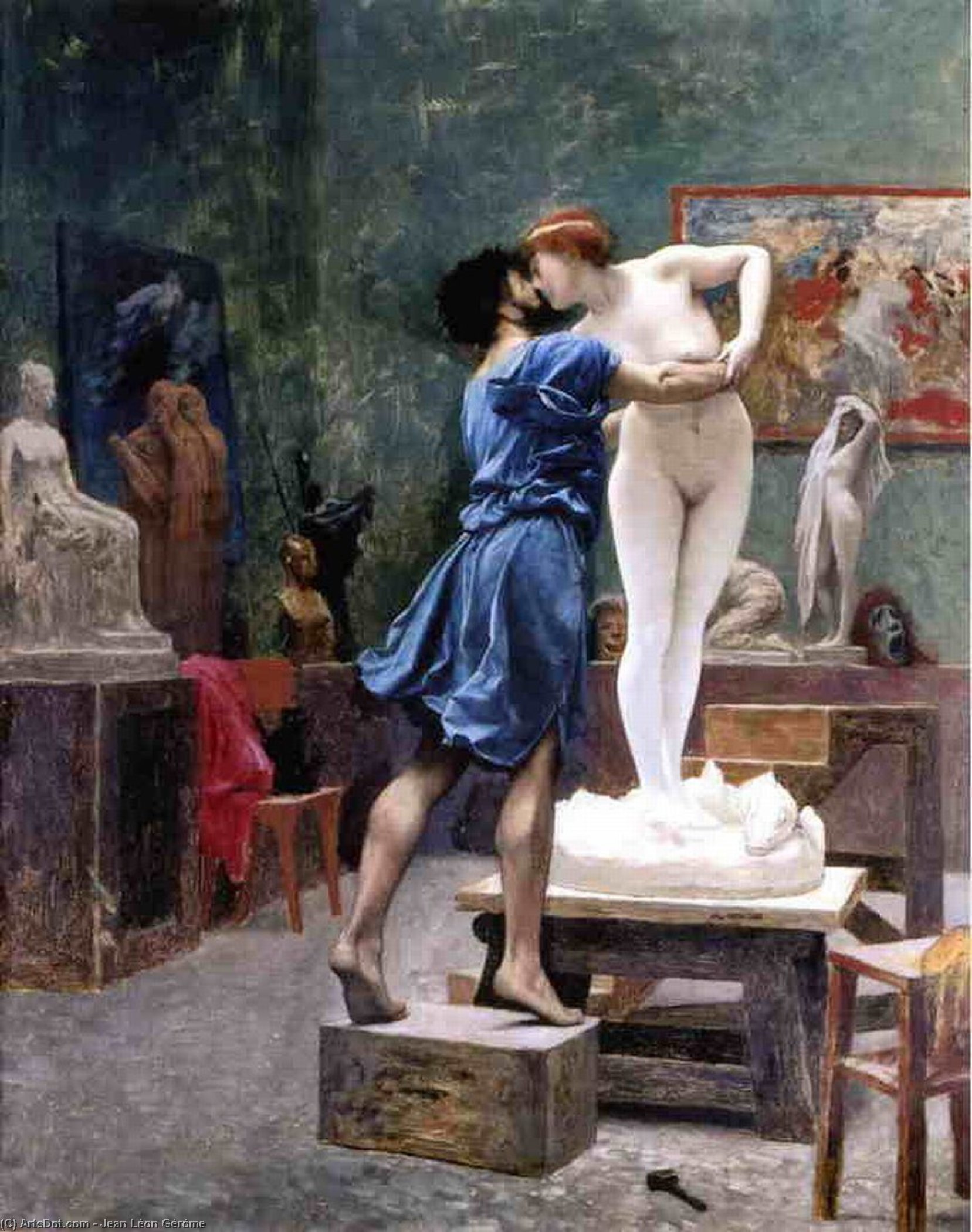
Jean-Léon Gérôme's "Pygmalion und Galatea" (Study), painted in 1890, is more than simply a depiction of a classical myth; it’s a meticulously crafted tableau of longing, creation, and the potent allure of transformation. This work, now available as a stunning hand-painted reproduction from OriginalUniqueArt.com, offers a glimpse into the mind of one of 19th-century France's most celebrated academic painters – a master of narrative detail who brought ancient stories to life with breathtaking realism and dramatic flair. The painting captures a pivotal moment: the first kiss between Pygmalion, the sculptor, and his newly animated statue, Galatea. It’s a scene brimming with unspoken desire, a testament to the transformative power of art and the human imagination.
Gérôme's style is immediately recognizable – a harmonious blend of classical training and a distinctly personal vision. He eschewed mere imitation, instead employing a rigorous technique honed at the École des Beaux-Arts in Paris, yet injecting his work with an undeniable theatricality. The composition is carefully balanced; the figures are rendered with exquisite anatomical detail, reflecting Gérôme’s dedication to realism. Yet, he doesn't shy away from dramatic lighting and evocative gestures, creating a palpable sense of intimacy within the studio setting. Notice how the light falls across Galatea’s form, highlighting her beauty and emphasizing the vulnerability of this nascent life.
The Setting: A Studio of Dreams
The backdrop to this mythological romance is a carefully constructed studio – a space that feels both familiar and slightly surreal. The two chairs, the dining table laden with objects, and even the vase on the left side contribute to the scene’s atmosphere. These aren't merely decorative elements; they ground the fantastical narrative in a tangible reality, suggesting the process of creation itself. The inclusion of everyday objects subtly underscores the idea that beauty can emerge from the most ordinary circumstances – a concept central to Gérôme’s artistic philosophy.
Gérôme was particularly adept at capturing the nuances of human emotion and the drama inherent in historical and mythological subjects. He frequently employed a technique known as *contre-jour*, using strong light sources to create dramatic shadows and highlight key figures, drawing inspiration from Caravaggio's masterful use of chiaroscuro. This is evident here in the way the light illuminates Galatea’s face, intensifying her expression of surprise and nascent joy.
Symbolism and Mythic Resonance
The story of Pygmalion and Galatea, originating in Ovid's *Metamorphoses*, explores themes of creation, love, and the blurring lines between reality and art. Pygmalion’s act of sculpting Galatea represents the artist’s ability to breathe life into his own imagination – a powerful metaphor for human creativity. The kiss itself symbolizes the union of creator and creation, a moment of profound connection and transformation. Aphrodite, the goddess of love, is subtly alluded to through Galatea's beauty and the overall atmosphere of adoration.
Furthermore, the study format—a preparatory sketch rather than a finished painting—offers a unique insight into Gérôme’s artistic process. It reveals his initial thoughts and compositional choices, allowing us to appreciate the layers of planning that went into this meticulously rendered scene. The subtle variations in tone and detail suggest a constant refinement of the image, demonstrating Gérôme's commitment to achieving absolute perfection.
A Timeless Masterpiece – Available as a Hand-Painted Reproduction
“Pygmalion und Galatea” remains a captivating work of art, offering a window into the world of 19th-century academic painting and the enduring power of classical mythology. OriginalUniqueArt.com’s hand-painted reproductions faithfully recreate Gérôme's masterful technique and evocative atmosphere, ensuring that this timeless masterpiece can be enjoyed in your home or office. Whether you are an art enthusiast, a collector seeking to enrich your collection, or simply someone looking for a stunning piece of decorative art, this reproduction provides an exceptional opportunity to own a fragment of artistic history. Explore the full detail and exquisite craftsmanship on our website today – [Link to OriginalUniqueArt Product Page].
Fragen & Antworten
Wer verkauft handgemalte Kopien von "Pyrmalion und Galatea (Studie)" von Jean-Léon Gérôme?
Eine handgemalte Reproduktion von "Pyrmalion und Galatea (Studie)" von Jean-Léon Gérôme können Sie direkt auf der entsprechenden Handgemalte Reproduktion-Seite bestellen: eine handgemalte Ölreproduktion auf Leinenleinwand, auf Bestellung angefertigt.
Gibt es Werke, die "Pyrmalion und Galatea (Studie)" ähneln?
Werke, die "Pyrmalion und Galatea (Studie)" ähneln, sind auf der Ähnliche Werke-Seite des Kunstwerks aufgelistet.
Wie alt war Jean-Léon Gérôme, als „Pyrmalion und Galatea (Studie)“ im Jahr 1890 geschaffen wurde?
Jean-Léon Gérôme schuf „Pyrmalion und Galatea (Studie)“ im Alter von 66. Der Künstler wurde 1824 geboren, und das Werk datiert auf 1890.
Biografie des Künstlers
Frühe Jahre und Ausbildung
Jean-Léon Gérôme, ein renommierter französischer Maler und Bildhauer, wurde am 11. Mai 1824 in Vesoul, Haute-Saône geboren. Seine frühe künstlerische Ausbildung erhielt er von dem lokalen Künstler Claude-Basile Cariage. Im Jahr 1840 zog er nach Paris, um unter Paul Delaroche zu studieren und besuchte später die École des Beaux-Arts.Aufstieg zum Ruhm
Gérômes Gemälde Die Stierkampf (1846) brachte ihm 1847 eine dritte Auszeichnung beim Pariser Salon ein. Dieses Werk wurde als Inbegriff der Neo-Grec-Bewegung angesehen und katapultierte seine Karriere. Er wurde zu einem der einflussreichsten Lehrer seiner Zeit, wobei Schüler wie Thomas Eakins, John Singer Sargent und Mary Cassatt zu seinen Schützlingen gehörten.Wichtige Aufträge
Gérôme erhielt den Auftrag, ein großes Wandgemälde mit dem Titel Das Zeitalter des Augustus, die Geburt Christi zu malen. Dieses Werk vereinte die Darstellung der Geburt Christi mit der Huldigung des Augustus durch unterworfene Nationen und sollte Napoleon III. schmeicheln, der es in Auftrag gegeben hatte.Künstlerischer Stil und Vermächtnis
Gérômes Gemälde zeichneten sich durch seine akribische Detailgenauigkeit, lebendigen Farben und dramatische Beleuchtung aus. Er verwendete oft historische oder mythologische Themen, um Themen wie Macht, Gewalt und Sexualität zu erkunden. Seine orientalistischen Gemälde, wie Haremfrauen füttern Tauben im Innenhof, wurden für ihre exotischen Schauplätze und die erotisierten Darstellungen von Frauen aus dem Nahen Osten hoch geschätzt.- Betrachten Sie Gérômes Kunstwerke auf OriginalUniqueArt: Schlangenbeschwörer
- Erkunden Sie das Musée d'Art et d'Histoire de Cholet, das Gérômes Werke zeigt: Entdeckung des Musée d'Art et d'Histoire de Cholet (Frankreich)
- Erfahren Sie mehr über John Singer Sargent, einen von Gérômes Schülern: John Singer Sargent
Schlussfolgerung
Jean-Léon Gérômes künstlerisches Vermächtnis ist ein Beweis für seinen innovativen Stil und seine technische Fertigkeit. Als einflussreicher Lehrer und Künstler hat er bleibende Spuren in der Kunstwelt hinterlassen. Seine Werke inspirieren und faszinieren das Publikum bis heute. Wichtige Daten:- Mai 1824: Geburt in Vesoul, Haute-Saône
- 1840: Umzug nach Paris zur Studienzeit bei Paul Delaroche
- 1846: Malte Die Stierkampf
- 10. Januar 1904: Tod in Paris

Jean-Léon Gérôme
1824 - 1904 , Frankreich
Eckdaten zum Künstler
- Beeinflusste Künstler:
- Thomas Eakins
- John Singer Sargent
- Mary Cassatt
- Bemerkenswerte Werke:
- Der Hahnkampf
- Öffentliches Gebet in Kairo
- Harem Frauen füttern Tauben
- Geburtsdatum: 11. Mai 1824
- Geburtsort: Vesoul, Frankreich
- Künstlerische Richtung: Neoklassizismus, Orientalismus
- Nationalität: Französisch
- Todatum: 10. Januar 1904
- Vollständiger Name: Jean-Léon Gérôme
Verwandte Artikel

Jean-Léon Gérôme: Akademische Strenge und orientalistische Visionen – Ein Meister der französischen Malerei
Entdecken Sie das faszinierende Werk von Jean-Léon Gérôme! Wir analysieren seine akademische Strenge, orientalistischen Visionen und ikonischen Gemälde. Ein tiefer Einblick in den Meister der französischen Malerei des 19. Jahrhunderts.

The Enduring Form: Sculpture Across History, Technique & Emotional Resonance
Explore the rich history of sculpture with OriginalUniqueArt. Discover key techniques, influential artists & investment potential for discerning collectors. Expert insights into valuing and collecting timeless masterpieces.

The Enduring Form: Exploring Themes & Techniques in Sculpture Across Historical Periods
Explore the rich history of sculpture from ancient masterpieces to contemporary innovations. Discover key techniques, influential artists & investment potential for discerning art collectors.

Die 10 legendärsten Bronzestatuen: Meisterwerke, die Kunstgeschichte schrieben | OriginalUniqueArt
Entdecken Sie die 10 legendärsten Bronzestatuen der Kunstgeschichte! Von Rodin bis Michelangelo – erfahren Sie die Geschichten hinter ikonischen Skulpturen und finden Sie hochwertige Reproduktionen für Ihr Zuhause. Jetzt bei OriginalUniqueArt entdecken!

Bronze-Meisterwerke: Die 10 Skulpturen, die Kunstgeschichte schrieben | OriginalUniqueArt
Entdecken Sie die 10 legendärsten Bronze Skulpturen der Kunstgeschichte! Von Michelangelo bis Rodin – erfahren Sie die Geschichten hinter den Meisterwerken und lassen Sie sich von Wanddeko-Ideen inspirieren. Hochwertige Kunstdrucke auf OriginalUniqueArt.com.