In echtem Maßstab anzeigen
 Versenden als Grußkarte
 Teilen
 Details anzeigen
 Leitfaden öffnen

 Herunterladen
 Ähnliche Objekte
 Röntgenaufnahme
 Diashow
 Besucherstatistiken
Laundress
 Oil On Canvas
- WallArt
- Contemporary Realism
 1861
1861- 19th Century
 44.0 x 24.0 cm
 Mehr anzeigen
Handgefertigte Ölreproduktion
Handgemaltes Ölgemälde auf Leinwand in Ihrer Wunschgröße und mit Rahmen, auf Bestellung von unseren Künstlern angefertigt. ( Zum Druck wechseln Zum digitalen Bild wechseln)




P118B $10

P118H $10

P118W $10

P438Z $10

P508JH $12

P508YH $12

P805H $10

P805Z $10

P919BZ $10

P919G $10

P919XJ $10

P959ZH $10

P968JZ $12

W106C $8

W218G $10

W218JH $8

W218Y $10

W307PJ $10

W316G $10

W316PJ $8

W316Y $10

W398PJ $8

W4111J $10

W500HY $15

W500JH $15

W692G $12

W849H $8

W940BG $15

W953PJ $8




Wählen Sie aus unseren vordefinierten Formaten, die den ursprünglichen Proportionen des Kunstwerks entsprechen.

Sie können Ihre eigenen Maße eingeben, um einen bestimmten Rahmen oder Platz auszufüllen. Wenn die gewählte Größe nicht den Proportionen des Originalbildes entspricht, werden wir das Kunstwerk entweder beschneiden oder das Gemälde durch zusätzliche, handgemalte Elemente erweitern. Ein digitales Mockup wird Ihnen zur Genehmigung zugesandt, bevor die Produktion beginnt.
Bitte beachten Sie, dass die Bildschirmvorschau nicht die tatsächliche Beschneidung oder Erweiterung widerspiegelt. Nur das Mockup zeigt die endgültige Komposition exakt an.
Obwohl Sondermaße verfügbar sind, empfehlen wir, eine Größe aus der vordefinierten Liste zu wählen, um die ursprünglichen Proportionen beizubehalten.
Nach der Bestellung wird das OriginalUniqueArt.com-Team dem Kunden Anweisungen per E-Mail zusenden und eine Mockup-Vorschau bereitstellen.
Weltweiter Versand () in nur 3 bis 4 Wochen statt der üblichen 5 Wochen. (26 September). Keine Kompromisse bei der Qualität.

Kostenloser weltweiter Expressversand

Hochwertige Leinenleinwand

Vollständiger Versicherungsschutz beim Versand

Zollgebühren-Rückerstattungsgarantie

Garantie für exakte Farbtreue

100-tägiges Rückgaberecht (nur bei Mängeln)

100% Geld-zurück-Garantie

Angebot für Mengenrabatt
 Die Glasoption ist nur für Größen unter 110 cm verfügbar.

Laundress
Reproduktionsmedium
Format der Reproduktion
-


Gesamtpreis
$ 300
A Portrait of Rural Dignity: Exploring Jean-François Millet’s “Laundress”
The painting "Laundress," executed in 1861 by Jean-François Millet, transcends mere depiction; it embodies the spirit of Realism and offers a poignant glimpse into the daily life of rural France during its transformative era. More than just capturing an image, Millet’s work speaks volumes about social consciousness and artistic innovation—themes that continue to captivate audiences today.Subject Matter and Composition
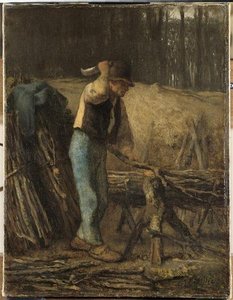
At first glance, “Laundress” presents a deceptively simple scene: a woman diligently tending to her chores in a humble kitchen. However, Millet's masterful composition elevates this commonplace activity into an emblem of human dignity. The central figure dominates the canvas, positioned against a backdrop of rustic furnishings—a large pot brimming with food and a chair suggesting a domestic space. These elements aren’t merely decorative; they serve to contextualize the woman’s labor within the broader framework of rural existence. Careful attention is paid to detail – the folds of her apron, the posture of her body – conveying both physical exertion and quiet perseverance.Style and Technique: The Essence of Realism
Millet's artistic approach firmly establishes him as a pioneer of Realism, rejecting idealized representations favored by Romantic painters. He eschewed theatrical grandeur for an unflinching portrayal of everyday life, prioritizing accuracy over embellishment. Millet employed a technique characterized by meticulous observation and tonal modulation—a hallmark of his style. The artist utilized oil paints on canvas with remarkable precision, layering colors to achieve subtle gradations that capture the nuances of light and shadow. This painstaking process resulted in textures that convincingly mimic the rough surfaces of rural materials – earthenware pots, wooden chairs – grounding the scene in tangible reality.Historical Context: A Nation Embracing Change
“Laundress” emerged during a period of significant social upheaval in France. The Industrial Revolution was reshaping urban landscapes and disrupting traditional agricultural practices, creating anxieties about societal stability. Millet’s artwork responded to this climate by celebrating the enduring values of rural labor and community. It served as a counterpoint to prevailing artistic trends that prioritized aristocratic subjects and idealized beauty. By depicting a woman engaged in honest toil—a task often overlooked by artists of the time—Millet championed the dignity of ordinary people and subtly critiqued the disparities between urban prosperity and rural hardship.Symbolism: Beyond the Surface Appearance
The seemingly unassuming details within “Laundress” carry symbolic weight. The pot of food represents sustenance, nourishment, and the importance of family life – values deeply rooted in peasant culture. Furthermore, the woman’s unwavering gaze conveys resilience and determination—qualities admired across cultures throughout history. Millet's deliberate choice of subject matter wasn't simply about documenting a scene; it was about conveying an emotional truth—a profound respect for the quiet heroism inherent in rural labor.Emotional Impact: A Timeless Reflection
Ultimately, “Laundress” resonates with viewers because it captures a fundamental human experience: the dedication and perseverance required to sustain oneself amidst challenging circumstances. Millet’s artwork evokes feelings of empathy and admiration for those who toil tirelessly to provide for their families—a sentiment that transcends time and culture. It serves as a powerful reminder of the beauty found in simplicity and the importance of honoring the traditions that shape our identities. Reproductions of this masterpiece offer an opportunity to bring this evocative image into any interior space, fostering contemplation on themes of labor, dignity, and connection to the natural world.Biografie des Künstlers
frühes Leben und Ausbildung
Jean-François Millet, geboren am 4. Oktober 1814 in der Normandie, Frankreich, etablierte sich als eine Schlüsselgestalt der Barbizon-Schule und war ein Verfechter des Realismus. Er wuchs in einer Bauerngemeinschaft auf, und sein frühes Leben war von ländlichen Erfahrungen geprägt, die seine künstlerischen Themen maßgeblich beeinflussten.Künstlerische Reise
Millets formale Kunstausbildung begann 1833 unter der Anleitung des Porträtmalers Bon du Mouchel in Cherbourg. Später studierte er bei Théophile Langlois de Chèvreville, einem Schüler von Baron Gros. Mit einer Stipendiumunterstützung zog er 1837 nach Paris, um an der École des Beaux-Arts zu studieren und unter Paul Delaroche zu lernen. Seine Reise war jedoch nicht ohne Rückschläge; 1839 verlor er sein Stipendium und wurde von der Salon-Ausstellung abgelehnt.Bekannte Werke und Realismusbewegung
Millets künstlerische Reise spiegelt seine tiefe Verbindung zu seinen ländlichen Wurzeln und seine Hingabe wider, das Leben der Bauern mit Würde und Realismus darzustellen. Zu seinen bekanntesten Werken gehören:- Die Ernte (1855), eine eindringliche Darstellung von Bauernernnten, die Millets Meisterschaft des Realismus demonstriert.
- Das Angelus (1850-1861), eine Reihe von Gemälden, die die täglichen Kämpfe des ländlichen Lebens hervorheben.
- Der Sämaschine (1850), eine ikonische Darstellung der Schwierigkeiten, mit denen Bauern konfrontiert sind, und die heute im Musée d'Orsay in Paris ausgestellt ist.
Vermächtnis und Einfluss
Millets Vermächtnis als Begründer der Barbizon-Schule macht ihn zu einer zentralen Figur bei der Übergangsbewegung zum Realismus in der Kunst. Sein Einfluss ist in den Werken nachfolgender Künstler wie Correa Benito Rebolledo erkennbar, die die Grenzen des Realismus weiter verschoben haben. Erfahren Sie mehr über Millets Werke und die Realismusbewegung auf OriginalUniqueArt: Jean François Millet der Ältere | OriginalUniqueArt Die Nouvelle Réalisme Kunstbewegung | OriginalUniqueArt
Jean-François Millet
1814 - 1875 , Frankreich
Eckdaten zum Künstler
- Artistic Movement Or Style: Realismus, Barbizon-Schule
- Artists Or Movements Influenced By This Artist: ['Correa Benito Rebolledo']
- Artists Who Influenced This Artist:
- Bon du Mouchel
- Théophile Langlois
- Paul Delaroche
- Date Of Birth: 4. Oktober 1814
- Date Of Death: 1875
- Full Name: Jean-François Millet
- Nationality: Französisch
- Notable Artworks:
- Die Erntehelfer
- Das Angelus
- Der Sämann
- Place Of Birth (City And Country): Gruchy, Frankreich
Verwandte Artikel
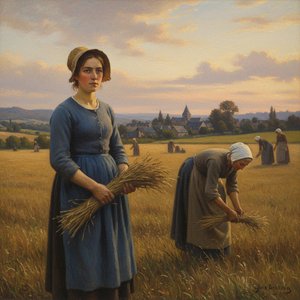
Jules Breton: Capturing the Poetic Soul of French Rural Life
Explore the captivating world of Jules Breton, master of French Realism. Discover his iconic paintings of rural life, learn about his artistic journey, and find high-quality reproductions to elevate your art collection at OriginalUniqueArt.

Paul Cézanne: Die 25 Meisterwerke des Impressionismus | OriginalUniqueArt
Entdecken Sie die 25 Meisterwerke von Paul Cézanne! Tauchen Sie ein in die Welt des Impressionismus und Postimpressionismus. Erfahren Sie mehr über seine Stillleben, Landschaften & berühmten Gemälde – jetzt hochwertige Kunstdrucke auf OriginalUniqueArt.com.

Impressionismus Meisterwerke: Die Top 10 Kunstwerke für Ihr Zuhause | OriginalUniqueArt
Entdecken Sie die Top 10 Meisterwerke des Impressionismus! Von Monet bis Renoir – erfahren Sie die Geschichten hinter berühmten Gemälden, Techniken & Farben. Hochwertige Kunstdrucke auf OriginalUniqueArt.com.

Léon Augustin L'Hermitte: Capturing the Soul of French Rural Life
Discover the captivating realist paintings of Léon Augustin L'Hermitte, masterfully depicting French rural life. Explore his technique, influences & legacy – a cornerstone of 19th-century art.

Jean-François Millet: Realismus, ländliche Poesie und die Würde der Arbeit
Entdecken Sie das Werk von Jean-François Millet! Erfahren Sie mehr über den Realismus, seine bahnbrechende Darstellung des bäuerlichen Lebens und seinen Einfluss auf die Kunstgeschichte. Jetzt bei OriginalUniqueArt!