In echtem Maßstab anzeigen
 Versenden als Grußkarte
 Teilen
 Details anzeigen
 Leitfaden öffnen

 Herunterladen
 Ähnliche Objekte
 Röntgenaufnahme
 Diashow
 Besucherstatistiken
Selbstporträt
 Acryl auf Leinwand
- Wandkunst
- Romantic Landscape
 1825
1825 33.0 x 25.0 cm
 Louvre
 Mehr anzeigen
Handgefertigte Ölreproduktion
Handgemaltes Ölgemälde auf Leinwand in Ihrer Wunschgröße und mit Rahmen, auf Bestellung von unseren Künstlern angefertigt. ( Zum Druck wechseln Zum digitalen Bild wechseln)




P118B €10

P118H €10

P118W €10

P438Z €10

P508JH €12

P508YH €12

P805H €10

P805Z €10

P919BZ €10

P919G €10

P919XJ €10

P959ZH €10

P968JZ €12

W106C €8

W218G €10

W218JH €8

W218Y €10

W307PJ €10

W316G €10

W316PJ €8

W316Y €10

W398PJ €8

W4111J €10

W500HY €15

W500JH €15

W692G €12

W849H €8

W940BG €15

W953PJ €8




Wählen Sie aus unseren vordefinierten Formaten, die den ursprünglichen Proportionen des Kunstwerks entsprechen.

Geben Sie die Breite und die Höhe an, die Sie für Ihren Rahmen oder Ihre Wand benötigen. Da dieses Werk handgemalt ist, kann der Künstler bei einer anderen Form etwas mehr um das Bild herum malen oder etwas abschneiden – Sie entscheiden. Wir senden Ihnen ein digitales Mockup zur Freigabe, bevor mit dem Malen begonnen wird. Das auf dieser Seite gezeigte Bild stellt nicht das tatsächliche Ergebnis dar – dies tut nur das Mockup.
Nach der Bestellung wird das OriginalUniqueArt.com-Team dem Kunden Anweisungen per E-Mail zusenden und eine Mockup-Vorschau bereitstellen.
Weltweiter Versand () in nur 3 bis 4 Wochen statt der üblichen 5 Wochen. (23 Oktober). Keine Kompromisse bei der Qualität.

Kostenloser weltweiter Expressversand

Hochwertige Leinenleinwand

Vollständiger Versicherungsschutz beim Versand

Zollgebühren-Rückerstattungsgarantie

Garantie für exakte Farbtreue

100-tägiges Rückgaberecht (nur bei Mängeln)

100% Geld-zurück-Garantie

Angebot für Mengenrabatt
 Die Glasoption ist nur für Größen unter 110 cm verfügbar.

Selbstporträt
Reproduktionsmedium
Format der Reproduktion
-


Gesamtpreis
€ 264
Jean-Baptiste-Camille Corot’s Introspective Portrait – A Window into Light and Feeling
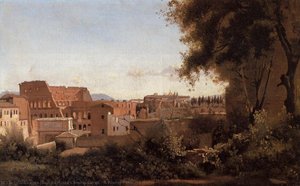
The year is 1825, and within the quiet intimacy of Jean-Baptiste-Camille Corot's studio emerges this remarkable self-portrait. More than a simple likeness, it’s a profound meditation on the artist himself, his relationship with nature, and the delicate dance between observation and emotion. The painting immediately draws us in with its understated elegance; a man seated comfortably in a chair, holding a guitar – an instrument intimately linked to Corot's own life and artistic practice, often used to accompany his landscape studies. His gaze is direct, almost challenging, yet imbued with a gentle seriousness that invites contemplation. The subtle shift of light across his face, meticulously rendered by Corot’s masterful hand, speaks volumes about the artist’s dedication to capturing the fleeting effects of sunlight – a hallmark of his entire oeuvre.
A Master of Atmospheric Impressionism
Corot's style during this period exemplifies what we now recognize as atmospheric impressionism. He wasn’t interested in sharp, photographic detail; instead, he sought to convey the *feeling* of a scene – the way light interacts with surfaces, the subtle shifts in color and tone that define a particular moment. Notice how Corot employs loose, broken brushstrokes, layering paint thinly to create an almost hazy effect. This technique is particularly evident in the background, where the suggestion of a room—a chair and bench—melds seamlessly into the broader landscape. The palette is muted – predominantly browns, greens, and greys – reflecting Corot’s preference for naturalistic colors and his ability to evoke mood through subtle chromatic variations. He deliberately avoids strong contrasts, prioritizing the delicate gradations that define the atmosphere.
Symbolism of the Guitar and the Landscape
The inclusion of the guitar is not merely a biographical detail; it’s deeply symbolic. Corot was a passionate musician, and the instrument represents his connection to nature – he often played while sketching outdoors, absorbing the sounds and rhythms of the countryside. The act of playing suggests a creative process, mirroring Corot's own artistic endeavors. Furthermore, the landscape itself becomes a participant in this scene. It’s not simply a backdrop; it’s an active presence, influencing the mood and shaping the narrative. The slightly blurred edges of the room and the distant trees create a sense of depth and invite the viewer to step into Corot's world, to share his experience of being immersed in nature.
Historical Context: A Painter of Light
Corot’s work emerged during a pivotal moment in art history – the transition from Neoclassicism to Romanticism and ultimately, Impressionism. He was deeply influenced by the Barbizon School, a group of landscape painters who championed painting *en plein air* (outdoors) and focused on depicting the natural world with honesty and immediacy. His early years spent in rural France instilled within him an appreciation for the beauty of the countryside and a profound understanding of light and atmosphere. This self-portrait offers a glimpse into his artistic philosophy, revealing a man dedicated to capturing the ephemeral qualities of nature – a pursuit that would define his legacy as one of the most influential landscape painters of the 19th century.
OriginalUniqueArt is proud to offer a meticulously crafted hand-painted reproduction of this captivating portrait. Each detail, from the subtle nuances of Corot’s brushstrokes to the evocative play of light and shadow, is faithfully reproduced using traditional techniques and archival quality materials. This artwork is more than just a print; it's an authentic representation of a masterpiece, perfect for adorning your home or office and bringing a touch of timeless beauty into your space.
Fragen & Antworten
Wo kann man "Selbstporträt" von Jean-Baptiste-Camille Corot heute besichtigen?
Das Original von "Selbstporträt" von Jean-Baptiste-Camille Corot befindet sich im Louvre, Paris, Frankreich. Eine Reproduktion ermöglicht es, das Werk zu Hause auszustellen.
Wo finde ich einen Leitfaden zu „Selbstporträt“?
Die Leitfaden-Seite von "Selbstporträt" von Jean-Baptiste-Camille Corot bietet ein druckbares, zweiseitiges Infoblatt: das Kunstwerk mit seiner Identifikationstabelle, eine Zeitstrahl-Einordnung in die Lebensspanne des Künstlers, weitere Werke des Künstlers, die gemessene Farbpalette sowie kopierfertige Zitate in vier verschiedenen Stilen.
Welche Technik und welche Maße hat "Selbstporträt" von Jean-Baptiste-Camille Corot?
Das Originalwerk "Selbstporträt" von Jean-Baptiste-Camille Corot ist ein Acryl auf Leinwand mit den Maßen 33 x 25 cm. Technik und Größe beziehen sich auf das Originalobjekt.
Biografie des Künstlers
Frühe Jahre und Ausbildung
Jean-Baptiste-Camille Corot, ein renommierter französischer Landschafts- und Porträtmaler, wurde am 16. Juli 1796 in Paris geboren. Seine Familie, die zum Bürgertum gehörte, bot ihm eine Umgebung, die seine künstlerischen Neigungen förderte. Anfänglich lagen Corots Interessen woanders, doch er entdeckte um 1821 seine Leidenschaft für das Malen. Dies markierte den Beginn seiner produktiven Karriere, die später die Entwicklung des Impressionismus beeinflussen sollte.Künstlerische Laufbahn und bedeutende Werke
Corots künstlerischer Weg ist geprägt von einer Mischung aus neoklassischer Tradition und plein-air Innovationen. Er kombinierte sorgfältige Kompositionen mit der direkten Beobachtung der Natur im Freien, was zu einer einzigartigen Atmosphäre in seinen Werken führte. Zu seinen bemerkenswertesten Arbeiten zählen:- Die Ruhe (La Repose) (Öl auf Leinwand, ca. 1860er Jahre), ein fesselndes Werk, das Corots Meisterschaft in der Darstellung von Gelassenheit zeigt.
- Unterbrochenes Lesen (Lecture Interrompue) (Realismus, Öl, ca. 1850er Jahre), ein ergreifendes Beispiel für Corots Fähigkeit, den Alltag mit Tiefe und Emotion darzustellen.
- Agostina (Realismus, Öl, ca. 1860er Jahre), ein beeindruckendes Porträt, das Corots Geschicklichkeit in der Darstellung des Wesens seiner Motive veranschaulicht.
Einflüsse und Entwicklung
Corots künstlerische Entwicklung wurde von verschiedenen Einflüssen geprägt. Er studierte zunächst bei den neoklassizistischen Malern Jacques-Louis David und Jean-Antoine Houdon, was seine frühen Werke beeinflusste. Später fand er Inspiration in der Landschaftsmalerei des 17. Jahrhunderts, insbesondere bei Meistern wie Claude Lorrain und Nicolas Poussin. Corot entwickelte jedoch seinen eigenen Stil, indem er die klassische Komposition mit den direkten Beobachtungen der Natur im Freien verband. Er gilt als Brücke zwischen dem Klassizismus und dem Impressionismus. Seine Plein-Air-Malerei war revolutionär für seine Zeit und ebnete den Weg für zukünftige Generationen von Künstlern, darunter die Impressionisten.Vermächtnis und Bedeutung
Corots umfangreicher Output hatte einen nachhaltigen Einfluss auf die Entwicklung der Landschaftsmalerei. Sein innovativer Ansatz, traditionelle Techniken mit plein-air Innovationen zu verbinden, ebnete den Weg für zukünftige Generationen von Künstlern. Obwohl er zu Lebzeiten nicht immer Anerkennung fand, wurde Corot nach seinem Tod als einer der wichtigsten französischen Maler des 19. Jahrhunderts anerkannt. Seine Werke werden heute in bedeutenden Museen auf der ganzen Welt ausgestellt und seine Bedeutung für die Kunstgeschichte ist unbestreitbar. Entdecken Sie mehr über Jean-Baptiste-Camille Corots Gemälde auf OriginalUniqueArt.com: https://OriginalUniqueArt.com/@/jean-baptiste-camille-corot Erfahren Sie mehr über das Musée Courbet auf Wikipedia: https://en.wikipedia.org/wiki/mus%c3%a9e_courbet_(ornans,_france)
Jean-Baptiste-Camille Corot
1796 - 1875 , Frankreich
Eckdaten zum Künstler
- Beeinflusste Künstler: ['Gustave Courbet']
- Bemerkenswerte Werke:
- Die Ruhe
- Unterbrochenes Lesen
- Agostina
- Geburtsdatum: 16. Juli 1796
- Geburtsort: Paris, Frankreich
- Künstlerische Richtung: Neoklassizismus, Pleinair
- Nationalität: Französisch
- Sterbedatum: 1875
- Vollständiger Name: Jean-Baptiste-Camille Corot
- Von Künstlern Beeinflusst: ['Keine Angaben']
Verwandte Artikel
Henri-Joseph Harpignies: Capturing the Poetic Essence of the French Landscape
Explore the serene landscapes of Henri-Joseph Harpignies, a master of the Barbizon School. Discover his atmospheric paintings, recurring themes & enduring legacy in 19th-century French art. Learn more at OriginalUniqueArt.
Master of Light: Exploring the Timeless Landscapes and Atmospheric Brilliance of Jean-Baptiste-Camille Corot
Discover the ethereal beauty of Jean-Baptiste-Camille Corot. Explore how this master of light bridged Neoclassicism and Impressionism through his atmospheric landscapes, capturing the timeless essence of the French countryside with unparalleled poetic brilliance.

Romantische Landschaften: Die 10 Meisterwerke, die eine Epoche prägten | OriginalUniqueArt
Entdecken Sie die 10 Meisterwerke der Romantischen Landschaftsmalerei! Von Caspar David Friedrich bis Turner – erleben Sie die Kunst, Emotion & Natur. Hochwertige Reproduktionen auf OriginalUniqueArt.com

Evoking Nature's Sublime: A Comprehensive Exploration of 19th-Century Landscape Painting
Explore the captivating world of 19th-century landscape painting! Discover renowned artists like Friedrich & Monet, key movements, and find the perfect artwork to bring nature's serenity into your home. Expert insights at OriginalUniqueArt.
Jean-Baptiste-Camille Corot: Poetische Realität und der Übergang zum Impressionismus
Entdecken Sie das Werk von Camille Corot und die Schule von Barbizon! Erfahren Sie mehr über den Übergang zum Impressionismus, seine poetische Realität und seinen Einfluss auf die Kunstgeschichte. Expertenwissen & detaillierte Analysen.