- Startseite

- Ölgemälde-Reproduktion
- Jean-Antoine Watteau
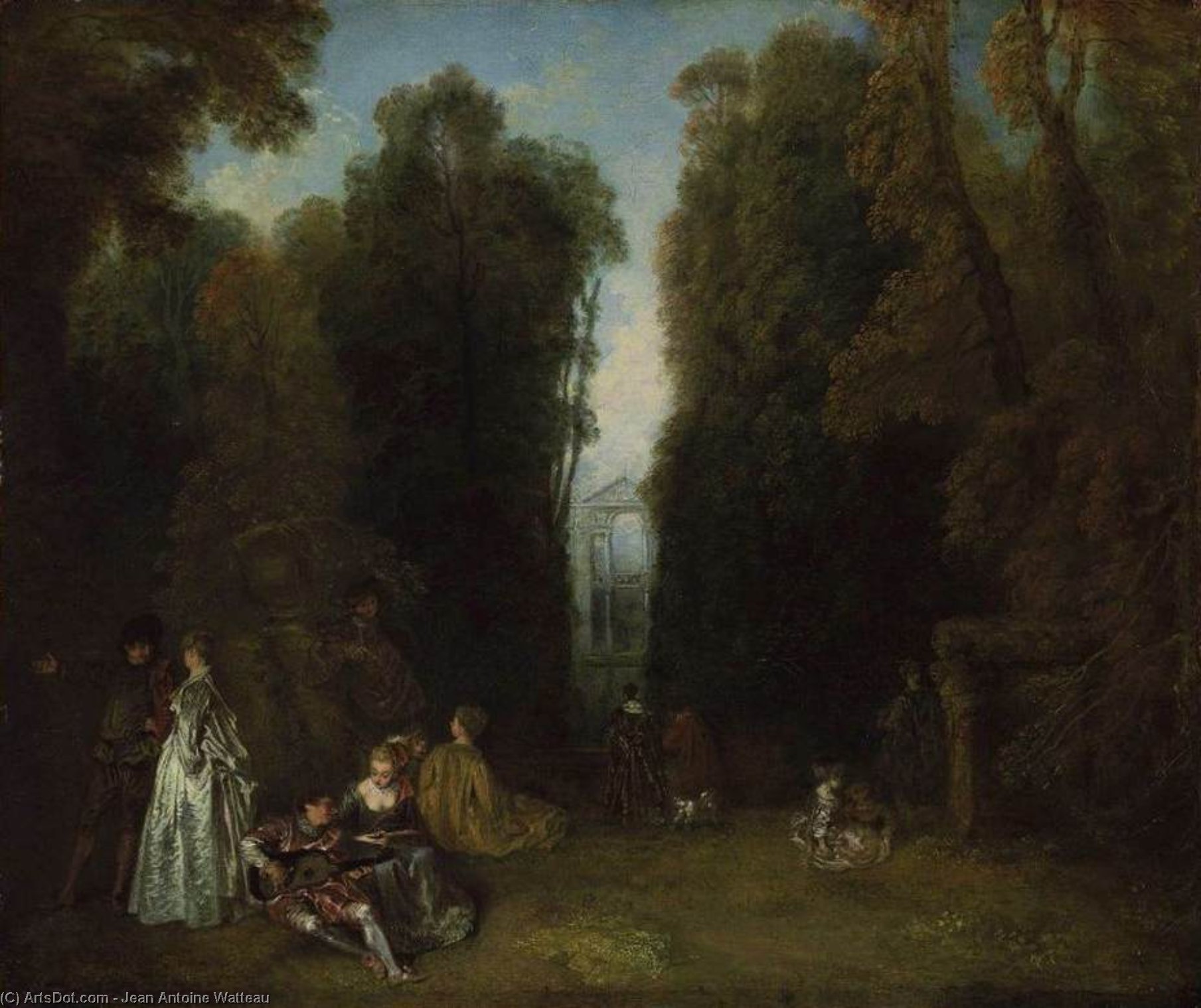
- La Perspective (Ansicht durch die Bäume im Park von Pierre Crozat)
 Druck bestellen Bild kaufen
 Versenden
 Teilen
 Details anzeigen
 Zu Favoriten hinzufügen

 Herunterladen
 Ähnliche Objekte
 Röntgenaufnahme
 Diashow anzeigen
La Perspective (Ansicht durch die Bäume im Park von Pierre Crozat)
 Ölfarbe
- Wandkunst
- Rococo Style
 1715
1715 47.0 x 55.0 cm
 Museum of Fine Arts
 Weiterlesen
Handgefertigte Öl-Reproduktion
Handgemaltes Ölgemälde auf Leinwand in Ihrer Wunschgröße und mit Rahmen, auf Bestellung von unseren Künstlern angefertigt.




P118B $10

P118H $10

P118W $10

P438Z $10

P508JH $12

P508YH $12

P805H $10

P805Z $10

P919BZ $10

P919G $10

P919XJ $10

P959ZH $10

P968JZ $12

W106C $8

W218G $10

W218JH $8

W218Y $10

W307PJ $10

W316G $10

W316PJ $8

W316Y $10

W398PJ $8

W4111J $10

W500HY $15

W500JH $15

W692G $12

W849H $8

W940BG $15

W953PJ $8




Wählen Sie aus unseren vordefinierten Größen, die den ursprünglichen Proportionen des Kunstwerks entsprechen.

Sie können Ihre eigenen Maße eingeben, um einen bestimmten Rahmen oder Platz auszufüllen. Wenn die gewählte Größe nicht den Proportionen des Originalbildes entspricht, werden wir das Kunstwerk entweder beschneiden oder das Gemälde durch zusätzliche, handgemalte Elemente erweitern. Ein digitales Mockup wird Ihnen zur Genehmigung zugesandt, bevor die Produktion beginnt.
Bitte beachten Sie, dass die Bildschirmvorschau nicht die tatsächliche Beschneidung oder Erweiterung widerspiegelt. Nur das Mockup zeigt die endgültige Komposition exakt an.
Obwohl Sondermaße verfügbar sind, empfehlen wir, eine Größe aus der vordefinierten Liste zu wählen, um die ursprünglichen Proportionen beizubehalten.
Nach der Bestellung wird das OriginalUniqueArt.com-Team dem Kunden Anweisungen per E-Mail zusenden und eine Mockup-Vorschau bereitstellen.
Weltweiter Versand () in nur 3 bis 4 Wochen statt der üblichen 5 Wochen. (16 Juli). Keine Kompromisse bei der Qualität.

Kostenloser weltweiter Expressversand

Hochwertige Leinenleinwand

Umfassender Versicherungsschutz beim Versand

Zollsteuer-Rückerstattungsgarantie

Garantie für echte Farbtreue

60-Tage-Rückgaberecht (nur bei Mängeln)

100% Geld-zurück-Garantie

Mengenrabatt verfügbar
 Die Glasoption ist nur in Größen unter 110 cm verfügbar.

La Perspective (Ansicht durch die Bäume im Park von Pierre Crozat)
Art der Reproduktion
Größe der Reproduktion
-


Endpreis aller Optionen
-
Beschreibung des Kunstwerks
Jean-Antoine Watteaus ‘La Perspective’: A Window into Rococo Idyllicism
Jean-Antoine Watteau’s “La Perspective (View through the Trees in the Park of Pierre Crozat)” – painted in 1715 and currently residing within the hallowed halls of the Museum of Fine Arts in Boston – is more than simply a landscape; it's an invitation. An invitation to step into a world crafted with exquisite delicacy, where fleeting moments of pleasure and social grace unfold beneath a dappled canopy of trees. This masterpiece, born from Watteau’s fascination with the burgeoning Rococo style, offers a profound glimpse into the aristocratic life of 18th-century France – a world of refined entertainment and carefully constructed illusions.
Watteau, a pivotal figure in the transition from the grandeur of the Baroque to the lighter, more intimate atmosphere of the Rococo, possessed an unparalleled ability to capture the ephemeral quality of experience. “La Perspective” exemplifies this perfectly. The painting isn’t concerned with precise topographical accuracy; instead, Watteau prioritizes creating a mood – one of gentle leisure and sophisticated companionship. He achieves this through a masterful deployment of *sfumato*, a technique borrowed from Leonardo da Vinci, which softens outlines and blends colors to create an atmospheric haze, lending the scene a dreamlike quality. The trees themselves aren’t rendered with sharp detail but rather as luminous forms, their branches interwoven to suggest depth and distance, drawing the viewer's eye into the painted space.
The Dance of Figures: Social Grace and Artistic Illusion
At the heart of “La Perspective” lies a group of elegantly dressed figures engaged in various activities – some strolling leisurely, others seated on the grass, while a few engage in what appears to be a lively conversation. These aren’t portraits in the traditional sense; Watteau avoids detailed individualization, instead presenting them as types, archetypes of aristocratic leisure. The women, adorned in pastel silks and delicate lace, exude an air of effortless grace, their gestures suggesting a subtle flirtation or shared amusement. The men, similarly dressed, project an aura of cultivated charm and refined taste. The composition is deliberately asymmetrical, creating a sense of movement and dynamism within the scene – a carefully orchestrated ballet of figures.
Notably, Watteau’s use of *chiaroscuro*—the dramatic interplay of light and shadow—further enhances the painting's emotional impact. The dappled sunlight filtering through the trees casts an ethereal glow upon the figures, highlighting their faces and clothing while simultaneously creating pockets of shadow that add depth and mystery to the scene. This skillful manipulation of light not only contributes to the painting’s visual beauty but also subtly underscores the fleeting nature of these moments of pleasure – a reminder that even in this idyllic setting, time continues its relentless march.
Symbolism and the ‘Fête Galante’ Tradition
“La Perspective” is a quintessential example of Watteau's invention of the *fête galante*, a genre he essentially pioneered. These paintings depicted idealized outdoor gatherings – picnics, dances, musical performances – often set in fantastical landscapes or borrowed from classical mythology. The ‘fête’ wasn’t meant to be a realistic portrayal of aristocratic life but rather an exploration of aesthetic pleasure and social grace. The inclusion of the Château de Montmorency in the distance is not merely decorative; it subtly anchors the scene within a specific location, grounding the fantastical elements in a recognizable reality.
The presence of two dogs – one near the center, another on the right – adds to the sense of life and movement within the painting. They are not simply pets but rather symbols of loyalty and companionship, reflecting the values prized by the aristocratic elite. A single bird soaring above completes the composition, adding a touch of freedom and joy to this carefully constructed tableau. The entire scene feels like a fleeting memory, captured in paint – an exquisite moment suspended in time.
Relevance Beyond its Time: A Timeless Celebration of Human Connection
Despite being painted over three centuries ago, “La Perspective” continues to resonate with contemporary viewers. Watteau’s ability to capture the essence of human connection and the beauty of nature remains remarkably timeless. The painting serves as a poignant reminder of the importance of social bonds and the simple pleasures of life – qualities that transcend historical boundaries. Reproductions like those offered by OriginalUniqueArt.com allow us to bring this exquisite work into our own homes, transforming any space into a sanctuary of refined beauty and gentle contemplation.
Biografie des Künstlers
frühes Leben und Ausbildung
Jean Antoine Watteau, ein französischer Maler, wurde in Valenciennes, Frankreich, im Jahr 1684 geboren. Wenig ist über sein frühes Leben bekannt, aber es wird angenommen, dass er eine Ausbildung beim Künstler Julien in Valenciennes erhielt, bevor er 1702 nach Paris zog.Aufstieg zur Bedeutung
Watteaus einzigartiger Stil, der Elemente des Barock- und des aufkommenden Rokoko-Stils vereinte, gewann schnell an Popularität. Seine Werke waren durch ihre leuchtende, traumhafte Qualität gekennzeichnet und zeigten oft Szenen aus dem Alltag und Theateraufführungen. Zu den bemerkenswerten Werken dieser Zeit gehören:- Der Landtanze (1718-1721), ein Gemälde, das seine Meisterschaft bei der Darstellung des Wesens sorgloser, rustikaler Lebensweise zeigt.
- Zeres (Sommer) (1705), ein Beispiel für seine Fähigkeit, die Schönheit der Natur und das menschliche Erleben darzustellen.
- Das Eheversprechen (1710), ein Werk, das seine Fähigkeit hervorhebt, die Intimität häuslicher Szenen mit der Formalität von Verträgen in Einklang zu bringen.
Einfluss und Vermächtnis
Watteaus Einfluss auf die Kunstwelt war erheblich und beeinflusste die Entwicklung des Rokoko-Stils. Seine Werke befinden sich in verschiedenen Museen, darunter die Nationalgalerie der Künste (Washington, Vereinigte Staaten) und das Museo del Prado (Spanien). Trotz seines unerwarteten Todes im Alter von 37 Jahren hinterließ Watteau einen unauslöschlichen Eindruck in der Kunstgeschichte.Erfahren Sie mehr
Um sich tiefer mit Watteaus Welt vertraut zu machen, besuchen Sie [https://OriginalUniqueArt.com/@/jean-antoine-watteau](https://OriginalUniqueArt.com/@/jean-antoine-watteau) und entdecken Sie die umfangreiche Sammlung seiner Werke, darunter:- Kopf einer jungen Frau mit Kapuze (1715-1720), der seine Fähigkeit zeigt, die Feinheiten des menschlichen Ausdrucks einzufangen.
- Studie einer sich drehenden Frau und fünf Studien von Händen (1708-1712), die seine Hingabe zur Beherrschung der Feinheiten der menschlichen Form hervorhebt.

Jean-Antoine Watteau
1684 - 1721 , Frankreich
Kurzinfos
- Beeinflusste Künstler:
- Fragonard
- Boucher
- Bemerkenswerte Werke:
- Der Landtanze
- Ceres (Sommer)
- Das Eheversprechen
- Gilles
- Die Verabschiedung nach Kythera
- Geburtsdatum: 1684
- Geburtsort: Valenciennes, Frankreich
- Künstlerische Bewegung: Rokoko
- Künstlerische Einflüsse:
- Titian
- Veronese
- Rubens
- Nationalität: Französisch
- Todatum: 1721
- Vollständiger Name: Jean-Antoine Watteau
Ähnliche Artikel
François Boucher: Rokoko-Meister von Mythos, Sinnlichkeit und dem französischen Hofleben
Entdecken Sie François Boucher, den Meister des Rokoko! Erfahren Sie mehr über sein Leben, seine sinnlichen Gemälde und seinen Einfluss auf die französische Hofkunst. Jetzt lesen!

Charles-André van Loo: A Study in Rococo Portraiture & the French Court's Artistic Dynamics
Explore the elegant world of Charles-André van Loo, a master of Rococo portraiture at the French court. Discover his life, techniques, and enduring influence on 18th-century art. Hand-painted reproductions available.

From Grandeur to Grace: Exploring the Evolution of Baroque & Rococo Art
Explore the captivating evolution from Baroque's drama to Rococo's grace! Discover key artists, characteristics & lasting influence of these art movements with expert insights at OriginalUniqueArt.
The Enduring Legacy of French Art: Movements, Masters & Cultural Impact
Explore the rich history of French art, from the Salon to Impressionism & beyond. Discover iconic masters, key movements, and expert guidance for collecting timeless masterpieces. OriginalUniqueArt.

Rococo Meisterwerke: Die Top 10, die eine Epoche prägten |
Entdecken Sie die Top 10 Rokoko Meisterwerke von Watteau, Boucher & Fragonard! Erfahren Sie die Geschichten hinter diesen ikonischen Gemälden und lassen Sie sich für Ihre Inneneinrichtung inspirieren. Hochwertige Kunstdrucke auf .