

 In echtem Maßstab anzeigen
 Versenden als Grußkarte
 Teilen
 Details anzeigen
 Leitfaden öffnen

 Herunterladen
 Ähnliche Objekte
 Röntgenaufnahme
 Diashow
 Besucherstatistiken
Still-Life
 Oil On Canvas
- WallArt
- Baroque
 86.0 x 68.0 cm
 Eremitage Museum
 Mehr anzeigen
Giclée / Kunstdruck
Giclée- oder Leinwanddruck in Museumsqualität mit schneller Produktion und flexiblen Veredelungsoptionen. ( Handgemalte Reproduktion kaufen Zum digitalen Bild wechseln)




P118B $10

P118H $10

P118W $10

P438Z $10

P508JH $12

P508YH $12

P805H $10

P805Z $10

P919BZ $10

P919G $10

P919XJ $10

P959ZH $10

P968JZ $12

W106C $8

W218G $10

W218JH $8

W218Y $10

W307PJ $10

W316G $10

W316PJ $8

W316Y $10

W398PJ $8

W4111J $10

W500HY $15

W500JH $15

W692G $12

W849H $8

W940BG $15

W953PJ $8




Wählen Sie aus unseren vordefinierten Formaten, die den ursprünglichen Proportionen des Kunstwerks entsprechen.

Sie können Ihre eigenen Maße eingeben, um ein bestimmtes Format oder einen speziellen Platz einzupassen. Wenn das von Ihnen gewählte Format nicht den Proportionen des Originalbildes entspricht, werden wir das Kunstwerk entweder beschneiden oder das Bild mit einem gespiegelten oder einfarbigen Rand erweitern. Ein digitaler Entwurf wird Ihnen zur Genehmigung zugesandt, bevor die Produktion beginnt.
Bitte beachten Sie, dass die Vorschau auf dem Bildschirm nicht den tatsächlichen Zuschnitt oder die Erweiterung widerspiegelt. Nur der Entwurf zeigt die endgültige Komposition präzise an.
Obwohl Sondermaße verfügbar sind, empfehlen wir die Auswahl eines Maßes aus der vordefinierten Liste, um die ursprünglichen Proportionen zu bewahren.
Weltweiter Versand () innerhalb von 2 Wochen statt der üblichen 4/5 Wochen. (27 September)

Kostenloser weltweiter Expressversand

Hochwertige Leinenleinwand

Vollständiger Versicherungsschutz beim Versand

Zollgebühren-Rückerstattungsgarantie

Garantie für exakte Farbtreue

100-tägiges Rückgaberecht (nur bei Mängeln)

100% Geld-zurück-Garantie

Angebot für Mengenrabatt
 Die Glasoption ist nur für Größen unter 110 cm verfügbar.

Still-Life
Giclée / Kunstdruck
Format der Reproduktion
-


Gesamtpreis
$ 80
A Glimpse into Baroque Grandeur: Jan Weenix’s “Still Life with a Monkey”
Jan Weenix's "Still Life with a Monkey," painted around 1697, is more than just a depiction of fruit and game; it’s a meticulously crafted window into the opulent world of Dutch Golden Age society. This remarkable piece, currently housed within the Hermitage Museum in St. Petersburg, Russia, offers a captivating blend of realism, theatricality, and subtle symbolism that continues to intrigue viewers centuries after its creation. Weenix, trained by his father Jan Baptist Weenix – himself a master of animal and still life painting – inherited a legacy of artistic precision and an appreciation for the natural world, but he quickly established his own distinctive style characterized by dramatic lighting, rich textures, and a keen eye for detail.
The composition immediately draws the viewer’s attention to a striking monkey perched on a ledge within a richly appointed interior. This isn't merely a decorative element; the monkey is the focal point, radiating an almost mischievous energy as it holds an apple in its hand. Surrounding this central figure are an abundance of carefully arranged objects: luscious grapes spilling from a basket, a plump pear glistening with ripeness, and a selection of game birds – a pheasant, a partridge, and a dove – all rendered with astonishing realism. The background is equally elaborate, featuring a large bird being plucked by two smaller birds, creating a dynamic and slightly unsettling tableau. The entire scene unfolds against the backdrop of a grand room, hinting at wealth and status—a testament to Weenix’s ability to seamlessly integrate elements of both naturalism and interior design.
Technique and Materials: A Masterclass in Baroque Realism
Weenix's mastery lies not only in his subject matter but also in his technical execution. He employed the oil painting technique with exceptional skill, layering thin glazes to achieve a remarkable sense of depth and luminosity. Notice how he captures the textures of the fruit – the velvety skin of the pear, the plumpness of the grapes – using subtle variations in color and brushstroke. The lighting is dramatic and carefully considered, casting strong shadows that accentuate the forms and create a sense of three-dimensionality. The use of chiaroscuro—the contrast between light and dark—is particularly effective in highlighting the monkey’s posture and drawing attention to its expressive face.
Furthermore, Weenix's meticulous observation of nature is evident throughout the painting. He studied animal anatomy with a keen eye, capturing their movements and expressions with remarkable accuracy. The arrangement of the game birds suggests a successful hunt, reflecting the importance of hunting in Dutch society at the time. The inclusion of the monkey adds an element of surprise and intrigue, hinting at the exotic and worldly influences that were increasingly prevalent in the Netherlands during the 17th century.
Symbolism and Context: A Window into Dutch Society
Beyond its aesthetic beauty, “Still Life with a Monkey” is rich in symbolism. The monkey itself has been interpreted as representing various concepts – from folly and deception to the fleeting nature of pleasure. Its holding of the apple can be seen as an allusion to the biblical story of Adam and Eve, suggesting a cautionary tale about temptation and indulgence. The presence of the hunting scene reflects the importance of hunting in Dutch society, not just for sustenance but also as a demonstration of wealth and status. The grand interior setting underscores the prosperity and sophistication of the merchant class who commissioned such elaborate artworks.
Painted during the Baroque period, this work embodies many of the key characteristics of the style: dramatic lighting, rich colors, complex compositions, and an emphasis on realism. However, Weenix’s approach is distinct from that of other Baroque painters, particularly in his use of light and shadow to create a sense of depth and atmosphere. The painting also reflects the growing interest in natural history and scientific observation during this period, as artists sought to accurately depict the world around them.
A Timeless Masterpiece: Reproductions and Beyond
Today, “Still Life with a Monkey” remains one of Jan Weenix’s most celebrated works. Its captivating composition, masterful technique, and rich symbolism continue to resonate with viewers centuries after its creation. High-quality reproductions offer an accessible way to appreciate the beauty and complexity of this remarkable painting. Whether displayed in a grand salon or a cozy corner, a reproduction of “Still Life with a Monkey” can bring a touch of Baroque grandeur into any setting, serving as a reminder of the artistic brilliance of the Dutch Golden Age.
Biografie des Künstlers
Jan Weenix: Leben und Erbe
Jan Weenix (1641-1719) war ein bedeutender niederländischer Maler des Barock, der für seine reichhaltig detaillierten Darstellungen von Jagdstillebensszenen, Wildpartys und Landschaften bekannt ist. Sein Werk verkörperte den künstlerischen Geist der Goldenen Ära und zeigte sowohl technische Meisterschaft als auch eine scharfe Beobachtung der natürlichen Welt.
Frühes Leben und künstlerische Entwicklung
Geboren in Amsterdam, Niederlande, im Jahr 1641, folgte Jan Weenix dem Fußabdruck seines Vaters als Künstler. Sein Vater, Jan Baptist Weenix, war ebenfalls ein angesehener Maler, der sich auf ähnliche Themen spezialisierte. Dieser familiäre Einfluss erwies sich als entscheidend für die frühe künstlerische Entwicklung von Jan. Er arbeitete zunächst unter der Anleitung seines Vaters und lernte die Techniken der Stilllebenmalerei und der Tierdarstellung.
Einflüsse und künstlerischer Stil
Jan Weenix’s Stil spiegelt die Einflüsse mehrerer wichtiger Künstler seiner Zeit wider. Sein Vater vermittelte ihm eine Liebe für detaillierte Realismus und lebendige Farbpaletten. Er war auch von Malern wie Hendrick Cornelisz Vroom, bekannt für Seemaler, und möglicherweise anderen, die sich auf Tierdarstellungen spezialisiert hatten, wie Melchior de Hondecoeter und Gillis Claesz d'Hondecoeter, beeinflusst.
Weenix’s künstlerischer Stil ist durch folgende Merkmale gekennzeichnet:
- Präzise Darstellung von Texturen – Fell, Federn und Blätter werden mit bemerkenswerter Genauigkeit dargestellt.
- Dramatische Verwendung von Licht und Schatten (Chiaroscuro) zur Schaffung von Tiefe und visuellen Interesse.
- Eine lebendige Farbpalette, die seine Motive zum Leben erweckt.
- Kompositionsgeschick bei der Anordnung von Elementen im Bilderraum.
Wichtige Werke und Leistungen
Während seiner Karriere produzierte Jan Weenix einen beträchtlichen Bestand an Werken. Einige seiner bekanntesten Gemälde sind:
- Jagd und Obst-Stillleben neben einem Gartenvasen (1714) – Eine komplexe Komposition, die Wild, Früchte und architektonische Elemente zeigt.
- Stillleben mit Hase und anderem Wild (1697) – Demonstriert seine Meisterschaft bei der Darstellung der Tieranatomie und -textur.
- Ein sitzender Affe (vor 1685) – Zeigt seine Fähigkeit, Persönlichkeit in Tierporträts einzufangen.
- Der weiße Pfau – Eine beeindruckende Darstellung eines majestätischen Vogels, die Weenixs Geschick mit Farbe und Detail hervorhebt.
Er erhielt auch Aufträge von angesehenen Mäzenen, darunter eine Einladung in den Hof des Johann Wilhelm, Kurfürsten von Pfalz, wo er neben anderen renommierten Künstlern arbeitete.
Historische Bedeutung
Jan Weenix spielte eine bedeutende Rolle bei der Popularisierung von Jagdstillebensszenen und Wildpartymalereien während der Barockzeit. Seine Werke wurden von Sammlern sehr begehrt und trugen zur Entwicklung niederländischer künstlerischer Traditionen bei. Er half, diese Genres über bloße Dekoration hinaus zu heben und ihnen ein Gefühl von Realismus, Drama und ästhetischer Schönheit verlieh.
Seine Tochter, Maria Weenix, setzte die Familientradition als geschickte Blumenmalerin fort und festigte damit den Namen Weenix in den Annalen der niederländischen Kunstgeschichte. Jan Weenix’s Erbe inspiriert weiterhin Künstler und fesselt das Publikum mit seinen meisterhaften Darstellungen der natürlichen Welt.
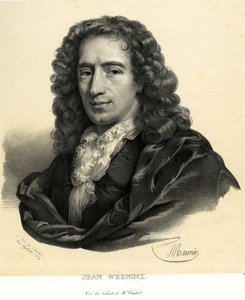
Jan Weenix
1641 - 1719 , Netherlands
Eckdaten zum Künstler
- Artistic Movement Or Style: Barockkunst
- Artists Who Influenced This Artist:
- Jan Baptist Weenix
- Hendrick Cornelisz Vroom
- Date Of Birth: 1642 Amsterdam Niederlande
- Date Of Death: 1719 Utrecht Niederlande
- Full Name: Jan Weenix
- Nationality: Niederländisch
- Notable Artworks:
- Jagd und Obst-Stillleben neben einem Gartenvasen
- Still Life mit einem Hasen
- Ein Sitzender Affe
- Place Of Birth: Amsterdam Niederlande
Verwandte Artikel

Jan Jansz Wijnants: A Study in Dutch Golden Age Still Life & Floral Transience
Explore the captivating world of Jan Wijnants and Dutch Golden Age still life painting. Discover symbolism, masterful techniques & lasting influence on floral art history. Learn more!
Jan Steen: Meister der niederländischen Genremalerei und Spiegelbild des Goldenen Zeitalters
Entdecken Sie Jan Steen, den Meister der niederländischen Genremalerei! Erfahren Sie mehr über sein Leben, seine Werke und den historischen Kontext des Goldenen Zeitalters. Kunstexperten-Analyse & hochwertige Reproduktionen.

Golden Age Reflections: Dutch Baroque Painting & Cultural Innovation
Explore the Dutch Golden Age of painting! Discover key artists like Vermeer & ter Borch, their innovative techniques, and the rich cultural context behind these Baroque masterpieces. Learn about collecting & appreciating this iconic art period.
Abraham Hendricksz van Beyeren: Pioneering Dutch Still Life & the Banquet Tradition
Explore the captivating world of Dutch Golden Age still life with Abraham van Beyeren. Discover his innovative techniques, symbolic banquet scenes & lasting influence on art history. Learn about collecting these masterpieces.

Die 10 Meisterwerke der niederländischen Barockmalerei – Kunst für Ihr Zuhause | OriginalUniqueArt
Entdecken Sie die 10 prägendsten Meisterwerke der niederländischen Barockmalerei! Von Rembrandt bis Vermeer – erleben Sie Kunstgeschichte, Techniken & Emotionen. Hochwertige Reproduktionen für Ihr Zuhause auf OriginalUniqueArt.com.


