Menü
Text size

() ·

A painting made for you, by hand

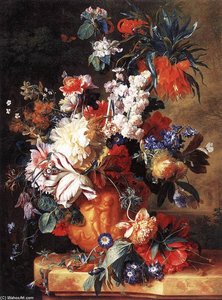
Blumenstillleben, ca. 1734

Handgefertigte Ölreproduktion

Handgemaltes Ölgemälde auf Leinwand in Ihrer Wunschgröße und mit Rahmen, auf Bestellung von unseren Künstlern angefertigt. ( Zum Druck wechseln Zum digitalen Bild wechseln)

Beschreibung des Sammlerstücks

Bewundern Sie Jan van Huysums 'Blumenstillleben', ca. 1734 – ein atemberaubendes niederländisches Meisterwerk voller exquisiter Blumenarrangements, feiner Details und zeitloser Eleganz.

Künstlerbiografie

Jan van Huysum (1682-1749): Meister der Blütenmalerei im Niederländischen Goldenen Zeitalter mit außergewöhnlicher Detailtreue und Eleganz. Entdecken Sie seine berühmtesten Werke!

from ·

Chapter 1

How large should it be?

Slide to change the size; the picture on the left shows the frame at its real width. The proportions of the original are kept.

Standardformat
individuell anpassbar
CM
INCH

Wählen Sie aus unseren vordefinierten Formaten, die den ursprünglichen Proportionen des Kunstwerks entsprechen.

Breite
Höhe

Geben Sie die Breite und die Höhe an, die Sie für Ihren Rahmen oder Ihre Wand benötigen. Da dieses Werk handgemalt ist, kann der Künstler bei einer anderen Form etwas mehr um das Bild herum malen oder etwas abschneiden – Sie entscheiden. Wir senden Ihnen ein digitales Mockup zur Freigabe, bevor mit dem Malen begonnen wird. Das auf dieser Seite gezeigte Bild stellt nicht das tatsächliche Ergebnis dar – dies tut nur das Mockup.

Chapter 2

How should it arrive?

Choose the edges of the stretched canvas

Choose your frame

Corner sample of the WhiteWrap canvas edge finish, stretched on Massivholz bars
White €1
Corner sample of the BlurSideWrap canvas edge finish, stretched on Massivholz bars
Blurside €1
Corner sample of the ExtendedWrap canvas edge finish, stretched on Massivholz bars
Extended €1
Corner sample of the P118B picture frame: formgepresstes Polystyrol, 5 cm wide and 3 cm thick
P118B €10
Corner sample of the P118H picture frame: formgepresstes Polystyrol, 5 cm wide and 3 cm thick
P118H €10
Corner sample of the P118W picture frame: formgepresstes Polystyrol, 5 cm wide and 3 cm thick
P118W €10
Corner sample of the P438Z picture frame: formgepresstes Polystyrol, 5.5 cm wide and 3.5 cm thick
P438Z €10
Corner sample of the P508JH picture frame: formgepresstes Polystyrol, 7 cm wide and 3.5 cm thick
P508JH €12
Corner sample of the P508YH picture frame: formgepresstes Polystyrol, 7 cm wide and 3.5 cm thick
P508YH €12
Corner sample of the P805H picture frame: formgepresstes Polystyrol, 5 cm wide and 3.5 cm thick
P805H €10
Corner sample of the P805Z picture frame: formgepresstes Polystyrol, 5 cm wide and 3.5 cm thick
P805Z €10
Corner sample of the P919BZ picture frame: formgepresstes Polystyrol, 7 cm wide and 3.5 cm thick
P919BZ €10
Corner sample of the P919G picture frame: formgepresstes Polystyrol, 7 cm wide and 3.5 cm thick
P919G €10
Corner sample of the P919XJ picture frame: formgepresstes Polystyrol, 7 cm wide and 3.5 cm thick
P919XJ €10
Corner sample of the P959ZH picture frame: formgepresstes Polystyrol, 5 cm wide and 3 cm thick
P959ZH €10
Corner sample of the P968JZ picture frame: formgepresstes Polystyrol, 6 cm wide and 4 cm thick
P968JZ €12
Corner sample of the W106C picture frame: Massivholz, 5 cm wide and 3 cm thick
W106C €8
Corner sample of the W218G picture frame: Massivholz, 5 cm wide and 3 cm thick
W218G €10
Corner sample of the W218JH picture frame: Massivholz, 5 cm wide and 3 cm thick
W218JH €8
Corner sample of the W218Y picture frame: Massivholz, 5 cm wide and 3 cm thick
W218Y €10
Corner sample of the W307PJ picture frame: Massivholz, 6 cm wide and 3 cm thick
W307PJ €10
Corner sample of the W316G picture frame: Massivholz, 6 cm wide and 3 cm thick
W316G €10
Corner sample of the W316PJ picture frame: Massivholz, 6 cm wide and 3 cm thick
W316PJ €8
Corner sample of the W316Y picture frame: Massivholz, 6 cm wide and 3 cm thick
W316Y €10
Corner sample of the W398PJ picture frame: Massivholz, 5 cm wide and 3 cm thick
W398PJ €8
Corner sample of the W4111J picture frame: Massivholz, 6.5 cm wide and 3.5 cm thick
W4111J €10
Corner sample of the W500HY picture frame: Massivholz, 7 cm wide and 5 cm thick
W500HY €15
Corner sample of the W500JH picture frame: Massivholz, 7 cm wide and 5 cm thick
W500JH €15
Corner sample of the W692G picture frame: Massivholz, 8 cm wide and 4 cm thick
W692G €12
Corner sample of the W849H picture frame: Massivholz, 5 cm wide and 3 cm thick
W849H €8
Corner sample of the W940BG picture frame: Massivholz, 7.5 cm wide and 4.5 cm thick
W940BG €15
Corner sample of the W953PJ picture frame: Massivholz, 6 cm wide and 3.5 cm thick
W953PJ €8
Corner sample of the H24-GOLD picture frame: geschnitztes Holz mit Gesso, 10 cm wide and 6 cm thick
H24-GOLD €30
Corner sample of the H24-SILVER picture frame: geschnitztes Holz mit Gesso, 10 cm wide and 6 cm thick
H24-SILVER €30
Corner sample of the H36-GOLD picture frame: geschnitztes Holz mit Gesso, 15 cm wide and 6.5 cm thick
H36-GOLD €45
Corner sample of the H36-SILVER picture frame: geschnitztes Holz mit Gesso, 15 cm wide and 6.5 cm thick
H36-SILVER €45

Moulding: . Overall size with the frame: .

Chapter 3

Who paints it, and should anything change?

Examples of what can be changed: Replace face with customer photo; Add pet (e.g., replace cat with dog); Include hidden message in background; Change background landscape or elements.
After order, OriginalUniqueArt.com team will email client for instructions and provide a mockup preview

Weltweiter Versand () in nur 3 bis 4 Wochen statt der üblichen 5 Wochen. (31 Oktober). Keine Kompromisse bei der Qualität.

Chapter 4

The finishing touches

A nameplate, as in a museum?

Details der gravierten Bronzetafel

This elegant plaque features the artist's name and the title of the artwork, finely engraved for a timeless presentation.

It is made from bronze with a refined, elegant finish. The text is precisely laser-engraved for a sharp and permanent result. Measuring 9x2 cm, the plaque is compact yet easy to read. It's built to be durable and scratch-resistant, offering a professional, museum-quality look. Mounting is simple thanks to the included adhesive backing.

Details zur Acrylglas-Plakette (transparent)

The plaque includes essential engraved details such as the artist's name, the title of the artwork, the date it was created, the type of media used-like oil on canvas or watercolor-a brief description of the piece, and a QR code that links to the complete artwork information.

It is crafted from clear acrylic, offering a sleek, modern appearance. The text is UV-engraved in black to ensure strong visual contrast. With a size of 10x15 cm, it ensures optimal readability. It comes equipped with two metal hooks for secure wall mounting. The plaque is designed to be weather-resistant, making it suitable for various environments, and it includes interactive features that work seamlessly with smartphone scanning.

Details zur schwarzen Acryltafel

This elegant plaque includes engraved information such as the artist's name, the title of the artwork, the date it was created, the type of media used (like oil on canvas or watercolor), a short description of the artwork, and a QR code for quick access to more information.

The plaque itself is made from refined black acrylic with a premium finish. The text is laser-engraved in white for high contrast and readability. Its size is 10x15 cm, designed to be easy to read. It comes with two metal hooks for professional mounting. The design is sleek and fits any interior style. It is also weather-resistant and durable, with built-in digital integration for mobile compatibility.

A protective varnish?

When do you need it?

Chapter 5

Your painting, as you ordered it

Blumenstillleben, ca. 1734

Art der Reproduktion

Format der Reproduktion

-

Erstklassige Meisterkünstler

Mehr Detailtiefe, Raffinesse und zusätzliche Produktionszeit

-

Rahmen für Reproduktionen

-

-

Bei Kunstwerken oder Reproduktionen, die an einer Seite größer als 105 cm (ca. 41 Zoll) sind, wird der Rahmen zerlegt als Bausatz geliefert. Diese Methode gewährleistet eine sichere Zustellung und verhindert Schäden während des Transports.

Professionelle Montage erforderlich – dies ist kein DIY-Produkt.
Der Bausatz muss von einem erfahrenen professionellen Rahmenmacher zusammengebaut und die Leinwand gespannt werden. Hierfür werden Holzleim (nicht im Lieferumfang enthalten), eine Leinwandspannzange sowie Klemmen benötigt, um die Keilleisten während des Trocknungsvorgangs rechtwinklig zu halten. Eine unsachgemäße Montage oder eine ungleichmäßige Spannung der Leinwand kann das Kunstwerk dauerhaft beschädigen und ist nicht durch unsere Garantie abgedeckt.

  • Alle Vollholzkomponenten sind enthalten, präzise auf Maß zugeschnitten.

  • Der Zusammenbau erfolgt mit den mitgelieferten Schrauben sowie Holzkleber für die Eckverbindungen, der nicht im Lieferumfang enthalten ist und vom Rahmenbauer selbst beschafft werden muss.

  • Professionelles Werkzeug ist erforderlich und nicht im Lieferumfang enthalten: eine Keilrahmenzange (Spannwerkzeug) sowie Klammern, um die Leisten während der Trocknungszeit des Klebers rechtwinklig zu fixieren.

Wichtiger Hinweis:
Für die Eckverbindungen wird Holzleim benötigt, die Leisten müssen mit Zwingen fixiert werden, bis der Leim vollständig getrocknet ist, und das Spannen der Leinwand auf dem fertigen Rahmen erfordert eine Keilrahmen-Zange. Keines dieser Utensilien ist im Set enthalten. Bitte stellen Sie sicher, dass ein erfahrener Rahmenmacher zur Verfügung steht, bevor Sie diese Größe bestellen.

Beschriftung

-

-

Schutzlackierung

Glanzlack (verstärkt die Farben, schützt vor Licht und Feuchtigkeit)

-

Mein Kunstwerk personalisieren

Beispiele für Anpassungsmöglichkeiten: Gesicht durch Kundenfoto ersetzen; Haustier hinzufügen (z. B. Katze durch Hund ersetzen); Versteckte Nachricht im Hintergrund einfügen; Hintergrundlandschaft oder -elemente ändern.

-

Eilt sehr

Weltweiter Versand () in nur 3 bis 4 Wochen statt der üblichen 5 Wochen. (31 Oktober). Keine Kompromisse bei der Qualität.

-

Expressversand

Weltweiter Versand () innerhalb von 5 Wochen. (7 November).

Inklusive Versand

Endpreis

€ 266

Gesamtpreis € 266

Die Glasoption ist nur für Größen unter 110 cm verfügbar.

Included with every order

  • Kostenloser weltweiter Expressversand
  • Hochwertige Leinenleinwand
  • Umfassender Versicherungsschutz beim Versand
  • Zollgebühren-Rückerstattungsgarantie
  • Garantie für exakte Farbtreue
  • 100 Tage Rückgaberecht (nur bei Mängeln)
  • 100% Geld-zurück-Garantie
  • Mengenrabatt verfügbar

Eine Symphonie in voller Blüte: Jan van Huysums „Stillleben mit Blumen, ca. 1734“

Tauchen Sie ein in eine Welt exquisiter Details und zarter Schönheit mit Jan van Huysums „Stillleben mit Blumen, ca. 1734“, einem Meisterwerk, das weit über eine bloße botanische Illustration hinausgeht und zu einer tiefgründigen Meditation über die flüchtige Pracht der Natur wird. Gemalt im Herzen des niederländischen Goldenen Zeitalters, ist dieses Werk nicht einfach nur eine Darstellung von Blumen; es ist eine Einladung, innehaltestoppen und die Vergänglichkeit des Lebens selbst zu betrachten – ein Konzept, das tief in der künstlerischen Philosophie der Vanitas verwurzelt ist.

Van Huysum, ein Meister seines Fachs, besaß die fast unheimliche Fähigkeit, die Texturen und Nuancen jeder Blüte mit atemberaubendem Realismus wiederzugeben. Seine akribische Liebe zum Detail – die samtigen Blütenblätter der Rosen, die feinen Adern der Blätter, die glitzernden Wassertropfen – erschafft eine Illusion, die so überzeugend ist, dass man das Bedürfnis verspürt, danach zu greifen und sie zu berühren. Die Komposition ist ein sorgfältig orchestriertes Arrangement, ein lebendiger Wandteppich, gewebt aus einer vielfältigen Sammlung von Blumen: purpurrote Rosen, blassrosa Nelken, saphirblaue Prunkwinden und eine Streuung zarter weißer Blüten. Sie sind nicht bloß arrangiert; es scheint, als wären sie mitten in einem stillen, anmutigen Tanz eingefangen.

Die Technik des Gemäldes ist ebenso fesselnd wie sein Sujet. Van Huysum wandte einen schichtweisen Ansatz an, beginnend mit Untermalungen in Blau und Braun, gefolgt von Lasuren, die Tiefe und Leuchtkraft aufbauten. Anschließend fügte er mit feinster Pinselführung akribisch Details hinzu – Glanzlichter auf den Blütenblättern, Schatten innerhalb der Blätter –, um ein beispielloses Maß an Präzision zu erreichen. Der Einsatz des Lichts ist besonders meisterhaft; es wirft sanfte Glühlaute über das Arrangement und erzeugt eine Dreidimensionalität, die den Betrachter förmlich in die Szene hineinzieht. Bemerkenswert ist, dass er oft direkt nach der Natur arbeitete und frische Blumen über längere Zeiträume zusammensetzte, um ihren lebendigsten Zustand einzufangen und sicherzustellen, dass jede Blüte auf dem Höhepunkt ihrer Pracht war.

Die Sprache der Blumen: Symbolik in Van Huysums Palette

Jenseits seiner technischen Brillanz ist das „Stillleben mit Blumen“ reich an symbolischer Bedeutung. Van Huysums Werk setzte sich häufig mit der Vanitas-Tradition auseinander, einer in dieser Zeit populären Bewegung, die Stillleben nutzte, um den Betrachter an die Sterblichkeit und die Vergänglichkeit irdischer Freuden zu erinnern. Jede Blume trägt eine spezifische symbolische Last – Rosen stehen für Liebe und Schönheit, Nelken bedeuten Erinnerung, Prunkwinden symbolisieren Glauben und Hoffnung. Die Einbeziehung einer Uhr, ein gängiges Motiv in Vanitas-Gemälden, dient als eindringliche Mahnung an das Vergehen der Zeit und die Unausweichlichkeit des Todes.

Das Arrangement selbst ist sorgfältig durchdacht. Das Nebeneinander von leuchtenden Farben vor einem dunklen Hintergrund erzeugt einen dramatischen Effekt, der die Schönheit der Blumen betont und gleichzeitig auf ihre Zerbrechlichkeit hindeutet. Die Einbindung eines kleinen, fast verborgenen Schmetterlings fügt eine weitere Ebene der Symbolik hinzu – er repräsentiert Transformation sowie den Kreislauf von Leben und Tod. Selbst die Platzierung jeder einzelnen Blume – die herabhängenden Blütenblätter, die geneigten Köpfe – deutet auf einen Zustand stiller Kontemplation und Akzeptanz hin.

Ein Fenster zur niederländischen Kunst des 18. Jahrhunderts

„Stillleben mit Blumen, ca. 1734“ bietet einen bemerkenswerten Einblick in die künstlerische Welt des Holland des 18. Jahrhunderts. In dieser Epoche erreichte die Blumenmalerei ihren Zenit, angetrieben durch ein wachsendes Interesse an Botanik und Gartenbau. Die Niederländer waren berühmt für ihre prachtvollen Gärten und ihre Leidenschaft für das Sammeln exotischer Pflanzen – ein Trend, der sich in den üppigen Blumendarstellungen in Gemälden wie diesem widerspiegelt. Das Werk von Jan van Huysum steht als Zeugnis für das Geschick und die Kunstfertigkeit jener Ära und fängt nicht nur die Schönheit der Natur ein, sondern auch die kulturellen Werte und philosophischen Anliegen seiner Zeit.

Die Popularität des Gemäldes zu Van Huysums Lebzeiten – mit Preisen, die das Vielfache der Werke Rembrandts erreichten – unterstreicht seine Bedeutung. Es war bei europäischem Adel hoch begehrt, darunter Wilhelm V., Prinz von Oranien, der zahlreiche Exemplare für seine Sammlung im Schloss Het Loo erwarfert hat. Heute bleibt das „Stillleben mit Blumen“ ein geschätztes Beispiel der Kunst des Goldenen Zeitalters der Niederlande, bewundert für seine technische Meisterschaft, seinen symbolischen Reichtum und seine zeitlose Schönheit.

Schönheit nach Hause bringen: Reproduktionen & Inneneinrichtung

Die exquisite Detailtreue und die evokative Atmosphäre von Van Huysums „Stillleben mit Blumen“ machen es zu einem idealen Motiv für hochwertige Reproduktionen. Ob Sie sich für eine handgemalte Replik oder eine präzise gedruckte Leinwand entscheiden, dieses Kunstwerk kann jedem Innenraum einen Hauch zeitloser Eleganz verleihen.

Berücksichtigen Sie die Farbpalette des Gemäldes – das satte Rot, das lebendige Blau und das zarte Rosa –, wenn Sie Komplementärmöbel und Dekoration auswählen. Das Gefühl von Ruhe und Kontemplation, das das Arrangement ausstrahlt, würde besonders gut in ein Arbeitszimmer oder ein Wohnzimmer passen, in dem Entspannung und Reflexion geschätzt werden. Die Einbeziehung natürlicher Elemente – wie Topfpflanzen oder Blumenarrangements – kann die Wirkung des Gemäldes weiter verstärken und eine harmonische Verbindung von Kunst und Natur schaffen.

Entdecken Sie unsere Kollektion sorgfältig gefertigter Reproduktionen, um die Schönheit und Kunstfertigkeit von Jan van Huysums „Stillleben mit Blumen“ in Ihrem eigenen Zuhause zu erleben.

Fragen & Antworten

Welche Stellung nimmt „Blumenstillleben, ca. 1734“ unter den wiederkehrenden Motiven von Jan Van Huysum ein?

Zu den wiederkehrenden Themen von Jan Van Huysum gehören barockes blumenstillleben, vanitas-symbolik, niederländisches goldenes zeitalter, königliche schirmherrschaft, familienerbe; „Blumenstillleben, ca. 1734“ konzentriert sich auf blumenstillleben, niederländisches goldenes zeitalter, jan van huysum, blumenarrangement, vanitas, wassertropfen, 18. jahrhundert.

Wo kann ich die Abbildung von "Blumenstillleben, ca. 1734" von Jan Van Huysum herunterladen?

Für „Blumenstillleben, ca. 1734“ steht ein Download zur Verfügung: Die Download-Seite des Kunstwerks bietet hochauflösender digitaler Bild-Download.

Ist "Blumenstillleben, ca. 1734" von Jan Van Huysum gemeinfrei, und warum?

Der Urheberrechtsstatus von "Blumenstillleben, ca. 1734" – gemeinfrei – das Urheberrecht ist abgelaufen – ergibt sich aus dem Todesjahr des Künstlers im Jahr 1749.

More about this painting

Vorschau anzeigen In AR ansehen Zum Druck wechseln Zum digitalen Bild wechseln Versenden
Details anzeigen Leitfaden Zu Favoriten hinzufügen Herunterladen Ähnliche Objekte Röntgenaufnahme Diashow Q&A Statistiken

In numbers

  • 1734the year it was painted
  • 29frames to choose from
  • standard sizes, in its own proportions
  • 5weeks to paint and deliver it
Jan Van Huysum

Jan Van Huysum

1682 - 1749, Niederlande

Quick facts about Jan Van Huysum

  • Artistic Movement Or Style: Dutch Golden Age, Still life
  • Artists Or Movements Influenced By This Artist: ['Justus van Huysum']
  • Artists Who Influenced This Artist:
    • Johannes de Bosch
    • Jan van Os
  • Date Of Birth: April 15, 1682
  • Date Of Death: February 8, 1749
  • Full Name: Jan van Huysum
  • Nationality: Dutch
  • Notable Artworks:
    • Terracotta Vase with Flowers
    • Flowers and Fruits
    • Bouquet of Flowers in an Urn
  • Place Of Birth: Amsterdam, Netherlands

Künstlerbiografie

Jan van Huysum (1682–1749): A Master of Floral Illusion

Jan van Huysum, a name synonymous with the exquisite flower paintings of the Dutch Golden Age, was born in Amsterdam on April 15, 1682. He wasn’t simply a painter of blooms; he was a master of illusion, capable of rendering petals and droplets with such breathtaking realism that viewers felt they could almost inhale their fragrance. Born into an artistic family—his father, Justus van Huysum the Elder, was also a respected flower painter, and his brothers Jacob and Michiel followed suit—Jan’s path seemed predetermined. However, he wasn't immediately drawn to floral subjects. Early in his career, he experimented with landscapes, described as “conventional and arcadian,” but it was within the delicate world of still life that his true genius blossomed.

The foundation of Van Huysum’s artistic education was laid by his father, a formative experience that instilled in him not only technical skill but also an understanding of the art market. Amsterdam during this period thrived as a center for commerce and culture, fostering a demand for luxurious and decorative paintings like those depicting lavish floral arrangements. This environment shaped Van Huysum’s approach; he wasn’t merely replicating nature, but crafting idealized visions of beauty intended to delight and impress. His earliest dated work is completed in 1717 and now residing in the Louvre, already revealing a remarkable maturity and attention to detail, hinting at the mastery that was to come.

The Art of Detail: Technique and Style

What truly sets Van Huysum apart is his unparalleled technique. He employed smooth, glossy brushstrokes, building up layers of paint to create an almost enamel-like surface that enhanced the richness and vibrancy of his colors. But it wasn’t just about color; it was about light—the way it played across petals, illuminated water droplets clinging to leaves, and created a sense of depth and volume. He possessed an extraordinary eye for detail, meticulously capturing the textures of every flower, fruit, and leaf with astonishing precision. Stories circulated that he could paint details like ants and dew drops so realistically they were visible without magnification—a testament to his dedication and skill.

His compositions are characterized by a refined elegance and balance. Unlike some of his contemporaries who favored crowded, overflowing arrangements, he consistently avoided imbalance or over-composition. His later works became more elaborate, certainly, but always maintained a sense of harmony and grace. He often incorporated elements of fantasy into his work, particularly in his landscapes which featured imaginary scenes with classical architectural details and motionless trees. These weren’t attempts at topographical accuracy, but rather evocative settings designed to showcase the beauty of the flowers they contained.

A Flourishing Reputation: Major Works and Legacy

Throughout his lifetime, Jan van Huysum enjoyed considerable acclaim and financial success. His paintings were highly sought after by collectors, and he commanded high prices for his work. Today, his masterpieces can be found in prestigious museums around the world, including the Louvre in Paris, the National Gallery in London, and collections in Berlin and Amsterdam. Among his most celebrated works are Terracotta Vase with Flowers and Fruits, a stunning display of color and texture; Flowers and Fruits, showcasing his mastery of composition; and Bouquet of Flowers in an Urn, a testament to his ability to capture the ephemeral beauty of nature.

Van Huysum’s influence extended beyond his own time, inspiring generations of artists. Painters like Jan van Os and Johannes de Bosch clearly demonstrate his impact on subsequent floral still life traditions. He represents the pinnacle of Dutch Golden Age flower painting, a period defined by its meticulous observation of nature and its celebration of beauty. His legacy isn't simply about the numerous paintings he created, but also about the enduring appeal of his style—a style that continues to inspire artists and captivate audiences today. His work remains a powerful reminder of the artistry and skill required to transform fleeting moments of natural beauty into timeless works of art.

Family Connections & Artistic Lineage

  • Justus van Huysum the Elder (1659–1716): Jan’s father, a prolific painter of flower pieces and decorative schemes.
  • Jacob van Huysum (1688–1740): Jan's brother, also a notable artist specializing in botanical illustrations.
  • Justus van Huysum the Younger (1685-1707): Another of Jan’s brothers who pursued painting but died young.
  • Michiel van Huysum (1703–1777): A half-brother, also a flower painter.
  • Francina Margaretha van Huysum: Jan’s daughter, who assisted him in his work and was herself a skilled flower painter.

The Van Huysum family represents a remarkable artistic lineage, contributing significantly to the rich tapestry of Dutch Golden Age painting. Jan, however, stands out as the most celebrated member, leaving an indelible mark on the history of art with his exquisite and enduring floral masterpieces.

Eckdaten

  • Jahr: 1734
  • Besondere Elemente oder Techniken: Detaillierte florale Darstellung
  • Ort: Albertina Museum, Wien
  • Künstlerischer Stil: Vanitas, Stillleben
  • Einflüsse: Jan van Kessel

Kunst-Quiz

Jede Frage hat nur eine richtige Antwort.

Frage 1:
Was ist das Hauptmotiv von Jan van Huysums ‘Blumenstillleben, ca. 1734’?
Frage 2:
In welcher Stadt arbeitete Jan van Huysum hauptsächlich als Künstler?
Frage 3:
Das Gemälde ‘Blumenstillleben, ca. 1734’ gilt als ein Paradebeispiel für welchen Kunststil?
Frage 4:
Welche Technik wandte Jan van Huysum häufig an, um die Illusion von Tiefe und Textur in seinen Blumengemälden zu erzeugen?
Frage 5:
Das Gemälde enthält eine Uhr, ein gängiges Symbol in Vanitas-Gemälden. Was stellt dieses Symbol typischerweise dar?