
 Vorschau anzeigen
 Versenden
 Teilen
 Details anzeigen
 Leitfaden

 Herunterladen
 Ähnliche Objekte
 Röntgenaufnahme
 Diashow
 Fragen & Antworten
 Statistiken
LE MENDIANT


 Weiterlesen
Erhalten Sie eine druckfertige Datei, die weit über die Web-Vorschau hinausgeht. Jedes von uns verkaufte digitale Bild basiert auf einem hochauflösenden Master aus unserer Datenbank – in der Regel 5.000 bis 15.000 Pixel breit –, sodass Sie mit Vertrauen großformatig drucken, eng ausschneiden oder feinste Details reproduzieren können.
Keine Datei verlässt unser Studio unberührt. Ein Digitalexperte gleicht die Farben mit dem Originalgemälde ab und korrigiert sie bei Bedarf, um anschließend Klarheit und Details mit professionellen Retuschewerkzeugen zu optimieren – dabei stets der Pinselführung und dem Stil des Künstlers treu bleibend. Das Ergebnis ist ein Bild, das wie das Gemälde selbst wirkt und nicht wie ein gefilterter Scan.
Sie entscheiden über das Endergebnis: Unser Experte sendet Ihnen das Bild innerhalb von 72 Stunden zur Ansicht per E-Mail zu. Nicht zufrieden? Fordern Sie Verbesserungen oder Korrekturen an oder verlangen Sie eine Rückerstattung, falls die Qualität nicht Ihren Erwartungen entspricht.
Dies ist die Qualität, auf die sich Verlage, Designstudios, Galerien und Druckereien verlassen.
Digitales Kunstwerk
Laden Sie eine hochauflösende Datei für die persönliche Präsentation, den Druck und kreative Projekte herunter. ( Zum Druck wechseln Handgemalte Reproduktion bestellen)
In jeder Bestellung digitaler Bilder enthalten
Professionelle digitale Bereitstellung, garantiert
Wenn Sie sich für OriginalUniqueArt.com entscheiden, erhalten Sie nicht nur ein Bild – Sie erhalten ein professionell aufbereitetes digitales Kunstwerk, das mit höchster Präzision erstellt und durch eine Zufriedenheitsgarantie abgesichert wird. Hier ist alles, was automatisch mit Ihrer Bestellung geliefert wird:

Schnelle E-Mail-Zustellung
Ihre hochauflösende digitale Bilddatei wird Ihnen innerhalb von 72 Stunden nach der Bestellung per E-Mail zugestellt – bereit zur sofortigen Verwendung.

KI-optimierte digitale Datei
Ihre Kunstwerke werden professionell mithilfe fortschrittlicher KI-Tools und manueller Bearbeitung optimiert, um maximale Detailtreue, Klarheit und Farbgenauigkeit zu gewährleisten.

Kostenloser lebenslanger Neudruckservice
Datei versehentlich gelöscht oder verloren? Keine Sorge – wir senden sie Ihnen jederzeit kostenlos erneut zu.

Keine Einfuhrgebühren – jemals
Genießen Sie Ihr Kunstwerk sofort ohne Zollgebühren, Einfuhrabgaben oder Versandkosten – digitale Downloads sind immer steuerfrei.

Garantierte Farbtreue
Wir garantieren, dass Ihr digitales Bild mithilfe professioneller Werkzeuge und Farbmanagement die Originalfarben so präzise wie möglich wiedergibt.

100-Tage-Zufriedenheitsgarantie
Sollten Sie mit Ihrem digitalen Bild nicht zufrieden sein, werden wir es überarbeiten oder 100% innerhalb von 100 Tagen erstatten – ohne Wenn und Aber.

100% Geld-zurück-Garantie
Nicht zufrieden? Erhalten Sie innerhalb von 100 Tagen nach Erhalt Ihrer digitalen Datei eine vollständige Rückerstattung – ohne Wenn und Aber.

Rabatte bei Großbestellungen
3 Bilder kaufen, 10% sparen – 5 Bilder kaufen, 15% sparen – Ab 10 Bildern 20% sparen. Ideal für kreative Projekte, Galerien und Agenturen.
Jan Miel’s “Le Mendiant”: A Window Into Baroque Dignity Amidst Poverty
The artwork "Le Mendiant," attributed to Jan Miel (1599 – 1663), stands as a poignant testament to the artistic spirit of the Dutch Golden Age and its engagement with broader humanist concerns. Painted circa 1630, this genre scene—a hallmark of Miel’s oeuvre during his formative years in Rome—captures a moment of quiet contemplation within a bustling tavern interior, offering viewers an arresting glimpse into both social realities and artistic sophistication.Composition and Style: Baroque Restraint Within Classical Framework
Miel's stylistic approach skillfully blends influences from Flemish masters like Anthony van Dyck with the burgeoning grandeur of Italian Baroque aesthetics. The horizontal orientation of the canvas immediately establishes a sense of stability, mirroring the formal balance characteristic of Baroque compositions. However, unlike the opulent theatricality often associated with Rome at the time, Miel employs subtle tonal gradations and muted colors—primarily grayscale—to convey an atmosphere of understated dignity. This deliberate restraint serves to heighten the emotional impact of the depicted scene: a beggar humbly requesting alms amidst a group of patrons engaged in conversation. The artist’s meticulous attention to detail—evident in the rendering of textures, particularly on the tavern table and the livestock visible in the background—underscores Miel's commitment to realism while simultaneously grounding the image within a broader artistic tradition.Detailed Examination: Technique and Materials
The painting utilizes oil paint on canvas with considerable skill. Brushstrokes are perceptible but carefully blended, creating a smooth surface that enhances the illusion of depth and luminosity despite the absence of vibrant hues. Layers of tonal variation—a technique favored by Miel—are skillfully applied to sculpt form and delineate contours, capturing the nuances of light and shadow within the tavern setting. The artist’s meticulous observation of natural forms—reflected in the depiction of the cows and sheep—demonstrates a profound understanding of classical principles of perspective and anatomical accuracy.Historical Context: Rome and Beyond – Miel's Artistic Journey
Jan Miel’s artistic development unfolded primarily in Rome during the 1630s, where he honed his craft under the patronage of Charles Emanuel II, Duke of Savoy—a connection that cemented his reputation as a court artist. This period witnessed a significant shift towards classicizing tendencies within Miel's oeuvre, mirroring the broader cultural revival occurring across Europe. The artwork’s subject matter – depicting poverty alongside social interaction – speaks to the humanist ideals prevalent during the Baroque era, reflecting an interest in portraying human experience with compassion and intellectual rigor.Symbolism: Dignity Amidst Adversity
“Le Mendiant” transcends mere visual representation; it embodies a deeper symbolic resonance. The beggar’s posture—characterized by humility and supplication—serves as a poignant reminder of the vulnerability inherent within the human condition. Simultaneously, the gathering of people around the table symbolizes communal life and social responsibility. The inclusion of livestock reinforces the artwork's connection to rural existence and underscores its engagement with themes of moral contemplation. Ultimately, Miel’s masterpiece invites viewers to consider not only the aesthetic beauty of the scene but also its profound ethical implications—a testament to the enduring power of art to illuminate both the grandeur and fragility of human experience.- Artist: Jan Miel
- Birth Year: 1599
- Death Year: 1663
- Birth City: Beveren
- Birth Country: Belgium
Additional Resources:
LE MENDIANT – Louvre site des collections 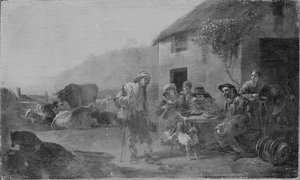
jan josef horemans the elder – Belgian painter (1682-1759) known for detailed interiors & anatomical precision.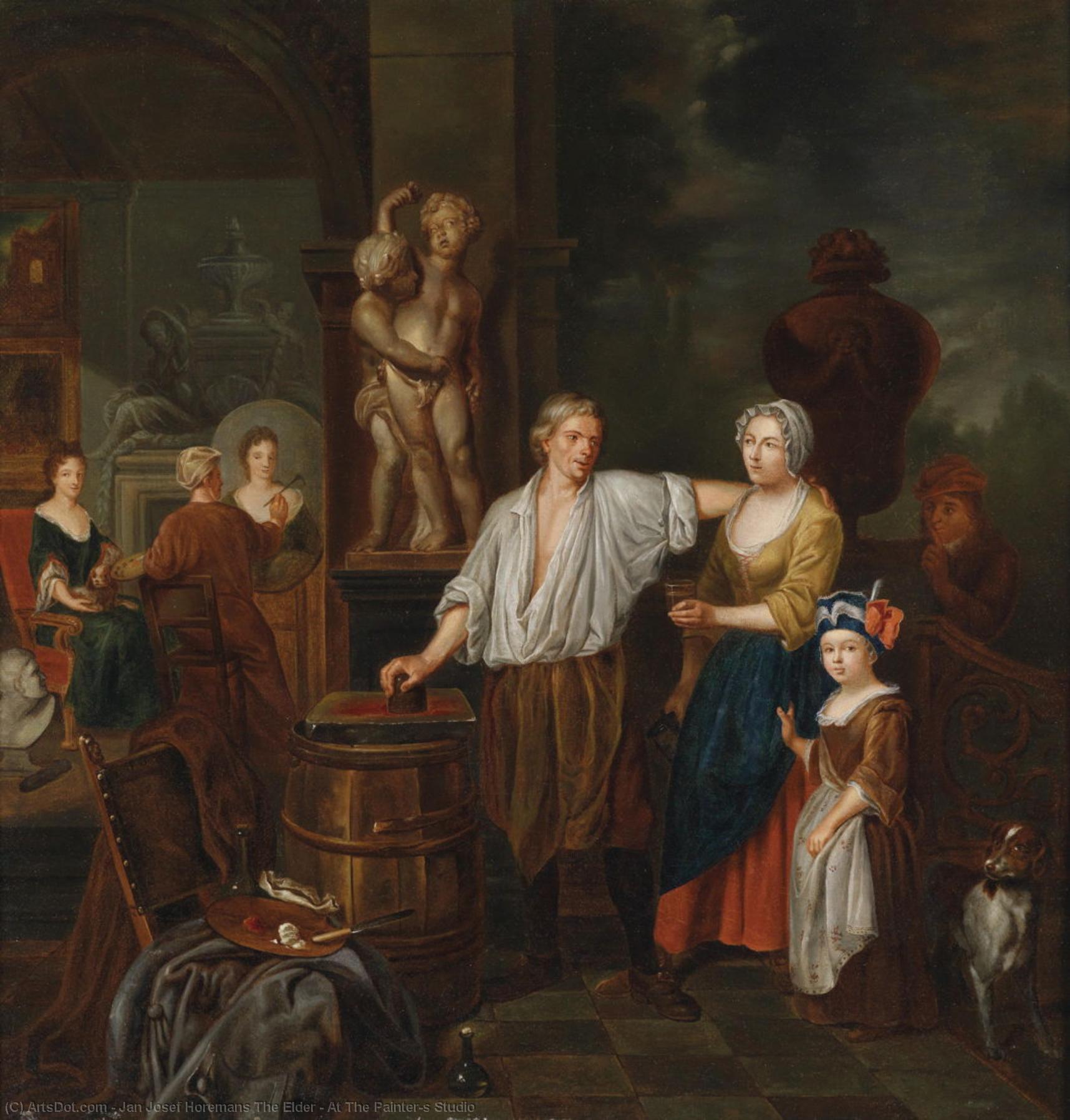
jan le ducq – Explore the captivating landscapes & animal paintings of Jan Le Ducq, a Dutch master known for his dog portraits.
Jan Miel – Cavaliere della Vita, (Anvers, 1599 - Turin, 1663) Court artist to Charles Emanuel II, Duke of Savoy.
Louvre, Paris, France – INV 1447 and MR 816 ( )
)

File:Jan Miel - The beggar.JPG – Wikimedia Commons 
Louvre Cartel – Foucart, Jacques, Catalogue des peintures flamandes et hollandaises du musée du Louvre, Gallimard / Louvre éditions, 2009, p. 182, ill. n&bCatalogue des peintures flamandes et hollandaises
Fragen & Antworten
Inwiefern spiegelt der Stil von "LE MENDIANT" die Epoche seines Schöpfers wider?
"LE MENDIANT" von Jan Miel lässt sich der Strömung des Dutch Golden Age Painting innerhalb der – Frühe Neuzeit-Ära seines Schöpfers zuordnen.
Warum ist der Urheberrechtsstatus von "LE MENDIANT" so, wie er ist?
Der Urheberrechtsstatus von "LE MENDIANT" – gemeinfrei – das Urheberrecht ist abgelaufen – ergibt sich aus dem Todesjahr des Künstlers im Jahr 1663.
Wie intensiv und gesättigt sind die Farben von "LE MENDIANT" von Jan Miel?
"LE MENDIANT" von Jan Miel zeichnet sich durch eine Sättigung von Muted und eine Intensität von Monochromatic aus.
Biografie des Künstlers
Jan Miel: Die Brücke zwischen niederländischem Realismus und barocker Pracht
Jan Miel (1599–1663) gilt als eine Schlüsselfigur in der künstlerischen Landschaft des siebzehnten Jahrhunderts, da er die faszinierende Verschmelzung von flämischer Tradition und italienischer Innovation verkörprobte. Geboren in Beveren, Belgien – obwohl auch Antwerpen und ’s-Hertogenbosch als Geburtsorte in Betracht kommen – bleibt Miels frühes Leben in relativer Unklarheit gehüllt, was die biografischen Details spärlich hält. Was jedoch aus der wissenschaftlichen Forschung hervorgeht, ist eine bemerkenswerte künstlerische Reise, die durch stilistische Evolution und gemeinschaftliche Bestrebungen geprägt war und seinen Platz innerhalb des lebendigen kulturellen Milieus von Rom und Turin festigte.
Seine prägenden Jahre verbrachte er vor allem in Antwerpen, wo er die Einflüsse bedeutender flämischer Meister wie Anthony van Dyck in sich aufnahm. Während der genaue Umfang seiner Ausbildung schwer fassbar bleibt, hat sie zweifellos eine Wertschätzung für akribische Beobachtung und raffinierte Technik in ihm verankert – Qualitäten, die sein späteres Gesamtwerk charakterisieren sollten. Diese fundamentale Ausbildung in klassischer Zeichnung und Porträtmalerei lieferte das wesentliche Instrumentarium für eine Karriere, die schließlich regionale Grenzen überschreiten sollte.
Die römische Transformation und der Geist der Bamboccianti
Miels Ankunft in Rom um 1636 markierte einen transformativen Moment in seiner künstlerischen Laufbahn. Er schloss sich rasch den Bentvueghels an, einer einflussreichen Vereinigung niederländischer und flämischer Künstler, die in der Ewigen Stadt lebten. Innerhalb dieser Bruderschaft nahm er den einprägschaftlichen Beinamen „bieco“ an, einen Spitznamen, der seinen charakteristischen schielenden Blick widerspiegelte – ein Merkmal, das untrennbar mit seiner künstlerischen Identität werden sollte. Diese Zugehörigkeit förderte tiefe Verbindungen innerhalb einer breiteren Künstlergemeinschaft, die stark vom Bamboccianti-Stil des Pieter van Laer beeinflusst war.
Diese Bewegung widmete sich der Darstellung von Alltagsszenen der unteren sozialen Schichten in Rom und Umgebung und verzichtete auf die idealisierte Pracht der Hochrenaissance zugunsten von etwas viel Unmittelbarerem und Viszeralem. Miel verschrieb sich diesem Trend mit ganzem Herzen und schuf fesselnde Genrebilder, welche den Geist des städtischen Lebens mit bemerkenswertem Realismus und Sensibilität einfingen. Seine Werke zeichneten sich oft aus durch:
- Lebendige Straßenszenen, bevölkert von Reisenden, Händlern und Arbeitern.
- Einen meisterhaften Einsatz des Lichts, um die staubige, sonnendurchflutete Atmosphäre römischer Gassen heraufzubeschwören.
- Das subtile Zusammenspiel menschlicher Emotionen in überfüllten, chaotischen Umgebungen.
- Eine akribische Aufmerksamkeit für die Texturen von Stoff, Stein und Erde.
Evolution hin zum Klassizismus und zur höfischen Grandezza
Im Laufe seiner Karriere durchlief Miels künstlerische Vision eine bedeutende Metamorphose. Obwohl er ein Meister der Genreszene blieb, begann er sich vom rauen Realismus der Bamboccianti hin zu klassizistischeren Historiengemälden zu bewegen. Dieser Wandel spiegelte einen breiteren Trend in der europäischen Kunst wider, bei dem die rohe Energie des Barock zunehmend durch das Verlangen nach Ordnung, Adel und klassischer Allegorie gezähmt wurde.
Diese Entwicklung führte ihn schließlich zu prestigeträchtigen Ämtern, am bedeutendsten als Hofmaler für Charles Emanuel II., Herzog von Savoyen. Im Dienste des Mailänder Hofes nahm Miels Werk einen formelleren und prächtigeren Charakter an. Die Intimität seiner früheren römischen Szenen wich Kompositionen von größerem Ausmaß und Komplexität, die darauf ausgelegt waren, die Macht und das Prestige seines königlichen Gönners widerzuspiegeln. Diese Periode stellt den Höhepunkt seines beruflichen Erfolgs dar, in der seine flämischen Wurzeln im Detail auf die großen, weitläufigen Erzählungen trafen, die vom europäischen Adel gefordert wurden.
Die historische Bedeutung von Jan Miel liegt in seiner Fähigkeit, diese unterschiedlichen Welten zu navigieren. Er war ein Künstler, der Schönheit im bescheidenen Kampf eines römischen Straßenkindes und Würde in den epischen Erzählungen der Antike finden konnte. Indem er die Kluft zwischen dem akribischen Realismus des Nordens und dem dramatischen Klassizismus des Südens überbrückte, hinterließ Miel einen unauslöschlichen Eindruck im Kanon des siebzehnten Jahrhunderts und sicherte sich sein Erbe als wahrer Kosmopolit der Barockära.
Jan Miel
1599 - 1663 , Belgien
Auf einen Blick
- Artistic Movement Or Style: Bamboccianti, Klassizierend
- Artists Or Movements Influenced By This Artist: ['Pieter van Laer']
- Artists Who Influenced This Artist: ['Anthony van Dyck']
- Date Of Birth: 1599 Beveren Belgien
- Date Of Death: 1663
- Full Name: Jan Miel
- Nationality: Niederländisch
- Notable Artworks:
- Landschaft mit einem Kampf zwischen zwei Gänsen
- Römisches Kalksteinbruch mit Bauern beim Glücksspiel
- Place Of Birth: Beveren Belgien