

 Vorschau anzeigen
 Versenden
 Teilen
 Details anzeigen
 Leitfaden

 Herunterladen
 Ähnliche Objekte
 Röntgenaufnahme
 Diashow
 Statistiken
Lieu dit II (rot)
 Oil
Oil- WallArt
- Contemporary Art
 1989
1989- Contemporary
 218.0 x 314.0 cm
 Lentos Kunstmuseum Linz
 Weiterlesen
Die auf dieser Seite dargestellten Kunstwerke sind urheberrechtlich geschützt, was bedeutet, dass wir keine identische Reproduktion rechtmäßig erstellen oder verkaufen dürfen. Dieser Schutz wird durch internationale Abkommen wie die Berner Übereinkunft und durch nationale Gesetze, einschließlich derer, die von den US-Urheberrecht – Titel 17.
Diese Methode entspricht vollumfänglich den Urheberrechtsbestimmungen, da sie keine Kopie oder Vervielfältigung des geschützten Kunstwerks darstellt. Stattdessen handelt es sich um eine kreative Neuinterpretation – ein neues Gemälde, das vom Original inspiriert, aber nicht identisch mit ihm ist.
Giclée / Kunstdruck
Giclée- oder Leinwanddruck in Museumsqualität mit schneller Produktion und flexiblen Veredelungsoptionen. ( Handgemalte Reproduktion bestellen Zum digitalen Bild wechseln)




































Wählen Sie aus unseren vordefinierten Formaten, die den ursprünglichen Proportionen des Kunstwerks entsprechen.

Geben Sie die benötigte Breite und Höhe an, damit der Druck perfekt in Ihren Rahmen oder an Ihre Wand passt. Ein Druck kann nur beschnitten, aber niemals größer als das Originalbild angefertigt werden; daher verliert ein Format mit anderen Proportionen einen Teil des Bildes. Wir senden Ihnen ein digitales Mockup zur Freigabe, bevor wir den Druck ausführen. Das auf dieser Seite gezeigte Bild zeigt nicht den tatsächlichen Beschnitt – dies ist nur im Mockup ersichtlich.
Weltweiter Versand () innerhalb von 2 Wochen statt der üblichen 4/5 Wochen. (26 Oktober)

Kostenloser weltweiter Expressversand

Hochwertige Leinenleinwand

Umfassender Versicherungsschutz beim Versand

Zollgebühren-Rückerstattungsgarantie

Garantie für exakte Farbtreue

100 Tage Rückgaberecht (nur bei Mängeln)

100% Geld-zurück-Garantie

Mengenrabatt verfügbar
 Die Glasoption ist nur für Größen unter 110 cm verfügbar.

Lieu dit II (rot)
Giclée / Kunstdruck
Format der Reproduktion
-


Endpreis
€ 70
A Symphony of Crimson Chaos
In the vast, immersive expanse of Lieu dit II (rot), the viewer is immediately plunged into a visceral, monochromatic world where color ceases to be merely a pigment and becomes an environment. Created in 1989 by the enigmatic German artist Jan Appel, this monumental oil painting—measuring a staggering 218 x 314 cm—commands the space it inhabits with an unapologetic intensity. The work is a masterclass in the use of red, utilizing a spectrum of scarlet, crimson, and deep vermilion to create a textured landscape that feels both tactile and atmospheric. At first glance, the composition presents a sense of profound disarray, as if a moment of creative destruction has been frozen in time. Scattered across the canvas are fragments of red fabric, scraps of paper, and even the sharp, metallic presence of scissors, all layered within a sea of crimson that blurs the line between painting and assemblage.
The technique employed by Appel in this late-career masterpiece suggests a deep engagement with the physical properties of his medium. Rather than seeking a smooth, illusionistic finish, the artist embraces the raw, sculptural quality of oil paint combined with mixed media elements. The way the fabric pieces interact with the painted surface creates a rhythmic, almost percussive visual texture, drawing the eye through a labyrinth of folds and edges. This approach evokes the spirit of late 20th-century abstraction, where the act of creation is as much about the physical struggle with materials as it is about the final image. For the collector or interior designer, this piece offers a profound sense of depth; its sheer scale and complex layering allow it to serve as a powerful focal point that changes character depending on the light and the angle of observation.
Historical Echoes and Emotional Resonance
To understand the turbulent energy of Lieu dit II (rot), one must consider the historical weight carried by Jan Appel. Though often remembered for his revolutionary political activism in early 20th-century Germany, Appel’s later artistic output reflects a lifetime of navigating social and structural upheaval. The "chaos" within this painting—the scattered remnants and the sense of fragmentation—can be read as a metaphor for the fractured nature of modern existence and the beautiful, messy process of reconstruction. There is a profound tension between the destruction suggested by the discarded scraps and the vibrant, life-affirming power of the red hue itself. It is an artwork that does not merely sit on a wall; it breathes with a restless, revolutionary spirit.
For those looking to integrate such a commanding work into a curated space, Lieu dit II (rot) offers unparalleled emotional impact. In a contemporary interior, this reproduction serves as a bold statement of sophistication and intellectual depth. It provides a warm yet provocative energy that can anchor a minimalist room or add a layer of complex history to a more traditional setting. The painting invites contemplation, prompting the viewer to find order within the disorder and beauty within the fragments. Owning a piece of this magnitude is an opportunity to possess a fragment of German art history—a work that captures the raw, unyielding pulse of human expression.
Fragen & Antworten
Welche nationale Herkunft spiegelt sich in der Contemporary Art von „Lieu dit II (rot)“ wider?
Das Werk "Lieu dit II (rot)" aus der Epoche des Contemporary Art wurde von einem Künstler geschaffen, der in Deutschland geboren wurde.
Kann "Lieu dit II (rot)" in Augmented Reality vorab betrachtet werden?
"Lieu dit II (rot)" von Jan Appel kann mithilfe der AR-Vorschau-Seite des Kunstwerks mit Augmented Reality auf einem kompatiblen Gerät direkt an Ihrer eigenen Wand vorab betrachtet werden.
Welcher Raum eignet sich aufgrund der Farben von "Lieu dit II (rot)" von Jan Appel am besten?
Die Dark-Farben von "Lieu dit II (rot)" von Jan Appel passen perfekt zum empfohlenen Raum: einem Coworking.
Künstlerbiografie
early life and activism
Jan Appel, born August 22nd, 1890 in Bremen, Germany, was a German revolutionary whose formative years were deeply intertwined with the turbulent political landscape of his time. From an early age, he demonstrated unwavering commitment to socialist ideals, joining the Sozialistische Partei Deutschlands (SPD) in 1908 – a pivotal moment that would shape his entire trajectory. Appel’s involvement extended far beyond theoretical discussions; he actively participated in organizing labor movements and advocating for social justice, establishing himself as a prominent voice within the German left wing. The eruption of the German Revolution of 1918 irrevocably altered Appel's life, propelling him to the forefront of communist activism and intellectual discourse. He became a fervent supporter of Leon Trotsky’s theories, championing the concept of permanent revolution and tirelessly campaigning for radical social transformation.artistic pursuits
Despite his dedication to political struggle, Jan Appel possessed a remarkable artistic sensibility that found expression through painting. While relatively few of his artworks survive today – representing a significant challenge to fully understanding his creative vision – they offer invaluable insights into the worldview of a man grappling with profound ideological convictions. Appel’s style leaned heavily toward Expressionism, characterized by bold colors and emotionally charged brushstrokes designed to convey inner turmoil and impassioned conviction. His canvases frequently depicted scenes of industrial landscapes and urban life, imbued with symbolic representations of social oppression and resistance. Notably, Appel's oeuvre includes pieces like "Lieu dit II (rot)" and "Green and Gold," which exemplify his distinctive approach to capturing the essence of human experience amidst societal upheaval. These works serve as tangible reminders of a creative spirit driven by both intellectual fervor and artistic sensitivity.museums and art market
Appel’s artistic legacy has been recognized through inclusion in several German museums, bolstering its reputation within the broader art historical canon. Kunsthalle Bremen proudly showcases a selection of his paintings—a testament to his enduring influence on German Expressionist art. Furthermore, Gemäldegalerie Alte Meister in Dresden houses a significant collection of Appel's works, providing scholars and enthusiasts alike with opportunities for close examination and appreciation. The art market acknowledges Appel’s significance as an artist operating within the context of early 20th-century Germany—a period marked by intense social and political ferment.influences and development
Appel’s artistic development was profoundly impacted by the avant-garde movements circulating throughout Europe during his formative years. He drew inspiration from figures like Pablo Picasso, whose Cubist explorations challenged conventional notions of representation, and Henri Matisse, known for his vibrant use of color and simplified forms. These influences contributed to Appel's stylistic choices—particularly his preference for expressive brushwork and symbolic imagery—reflecting a broader engagement with the intellectual currents shaping artistic innovation at the time.historical significance
Jan Appel’s contribution to German art history transcends mere aesthetic considerations; he embodies the spirit of resistance against oppressive forces and champions the pursuit of social justice. His paintings serve as potent visual narratives documenting the anxieties and aspirations of a generation confronting momentous historical transformations—a legacy that continues to resonate with contemporary audiences interested in exploring the intersection of politics and artistic expression.
Jan Appel
1890 - 1985 , Deutschland
Kurzinfos
- Artistic Movement Or Style: CoBrA
- Artists Who Influenced This Artist:
- Wassily Kandinsky
- Pablo Picasso
- Henri Matisse
- Date Of Birth: August 22, 1890
- Date Of Death: May 4, 1985
- Full Name: Jan Appel (Jan Voss)
- Nationality: German
- Notable Artworks:
- Lieu dit II (rot)
- Green and Gold
- Place Of Birth: Bremen, Germany
Ähnliche Artikel

Abstrakter Expressionismus: Die 10 Meisterwerke, die eine Kunstbewegung prägten |
Entdecken Sie die 10 Meisterwerke des Abstrakten Expressionismus! Von Jackson Pollock bis Mark Rothko – erfahren Sie die Geschichten hinter ikonischen Gemälde und finden Sie hochwertige Reproduktionen für Ihr Zuhause. Jetzt bei entdecken!

Geometrische Abstraktion: Die 10 Meisterwerke, die Kunstgeschichte prägten | OriginalUniqueArt.com
Entdecken Sie die 10 Meisterwerke der geometrischen Abstraktion! Von Kandinsky bis Mondrian – erleben Sie die Geschichte, Farben & Formen dieser revolutionären Kunstrichtung. Hochwertige Kunstreproduktionen auf OriginalUniqueArt.com
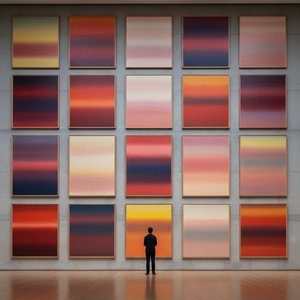
Mark Rothkos Meisterwerke: Die Top 25 für Kunstliebhaber | OriginalUniqueArt
Entdecken Sie die 25 Meisterwerke von Mark Rothko! Tauchen Sie ein in die Welt der abstrakten Kunst, des Expressionismus und der Farbfeldmalerei. Hochwertige Kunstdrucke & Reproduktionen auf OriginalUniqueArt.com – für Ihre Wohnräume.

Crimson Threads of Narrative: Exploring Symbolism & Representation in Artworks Featuring the Red Dress
Explore the rich symbolism of the red dress in art history! From ancient power displays to iconic portraits like Cézanne’s 'Madame Cezanne', discover the cultural and artistic significance behind this captivating color. Expert analysis & insights.

Kandinsky: Die 25 Meisterwerke des Abstrakten – Kunst für Ihr Zuhause | OriginalUniqueArt
Entdecken Sie die 25 bedeutendsten Gemälde von Wassily Kandinsky! Tauchen Sie ein in die Welt der abstrakten Kunst, des Expressionismus und der Farbkomposition. Hochwertige Kunstdrucke & Inspiration für Ihr Zuhause auf OriginalUniqueArt.com.