

 Vorschau anzeigen
 Versenden
 Teilen
 Details anzeigen
 Leitfaden

 Herunterladen
 Ähnliche Objekte
 Röntgenaufnahme
 Diashow
 Q&A
Q&A Statistiken
Heath Ewe and Lambs
 Oil
Oil- WallArt
- Romantic Landscape
 1810
1810- 19th Century
 71.0 x 92.0 cm
 Yale Center for British Art
 Weiterlesen
Giclée / Kunstdruck
Giclée- oder Leinwanddruck in Museumsqualität mit schneller Produktion und flexiblen Veredelungsoptionen. ( Handgemalte Reproduktion bestellen Zum digitalen Bild wechseln)




P118B €10

P118H €10

P118W €10

P438Z €10

P508JH €12

P508YH €12

P805H €10

P805Z €10

P919BZ €10

P919G €10

P919XJ €10

P959ZH €10

P968JZ €12

W106C €8

W218G €10

W218JH €8

W218Y €10

W307PJ €10

W316G €10

W316PJ €8

W316Y €10

W398PJ €8

W4111J €10

W500HY €15

W500JH €15

W692G €12

W849H €8

W940BG €15

W953PJ €8




Wählen Sie aus unseren vordefinierten Formaten, die den ursprünglichen Proportionen des Kunstwerks entsprechen.

Geben Sie die benötigte Breite und Höhe an, damit der Druck perfekt in Ihren Rahmen oder an Ihre Wand passt. Ein Druck kann nur beschnitten, aber niemals größer als das Originalbild angefertigt werden; daher verliert ein Format mit anderen Proportionen einen Teil des Bildes. Wir senden Ihnen ein digitales Mockup zur Freigabe, bevor wir den Druck ausführen. Das auf dieser Seite gezeigte Bild zeigt nicht den tatsächlichen Beschnitt – dies ist nur im Mockup ersichtlich.
Weltweiter Versand () innerhalb von 2 Wochen statt der üblichen 4/5 Wochen. (30 Oktober)

Kostenloser weltweiter Expressversand

Hochwertige Leinenleinwand

Umfassender Versicherungsschutz beim Versand

Zollgebühren-Rückerstattungsgarantie

Garantie für exakte Farbtreue

100 Tage Rückgaberecht (nur bei Mängeln)

100% Geld-zurück-Garantie

Mengenrabatt verfügbar
 Die Glasoption ist nur für Größen unter 110 cm verfügbar.

Heath Ewe and Lambs
Giclée / Kunstdruck
Format der Reproduktion
-


Endpreis
€ 71
A Pastoral Symphony in Wool and Earth
In the quietude of the English countryside, captured through the masterful lens of James Ward, Heath Ewe and Lambs emerges as a profound meditation on the rhythms of pastoral life. Painted in 1810, this evocative work transcends a mere depiction of livestock, offering instead a window into a vanished era of rustic tranquility. The composition draws the viewer immediately into a tender encounter between ewe and lamb, where the soft textures of fleece meet the rugged, weathered elements of the landscape. Through his delicate handling of light and form, Ward invites us to witness a moment of profound biological and emotional connection, set against the backdrop of an enduring, timeless countryside.
The scene is anchored by the presence of three sheep, their forms rendered with a tactile realism that makes one almost feel the warmth of their wool. A lamb, nestled closely beside its mother, serves as the emotional heartbeat of the piece, embodying innocence and the cycle of life. This intimacy is balanced by the broader landscape, where an old wooden fence and a striking splash of red cloth provide structural rhythm and a touch of human presence. The inclusion of figures in the periphery—one near the upper corner and another toward the bottom—suggests the watchful, symbiotic relationship between man and beast, hinting at a life defined by stewardship and the seasonal movements of the flock.
Mastery of the Romantic Animalier Style
James Ward was a titan of the British school, particularly renowned for his ability to imbue animal subjects with a sense of dignity and individual character. In Heath Ewe and Lambs, we see the hallmarks of his evolving technique during the early 19th century. Moving away from the simpler genre scenes of his early career, Ward began to embrace a more Romantic sensibility, where the landscape is not merely a setting but an active participant in the emotional narrative. His brushwork, though precise enough to capture the coarse grain of the wooden fence and the softness of the lamb's coat, possesses a fluid grace that allows the atmosphere of the heath to breathe.
For the discerning collector or interior designer, this painting offers a sophisticated interplay of texture and tone. The muted, earthy palette—rich with mossy greens, weathered browns, and subtle ochres—creates a soothing visual harmony that is ideal for creating a focal point in a classic or farmhouse-style interior. The sudden, rhythmic accent of the red cloth serves as a brilliant compositional device, drawing the eye across the canvas and preventing the pastoral scene from becoming overly monochromatic. It is a work that commands attention through its subtlety rather than through overt spectacle.
An Enduring Legacy for the Modern Collector
To possess a reproduction of such a significant work is to bring a piece of British art history into one's personal sanctuary. Heath Ewe and Lambs resonates deeply with the contemporary desire for connection to nature and the restorative power of the pastoral ideal. It evokes a sense of nostalgia for a slower, more deliberate way of existence, making it an inspiring choice for spaces designed for reflection and peace. Whether placed in a sunlit study or a grand dining hall, this painting serves as a testament to Ward's enduring ability to capture the soul of the natural world, offering a timeless elegance that transcends the boundaries of its 1810 origins.
Fragen & Antworten
Sind die Farben von "Heath Ewe and Lambs" von James Ward leuchtend oder eher dezent?
Die Farben von "Heath Ewe and Lambs" von James Ward bestechen durch eine Subtle Color Sättigung und eine Monochromatic Intensität.
Aus welchen Materialien besteht "Heath Ewe and Lambs" und in welchem Stil ist es gehalten?
"Heath Ewe and Lambs" ist in Oil im Stil der Romantic Landscape-Epoche gefertigt.
Welches Druckformat wird für "Heath Ewe and Lambs" von James Ward empfohlen?
Format Large, Ausrichtung Landscape: Dies ist die empfohlene Druckeinstellung für "Heath Ewe and Lambs" von James Ward.
Künstlerbiografie
James Ward: A Life in British Art
James Ward (1769-1859) war ein bedeutender britischer Maler, der für seine fesselnden Tiermalereien, romantischen Landschaften und aufschlussreichen Porträts bekannt ist. Obwohl er oft von Zeitgenossen überschattet wurde, hatte sein einzigartiger Stil und seine Fähigkeiten einen erheblichen Einfluss auf die Entwicklung der britischen Kunst im 19. Jahrhundert.
Frühes Leben und Ausbildung
James Ward wurde am 23. Oktober 1769 in London, Vereinigte Königreich, geboren und war der jüngere Bruder des Stahlschnitters William Ward. Seine frühen künstlerischen Neigungen wurden in einem kreativen Familienumfeld gefördert. Obwohl er eine gewisse formale Ausbildung erhielt, war seine Entwicklung weitgehend selbstgesteuert und stark von Beobachtung und Übung geprägt.
Künstlerische Entwicklung & Einflüsse
Wards Karriere lässt sich konventionell in zwei unterschiedliche Perioden hinsichtlich des Einflusses unterteilen. Zunächst bis etwa 1803 ähnelten seine Werke denen seines Schwagers, George Morland, gekennzeichnet durch Genreszenen und einen Fokus auf das Alltagsleben. In dieser Zeit wurde er zutiefst vom Barockmeister Peter Paul Rubens inspiriert und übernahm eine dynamischere Komposition, eine reiche Farbpalette und eine dramatische Verwendung von Licht und Schatten.
Bemerkenswerte Werke & Künstlerischer Stil
Wards einzigartiger Stil unterschied ihn von vielen Zeitgenossen. Er zeichnete sich in verschiedenen Genres aus, darunter Historienmalerei, Porträtmalerei, Landschaftsmalerei und Tiermalerei. Zu seinen bekanntesten Werken gehören:
- Gordale Scar (1814/15): Gilt als sein Meisterwerk, diese dramatische Darstellung einer Yorkshire-Schlucht veranschaulicht die sublimen Qualitäten des englischen Romantismus.
- The Deer Stealer (1823): In Auftrag gegeben von Theophilus Levett, zeigt dieses Gemälde Wards Geschicklichkeit in Erzählung und Tierdarstellung.
- John Levett Hunting at Wychnor, Staffordshire (1817): Ein Porträt eines seiner Mäzene, das seine Fähigkeit demonstriert, sowohl Ähnlichkeit als auch Atmosphäre einzufangen.
Seine Gemälde zeichnen sich durch eine sorgfältige Detailgenauigkeit aus, insbesondere bei der Darstellung von Tieren, kombiniert mit einer romantischen Sensibilität, die die Schönheit und Kraft der Natur betont.
Aufträge & Ausstellungen
Ward genoss die Förderung prominenter Persönlichkeiten wie Theophilus Levett, was zu zahlreichen Aufträgen führte. Er stellte seine Werke regelmäßig bei der Royal Academy aus und erlangte Anerkennung für sein Können und Originalität. Seine Aufnahme als Mitglied im Jahr 1811 festigte seinen Status innerhalb des britischen Kunstestablishment.
Späteres Leben & Vermächtnis
Ward malte bis zu einem Schlaganfall im Jahr 1855 weiterhin produktiv, der seine Karriere beendete. Er verstarb am 17. November 1859 in relativer Armut trotz seines früheren Erfolgs.
Trotz finanzieller Schwierigkeiten später im Leben ist James Wards Einfluss auf die britische Kunst unbestreitbar. Seine einzigartige Mischung aus Realismus und Romantik ebnete den Weg für zukünftige Generationen von Tiermalern und Landschaftskünstlern. Seine Werke befinden sich heute in renommierten Sammlungen wie Tate Britain und dem Yale Center for British Art.
Historische Bedeutung
James Ward nimmt eine bedeutende Position innerhalb des Übergangs von der Neoklassik zur Romantik in der britischen Kunst ein. Er schloss die Lücke zwischen traditioneller Genresmalerei und dem wachsenden Interesse an Landschaft und Naturalismus und hinterließ ein Vermächtnis fesselnder Werke, die weiterhin inspirieren und erfreuen.

James Ward
1769 - 1859 , Vereinigtes Königreich
Kurzinfos
- Artistic Movement Or Style: Romantik
- Artists Who Influenced This Artist:
- George Morland
- Peter Paul Rubens
- Date Of Birth: 23. Oktober 1769
- Full Name: James Ward
- Nationality: Englisch
- Notable Artworks:
- Gordale Scar
- Die Deer Stealer
- John Levett Hunting at Wychnor
- Place Of Birth: London, Vereinigtes Königreich
Ähnliche Artikel

James Abbott McNeill Whistler: Die 25 Meisterwerke für Ihr Zuhause | OriginalUniqueArt
Entdecken Sie die 25 Meisterwerke von James Abbott McNeill Whistler! Von den berühmten Nocturnes bis zu ikonischen Porträts – erleben Sie Ästhetizismus, Impressionismus & Tonalismus. Hochwertige Reproduktionen auf OriginalUniqueArt.com.
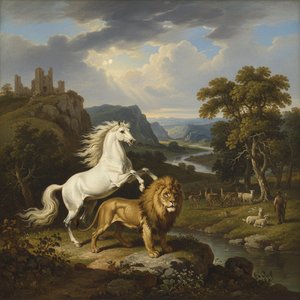
James Ward: A Study in British Romantic Landscape and Animal Painting
Explore the captivating world of James Ward (1769-1859), a master of British Romantic landscape & animal painting. Discover his iconic 'Gordale Scar' and exquisite portraits – a timeless art investment. Learn about his influences, style, and enduring legacy.

Sir Alfred James Munnings: Die 25 Meisterwerke des Pferdebildes | OriginalUniqueArt
Entdecken Sie die 25 Meisterwerke von Sir Alfred James Munnings! Erleben Sie seine beeindruckenden Pferdebilder, geprägt vom Impressionismus und Realismus. Hochwertige Kunstdrucke & Reproduktionen auf OriginalUniqueArt.com – für elegante Wandkunst & stilvolles Interieurdesign.
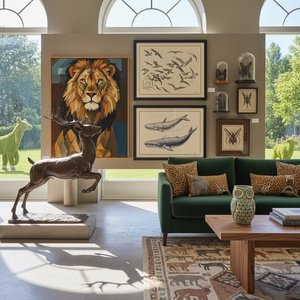
Animalia: Die bleibende Präsenz von Tieren in Kunst und Innenarchitektur
Entdecken Sie die faszinierende Welt der Animalia! Von historischen Tierdarstellungen bis zur modernen Innenarchitektur – wir bieten Expertise, hochwertige Reproduktionen & Kunstberatung.

Deine Fotos als Anime-Meisterwerk: Verwandle flüchtige Erinnerungen in zeitlose, handgemalte Kunstwerke für dein Zuhause
Verwandle deine liebsten Fotos in exklusive Anime-Meisterwerke. Unsere professionellen Künstler erschaffen handgemalte Ölgemälde auf Leinwand, die digitale Momente in zeitlose Kunst verwandeln. Erlebe höchste Qualität und emotionale Tiefe für dein Zuhause. Jetzt entdecken!


