

 Vorschau anzeigen
 Versenden
 Teilen
 Details anzeigen

 Herunterladen
 Ähnliche Objekte
 Röntgenaufnahme
 Diashow
Gordale Scar
 Oil On Canvas
- WallArt
- Romantic Landscape
 1811
1811 332.0 x 421.0 cm
 Tate Britain
 Weiterlesen
Giclée / Kunstdruck
Giclée- oder Leinwanddruck in Museumsqualität mit schneller Produktion und flexiblen Veredelungsoptionen. ( Handgemalte Reproduktion bestellen Bild kaufen)




P118B $10

P118H $10

P118W $10

P438Z $10

P508JH $12

P508YH $12

P805H $10

P805Z $10

P919BZ $10

P919G $10

P919XJ $10

P959ZH $10

P968JZ $12

W106C $8

W218G $10

W218JH $8

W218Y $10

W307PJ $10

W316G $10

W316PJ $8

W316Y $10

W398PJ $8

W4111J $10

W500HY $15

W500JH $15

W692G $12

W849H $8

W940BG $15

W953PJ $8




Wählen Sie aus unseren vordefinierten Formaten, die den ursprünglichen Proportionen des Kunstwerks entsprechen.

Sie können Ihre eigenen Maße eingeben, um ein bestimmtes Format oder einen speziellen Platz einzupassen. Wenn das von Ihnen gewählte Format nicht den Proportionen des Originalbildes entspricht, werden wir das Kunstwerk entweder beschneiden oder das Bild mit einem gespiegelten oder einfarbigen Rand erweitern. Ein digitaler Entwurf wird Ihnen zur Genehmigung zugesandt, bevor die Produktion beginnt.
Bitte beachten Sie, dass die Vorschau auf dem Bildschirm nicht den tatsächlichen Zuschnitt oder die Erweiterung widerspiegelt. Nur der Entwurf zeigt die endgültige Komposition präzise an.
Obwohl Sondermaße verfügbar sind, empfehlen wir die Auswahl eines Maßes aus der vordefinierten Liste, um die ursprünglichen Proportionen zu bewahren.
Weltweiter Versand () innerhalb von 2 Wochen statt der üblichen 4/5 Wochen. (17 August)

Kostenloser weltweiter Expressversand

Hochwertige Leinenleinwand

Umfassender Versicherungsschutz beim Versand

Zollgebühren-Rückerstattungsgarantie

Garantie für exakte Farbtreue

60 Tage Rückgaberecht (nur bei Mängeln)

100% Geld-zurück-Garantie

Mengenrabatt verfügbar
 Die Glasoption ist nur für Größen unter 110 cm verfügbar.

Gordale Scar
Giclée / Kunstdruck
Format der Reproduktion
-


Gesamtpreis
$ 80
Sammlerstück-Beschreibung
A Dramatic Vision of the Yorkshire Landscape
James Ward’s “Gordale Scar” isn't merely a depiction of a Yorkshire ravine; it’s an immersive experience, a carefully constructed drama rendered in oil on canvas. Completed in 1814, this monumental work captures a pivotal moment within the Romantic movement – a time when artists sought to elevate nature beyond mere representation, imbuing it with profound emotional and spiritual significance. The painting immediately commands attention with its sheer scale; measuring over three by four feet, it invites the viewer into the heart of Gordale Scar, drawing them into a world of towering cliffs, cascading waterfalls, and brooding skies.
Ward’s skill lies not just in his technical prowess – evident in the meticulous detail of the rock formations and the subtle play of light on the water – but also in his ability to evoke atmosphere. The palette is dominated by cool blues and greys, reflecting the dampness and shadow that perpetually cling to this dramatic gorge. Yet, flashes of ochre and umber hint at the warmth of the sun struggling to penetrate the clouds, creating a dynamic tension between light and darkness. The composition itself is carefully orchestrated; the receding cliffs draw the eye into the depths of the ravine, while the figures scattered throughout the scene serve as anchors, grounding the viewer in this wild and untamed landscape.
The Commission and its Context
“Gordale Scar” was commissioned by Lord Ribblesdale, a prominent landowner in the region, who sought to immortalize his estate’s most striking feature. This commission reflects the broader trend of landowners investing in art to enhance their prestige and demonstrate their connection to the land. However, Ward's painting transcends mere vanity; it speaks to a deeper appreciation for the sublime – that feeling of awe and terror inspired by the grandeur and power of nature. The Napoleonic Wars were ongoing at the time of its creation, and many artists sought solace and inspiration in the enduring beauty of England’s countryside, viewing it as a bastion of stability amidst political turmoil.
The inclusion of figures within the landscape is particularly significant. These aren't simply incidental additions; they represent humanity’s smallness and vulnerability when confronted with the overwhelming scale of nature. They are dwarfed by the cliffs, seemingly lost in the vastness of the ravine, prompting a contemplative response from the viewer. The presence of a bull on the right side of the painting is often interpreted as a symbol of John Bull, representing England itself, guarding this natural treasure.
Technique and Romantic Ideals
Ward’s technique is characterized by a loose, expressive brushstroke – a hallmark of the Romantic style. He eschews precise detail in favor of capturing the overall mood and atmosphere of the scene. The cliffs are rendered with a sense of ruggedness and dynamism, their surfaces textured with layers of paint that suggest both solidity and movement. The waterfalls are depicted as powerful torrents of water, cascading down the rock face with impressive force. Noticeably, Ward employed a technique called ‘atmospheric perspective’ – using lighter colors and softer edges to represent objects further away, creating a sense of depth and distance.
“Gordale Scar” is more than just a landscape painting; it's a testament to the Romantic ideal of connecting with nature on an emotional level. It invites us to contemplate our place within the natural world, reminding us of both its beauty and its power. Reproductions of this iconic work offer a remarkable opportunity to bring this dramatic vision into your home or office, capturing the spirit of the Yorkshire countryside and the enduring legacy of James Ward.
Über den Künstler
James Ward: A Life in British Art
James Ward (1769-1859) war ein bedeutender britischer Maler, der für seine fesselnden Tiermalereien, romantischen Landschaften und aufschlussreichen Porträts bekannt ist. Obwohl er oft von Zeitgenossen überschattet wurde, hatte sein einzigartiger Stil und seine Fähigkeiten einen erheblichen Einfluss auf die Entwicklung der britischen Kunst im 19. Jahrhundert.
Frühes Leben und Ausbildung
James Ward wurde am 23. Oktober 1769 in London, Vereinigte Königreich, geboren und war der jüngere Bruder des Stahlschnitters William Ward. Seine frühen künstlerischen Neigungen wurden in einem kreativen Familienumfeld gefördert. Obwohl er eine gewisse formale Ausbildung erhielt, war seine Entwicklung weitgehend selbstgesteuert und stark von Beobachtung und Übung geprägt.
Künstlerische Entwicklung & Einflüsse
Wards Karriere lässt sich konventionell in zwei unterschiedliche Perioden hinsichtlich des Einflusses unterteilen. Zunächst bis etwa 1803 ähnelten seine Werke denen seines Schwagers, George Morland, gekennzeichnet durch Genreszenen und einen Fokus auf das Alltagsleben. In dieser Zeit wurde er zutiefst vom Barockmeister Peter Paul Rubens inspiriert und übernahm eine dynamischere Komposition, eine reiche Farbpalette und eine dramatische Verwendung von Licht und Schatten.
Bemerkenswerte Werke & Künstlerischer Stil
Wards einzigartiger Stil unterschied ihn von vielen Zeitgenossen. Er zeichnete sich in verschiedenen Genres aus, darunter Historienmalerei, Porträtmalerei, Landschaftsmalerei und Tiermalerei. Zu seinen bekanntesten Werken gehören:
- Gordale Scar (1814/15): Gilt als sein Meisterwerk, diese dramatische Darstellung einer Yorkshire-Schlucht veranschaulicht die sublimen Qualitäten des englischen Romantismus.
- The Deer Stealer (1823): In Auftrag gegeben von Theophilus Levett, zeigt dieses Gemälde Wards Geschicklichkeit in Erzählung und Tierdarstellung.
- John Levett Hunting at Wychnor, Staffordshire (1817): Ein Porträt eines seiner Mäzene, das seine Fähigkeit demonstriert, sowohl Ähnlichkeit als auch Atmosphäre einzufangen.
Seine Gemälde zeichnen sich durch eine sorgfältige Detailgenauigkeit aus, insbesondere bei der Darstellung von Tieren, kombiniert mit einer romantischen Sensibilität, die die Schönheit und Kraft der Natur betont.
Aufträge & Ausstellungen
Ward genoss die Förderung prominenter Persönlichkeiten wie Theophilus Levett, was zu zahlreichen Aufträgen führte. Er stellte seine Werke regelmäßig bei der Royal Academy aus und erlangte Anerkennung für sein Können und Originalität. Seine Aufnahme als Mitglied im Jahr 1811 festigte seinen Status innerhalb des britischen Kunstestablishment.
Späteres Leben & Vermächtnis
Ward malte bis zu einem Schlaganfall im Jahr 1855 weiterhin produktiv, der seine Karriere beendete. Er verstarb am 17. November 1859 in relativer Armut trotz seines früheren Erfolgs.
Trotz finanzieller Schwierigkeiten später im Leben ist James Wards Einfluss auf die britische Kunst unbestreitbar. Seine einzigartige Mischung aus Realismus und Romantik ebnete den Weg für zukünftige Generationen von Tiermalern und Landschaftskünstlern. Seine Werke befinden sich heute in renommierten Sammlungen wie Tate Britain und dem Yale Center for British Art.
Historische Bedeutung
James Ward nimmt eine bedeutende Position innerhalb des Übergangs von der Neoklassik zur Romantik in der britischen Kunst ein. Er schloss die Lücke zwischen traditioneller Genresmalerei und dem wachsenden Interesse an Landschaft und Naturalismus und hinterließ ein Vermächtnis fesselnder Werke, die weiterhin inspirieren und erfreuen.

James Ward
1769 - 1859 , Vereinigtes Königreich
Kurzinfos
- Artistic Movement Or Style: Romantik
- Artists Who Influenced This Artist:
- George Morland
- Peter Paul Rubens
- Date Of Birth: 23. Oktober 1769
- Full Name: James Ward
- Nationality: Englisch
- Notable Artworks:
- Gordale Scar
- Die Deer Stealer
- John Levett Hunting at Wychnor
- Place Of Birth: London, Vereinigtes Königreich
Ähnliche Artikel
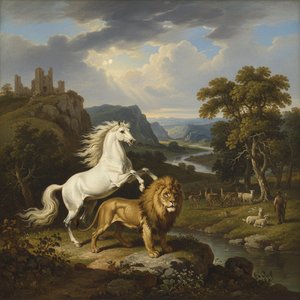
James Ward: A Study in British Romantic Landscape and Animal Painting
Explore the captivating world of James Ward (1769-1859), a master of British Romantic landscape & animal painting. Discover his iconic 'Gordale Scar' and exquisite portraits – a timeless art investment. Learn about his influences, style, and enduring legacy.

Sir Alfred James Munnings: Die 25 Meisterwerke des Pferdebildes | OriginalUniqueArt
Entdecken Sie die 25 Meisterwerke von Sir Alfred James Munnings! Erleben Sie seine beeindruckenden Pferdebilder, geprägt vom Impressionismus und Realismus. Hochwertige Kunstdrucke & Reproduktionen auf OriginalUniqueArt.com – für elegante Wandkunst & stilvolles Interieurdesign.

James Abbott McNeill Whistler: Die 25 Meisterwerke für Ihr Zuhause | OriginalUniqueArt
Entdecken Sie die 25 Meisterwerke von James Abbott McNeill Whistler! Von den berühmten Nocturnes bis zu ikonischen Porträts – erleben Sie Ästhetizismus, Impressionismus & Tonalismus. Hochwertige Reproduktionen auf OriginalUniqueArt.com.
Die schönsten Landschaftsbilder: 10 Meisterwerke für Ihr Zuhause | OriginalUniqueArt.com
Entdecken Sie die 10 schönsten Landschaftsbilder der Kunstgeschichte! Von Monet bis Van Gogh – erfahren Sie die Geschichten hinter Meisterwerken & finden Sie Inspiration für Ihr Zuhause. Hochwertige Kunstdrucke auf OriginalUniqueArt.com.

Evocations of Place: A Historical Journey Through Landscape Art
Explore the rich history of landscape art with OriginalUniqueArt. Discover renowned artists, movements like Impressionism & Romanticism, and expert guidance for collecting timeless pieces. Find your perfect serene escape today!



