
 Vorschau anzeigen
 Versenden
 Teilen
 Details anzeigen
 Leitfaden

 Herunterladen
 Ähnliche Objekte
 Röntgenaufnahme
 Diashow
 Fragen & Antworten
 Statistiken
Rien faire et laisser rire

 Weiterlesen
Giclée / Kunstdruck
Giclée- oder Leinwanddruck in Museumsqualität mit schneller Produktion und flexiblen Veredelungsoptionen. ( Handgemalte Reproduktion bestellen Zum digitalen Bild wechseln)




P118B €10

P118H €10

P118W €10

P438Z €10

P508JH €12

P508YH €12

P805H €10

P805Z €10

P919BZ €10

P919G €10

P919XJ €10

P959ZH €10

P968JZ €12

W106C €8

W218G €10

W218JH €8

W218Y €10

W307PJ €10

W316G €10

W316PJ €8

W316Y €10

W398PJ €8

W4111J €10

W500HY €15

W500JH €15

W692G €12

W849H €8

W940BG €15

W953PJ €8




Wählen Sie aus unseren vordefinierten Formaten, die den ursprünglichen Proportionen des Kunstwerks entsprechen.

Geben Sie die benötigte Breite und Höhe an, damit der Druck perfekt in Ihren Rahmen oder an Ihre Wand passt. Ein Druck kann nur beschnitten, aber niemals größer als das Originalbild angefertigt werden; daher verliert ein Format mit anderen Proportionen einen Teil des Bildes. Wir senden Ihnen ein digitales Mockup zur Freigabe, bevor wir den Druck ausführen. Das auf dieser Seite gezeigte Bild zeigt nicht den tatsächlichen Beschnitt – dies ist nur im Mockup ersichtlich.
Weltweiter Versand () innerhalb von 2 Wochen statt der üblichen 4/5 Wochen. (3 November)

Kostenloser weltweiter Expressversand

Hochwertige Leinenleinwand

Umfassender Versicherungsschutz beim Versand

Zollgebühren-Rückerstattungsgarantie

Garantie für exakte Farbtreue

100 Tage Rückgaberecht (nur bei Mängeln)

100% Geld-zurück-Garantie

Mengenrabatt verfügbar
 Die Glasoption ist nur für Größen unter 110 cm verfügbar.

Rien faire et laisser rire
Giclée / Kunstdruck
Format der Reproduktion
-


Endpreis
€ 72
Das Wirbelnde Chaos der Ironie: Eine Betrachtung zu „Rien faire et laisser rire“
James Ensor’s “Rien faire et laisser rire” (Nothing to do but laugh) is not merely a painting; it's an immersive experience, a vibrant collision of figures and symbols that plunges the viewer directly into the heart of Belgian artist James Ensor’s uniquely unsettling world. Painted in 1939, during a period of immense global upheaval, the work transcends simple representation, becoming a potent commentary on societal expectations, artistic critique, and the inherent absurdity of human behavior. The scene unfolds within a claustrophobic interior space, dominated by a central statue – a male figure with an oversized ear – seemingly oblivious to the chaotic spectacle surrounding him. This statue, often interpreted as a self-portrait of Ensor himself, embodies a detached, almost arrogant indifference, a deliberate refusal to engage with the world’s follies.
The painting is awash in a riotous palette of colors – deep reds, yellows, and blues clash dramatically, creating an atmosphere of heightened tension. Ensor employs a technique characteristic of his mature style: bold brushstrokes, flattened perspectives, and a deliberate distortion of reality. He utilizes a layered approach, building up the composition through multiple applications of paint, resulting in a textured surface that seems to pulsate with energy. The figures themselves are rendered with an almost grotesque exaggeration – birds squawking and flapping wildly, animals exhibiting unsettling behaviors, and people engaged in bizarre interactions all contribute to this sense of controlled chaos.
Symbolik und Interpretation: Ein Tanz der Ironie
The painting’s title, “Rien faire et laisser rire,” immediately establishes a key theme: the deliberate act of doing nothing but laughing. This isn't a joyous, carefree laughter; rather, it suggests a cynical amusement at the follies and pretensions of others. The act of spitting upon the central statue – an inkwell and a book bearing the title “Rien faire et laisser rire” – is particularly significant. It’s a direct challenge to authority, a rejection of established norms, and a playful subversion of artistic conventions. The parrot, perched prominently on the wall, further amplifies this sense of irreverence, its mimicry suggesting a critique of imitation and conformity.
Numerous birds are scattered throughout the composition, each contributing to the overall feeling of unrestrained energy. Some fly directly towards the statue, as if attempting to disrupt its composure, while others appear more detached, observing the scene with an almost sardonic gaze. The presence of a dog chasing something and a cat lurking in the corner adds another layer of complexity, hinting at primal instincts and the unpredictable nature of human behavior. The overall effect is one of controlled chaos – a visual representation of the anxieties and uncertainties of the era.
Historischer Kontext und der Künstler
To understand “Rien faire et laisser rire,” it’s crucial to consider James Ensor's life and artistic trajectory. Born in Ostend, Belgium, in 1860, Ensor was deeply influenced by the vibrant atmosphere of his seaside hometown – a melting pot of cultures and traditions. His early work often featured masks and theatrical costumes, reflecting his fascination with disguise and performance. He initially studied at the Académie Royale des Beaux-Arts in Brussels but quickly rejected its rigid academic approach, forging his own distinctive style characterized by psychological intensity and social satire.
The painting was created during a period of significant political and social upheaval – just before the outbreak of World War II. Ensor’s work often explored themes of isolation, anxiety, and the dark undercurrents beneath the surface of everyday life. “Rien faire et laisser rire” can be interpreted as a reflection on these anxieties, a darkly humorous commentary on the absurdity of human existence in the face of impending doom. The painting's deliberate ambiguity invites multiple interpretations, ensuring that it continues to resonate with viewers today.
Reproduktionen und die Kunst von James Ensor
OriginalUniqueArt offers meticulously crafted hand-painted reproductions of “Rien faire et laisser rire,” allowing art lovers to experience the full impact of this iconic work. Our skilled artists faithfully recreate Ensor’s distinctive style, capturing the painting's vibrant colors, dynamic composition, and unsettling atmosphere with remarkable precision. Whether you are a seasoned collector or simply seeking a unique piece of art for your home, our reproductions provide an authentic and affordable way to bring the world of James Ensor into your space. Explore our selection today and discover the enduring power of this unforgettable masterpiece.
Fragen & Antworten
Wie spiegeln sich Stilrichtung und Epoche in "Rien faire et laisser rire" von James Ensor wider?
"Rien faire et laisser rire" gehört der Strömung des Symbolism, Expressionism, Surrealism an, und sein Schöpfer war in der Ära der – 19. Jahrhundert tätig.
Welche emotionale Stimmung vermittelt "Rien faire et laisser rire" von James Ensor?
Die für "Rien faire et laisser rire" von James Ensor festgelegte emotionale Stimmung ist Melancholisch. Sie fasst das Gefühl zusammen, das das Werk ausdrückt.
Wie harmonisch ist die Farbgestaltung von "Rien faire et laisser rire" von James Ensor?
Die Farben von "Rien faire et laisser rire" von James Ensor weisen eine Disharmonische Farbpalette Harmonie auf. Harmonie beschreibt das Zusammenspiel der Farben untereinander.
Künstlerbiografie
frühes Leben und künstlerische Reise
James Sidney Edward, Baron Ensor, ein prominenter belgischer Maler und Grafiker, wurde am 13. April 1860 in Ostend, Belgien, geboren. Sein frühes Leben war von einem vielfältigen kulturellen Hintergrund geprägt, mit einem englischen Vater, James Frederic Ensor, und einer belgischen Mutter, Maria Catherina Haegheman. Ensor zeigte wenig Interesse an traditionellen akademischen Studien und verließ die Schule mit fünfzehn Jahren, um sich der Kunst zu widmen, zunächst bei lokalen Malern und später am Académie Royale des Beaux-Arts in Brüssel.Künstlerischer Stil und Themen
Ensor's künstlerischer Stil war durch seine Auseinandersetzung mit dem Unterbewusstsein und traumhaften Bildern gekennzeichnet, der die Expressionismus und Surrealismus maßgeblich beeinflusste. Seine Gemälde zeigten oft bizarre Motive, darunter Karnevale, Masken, Puppenspiel, Skelette und fantastische Allegorien. Bekannte Werke sind Die Schändlichen Masken (1883) und Skelette kämpfen um eine gehängte Person (1891), die seine einzigartige Mischung aus Groteskem und Fantasievollem zeigen.Anerkennung und Vermächtnis
Trotz anfänglicher Ablehnung gewann Ensor's Werk allmählich Anerkennung und Anklang. Bis 1920 war er das Thema bedeutender Ausstellungen; im Jahr 1929 wurde er zum Baron durch König Albert ernannt, und 1933 erhielt er die Légion d’honneur. Sein Vermächtnis als Pionier der modernen Kunst ist in seinem Einfluss auf nachfolgende künstlerische Bewegungen, einschließlich Expressionismus und Surrealismus, erkennbar.Wichtige Werke und Ausstellungen
* Die Intrige (90 x 150 cm, Koninklijk Museum voor Schone Kunsten, Antwerpen, Belgien) * Die Qualen des Heiligen Antonius (1887, heute im Besitz der Sammlung des Museum of Modern Art, New York)- Erfahren Sie mehr über das Leben und Werk von James Ensor auf OriginalUniqueArt: James Ensor
- Entdecken Sie das Museum Mu.Zee in Ostend, Belgien, das eine Sammlung belgischer Kunst von 1830 bis heute beherbergt auf OriginalUniqueArt: Entdecken Sie das Museum Mu.Zee in Ostend, Belgien
- Erfahren Sie mehr über Malerei des Symbolismus und seinen Einfluss auf Expressionismus und Surrealismus auf Wikipedia: Symbolistische Malerei

James Ensor
1860 - 1949 , Belgien
Kurzinfos
- Beeinflusste Künstler:
- Pieter Bruegel der Ältere
- Francisco Goya
- Bemerkenswerte Werke:
- Die Schmählichen Masken
- Christus in Brüssel
- Tribulationen des Heiligen Antonius
- Geburtsdatum: 1860-04-13
- Geburtsort: Ostende, Belgien
- Künstlerische Richtung: Expressionismus, Symbolismus
- Nationalität: Belgisch
- Todatum: 1949-11-19
- Vollständiger Name: James Ensor
- Von Künstlern Beeinflusst: ['']
Ähnliche Artikel
Feathered Visions: A Historical & Artistic Exploration of Birds in Painting
Explore the rich history of birds in painting! Discover symbolism, artistic movements & master artists like Audubon. High-quality reproductions available at OriginalUniqueArt.

Meisterwerke der englischen Landschaft: Die 25 besten Werke von Sir Alfred James Munnings
Entdecken Sie die 25 besten Werke von Sir Alfred James Munnings. Erleben Sie britische Pferdemalerei auf OriginalUniqueArt.com.
The Sharpest Wit: A Historical Exploration of Satire in Visual Culture
Explore the history of satire in art! From ancient masters like Aristophanes to Goya & Grosz, discover how artists use wit and critique to reflect—and challenge—society. Expert insights at OriginalUniqueArt.

James Abbott McNeill Whistler: Die 25 Meisterwerke für Ihr Zuhause | OriginalUniqueArt
Entdecken Sie die 25 Meisterwerke von James Abbott McNeill Whistler! Von den berühmten Nocturnes bis zu ikonischen Porträts – erleben Sie Ästhetizismus, Impressionismus & Tonalismus. Hochwertige Reproduktionen auf OriginalUniqueArt.com.
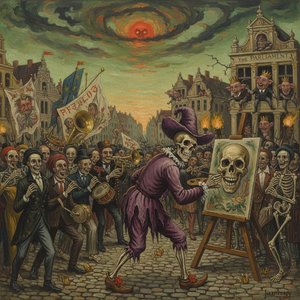
James Ensor und die groteske Vision: Gesellschaftskritik und künstlerische Innovation
Entdecken Sie James Ensors faszinierende Welt der Groteske! Analysieren Sie seine Gesellschaftskritik, den Einfluss des Symbolismus und seinen einzigartigen Stil. Expertenwissen zur modernen Kunst.


