

 Vorschau anzeigen
 Versenden
 Teilen
 Details anzeigen

 Herunterladen
 Ähnliche Objekte
 Röntgenaufnahme
 Diashow
 Statistiken
La musique russe


 Weiterlesen
Giclée / Kunstdruck
Giclée- oder Leinwanddruck in Museumsqualität mit schneller Produktion und flexiblen Veredelungsoptionen. ( Handgemalte Reproduktion bestellen Zum digitalen Bild wechseln)




P118B $10

P118H $10

P118W $10

P438Z $10

P508JH $12

P508YH $12

P805H $10

P805Z $10

P919BZ $10

P919G $10

P919XJ $10

P959ZH $10

P968JZ $12

W106C $8

W218G $10

W218JH $8

W218Y $10

W307PJ $10

W316G $10

W316PJ $8

W316Y $10

W398PJ $8

W4111J $10

W500HY $15

W500JH $15

W692G $12

W849H $8

W940BG $15

W953PJ $8




Wählen Sie aus unseren vordefinierten Formaten, die den ursprünglichen Proportionen des Kunstwerks entsprechen.

Sie können Ihre eigenen Maße eingeben, um ein bestimmtes Format oder einen speziellen Platz einzupassen. Wenn das von Ihnen gewählte Format nicht den Proportionen des Originalbildes entspricht, werden wir das Kunstwerk entweder beschneiden oder das Bild mit einem gespiegelten oder einfarbigen Rand erweitern. Ein digitaler Entwurf wird Ihnen zur Genehmigung zugesandt, bevor die Produktion beginnt.
Bitte beachten Sie, dass die Vorschau auf dem Bildschirm nicht den tatsächlichen Zuschnitt oder die Erweiterung widerspiegelt. Nur der Entwurf zeigt die endgültige Komposition präzise an.
Obwohl Sondermaße verfügbar sind, empfehlen wir die Auswahl eines Maßes aus der vordefinierten Liste, um die ursprünglichen Proportionen zu bewahren.
Weltweiter Versand () innerhalb von 2 Wochen statt der üblichen 4/5 Wochen. (12 September)

Kostenloser weltweiter Expressversand

Hochwertige Leinenleinwand

Umfassender Versicherungsschutz beim Versand

Zollgebühren-Rückerstattungsgarantie

Garantie für exakte Farbtreue

100-Tage-Rückgaberecht (nur bei Mängeln)

100% Geld-zurück-Garantie

Mengenrabatt verfügbar
 Die Glasoption ist nur für Größen unter 110 cm verfügbar.

La musique russe
Giclée / Kunstdruck
Format der Reproduktion
-


Gesamtpreis
$ 80
James Ensor's 'La Musique Russe': A Portrait of Unease
James Ensor’s “La Musique Russe,” painted circa 1896, is not merely a depiction of a musical gathering; it’s a meticulously crafted exploration of psychological tension and the unsettling undercurrents lurking beneath the surface of social interaction. This captivating work, rendered in Ensor's signature dark palette and characterized by its almost claustrophobic composition, immediately draws the viewer into a world of veiled emotions and unspoken anxieties. The scene unfolds within a richly detailed interior – a dining room bathed in shadow – populated with figures engaged in an ostensibly joyful activity: a man playing the piano while a woman observes him. However, the overall effect is profoundly unsettling, a testament to Ensor’s masterful ability to evoke discomfort rather than simply represent reality.
- Subject Matter & Composition: The central focus is undeniably the pianist, his posture suggesting both concentration and a subtle detachment. His dark suit and intense gaze contribute to an air of mystery, while the woman's stance – poised yet distant – hints at a complex relationship or perhaps a shared sense of unease. The inclusion of several other figures, partially obscured and rendered with varying degrees of detail, further amplifies this feeling of disquiet.
- Technique & Style: Ensor’s technique is immediately recognizable—a dense impasto application of paint creates a tactile surface, emphasizing the physicality of his brushstrokes. The use of strong contrasts between light and shadow – a hallmark of his style – dramatically shapes the forms and intensifies the emotional impact. His meticulous attention to detail, particularly in rendering the textures of fabrics and objects, adds to the painting’s unsettling realism.
Symbolism and the Ensorian Vision
Ensor's work is deeply rooted in Symbolism, a movement that sought to express subjective emotions and ideas rather than objective reality. “La Musique Russe” is replete with symbolic elements that contribute to its overall sense of unease. The dark color palette – dominated by blacks, browns, and muted greens – evokes feelings of melancholy, isolation, and perhaps even impending doom. The presence of carnival masks (implied through the souvenir shop setting in Ensor’s childhood) speaks to a fascination with disguise and the hidden identities that lie beneath social facades. The open book on the table suggests interrupted contemplation or a lost opportunity for connection – further reinforcing the theme of isolation.
- Masks & Disguise: Ensor frequently employed masks in his art, reflecting his preoccupation with themes of identity and deception. While not overtly visible in this painting, the suggestion of masks through the souvenir shop origins subtly permeates the scene.
- Emotional Intensity: The figures’ expressions are deliberately ambiguous, inviting viewers to project their own anxieties and interpretations onto the work. This deliberate lack of clarity is a key element of Ensor's artistic strategy – forcing the viewer to confront uncomfortable emotions rather than offering easy answers.
Historical Context & Ensor’s Legacy
Painted in 1896, “La Musique Russe” reflects the anxieties and uncertainties of the late 19th century. The rise of industrialization, urbanization, and social change contributed to a growing sense of alienation and disillusionment – themes that resonated deeply with Ensor’s artistic vision. Ensor was a pivotal figure in the development of modern art, particularly in Belgium, where he challenged academic conventions and paved the way for Expressionism. His unflinching exploration of psychological darkness and his rejection of traditional aesthetic values established him as one of the most important artists of his time.
Provenance & Reproduction Quality:** OriginalUniqueArt offers a meticulously crafted hand-painted reproduction of “La Musique Russe,” ensuring that you experience the full impact of Ensor’s masterpiece. Our skilled artisans employ the same techniques and attention to detail as the original, capturing every nuance of color, texture, and composition. This is more than just an image; it's a tangible connection to one of art history’s most compelling and unsettling visions.Perfect for Interior Design & Art Collection
"La Musique Russe" would be a striking addition to any discerning collection or interior space. Its evocative atmosphere and powerful symbolism make it a conversation starter, while its timeless quality ensures that it will remain a captivating work of art for generations to come. Consider this piece as a focal point in a study, salon, or gallery – a testament to the enduring power of Ensor’s vision.
Über den Künstler
frühes Leben und künstlerische Reise
James Sidney Edward, Baron Ensor, ein prominenter belgischer Maler und Grafiker, wurde am 13. April 1860 in Ostend, Belgien, geboren. Sein frühes Leben war von einem vielfältigen kulturellen Hintergrund geprägt, mit einem englischen Vater, James Frederic Ensor, und einer belgischen Mutter, Maria Catherina Haegheman. Ensor zeigte wenig Interesse an traditionellen akademischen Studien und verließ die Schule mit fünfzehn Jahren, um sich der Kunst zu widmen, zunächst bei lokalen Malern und später am Académie Royale des Beaux-Arts in Brüssel.Künstlerischer Stil und Themen
Ensor's künstlerischer Stil war durch seine Auseinandersetzung mit dem Unterbewusstsein und traumhaften Bildern gekennzeichnet, der die Expressionismus und Surrealismus maßgeblich beeinflusste. Seine Gemälde zeigten oft bizarre Motive, darunter Karnevale, Masken, Puppenspiel, Skelette und fantastische Allegorien. Bekannte Werke sind Die Schändlichen Masken (1883) und Skelette kämpfen um eine gehängte Person (1891), die seine einzigartige Mischung aus Groteskem und Fantasievollem zeigen.Anerkennung und Vermächtnis
Trotz anfänglicher Ablehnung gewann Ensor's Werk allmählich Anerkennung und Anklang. Bis 1920 war er das Thema bedeutender Ausstellungen; im Jahr 1929 wurde er zum Baron durch König Albert ernannt, und 1933 erhielt er die Légion d’honneur. Sein Vermächtnis als Pionier der modernen Kunst ist in seinem Einfluss auf nachfolgende künstlerische Bewegungen, einschließlich Expressionismus und Surrealismus, erkennbar.Wichtige Werke und Ausstellungen
* Die Intrige (90 x 150 cm, Koninklijk Museum voor Schone Kunsten, Antwerpen, Belgien) * Die Qualen des Heiligen Antonius (1887, heute im Besitz der Sammlung des Museum of Modern Art, New York)- Erfahren Sie mehr über das Leben und Werk von James Ensor auf OriginalUniqueArt: James Ensor
- Entdecken Sie das Museum Mu.Zee in Ostend, Belgien, das eine Sammlung belgischer Kunst von 1830 bis heute beherbergt auf OriginalUniqueArt: Entdecken Sie das Museum Mu.Zee in Ostend, Belgien
- Erfahren Sie mehr über Malerei des Symbolismus und seinen Einfluss auf Expressionismus und Surrealismus auf Wikipedia: Symbolistische Malerei

James Ensor
1860 - 1949 , Belgien
Kurzinfos
- Beeinflusste Künstler:
- Pieter Bruegel der Ältere
- Francisco Goya
- Bemerkenswerte Werke:
- Die Schmählichen Masken
- Christus in Brüssel
- Tribulationen des Heiligen Antonius
- Geburtsdatum: 1860-04-13
- Geburtsort: Ostende, Belgien
- Künstlerische Richtung: Expressionismus, Symbolismus
- Nationalität: Belgisch
- Todatum: 1949-11-19
- Vollständiger Name: James Ensor
- Von Künstlern Beeinflusst: ['']
Ähnliche Artikel

10 Meisterwerke des Romantischen Realismus: Wenn Emotion auf Wahrheit trifft
Entdecken Sie 10 Meisterwerke des Romantischen Realismus. Erleben Sie die emotionale Tiefe von Künstlern wie Constable und Friedrich – perfekt als Inspiration für Ihre Kunstsammlung oder Wandgestaltung. Finden Sie museale Reproduktionen auf OriginalUniqueArt.com.

Giclée Prints: Archival Quality & Aesthetic Nuances for the Discerning Collector
Explore the world of giclée prints with OriginalUniqueArt. Learn about archival quality, aesthetic nuances & investment potential. Expert guidance for discerning art collectors seeking museum-quality reproductions and lasting value.

The Enduring Legacy of Fine Art Prints: Technique, History & Aesthetic Impact
Explore the rich history & techniques of fine art prints. Discover investment potential, assess authenticity, and learn how to preserve your collection with expert guidance. Trusted insights for discerning collectors.

Echoes of Time: Exploring the Enduring Appeal & Historical Context of Vintage Art Prints
Explore the captivating world of vintage art prints! Discover their history, collecting tips & enduring appeal. Expert insights on chromolithography and building a legacy collection with OriginalUniqueArt.
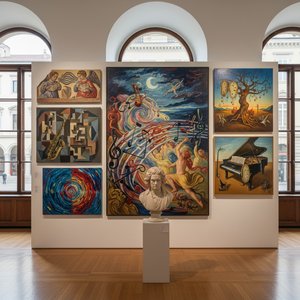
Harmonies on Canvas: Exploring the Visual Representation of Music in Art History
Explore the fascinating history of music's visual representation in art! From ancient symbolism to modern abstraction, discover how artists have captured sound and emotion on canvas. Expert insights & stunning examples.


