
 Vorschau anzeigen
 Versenden
 Teilen
 Details anzeigen
 Leitfaden

 Herunterladen
 Ähnliche Objekte
 Röntgenaufnahme
 Diashow
 Fragen & Antworten
 Statistiken
Comité Américain pour les Régions Dévastées de la France


 Weiterlesen
Giclée / Kunstdruck
Giclée- oder Leinwanddruck in Museumsqualität mit schneller Produktion und flexiblen Veredelungsoptionen. ( Handgemalte Reproduktion bestellen Zum digitalen Bild wechseln)




P118B €10

P118H €10

P118W €10

P438Z €10

P508JH €12

P508YH €12

P805H €10

P805Z €10

P919BZ €10

P919G €10

P919XJ €10

P959ZH €10

P968JZ €12

W106C €8

W218G €10

W218JH €8

W218Y €10

W307PJ €10

W316G €10

W316PJ €8

W316Y €10

W398PJ €8

W4111J €10

W500HY €15

W500JH €15

W692G €12

W849H €8

W940BG €15

W953PJ €8




Wählen Sie aus unseren vordefinierten Formaten, die den ursprünglichen Proportionen des Kunstwerks entsprechen.

Geben Sie die benötigte Breite und Höhe an, damit der Druck perfekt in Ihren Rahmen oder an Ihre Wand passt. Ein Druck kann nur beschnitten, aber niemals größer als das Originalbild angefertigt werden; daher verliert ein Format mit anderen Proportionen einen Teil des Bildes. Wir senden Ihnen ein digitales Mockup zur Freigabe, bevor wir den Druck ausführen. Das auf dieser Seite gezeigte Bild zeigt nicht den tatsächlichen Beschnitt – dies ist nur im Mockup ersichtlich.
Weltweiter Versand () innerhalb von 2 Wochen statt der üblichen 4/5 Wochen. (6 November)

Kostenloser weltweiter Expressversand

Hochwertige Leinenleinwand

Umfassender Versicherungsschutz beim Versand

Zollgebühren-Rückerstattungsgarantie

Garantie für exakte Farbtreue

100 Tage Rückgaberecht (nur bei Mängeln)

100% Geld-zurück-Garantie

Mengenrabatt verfügbar
 Die Glasoption ist nur für Größen unter 110 cm verfügbar.

Comité Américain pour les Régions Dévastées de la France
Giclée / Kunstdruck
Format der Reproduktion
-


Endpreis
€ 72
A Testament to Resilience: The Committee Américain pour les Régions Dévastées de la France
James Earle Fraser’s “Comité Américain pour les Régions Dévastées de la France” is more than a bronze medallion; it's a poignant artifact of a specific historical moment and a testament to the enduring spirit of human compassion. Created in 1919, amidst the immediate aftermath of World War I, this striking piece captures a pivotal chapter in transatlantic relations – the American response to the devastation inflicted upon France by years of brutal conflict. The medallion’s central figure, a stylized bird poised with outstretched wings, immediately evokes the imagery of a phoenix rising from the ashes, symbolizing rebirth and hope amidst profound loss. This isn't merely a depiction of a bird; Fraser masterfully imbues it with an air of dignified strength, suggesting resilience and the promise of recovery.
The intricate embossed details—the carefully rendered feathers, the subtle curve of the beak, the powerful stance—speak volumes about Fraser’s technical skill. The bronze itself, chosen for its durability and ability to capture fine detail, lends a weighty gravitas to the image. Beyond the purely aesthetic qualities, the medallion's design is deeply symbolic. The bird, often associated with divinity and renewal, represents the American commitment to aiding France in rebuilding its shattered nation. Surrounding the central figure are lines of French text – “COMITE AMERICAIN POUR LES REGIONS DEVASTEE DE LA FRANCE” – a clear declaration of purpose and affiliation, grounding the artwork within its specific historical context. The inclusion of the date "1919" serves as a vital marker, anchoring the piece to this crucial period of reconstruction and international aid.
The Legacy of Fraser: A Sculptor Shaped by the American West
James Earle Fraser’s artistic journey is inextricably linked to the spirit of the American West. Born in Winona, Minnesota, in 1876, his childhood was profoundly shaped by his family's connection to the frontier – his father an engineer involved in the westward expansion and his mother tracing her lineage back to the Pilgrims. This unique heritage instilled within him a deep appreciation for both the rugged beauty of the American landscape and the complex history of its people. Fraser’s early exposure to Native American culture, fostered through friendships with local children, profoundly influenced his artistic vision, informing his later works with a nuanced understanding of indigenous traditions.
Fraser's apprenticeship under Augustus Saint-Gaudens proved formative, solidifying his commitment to realism and shaping his distinctive style. However, it was Fraser’s own experiences – particularly his involvement in the American Committee for Devastated France – that truly cemented his place as a significant artist of the 20th century. This commission wasn't simply about creating a commemorative medal; it demanded an understanding of human suffering and a commitment to humanitarian action. His ability to translate these complex emotions into a single, powerful image is a testament to his artistic talent and his empathy for others.
A Window into Post-War France: The Committee's Mission
The “Comité Américain pour les Régions Dévastées de la France” itself represents a remarkable chapter in transatlantic history. Established in 1919, the committee was formed by Anne Morgan and her friend Anne Murray Dike to provide aid and support to the French regions ravaged by World War I. The devastation was immense – entire towns were reduced to rubble, infrastructure lay in ruins, and countless lives had been lost. The American Committee’s efforts focused on providing essential supplies, rebuilding homes, and offering psychological support to the displaced population.
Fraser's medallion serves as a visual representation of this vital mission. It’s not just a symbol of American generosity; it’s a reminder of the immense challenges faced by France in its recovery process. The choice of a bird, a universal emblem of hope and renewal, underscores the committee’s belief that even from the depths of despair, a brighter future could be built. The medallion's creation coincided with a period of intense international cooperation as nations sought to rebuild Europe after the horrors of war – a testament to the enduring power of human connection and shared responsibility.
Collecting a Piece of History: Reproductions & Beyond
Today, reproductions of “Comité Américain pour les Régions Dévastées de la France” offer art enthusiasts and collectors a tangible link to this significant historical moment. OriginalUniqueArt.com provides high-quality reproductions that faithfully capture the intricate details and powerful symbolism of Fraser’s original work. Whether displayed in a private collection or incorporated into an interior design scheme, this medallion serves as a poignant reminder of resilience, compassion, and the enduring spirit of international cooperation. Its historical significance, combined with Fraser's masterful artistry, makes it a truly exceptional piece for any discerning collector.
Fragen & Antworten
Welche Grundfarbe prägt "Comité Américain pour les Régions Dévastées de la France" von James Earle Fraser?
Ein Golden Yellow Range Farbton durchzieht "Comité Américain pour les Régions Dévastées de la France" von James Earle Fraser.
Sind die Farben von "Comité Américain pour les Régions Dévastées de la France" von James Earle Fraser gesättigt oder gedämpft?
"Comité Américain pour les Régions Dévastées de la France" von James Earle Fraser zeichnet sich durch eine Balanced Soft Sättigung aus.
Wie alt war James Earle Fraser, als „Comité Américain pour les Régions Dévastées de la France“ im Jahr 1919 geschaffen wurde?
James Earle Fraser war 43 Jahre alt, als Comité Américain pour les Régions Dévastées de la France im Jahr 1919 geschaffen wurde. Das Alter berechnet sich aus dem Geburtsjahr des Künstlers, 1876.
Künstlerbiografie
Frühes Leben und Ausbildung
- Geburt und Familie: James Earle Fraser wurde am 4. November 1876 in Winona, Minnesota, als Sohn von Thomas Alexander Fraser und Caroline E. (West) Fraser geboren.
- Familiärer Hintergrund: Die mütterliche Linie seiner Familie lässt sich bis zu den Plymouth-Pilgern zurückverfolgen, während sein Vater ein Ingenieur war, der am Ausbau der Eisenbahnen im amerikanischen Westen beteiligt war.
- Frühe Erfahrungen mit dem Westen: Als James vier Jahre alt war, zog die Familie in die Nähe von Mitchell, South Dakota, wo er in das Leben an der Grenze und die Kultur der amerikanischen Ureinwohner eintauchte. Die Arbeit seines Vaters bei der Bergung von Überresten der Schlacht am Little Bighorn hatte einen tiefgreifenden Einfluss auf seine Kindheit.
- Künstlerische Anfänge: Fraser begann mit dem Bildhauern von Kalksteinplatten, die er in seiner Umgebung fand, und demonstrierte so frühzeitig sein künstlerisches Talent.
- Formale Ausbildung: Er studierte ab 1890 am Art Institute of Chicago und später in Paris an der École des Beaux-Arts und der Académie Julian.
Künstlerische Entwicklung und Einflüsse
- Mentorschaft bei Saint-Gaudens: Fraser war Assistent von Augustus Saint-Gaudens, einem bedeutenden Bildhauer, was seinen Stil und seine Technik maßgeblich beeinflusste.
- Einfluss des Impressionismus: Seine Werke spiegelten die Betonung des Impressionismus auf das Einfangen flüchtiger Momente und natürliches Licht wider.
- Themen des amerikanischen Westens: Frasers Kunst konzentrierte sich stets auf Themen, die mit dem amerikanischen Westen, den amerikanischen Ureinwohnern und dem Leben an der Grenze zusammenhängen, was aus seinen Kindheitserfahrungen resultierte.
- Lehrtätigkeit: Er unterrichtete ab 1906 an der Art Students League in New York City und wurde später deren Direktor, wo er sein Wissen und seine Leidenschaft für die Bildhauerei teilte.
- Zusammenarbeit mit Laura Gardin Fraser: Seine Frau, Laura Gardin Fraser, war ebenfalls eine talentierte Bildhauerin, und sie arbeiteten an mehreren Projekten zusammen, darunter die Oregon Trail Memorial Half Dollar Münze.
Hauptwerke und Errungenschaften
- End of the Trail (1894-1915): Diese ikonische Skulptur zeigt einen erschöpften amerikanischen Ureinwohner zu Pferd und symbolisiert den Niedergang ihrer Kultur und Lebensweise. Ursprünglich 1894 als Gipsmodell geschaffen, erlangte sie auf der Weltausstellung von 1915 in Panama-Pacific große Bekanntheit.
- Buffalo Nickel (1913): Fraser entwarf den Buffalo Nickel, offiziell bekannt als Indian Head Nickel, mit einem Porträt eines amerikanischen Ureinwohners und einem Amerikanischen Bison. Er ist bis heute eine der beliebtesten und bekanntesten Münzen in der US-Geschichte.
- Architektonische Skulpturen in Washington D.C.: Er trug maßgeblich zur architektonischen Gestaltung von Washington, D.C., bei, mit Skulpturen am Obersten Gerichtshof (Die Autorität des Gesetzes und Die Kontemplation der Gerechtigkeit), den Nationalen Archiven, dem Finanzministerium und dem Jefferson Memorial.
- Weitere bemerkenswerte Werke: Dazu gehören *For Humanity Obverse* (1918) und *Comité américain pour les régions dévastées de la France* (1919), die seine Vielseitigkeit im Medaillendesign demonstrieren.
Vermächtnis und historische Bedeutung
- Symbolik des amerikanischen Westens: Frasers Werk fing den Geist und die Komplexität des amerikanischen Westens ein und bot eine differenzierte Darstellung seiner Geschichte und Menschen.
- Einfluss auf die numismatische Kunst: Der Buffalo Nickel bleibt ein gefeiertes Beispiel für künstlerische Leistung im Münzdesign und beeinflusste nachfolgende numismatische Arbeiten.
- Anerkennung und Auszeichnungen: Er erhielt zahlreiche Auszeichnungen, darunter die Saltus-Medaille der American Numismatic Society und die Goldmedaille des National Institute of Arts and Letters.
- Fortwährende Inspiration: Frasers Skulpturen inspirieren auch heute noch Künstler und Historiker und erinnern an die Vergangenheit Amerikas und seinen fortlaufenden kulturellen Dialog.
- Seine Werke sind integraler Bestandteil vieler der bekanntesten Bauwerke Washington, D.C.s und festigen so seinen Platz in der amerikanischen Kunstgeschichte.
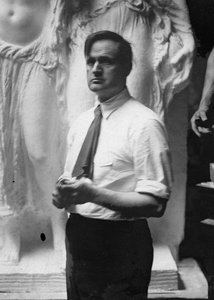
James Earle Fraser
1876 - 1953 , Vereinigte Staaten von Amerika
Kurzinfos
- Bemerkenswerte Werke:
- End of the Trail
- Buffalo Nickel
- Einflüsse Durch Künstler: ['Augustus Saint-Gaudens']
- Geburtsdatum: 4. November 1876
- Geburtsort (Stadt, Land): Winona, USA
- Künstlerische Bewegung/Stil: Realismus, Impressionismus
- Nationalität: Amerikanisch
- Sterbedatum: 11. Oktober 1953
- Vollständiger Name: James Earle Fraser
Ähnliche Artikel

James Otto Lewis: Navigating American Modernism Through Regional Identity & Stylistic Innovation
Explore the captivating portraits of James Otto Lewis, a pivotal figure bridging 19th-century realism & American Modernism. Discover his groundbreaking work documenting Native American culture and regional identity.

Grant Wood und der amerikanische Regionalismus: Identität, Mythos und die ländliche Landschaft
Entdecken Sie Grant Wood und den amerikanischen Regionalismus! Erfahren Sie mehr über 'American Gothic', Woods Leben, Einflüsse und sein Vermächtnis in der Kunstgeschichte. Expertenwissen & hochwertige Reproduktionen.

James Abbott McNeill Whistler: Die 25 Meisterwerke für Ihr Zuhause | OriginalUniqueArt
Entdecken Sie die 25 Meisterwerke von James Abbott McNeill Whistler! Von den berühmten Nocturnes bis zu ikonischen Porträts – erleben Sie Ästhetizismus, Impressionismus & Tonalismus. Hochwertige Reproduktionen auf OriginalUniqueArt.com.

James Bard: Navigating Light & Landscape in American Impressionism
Explore the captivating world of James Bard (1815-1897), a meticulous chronicler of 19th-century American maritime life. Discover his detailed steamboat paintings and lasting legacy within the American Impressionism movement.

Meisterwerke der englischen Landschaft: Die 25 besten Werke von Sir Alfred James Munnings
Entdecken Sie die 25 besten Werke von Sir Alfred James Munnings. Erleben Sie britische Pferdemalerei auf OriginalUniqueArt.com.