Menü

() ·

A painting made for you, by hand

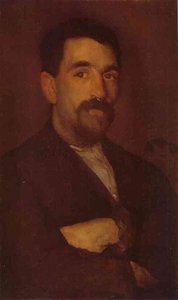
Selbstporträt

Handgefertigte Ölreproduktion

Handgemaltes Ölgemälde auf Leinwand in Ihrer Wunschgröße und mit Rahmen, auf Bestellung von unseren Künstlern angefertigt. ( Zum Druck wechseln Zum digitalen Bild wechseln)

Beschreibung des Sammlerstücks

Ein eindrucksvolles Selbstporträt von James Abbott McNeill Whistler aus dem Jahr 1858. Entdecken Sie die Details dieser ikonischen Etchographie und lassen Sie sich von der Ästhetik des Impressionismus inspirieren.

Künstlerbiografie

Erkunden Sie James Abbott McNeill Whistler (1834-1903): Amerikanischen Künstler der Tonalismus & Ästhetizismus. Entdecken Sie 'Whistlers Mutter', Nachträge, Porträts und seine 'Kunst für Kunst's Sake'-Philosophie.

from ·

Chapter 1

How large should it be?

Slide to change the size; the picture on the left shows the frame at its real width. The proportions of the original are kept.

Standardformat
individuell anpassbar
CM
INCH

Wählen Sie aus unseren vordefinierten Formaten, die den ursprünglichen Proportionen des Kunstwerks entsprechen.

Breite
Höhe

Geben Sie die Breite und die Höhe an, die Sie für Ihren Rahmen oder Ihre Wand benötigen. Da dieses Werk handgemalt ist, kann der Künstler bei einer anderen Form etwas mehr um das Bild herum malen oder etwas abschneiden – Sie entscheiden. Wir senden Ihnen ein digitales Mockup zur Freigabe, bevor mit dem Malen begonnen wird. Das auf dieser Seite gezeigte Bild stellt nicht das tatsächliche Ergebnis dar – dies tut nur das Mockup.

Chapter 2

How should it arrive?

Choose the edges of the stretched canvas

Choose your frame

Corner sample of the WhiteWrap canvas edge finish, stretched on Massivholz bars
White €1
Corner sample of the BlurSideWrap canvas edge finish, stretched on Massivholz bars
Blurside €1
Corner sample of the ExtendedWrap canvas edge finish, stretched on Massivholz bars
Extended €1
Corner sample of the P118B picture frame: formgepresstes Polystyrol, 5 cm wide and 3 cm thick
P118B €10
Corner sample of the P118H picture frame: formgepresstes Polystyrol, 5 cm wide and 3 cm thick
P118H €10
Corner sample of the P118W picture frame: formgepresstes Polystyrol, 5 cm wide and 3 cm thick
P118W €10
Corner sample of the P438Z picture frame: formgepresstes Polystyrol, 5.5 cm wide and 3.5 cm thick
P438Z €10
Corner sample of the P508JH picture frame: formgepresstes Polystyrol, 7 cm wide and 3.5 cm thick
P508JH €12
Corner sample of the P508YH picture frame: formgepresstes Polystyrol, 7 cm wide and 3.5 cm thick
P508YH €12
Corner sample of the P805H picture frame: formgepresstes Polystyrol, 5 cm wide and 3.5 cm thick
P805H €10
Corner sample of the P805Z picture frame: formgepresstes Polystyrol, 5 cm wide and 3.5 cm thick
P805Z €10
Corner sample of the P919BZ picture frame: formgepresstes Polystyrol, 7 cm wide and 3.5 cm thick
P919BZ €10
Corner sample of the P919G picture frame: formgepresstes Polystyrol, 7 cm wide and 3.5 cm thick
P919G €10
Corner sample of the P919XJ picture frame: formgepresstes Polystyrol, 7 cm wide and 3.5 cm thick
P919XJ €10
Corner sample of the P959ZH picture frame: formgepresstes Polystyrol, 5 cm wide and 3 cm thick
P959ZH €10
Corner sample of the P968JZ picture frame: formgepresstes Polystyrol, 6 cm wide and 4 cm thick
P968JZ €12
Corner sample of the W106C picture frame: Massivholz, 5 cm wide and 3 cm thick
W106C €8
Corner sample of the W218G picture frame: Massivholz, 5 cm wide and 3 cm thick
W218G €10
Corner sample of the W218JH picture frame: Massivholz, 5 cm wide and 3 cm thick
W218JH €8
Corner sample of the W218Y picture frame: Massivholz, 5 cm wide and 3 cm thick
W218Y €10
Corner sample of the W307PJ picture frame: Massivholz, 6 cm wide and 3 cm thick
W307PJ €10
Corner sample of the W316G picture frame: Massivholz, 6 cm wide and 3 cm thick
W316G €10
Corner sample of the W316PJ picture frame: Massivholz, 6 cm wide and 3 cm thick
W316PJ €8
Corner sample of the W316Y picture frame: Massivholz, 6 cm wide and 3 cm thick
W316Y €10
Corner sample of the W398PJ picture frame: Massivholz, 5 cm wide and 3 cm thick
W398PJ €8
Corner sample of the W4111J picture frame: Massivholz, 6.5 cm wide and 3.5 cm thick
W4111J €10
Corner sample of the W500HY picture frame: Massivholz, 7 cm wide and 5 cm thick
W500HY €15
Corner sample of the W500JH picture frame: Massivholz, 7 cm wide and 5 cm thick
W500JH €15
Corner sample of the W692G picture frame: Massivholz, 8 cm wide and 4 cm thick
W692G €12
Corner sample of the W849H picture frame: Massivholz, 5 cm wide and 3 cm thick
W849H €8
Corner sample of the W940BG picture frame: Massivholz, 7.5 cm wide and 4.5 cm thick
W940BG €15
Corner sample of the W953PJ picture frame: Massivholz, 6 cm wide and 3.5 cm thick
W953PJ €8
Corner sample of the H24-GOLD picture frame: geschnitztes Holz mit Gesso, 10 cm wide and 6 cm thick
H24-GOLD €30
Corner sample of the H24-SILVER picture frame: geschnitztes Holz mit Gesso, 10 cm wide and 6 cm thick
H24-SILVER €30
Corner sample of the H36-GOLD picture frame: geschnitztes Holz mit Gesso, 15 cm wide and 6.5 cm thick
H36-GOLD €45
Corner sample of the H36-SILVER picture frame: geschnitztes Holz mit Gesso, 15 cm wide and 6.5 cm thick
H36-SILVER €45

Moulding: . Overall size with the frame: .

Chapter 3

Who paints it, and should anything change?

Examples of what can be changed: Replace face with customer photo; Add pet (e.g., replace cat with dog); Include hidden message in background; Change background landscape or elements.
After order, OriginalUniqueArt.com team will email client for instructions and provide a mockup preview

Weltweiter Versand () in nur 3 bis 4 Wochen statt der üblichen 5 Wochen. (30 Oktober). Keine Kompromisse bei der Qualität.

Chapter 4

The finishing touches

A nameplate, as in a museum?

Details der gravierten Bronzetafel

This elegant plaque features the artist's name and the title of the artwork, finely engraved for a timeless presentation.

It is made from bronze with a refined, elegant finish. The text is precisely laser-engraved for a sharp and permanent result. Measuring 9x2 cm, the plaque is compact yet easy to read. It's built to be durable and scratch-resistant, offering a professional, museum-quality look. Mounting is simple thanks to the included adhesive backing.

Details zur Acrylglas-Plakette (transparent)

The plaque includes essential engraved details such as the artist's name, the title of the artwork, the date it was created, the type of media used-like oil on canvas or watercolor-a brief description of the piece, and a QR code that links to the complete artwork information.

It is crafted from clear acrylic, offering a sleek, modern appearance. The text is UV-engraved in black to ensure strong visual contrast. With a size of 10x15 cm, it ensures optimal readability. It comes equipped with two metal hooks for secure wall mounting. The plaque is designed to be weather-resistant, making it suitable for various environments, and it includes interactive features that work seamlessly with smartphone scanning.

Details zur schwarzen Acryltafel

This elegant plaque includes engraved information such as the artist's name, the title of the artwork, the date it was created, the type of media used (like oil on canvas or watercolor), a short description of the artwork, and a QR code for quick access to more information.

The plaque itself is made from refined black acrylic with a premium finish. The text is laser-engraved in white for high contrast and readability. Its size is 10x15 cm, designed to be easy to read. It comes with two metal hooks for professional mounting. The design is sleek and fits any interior style. It is also weather-resistant and durable, with built-in digital integration for mobile compatibility.

A protective varnish?

When do you need it?

Chapter 5

Your painting, as you ordered it

Selbstporträt

Art der Reproduktion

Format der Reproduktion

-

Erstklassige Meisterkünstler

Mehr Detailtiefe, Raffinesse und zusätzliche Produktionszeit

-

Rahmen für Reproduktionen

-

-

Bei Kunstwerken oder Reproduktionen, die an einer Seite größer als 105 cm (ca. 41 Zoll) sind, wird der Rahmen zerlegt als Bausatz geliefert. Diese Methode gewährleistet eine sichere Zustellung und verhindert Schäden während des Transports.

Professionelle Montage erforderlich – dies ist kein DIY-Produkt.
Der Bausatz muss von einem erfahrenen professionellen Rahmenmacher zusammengebaut und die Leinwand gespannt werden. Hierfür werden Holzleim (nicht im Lieferumfang enthalten), eine Leinwandspannzange sowie Klemmen benötigt, um die Keilleisten während des Trocknungsvorgangs rechtwinklig zu halten. Eine unsachgemäße Montage oder eine ungleichmäßige Spannung der Leinwand kann das Kunstwerk dauerhaft beschädigen und ist nicht durch unsere Garantie abgedeckt.

  • Alle Vollholzkomponenten sind enthalten, präzise auf Maß zugeschnitten.

  • Der Zusammenbau erfolgt mit den mitgelieferten Schrauben sowie Holzkleber für die Eckverbindungen, der nicht im Lieferumfang enthalten ist und vom Rahmenbauer selbst beschafft werden muss.

  • Professionelles Werkzeug ist erforderlich und nicht im Lieferumfang enthalten: eine Keilrahmenzange (Spannwerkzeug) sowie Klammern, um die Leisten während der Trocknungszeit des Klebers rechtwinklig zu fixieren.

Wichtiger Hinweis:
Für die Eckverbindungen wird Holzleim benötigt, die Leisten müssen mit Zwingen fixiert werden, bis der Leim vollständig getrocknet ist, und das Spannen der Leinwand auf dem fertigen Rahmen erfordert eine Keilrahmen-Zange. Keines dieser Utensilien ist im Set enthalten. Bitte stellen Sie sicher, dass ein erfahrener Rahmenmacher zur Verfügung steht, bevor Sie diese Größe bestellen.

Beschriftung

-

-

Schutzlackierung

Glanzlack (verstärkt die Farben, schützt vor Licht und Feuchtigkeit)

-

Mein Kunstwerk personalisieren

Beispiele für Anpassungsmöglichkeiten: Gesicht durch Kundenfoto ersetzen; Haustier hinzufügen (z. B. Katze durch Hund ersetzen); Versteckte Nachricht im Hintergrund einfügen; Hintergrundlandschaft oder -elemente ändern.

-

Eilt sehr

Weltweiter Versand () in nur 3 bis 4 Wochen statt der üblichen 5 Wochen. (30 Oktober). Keine Kompromisse bei der Qualität.

-

Expressversand

Weltweiter Versand () innerhalb von 5 Wochen. (6 November).

Inklusive Versand

Endpreis

€ 266

Gesamtpreis € 266

Die Glasoption ist nur für Größen unter 110 cm verfügbar.

Included with every order

  • Kostenloser weltweiter Expressversand
  • Hochwertige Leinenleinwand
  • Umfassender Versicherungsschutz beim Versand
  • Zollgebühren-Rückerstattungsgarantie
  • Garantie für exakte Farbtreue
  • 100 Tage Rückgaberecht (nur bei Mängeln)
  • 100% Geld-zurück-Garantie
  • Mengenrabatt verfügbar

Das Selbstporträt von James Abbott McNeill Whistler – Ein Fenster in die Ästhetik des 19. Jahrhunderts

James Abbott McNeill Whistler’s “Self-Portrait” from 1858 is not merely a depiction of a man; it's an invitation into the complex and revolutionary world of aestheticism, a movement that sought to elevate art beyond mere representation and moral instruction. Born in Lowell, Massachusetts, Whistler’s early life was characterized by constant relocation due to his father’s career as a railroad engineer – experiences that fostered a keen observational eye and a sensitivity to diverse environments, qualities that would profoundly shape his artistic vision. The brief, ultimately unsuccessful attempt at West Point further solidified his desire to pursue art independently, leading him on a journey across the Atlantic to immerse himself in the vibrant European avant-garde.

The etching itself is a testament to Whistler’s meticulous approach and his deliberate rejection of traditional portraiture conventions. The stark black and white contrasts are not simply stylistic choices; they represent a conscious effort to distill the essence of the subject, prioritizing tonal values and subtle gradations of light over detailed realism. Whistler's technique—a hallmark of his style—emphasizes the *tone* of the image, aiming for a harmonious balance between light and dark, creating an almost musical effect. The deliberate blurring of certain features, particularly in the background, draws attention to the central figure and invites contemplation rather than immediate recognition.

Die Ästhetik des “Art for Art’s Sake”

Whistler's work is inextricably linked to the broader aesthetic movement that dominated mid-19th century Europe. Rejecting the prevailing Victorian emphasis on narrative, moralizing themes, and historical subject matter, aesthetes like Whistler argued that art should exist solely for its own beauty – “art for art’s sake.” This philosophy profoundly influenced his approach to portraiture. Instead of striving to capture a likeness or convey a specific story, he sought to create an image that resonated with the viewer on an emotional and sensory level. The downward gaze of the subject in this self-portrait suggests introspection and perhaps even a detachment from the external world, aligning perfectly with the aestheticist’s focus on inner experience.

Symbolism und Ausdruck

While seemingly understated, the etching is rich in subtle symbolism. The mustache, a fashionable accessory of the time, subtly hints at Whistler's social standing and engagement with contemporary trends. The tie, neatly arranged, speaks to order and control – qualities that might be seen as a counterpoint to the perceived chaos of modern life. However, it’s the overall mood—a quiet contemplation, a sense of melancholy—that truly resonates. The lighting, carefully controlled, casts shadows that create depth and mystery, inviting the viewer to project their own emotions onto the image. Whistler wasn't simply depicting a man; he was capturing a feeling, an atmosphere.

Ein Meisterwerk für Sammler und Innenarchitekten

A reproduction of Whistler’s “Self-Portrait” offers more than just a beautiful image; it provides a window into the intellectual and artistic currents of the Victorian era. Its understated elegance and profound emotional depth make it an ideal addition to any discerning collection or interior space. The monochrome palette lends itself beautifully to contemporary design, offering a sophisticated contrast against brighter colors and textures. Consider how this piece could anchor a gallery wall, adding a touch of contemplative beauty to a study, or serve as a focal point in a living room – a reminder that art can transcend mere decoration and become a source of enduring inspiration. OriginalUniqueArt offers meticulously crafted hand-painted reproductions that faithfully capture the nuances of Whistler’s technique and the spirit of his aesthetic vision.

Fragen & Antworten

Sind die Farben in "Selbstporträt" von James Abbott McNeill Whistler eher gesättigt oder gedämpft?

"Selbstporträt" von James Abbott McNeill Whistler zeichnet sich durch eine Gedämpft Sättigung aus.

Unter welchen anderen Namen ist James Abbott McNeill Whistler bekannt?

James Abbott McNeill Whistler ist auch unter dem Namen James Abbot McNeill Whistler, James McNeill Whistler, Whistler bekannt.

Wo kann man "Selbstporträt" von James Abbott McNeill Whistler heute besichtigen?

Das Original von "Selbstporträt" von James Abbott McNeill Whistler befindet sich im The Smithsonian's National Museum of Asian Art, Washington, D.C., Vereinigte Staaten von Amerika. Eine Reproduktion ermöglicht es, das Werk zu Hause auszustellen.

More about this painting

Vorschau anzeigen In AR ansehen Zum Druck wechseln Zum digitalen Bild wechseln Versenden
Details anzeigen Leitfaden Zu Favoriten hinzufügen Herunterladen Ähnliche Objekte Röntgenaufnahme Diashow Q&A Statistiken

In numbers

  • 1858the year it was painted
  • 29frames to choose from
  • standard sizes, in its own proportions
  • 5weeks to paint and deliver it
James Abbott McNeill Whistler

James Abbott McNeill Whistler

1834 - 1903, Vereinigte Staaten von Amerika

Quick facts about James Abbott McNeill Whistler

  • Beeinflusste Künstler: ['Sébastien Bouré']
  • Bemerkenswerte Werke:
    • Die Schmiede
    • Whistlers Mutter
    • Nacht in Schwarz und Gold
    • Anordnung in Gelb und Grau
  • Geburtsdatum: 14. Juli 1834
  • Geburtsort: Lowell, Vereinigte Staaten
  • Künstlerische Richtung: Tonalismus, Ästhetizismus
  • Nationalität: Amerikanisch
  • Todatum: 1903
  • Vollständiger Name: James Abbott McNeill Whistler
  • Von Ihm Beeinflusste Künstler: ['Ästhetische Bewegung']

Künstlerbiografie

James Abbott McNeill Whistler: Ein Leben in der Kunst

Frühes Leben und Einflüsse

  • Geboren am 14. Juli 1834 in Lowell, Massachusetts, wurde James Abbotts McNeills frühes Leben von seiner Vaters Karriere als Eisenbahningenieur geprägt.
  • Wiederholte Umzüge verliehen ihm Anpassungsfähigkeit und Einblicke in vielfältige Umgebungen.
  • Er besuchte kurzzeitig die United States Military Academy in West Point, fand es aber nicht zu seinen künstlerischen Neigungen geeignet.
  • Eine anschließende Tätigkeit für die U.S. Coast and Geodetic Survey verzögerte, aber auch nicht, seine Suche nach der Kunst.
  • Seine prägenden Jahre waren von einem frühen Interesse am Zeichnen und dem Wunsch geprägt, ein professioneller Künstler zu werden.

Künstlerische Entwicklung & Pariser Anfänge

  • Whistler zog 1855 nach Paris, ein Wendepunkt in seiner künstlerischen Reise.
  • Er studierte unter der Anleitung von Sébastien Bouré und verfeinerte seine Fähigkeiten in Ölmalerei, Aquarell und Grafik.
  • Frühe Werke spiegelten Einflüsse von französischen Realisten und Barbizon-Schule Malern wider.
  • Whistler entwickelte schnell einen unverwechselbaren Stil, der durch tonale Harmonie und atmosphärische Effekte gekennzeichnet war.

Wichtige Themen & Künstlerischer Stil

  • Whistler setzte sich für das Konzept „Kunst um ihrer selbst willen“ ein und lehnte didaktische oder moralisierende Erzählungen zugunsten ästhetischer Überlegungen ab.
  • Seine Werke konzentrierten sich oft auf die Erfassung subtiler Nuancen von Licht, Farbe und Atmosphäre.
  • Er setzte häufig begrenzte Farbpaletten und zarte Pinselstriche ein, um suggestive Stimmungen zu erzeugen.
  • Nocturnes, atmosphärische Gemälde von Dämmerungslandschaften, wurden zu einem Markenzeichen seines Œuvres.
  • Porträts waren ebenfalls zentral für seine Praxis und betonten oft formale Anordnungen und tonale Beziehungen gegenüber strikter Ähnlichkeit.

Bekannte Werke & Wichtige Errungenschaften

  • The Forge (1861): Eine fesselnde Darstellung einer Schmiede, die Whistlers Meisterschaft im Licht und Schatten demonstriert.
  • Portrait of Charles Lang Freer (1873): Zeigt seine Fähigkeit, die Essenz seiner Sujets durch subtile tonale Variationen einzufangen.
  • Brown and Gold: The Gold Girl—Connie Gilchrist (1876-77): Ein typisches Beispiel für Tonalismus, das innovative Farb- und Kompositionsnutzung aufweist.
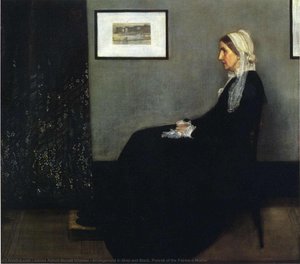
  • Arrangement in Grey and Black No. 1 (Whistler’s Mother) (1871): Vielleicht sein berühmtestes Werk, ein ikonisches Bild der viktorianischen Mutterschaft und ein Beweis für seinen formalistischen Ansatz.
  • Nocturne in Black and Gold – The Falling Rocket (1875): Ein umstrittenes Gemälde, das zu einer Verleumdungsklage gegen den Kunstkritiker John Ruskin führte und Whistlers Verteidigung der künstlerischen Autonomie hervorbrachte.

Einflüsse & Vermächtnis

  • Whistler wurde von japanischen Holzschnitten (ukiyo-e) beeinflusst, die seine kompositorischen Prinzipien und seinen Schwerpunkt auf dekorative Muster informierten.
  • Er bewunderte auch das Werk spanischer Maler wie Velázquez, insbesondere ihre Meisterschaft im Tonwert.
  • Seine Forderung nach „Kunst um ihrer selbst willen“ hatte einen tiefgreifenden Einfluss auf die Ästhetikbewegung in England und Amerika.
  • Whistlers Einfluss erstreckte sich auf nachfolgende Generationen von Künstlern, die formalistische Ansätze annahmen und das expressive Potenzial von Farbe und Komposition erforschten.
  • Er hinterließ einen unauslöschlichen Eindruck in der amerikanischen Kunstgeschichte und stellte konventionelle Vorstellungen über künstlerischen Zweck in Frage und ebnete den Weg für den Modernismus.

Historische Bedeutung

  • Whistlers Karrierezeitraum fiel mit einer bedeutenden sozialen und kulturellen Veränderung sowohl in Europa als auch in Amerika zusammen.
  • Seine Werke stellten viktorianische Konventionen in Frage und trugen zu einem breiteren Wandel hin zur Ästhetik und Individualität bei.
  • Die Verleumdungsklage gegen Ruskin erhöhte Whistlers Profil und löste wichtige Debatten über die Natur der Kunstkritik und künstlerischer Freiheit aus.
  • Er bleibt eine zentrale Figur in der Geschichte der amerikanischen Kunst, gefeiert für seinen innovativen Stil, seine intellektuelle Strenge und sein unerschütterliches Engagement für künstlerische Prinzipien.

Eckdaten

  • Besondere Elemente: Detailreiche Gesichtszüge, Tiefe durch Schatten
  • Jahr: 1858
  • Motiv/Thema: Porträt eines Mannes
  • Titel: Selbstporträt
  • Bewegung: Ästhetizismus

Kunst-Quiz

Jede Frage hat nur eine richtige Antwort.

Frage 1:
Welche künstlerische Bewegung ist James Abbott McNeill Whistler am bekanntesten für?
Frage 2:
In welchem Jahr wurde das Selbstporträt von James Abbott McNeill Whistler vermutlich gefertigt?
Frage 3:
Welche Technik wird in diesem Selbstporträt hauptsächlich verwendet?
Frage 4:
Wie interpretiert man die Blickrichtung des Porträtierten im Selbstporträt?
Frage 5:
Welche Rolle spielte Whistlers Vater als Ingenieur bei der Entwicklung seiner künstlerischen Perspektive?