In echtem Maßstab anzeigen
 Versenden als Grußkarte
 Teilen
 Details anzeigen
 Leitfaden öffnen

 Herunterladen
 Ähnliche Objekte
 Röntgenaufnahme
 Diashow
 Besucherstatistiken
Hide and Seek


 Mehr anzeigen
Giclée / Kunstdruck
Giclée- oder Leinwanddruck in Museumsqualität mit schneller Produktion und flexiblen Veredelungsoptionen. ( Handgemalte Reproduktion kaufen Zum digitalen Bild wechseln)




P118B €10

P118H €10

P118W €10

P438Z €10

P508JH €12

P508YH €12

P805H €10

P805Z €10

P919BZ €10

P919G €10

P919XJ €10

P959ZH €10

P968JZ €12

W106C €8

W218G €10

W218JH €8

W218Y €10

W307PJ €10

W316G €10

W316PJ €8

W316Y €10

W398PJ €8

W4111J €10

W500HY €15

W500JH €15

W692G €12

W849H €8

W940BG €15

W953PJ €8




Wählen Sie aus unseren vordefinierten Formaten, die den ursprünglichen Proportionen des Kunstwerks entsprechen.

Geben Sie die Breite und die Höhe an, die Sie benötigen, damit der Druck perfekt in Ihren Rahmen oder an Ihre Wand passt. Ein Druck kann nur beschnitten werden und niemals größer als das Originalbild gemacht werden; daher verliert ein Format mit einer anderen Proportion einen Teil des Bildes. Wir senden Ihnen ein digitales Mockup zur Freigabe, bevor wir den Druck ausführen. Das auf dieser Seite gezeigte Bild zeigt nicht den tatsächlichen Beschnitt – dies ist nur im Mockup ersichtlich.
Weltweiter Versand () innerhalb von 2 Wochen statt der üblichen 4/5 Wochen. (24 Oktober)

Kostenloser weltweiter Expressversand

Hochwertige Leinenleinwand

Vollständiger Versicherungsschutz beim Versand

Zollgebühren-Rückerstattungsgarantie

Garantie für exakte Farbtreue

100-tägiges Rückgaberecht (nur bei Mängeln)

100% Geld-zurück-Garantie

Angebot für Mengenrabatt
 Die Glasoption ist nur für Größen unter 110 cm verfügbar.

Hide and Seek
Giclée / Kunstdruck
Format der Reproduktion
-


Gesamtpreis
€ 70
Ein Einblick in die viktorianische Intimität
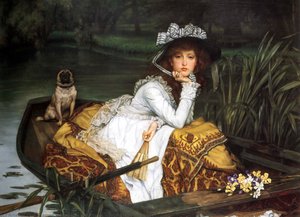
In den stillen, sonnendurchfluteten Ecken eines Wohnzimmers des neunzehnten Jahrhunderts fängt James Jacques Joseph Tissot einen Moment ein, der sich zugleich flüchtig und ewig anfühlt. „Hide and Seek“, gemalt um 1880, ist weit mehr als eine bloße häusliche Szene; es ist ein akribisch geschaffenes Fenster in das Herz des viktorianischen Englands. Während wir dieses Meisterwerk auf Öltafel betrachten, werden wir in das private Refugium einer wohlhabenden bürgerlichen Familie versetzt, in der die Luft von der Wärme familiärer Zuneigung und dem sanften Glanz des Nachmittagslichts erfüllt ist. Tissot, ein Meister darin, die Nuancen des sozialen Lebens einzufangen, lädt uns ein, Zeuge eines Spielrituals zu werden, das Generationen überdauert und ein tiefes Gefühl von Nostalgie und Frieden vermittelt.
Die Komposition gleicht einem zarten Tanz aus Figuren und Texturen. In dem reich möblierten Wohnzimmer verteilen sich die Familienmitglieder auf weichen Sofas und eleganten Stühlen, wobei ihre Positionen einen harmonischen Rhythmus erzeugen, der das Auge durch diese häusliche Landschaft leitet. Die Anwesenheit von zwei Hunden und einer wachsamen Katze verleiht der Szene eine Ebene lebendiger, organischer Energie und spiegelt den geschäftigen, aber kontrollierten Geist eines wohlgeordneten Heims wider. Es ist eine spürbare Bewegung vorhanden – die subtile Spannung eines Kindes, das darauf wartet, gefunden zu werden, die entspannte Haltung eines Erwachsenen, der das Spiel beobachtet –, die der Leinwand Leben einhaucht und den Betrachter weniger wie einen fernen Beobachter, sondern vielmehr wie einen ungebetenen Gast in einer kostbaren Erinnerung fühlen lässt.
Meisterschaft von Licht und Textur
Tissots technisches Können zeigt sich in seiner einzigartigen Fähigkeit, akribischen Realismus mit den aufkommenden Einflüssen des Impressionismus zu verschmelzen. Er verwendet weiche, diffuse Pinselstriche, um das Interieur in ein tröstliches, ätherisches Licht zu tauchen, das aus dem Inneren des Raumes selbst zu kommen scheint. Diese leuchtende Qualität dient nicht nur der Erhellung; sie betont den taktilen Prunk jener Ära. Man kann das Gewicht der schweren Stoffe, die Glätte des polierten Holzes und die komplizierten Muster der Polsterung fast fühlen. Jede Falte eines Kleidungsstücks und jeder Schimmer auf einer Porzellanvase ist mit einer solchen Präzision dargestellt, dass das Gemälde eine dreidimensionale Vitalität erlangt.
Diese Liebe zum Detail verfolgt einen tieferen Zweck als bloße Dekoration. Indem er sich auf den materiellen Reichtum der Umgebung konzentriert, verstärkt Tissot die Stabilität und den Wohlstand des viktorianischen Mittelstands. Die akribische Darstellung von Kleidung und Einrichtung fungiert als eine stille Sprache sozialer Angemessenheit und Geborgenheit. Für Sammler oder Innenarchitekten bietet dieses Werk eine unvergleichliche Tiefe; es ist ein Kunstwerk, das eine längere Betrachtung belohnt, indem es bei jedem Blick neue Schichten von Textur und Licht offenbart und so zu einem anspruchsvollen Herzstück jedes kuratierten Raumes wird.
Symbolik und die viktorianische Seele
Über seine ästhetische Schönheit hinaus ist „Hide and Seek“ tief in den kulturellen Werten des späten neunzehnten Jahrhunderts verwurzelt. Auf dem Höhepunkt der Herrschaft von Königin Victoria wurde das Zuhause als heiliger Zufluchtsort vor den industriellen Ängsten des städtischen Lebens verehrt. Tissot fängt dieses Ethos der häuslichen Ruhe perfekt ein. Das Versteckspiel dient als kraftvolles Symbol für die Unschuld und die Bewahrung der Kindheit innerhalb der strukturierten Grenzen der Erwachsenengesellschaft. Es repräsentiert einen Moment reiner, unverfälschter Freude, geborgen in der schützenden Umarmung der familiären Einheit.
Die emotionale Wirkung des Werkes liegt in seiner Fähigkeit, ein Gefühl der Zugehörigkeit und moralischen Tugend zu evozieren. In einer Ära, die durch soziale Hierarchien definiert war, konzentriert sich Tissot auf die universelle Sprache der Liebe und des Spiels. Für all jene, die versuchen, ein Gefühl von Geschichte und emotionaler Resonanz in ihre eigenen Heim zu bringen, bietet diese Reproduktion mehr als nur Kunst; sie bietet eine Verbindung zu einer verschwundenen Welt der Eleganz und Intimität. Es ist eine zeitlose Einladung, innezuhalten, die Schönheit in den stillen Momenten zu finden und die dauerhafte Stärke des familiären Bandes zu feiern.
Fragen & Antworten
Wie stehen die Farben von "Hide and Seek" zueinander?
"Hide and Seek" von Jacques Joseph Tissot zeigt eine Sanft nuancierte Palette Farbharmonie.
Welcher Phase der Karriere von Jacques Joseph Tissot ist „Hide and Seek“ (1880) zuzuordnen?
Die Datierung auf 1880 ordnet „Hide and Seek“ der Mature Period von Jacques Joseph Tissots künstlerischer Entwicklung zu.
In welche Phase von Jacques Joseph Tissots Schaffen lässt sich "Hide and Seek" einordnen?
„Hide and Seek“ entstammt der Mature Period von Jacques Joseph Tissot. Diese Einordnung setzt das Werk in Bezug zur künstlerischen Entwicklung des Künstlers.
Biografie des Künstlers
Early Life and Artistic Beginnings
Jacques Joseph Tissot, born October 15, 1836, in Nantes, France, was destined for a life steeped in artistic passion from his earliest years. His father, Marcel Théodore Tissot, was a successful drapery merchant. His mother, Marie Durand, assisted her husband in the family business and designed hats. A devout Catholic, Tissot's formative years were marked by a deep appreciation for craftsmanship and detail—qualities that would profoundly shape his artistic vision. Simultaneously, he absorbed influences from Parisian society, exposing him to the vibrant world of fashion and culture. Despite familial responsibilities, Tissot relentlessly pursued his artistic ambitions, enrolling at the École des Beaux-Arts in Paris where he honed his skills under the tutelage of luminaries like Ingres, Flandrin, and Lamothe. This formative period cemented his commitment to painting as a vocation and established him firmly within the influential Parisian art milieu.The Salon Years and Recognition
Tissot’s debut at the Paris Salon in 1861 signaled a pivotal moment—the unveiling of “The Meeting of Faust and Marguerite,” a dramatic tableau that captivated audiences and garnered considerable acclaim from critics. Purchased by the state for inclusion in the Luxembourg Gallery, this ambitious undertaking showcased Tissot's burgeoning reputation as a painter capable of capturing complex narratives and conveying profound emotion. Subsequent Salon exhibitions solidified his position within the artistic establishment, attracting commissions from prominent patrons. His early successes fueled confidence and propelled him toward exploring new subjects and techniques—a trajectory that would ultimately define his illustrious career. The painting’s masterful composition and luminous color palette immediately established Tissot as a rising star among Impressionist painters.Genre Painting and Parisian Society
Tissot’s artistic breakthrough arrived with his series “La Femme à Paris,” a meticulously observed depiction of the demi-mondaine world of late Victorian London. These paintings, characterized by their luminous color palettes and masterful rendering of textures—particularly fabrics—became synonymous with capturing the allure and dynamism of Parisian high society. Tissot's meticulous attention to detail extended beyond mere visual representation; he sought to convey not only appearances but also psychological nuances, reflecting the anxieties and aspirations of his subjects. His work stands as a testament to Impressionistic influences blended with realism, offering an unparalleled glimpse into the social customs and artistic sensibilities of the Belle Époque. He skillfully captured the atmosphere of London’s theaters and cafes, portraying women in elegant gowns and conveying subtle emotions through facial expressions and body language—a remarkable achievement for his time.Biblical Themes and Japonisme
Throughout his prolific output, Tissot embraced diverse artistic inspirations—ranging from medieval narratives to biblical scenes—demonstrating remarkable versatility. His depictions of religious subjects, imbued with spiritual depth and emotional resonance, showcased his ability to elevate visual storytelling into profound contemplation. Simultaneously, he was captivated by Japonisme—the fascination with Japanese art and aesthetics that swept across Europe during the Victorian era—evident in compositions infused with asymmetrical arrangements and subtle color harmonies reminiscent of Japanese prints. This stylistic fusion underscored Tissot’s intellectual curiosity and his willingness to experiment with innovative artistic approaches. He drew inspiration from Japanese woodblock prints, incorporating elements of flatness and bold outlines into his paintings—a distinctive feature that distinguishes him from many of his contemporaries.Later Years and Legacy
Tissot served in the Franco-Prussian War on the side of France and later the Paris Commune—an experience that undoubtedly shaped his worldview. Following the war’s conclusion, he relocated to London where he pursued etching alongside Sir Seymour Haden and honed his artistic skills through portrait commissions and caricatures for Vanity Fair. His relationship with Kathleen Newton blossomed into a passionate companionship, providing him with enduring inspiration for numerous paintings. Tragically, Newton succumbed to tuberculosis in 1882—a profound loss that deeply affected Tissot’s creative output. Despite this sorrowful chapter, he continued to produce exceptional artwork until his death in 1902. Today, Jacques Joseph Tissot's legacy resides in museums across Europe and North America—most notably the Musée National Jean-Jacques Henner in Paris—where his celebrated paintings continue to inspire admiration for their artistic brilliance and evocative portrayal of Victorian life and faith. His enduring influence on genre painting and Impressionism secures his place as one of France’s most distinguished artists of the 19th century.
Jacques Joseph Tissot
1836 - 1902 , Frankreich
Eckdaten zum Künstler
- Artistic Movement Or Style: Genre Painting
- Artists Who Influenced This Artist:
- Jean-Auguste Ingres
- Gustave Courbet
- Date Of Birth: 15. Oktober 1836
- Date Of Death: 8. August 1902
- Full Name: Jacques Joseph Tissot
- Nationality: Französisch
- Notable Artworks:
- Das Treffen von Faust und Marguerite
- La Femme à Paris
- Place Of Birth: Nantes, Frankreich
Verwandte Artikel

10 ikonische Meisterwerke des Zeitgenössischen Realismus
Entdecken Sie 10 Meisterwerke des Zeitgenössischen Realismus. Von Edward Hopper bis Lucian Freud – erleben Sie die Kraft von Licht und Emotion. Finden Sie museale Kunstreproduktionen für Ihr Interieur auf OriginalUniqueArt.com. Jetzt die gesamte Kollektion online erkunden!

Entwicklung von Familienporträts: Personalisierte Kunst als Chronik des Lebens über Generationen hinweg
Entdecken Sie die faszinierende Welt der Familienporträts! Von historischen Meisterwerken bis zu personalisierten Auftragsgemälden – wir bieten Kunst für Generationen. Expertenberatung & höchste Qualität.
Meisterwerke des Lichts: Die 25 besten Gemälde von Pierre-Auguste Renoir
Erleben Sie die Magie des Impressionismus: Entdecken Sie die 25 besten Meisterwerke von Pierre-Auguste Renoir. Von Lichteffekten bis zur Lebensfreude – finden Sie Inspiration und museale Ölgemälde-Reproduktionen für Ihr Zuhause. Jetzt auf OriginalUniqueArt.com entdecken!

10 Meisterwerke des Romantischen Realismus: Wenn Emotion auf Wahrheit trifft
Entdecken Sie 10 Meisterwerke des Romantischen Realismus. Erleben Sie die emotionale Tiefe von Künstlern wie Constable und Friedrich – perfekt als Inspiration für Ihre Kunstsammlung oder Wandgestaltung. Finden Sie museale Reproduktionen auf OriginalUniqueArt.com.

Victorian Realism: The Raw, High-Definition Drama and Unflinching Truth of 19th-Century Masterpieces
Experience the raw, high-definition drama of Victorian Realism. Explore 19th-century masterpieces through our premium, hand-painted oil reproductions. Discover how the unflinching truth of historical art meets modern luxury to transform your space with timeless, museum-quality detail.