

 In echtem Maßstab anzeigen
 Versenden als Grußkarte
 Teilen
 Details anzeigen
 Leitfaden öffnen

 Herunterladen
 Ähnliche Objekte
 Röntgenaufnahme
 Diashow
 Besucherstatistiken
Dumpy level


 Mehr anzeigen
Handgefertigte Ölreproduktion
Handgemaltes Ölgemälde auf Leinwand in Ihrer Wunschgröße und mit Rahmen, auf Bestellung von unseren Künstlern angefertigt. ( Zum Druck wechseln Zum digitalen Bild wechseln)




P118B €10

P118H €10

P118W €10

P438Z €10

P508JH €12

P508YH €12

P805H €10

P805Z €10

P919BZ €10

P919G €10

P919XJ €10

P959ZH €10

P968JZ €12

W106C €8

W218G €10

W218JH €8

W218Y €10

W307PJ €10

W316G €10

W316PJ €8

W316Y €10

W398PJ €8

W4111J €10

W500HY €15

W500JH €15

W692G €12

W849H €8

W940BG €15

W953PJ €8




Wählen Sie aus unseren vordefinierten Formaten, die den ursprünglichen Proportionen des Kunstwerks entsprechen.

Geben Sie die Breite und die Höhe an, die Sie für Ihren Rahmen oder Ihre Wand benötigen. Da dieses Werk handgemalt ist, kann der Künstler bei einer anderen Form etwas mehr um das Bild herum malen oder etwas abschneiden – Sie entscheiden. Wir senden Ihnen ein digitales Mockup zur Freigabe, bevor mit dem Malen begonnen wird. Das auf dieser Seite gezeigte Bild stellt nicht das tatsächliche Ergebnis dar – dies tut nur das Mockup.
Nach der Bestellung wird das OriginalUniqueArt.com-Team dem Kunden Anweisungen per E-Mail zusenden und eine Mockup-Vorschau bereitstellen.
Weltweiter Versand () in nur 3 bis 4 Wochen statt der üblichen 5 Wochen. (18 Oktober). Keine Kompromisse bei der Qualität.

Kostenloser weltweiter Expressversand

Hochwertige Leinenleinwand

Vollständiger Versicherungsschutz beim Versand

Zollgebühren-Rückerstattungsgarantie

Garantie für exakte Farbtreue

100-tägiges Rückgaberecht (nur bei Mängeln)

100% Geld-zurück-Garantie

Angebot für Mengenrabatt
 Die Glasoption ist nur für Größen unter 110 cm verfügbar.

Dumpy level
Reproduktionsmedium
Format der Reproduktion
-


Gesamtpreis
€ 261
Fragen & Antworten
In welchem Jahr und welcher Stilrichtung wurde "Dumpy level" geschaffen?
"Dumpy level" entstand im Jahr 1733 innerhalb der Neoclassicism-Bewegung.
Wie gesättigt ist die Farbpalette von "Dumpy level"?
"Dumpy level" von Jacques Canivet ist mit einer Muted Sättigung festgehalten.
Was ist das Entstehungsdatum von "Dumpy level" von Jacques Canivet?
"Dumpy level" von Jacques Canivet entstand im Jahr 1733.
Biografie des Künstlers
Jacques Canivet: The Silent Maker of Parisian Instruments
Jacques Canivet (1714-1773) remains a figure shrouded in scholarly curiosity, largely absent from the popular narrative of 18th-century France. Yet, his contribution to scientific instrumentation—a legacy quietly shaping the intellectual landscape of Paris—is undeniable. Born into a family steeped in craftsmanship and tradition, Canivet’s path diverged from the grand salons of Versailles, finding its focus instead within the workshops of Lordelle and Jean Chapotot, where he honed his skills alongside Claude Langlois, establishing himself as a pivotal figure in the burgeoning field of scientific measurement.- Early Life & Apprenticeship: Canivet’s formative years were spent mastering the art of instrument making—a craft passed down through generations—laying the groundwork for his future endeavors. His association with Langlois, a celebrated maker known for his meticulous attention to detail and innovative designs, proved invaluable in shaping his artistic sensibilities.
- The Workshop Legacy: Following Langlois’s death in 1756, Canivet assumed leadership of the workshop, inheriting not only expertise but also a reputation for excellence. This continuity ensured that the traditions of precision and artistry persisted—a testament to the enduring power of familial craftmanship.
- Instrument Production & Innovation: Canivet’s output spanned an impressive array of instruments – compasses, graphometers, astronomical quadrants, transit instruments, drawing instruments, and even parallactic machines. These creations weren't merely tools; they were embodiments of Enlightenment ideals—instruments designed to unlock the secrets of the cosmos and advance scientific understanding.
A Patron of Science & Artistic Vision
Canivet’s involvement extended beyond mere fabrication. He served as supplier of instruments to the Académie Royale des Sciences in Paris, actively collaborating with leading thinkers and scientists of his time. This engagement fostered a symbiotic relationship between artistic skill and intellectual pursuit—a hallmark of the era—demonstrating that beauty could be found within the realm of mathematics and observation.- Commissioned Artwork: Notably, Canivet was entrusted with crafting instruments for Napoleon Bonaparte’s expedition to Egypt. These commissions demanded not only technical proficiency but also an understanding of artistic symbolism—a reflection of Napoleon's ambition to elevate France as a beacon of enlightenment.
- Influence & Legacy: Canivet’s meticulous craftsmanship and dedication to accuracy established him as a benchmark for instrument makers, influencing subsequent generations. His work exemplifies the spirit of the Enlightenment—a commitment to empirical observation and reasoned inquiry that continues to resonate today.
Notable Instruments & Artistic Style
Canivet’s instruments are characterized by their exceptional quality and aesthetic refinement. He prioritized precision, utilizing techniques honed over years of experience—resulting in creations that were both functional and visually striking. His designs incorporated elegant curves and subtle ornamentation—reflecting the prevailing stylistic trends of the period while upholding the highest standards of craftsmanship.- Compasses & Graphometers: Canivet’s compasses and graphometers stand out for their meticulous construction and graceful proportions—testaments to his mastery of geometric principles and artistic sensibilities.
- Astronomical Quadrants: His astronomical quadrants exemplify the pursuit of scientific knowledge through visual observation—incorporating innovative designs that maximized accuracy and clarity.
Concluding Reflections
Jacques Canivet’s contribution to French science and art deserves greater recognition. Though he remained largely outside the spotlight of aristocratic circles, his unwavering dedication to craftsmanship and innovation cemented his place as a pivotal figure in shaping the intellectual landscape of Paris during the Enlightenment—a silent maker whose instruments continue to inspire awe and admiration.
Jacques Canivet
1714 - 1773 , France
Eckdaten zum Künstler
- Full Name: Jacques Canivet
- Nationality: French
- Date Of Birth: 1714
- Date Of Death: 1773
- Place Of Birth: France
- Notable Artworks:
- The Death of Marat
- Portrait of Madame Vigée Le Brun
- Artistic Movement Or Style: Neoclassical
- Artists Who Influenced This Artist: ['Claude Langlois']
- Artists Or Movements Influenced By This Artist: ['Classical Art']
Verwandte Artikel
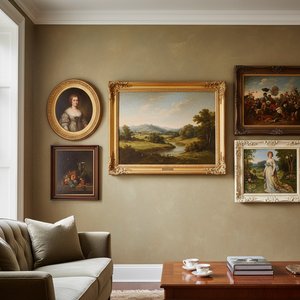
Meisterwerke des 18. & 19. Jahrhunderts: Kunst für Ihr Zuhause | OriginalUniqueArt
Entdecken Sie die 10 bedeutendsten Meisterwerke des 18. & 19. Jahrhunderts! Von Romantik bis Impressionismus – erfahren Sie die Geschichten berühmter Künstler und ihrer ikonischen Gemälde. Hochwertige Kunstdrucke auf OriginalUniqueArt.com.

Illuminating the Enlightenment: A Comprehensive Exploration of 18th-Century Painting
Explore the captivating world of 18th-century painting! Discover Rococo's playful elegance & Neoclassicism’s Enlightenment ideals with expert insights into Fragonard, David, and more. A comprehensive guide for art enthusiasts.

Reflections of an Age: Social Commentary & Artistic Representation in 18th-Century Society
Explore the social commentary & artistic representation of 18th-century society. Discover Rococo masterpieces, portraiture's power, and shifting historical perspectives. Expert insights for art lovers.
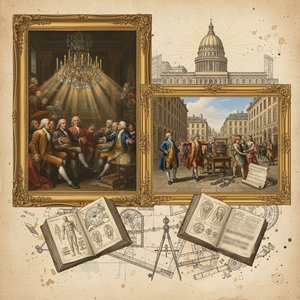
Illuminating the Enlightenment: Art & Sociopolitical Context of the 18th Century
Explore the art of the Enlightenment! Discover Rococo's elegance, Neoclassicism’s virtue, & David’s revolutionary masterpieces. Uncover the sociopolitical context shaping 18th-century European painting.
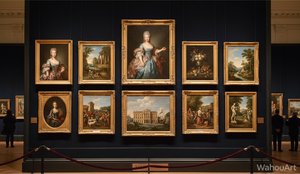
Die 10 Meisterwerke des 18. Jahrhunderts: Kunst für Ihr Zuhause | OriginalUniqueArt
Entdecken Sie die 10 prächtigsten Meisterwerke des 18. Jahrhunderts! Von Rokoko bis Klassizismus – erleben Sie die Kunst von Fragonard, David & Hogarth. Hochwertige Reproduktionen für Ihr Zuhause auf OriginalUniqueArt.com.