Versenden
 Teilen
 Details anzeigen
 Leitfaden

 Herunterladen
 Ähnliche Objekte
 Diashow
 Fragen & Antworten
 Statistiken
Bacchus


 Weiterlesen
Giclée / Kunstdruck
Giclée- oder Leinwanddruck in Museumsqualität mit schneller Produktion und flexiblen Veredelungsoptionen. ( Handgemalte Reproduktion bestellen Zum digitalen Bild wechseln)




































Wählen Sie aus unseren vordefinierten Formaten, die den ursprünglichen Proportionen des Kunstwerks entsprechen.

Geben Sie die benötigte Breite und Höhe an, damit der Druck perfekt in Ihren Rahmen oder an Ihre Wand passt. Ein Druck kann nur beschnitten, aber niemals größer als das Originalbild angefertigt werden; daher verliert ein Format mit anderen Proportionen einen Teil des Bildes. Wir senden Ihnen ein digitales Mockup zur Freigabe, bevor wir den Druck ausführen. Das auf dieser Seite gezeigte Bild zeigt nicht den tatsächlichen Beschnitt – dies ist nur im Mockup ersichtlich.
Weltweiter Versand () innerhalb von 2 Wochen statt der üblichen 4/5 Wochen. (8 November)

Kostenloser weltweiter Expressversand

Hochwertige Leinenleinwand

Umfassender Versicherungsschutz beim Versand

Zollgebühren-Rückerstattungsgarantie

Garantie für exakte Farbtreue

100 Tage Rückgaberecht (nur bei Mängeln)

100% Geld-zurück-Garantie

Mengenrabatt verfügbar
 Die Glasoption ist nur für Größen unter 110 cm verfügbar.

Bacchus
Giclée / Kunstdruck
Format der Reproduktion
-


Endpreis
€ 72
A Renaissance Reverie: Exploring Jacopo Sansovino’s Bacchus
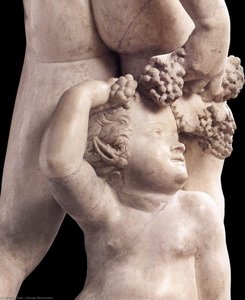
The sculpture of *Bacchus*, attributed to Florentine artist Jacopo Sansovino, stands as a testament to the humanist ideals and artistic innovations that defined the High Renaissance. Completed around 1515, this marble masterpiece resides within the Bargello museum in Florence—a location steeped in artistic heritage—and continues to captivate viewers with its masterful depiction of Dionysus, the Greek god of wine and revelry. More than just a beautiful object, *Bacchus* embodies a profound engagement with classical antiquity and represents Sansovino’s unwavering commitment to reviving the sculptural traditions of Greece and Rome.The Artist's Vision: Sansovino and Classical Influence
Jacopo Sansovino (1486-1570) emerged from Florence’s vibrant artistic crucible as a protégé of Andrea Sansovino, inheriting his mentor’s dedication to anatomical precision and stylistic elegance. Early training instilled in him an acute awareness of the sculptural achievements of antiquity—particularly the Belvedere Apollo—which profoundly shaped his aesthetic sensibilities. Unlike many artists of his time who embraced Mannerism's stylized distortions, Sansovino steadfastly pursued a path rooted in classical ideals, prioritizing naturalistic proportions and harmonious composition. This commitment is vividly evident in *Bacchus*, where Sansovino skillfully blends elements from various sculptural precedents to create an image that transcends mere imitation; it’s a deliberate reimagining of the past informed by contemporary artistic concerns.A Dynamic Pose: Anatomy and Movement
The sculpture's striking dynamism immediately draws the eye. Sansovino meticulously rendered the musculature of Bacchus’s body, demonstrating unparalleled anatomical accuracy—a hallmark of Florentine Renaissance art. The figure stands with one leg forward, creating a subtle counterbalance that conveys movement and energy. His left arm extends upward, holding a bunch of grapes or possibly a cup – symbols of Dionysian abundance and celebration – while his right hand rests on the thigh, adding to the sculpture’s sense of fluidity. This posture echoes depictions of Apollo Belvedere and other Classical sculptures, underscoring Sansovino's conscious engagement with sculptural traditions. The sculptor’s masterful manipulation of form contributes significantly to conveying the god’s joyous spirit.Symbolism and Context: Renaissance Florence
*Bacchus* operates within a broader artistic context—the flourishing intellectual and cultural landscape of Renaissance Florence under Cosimo I de Medici. The Medicis championed humanist scholarship and artistic patronage, fostering an environment where artists like Sansovino could explore classical ideals while simultaneously innovating stylistic conventions. The sculpture’s placement in Giovanni Bartolini's garden at Gualfonda reflects the Renaissance fascination with reviving the beauty and grandeur of antiquity—a desire to recapture the spirit of Classical Greece and Rome. Furthermore, Sansovino’s work aligns with the broader artistic trends of the period, exemplified by Raphael’s frescoes in the Stanza della Segnatura, where artists sought to elevate art as a vehicle for philosophical contemplation.A Legacy Enduring Beauty
Despite suffering significant damage during the 1762 fire that ravaged Florence's Palazzo Pitti—a tragedy that claimed many irreplaceable artworks—*Bacchus* remains an enduring symbol of Renaissance artistic excellence. Its captivating form, combined with Sansovino’s unwavering devotion to classical principles and humanist ideals, continues to inspire admiration and awe. The sculpture serves as a poignant reminder of the transformative power of art—its ability to transcend time and convey profound emotions while simultaneously engaging in dialogue with the artistic heritage of antiquity. It stands as an exemplar of Florentine Renaissance sculpture, cementing Sansovino’s place among the greatest artists of his era.Fragen & Antworten
Ist Jacopo Sansovino, der Schöpfer von „Bacchus“, unter anderen Namen bekannt?
Jacopo Sansovino ist auch unter dem Namen Jacopo Tatti bekannt.
Aus welcher Schaffensperiode von Jacopo Sansovino stammt "Bacchus"?
„Bacchus“ entstammt der Mature Period von Jacopo Sansovino. Diese Einordnung setzt das Werk in Bezug zur künstlerischen Entwicklung des Künstlers.
Für welche Verwendung wird ein Druck von "Bacchus" empfohlen?
Eine Reproduktion von "Bacchus" von Jacopo Sansovino wird für Focal empfohlen. Dieser Vorschlag ergibt sich aus dem Motiv, der Stimmung und den Farben des Werkes.
Künstlerbiografie
Frühes Leben und Florentinische Ausbildung
Jacopo Sansovino, geboren Jacopo Tatti um 1486 in Florenz, erlebte eine formative künstlerische Reise, die in seiner Heimatstadt begann. Zunächst Lehrling bei einem unbekannten Bildhauer, demonstrierte er schnell Talent und Ehrgeiz. Im Jahr 1511 erhielt er bedeutende Aufträge, darunter Marmorbildhauerei von St. Jakob für die Kathedrale und eine Hart-Statue, ausgestellt im Bargello. Ein bemerkenswerter Vorfall ereignete sich 1518, als seine Entwürfe für die Santa Maria Gloriosa dei Frari von Michelangelo abgelehnt wurden, was das wettbewerbsorientierte künstlerische Klima in Florenz unterstrich. Er teilte ein Atelier mit dem Maler Andrea del Sarto von 1511-1515 und bereicherte so sein Verständnis der Renaissancekunst weiter. Sansovinos frühe Arbeit spiegelt eine Mischung aus Hochrenaissanceidealen und aufkommenden Manierismustendenzen wider.Römische Periode und Architektonische Entwicklung
Nach einer Zeit in Rom (1519-1527), die mit der Entsackung Roms zusammenfiel, verlagerte sich Sansovinos Karrierebahn dramatisch. Seine römische Erfahrung setzte ihn breiteren architektonischen Einflüssen aus und verbesserte seine Fähigkeiten. Während dieser Zeit schuf er St. Onofrio und Thomas Rangone. Die Turbulenzen in Rom veranlassten seinen Umzug nach Venedig, wo er bleibende Berühmtheit erlangen würde.Venezianische Meisterwerke und Architektonisches Erbe
Sansovinos Ankunft in Venedig markierte den Beginn seiner produktivsten Periode. Ernannter Architekt der Venezianischen Republik, begann er mit einer Reihe ehrgeiziger Projekte, die die architektonische Landschaft der Stadt veränderten. Sein Meisterwerk ist zweifellos die Biblioteca Marciana, die um 1537 begonnen und über fünfzig Jahre später fertiggestellt wurde. Diese reich dekorierte Renaissancekonstruktion gegenüber dem Dogenpalast in der Piazzetta verkörpert seine Fähigkeit, klassische Architektur mit venezianischen Dekorationssensibilitäten zu verbinden. Andere bedeutende venezianische Werke sind:- Das Ca' de Dio-Krankenhaus.
- Der Palazzo Corner.
- Der Palazzo Loredan.
- Entwürfe für den Piazza San Marco.
Einfluss und Historische Bedeutung
Jacopo Sansovinos historische Bedeutung liegt in seiner Rolle als zentrale Figur, die Hochrenaissance und Manierismus verbindet. Seine Fähigkeit, klassische Ideale mit venezianischen Dekorations Traditionen zu synthetisieren, schuf einen einzigartigen architektonischen Stil, der Generationen von Künstlern und Architekten beeinflusste. Er war Mentor der Bildhauer Alessandro Vittoria und Danese Cataneo. Sansovinos Werk demonstriert eine Meisterschaft sowohl in Bildhauerei als auch in Architektur und festigt so seinen Platz als einer der wichtigsten Renaissancekünstler. Sein Vermächtnis inspiriert weiterhin die Wertschätzung für venezianische Kunst und Architektur.
Jacopo Sansovino
1486 - 1570 , Italien
Kurzinfos
- Artistic Movement Or Style: Hochrenaissance, Manierismus
- Artists Or Movements Influenced By This Artist:
- Andrea Palladio
- Alessandro Vittoria
- Artists Who Influenced This Artist:
- Michelangelo
- Andrea del Sarto
- Date Of Birth: ca. 1486
- Date Of Death: 1570
- Full Name: Jacopo Sansovino
- Nationality: Italiener
- Notable Artworks:
- Biblioteca Marciana
- Ca' de Dio
- Palazzo Corner
- Piazza San Marco (Entwürfe)
- Place Of Birth: Florenz, Italien
Ähnliche Artikel

Materie und Mimesis: Die handwerkliche Tradition der klassischen Marmorbildhauerei
Erfahren Sie alles über die Technik und Lichtmagie klassischer Marmorbildhauerei. Entdecken Sie die Tiefe der alten Meister jetzt.

The Enduring Form: Exploring Themes & Techniques in Sculpture Across Historical Periods
Explore the rich history of sculpture from ancient masterpieces to contemporary innovations. Discover key techniques, influential artists & investment potential for discerning art collectors.

The Enduring Allure of Marble in Art History: From Classical Sculpture to Modern Abstraction
Explore the captivating history of marble sculpture from ancient Greece to modern art. Discover renowned artists like Canova & Michelangelo, carving techniques, and investment insights at OriginalUniqueArt.

Meister des Dramas: Die 25 größten Kunstwerke von Jacopo Tintoretto
Entdecke die 25 Meisterwerke von Tintoretto und seine dramatische Lichtführung. Erlebe die Renaissance auf OriginalUniqueArt.com.

Bronze-Meisterwerke: Die 10 Skulpturen, die Kunstgeschichte schrieben | OriginalUniqueArt
Entdecken Sie die 10 legendärsten Bronze Skulpturen der Kunstgeschichte! Von Michelangelo bis Rodin – erfahren Sie die Geschichten hinter den Meisterwerken und lassen Sie sich von Wanddeko-Ideen inspirieren. Hochwertige Kunstdrucke auf OriginalUniqueArt.com.