Menü
Text size

() ·

A painting made for you, by hand

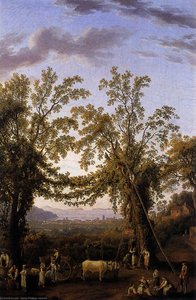
Great Cascades at Tivoli

Handgefertigte Ölreproduktion

Handgemaltes Ölgemälde auf Leinwand in Ihrer Wunschgröße und mit Rahmen, auf Bestellung von unseren Künstlern angefertigt. ( Zum Druck wechseln Zum digitalen Bild wechseln)

Beschreibung des Sammlerstücks

Discover Jacob Philipp Hackert’s ‘Great Cascades at Tivoli’ (1783). A stunning Rococo landscape painting of a dramatic waterfall, showcasing masterful detail & atmospheric perspective.

Künstlerbiografie

Jacob Philipp Hackert (1737-1807): Deutscher Landschaftsmaler, bekannt für seine italienischen Szenen im Klassizismusstil. Hofmaler Ferdinands I., beeinflusst von Vernet & Goethe. Entdecken Sie seine Meisterwerke!

from ·

Chapter 1

How large should it be?

Slide to change the size; the picture on the left shows the frame at its real width. The proportions of the original are kept.

Standardformat
individuell anpassbar
CM
INCH

Wählen Sie aus unseren vordefinierten Formaten, die den ursprünglichen Proportionen des Kunstwerks entsprechen.

Breite
Höhe

Geben Sie die Breite und die Höhe an, die Sie für Ihren Rahmen oder Ihre Wand benötigen. Da dieses Werk handgemalt ist, kann der Künstler bei einer anderen Form etwas mehr um das Bild herum malen oder etwas abschneiden – Sie entscheiden. Wir senden Ihnen ein digitales Mockup zur Freigabe, bevor mit dem Malen begonnen wird. Das auf dieser Seite gezeigte Bild stellt nicht das tatsächliche Ergebnis dar – dies tut nur das Mockup.

Chapter 2

How should it arrive?

Choose the edges of the stretched canvas

Choose your frame

Corner sample of the WhiteWrap canvas edge finish, stretched on Massivholz bars
White €1
Corner sample of the BlurSideWrap canvas edge finish, stretched on Massivholz bars
Blurside €1
Corner sample of the ExtendedWrap canvas edge finish, stretched on Massivholz bars
Extended €1
Corner sample of the P118B picture frame: formgepresstes Polystyrol, 5 cm wide and 3 cm thick
P118B €10
Corner sample of the P118H picture frame: formgepresstes Polystyrol, 5 cm wide and 3 cm thick
P118H €10
Corner sample of the P118W picture frame: formgepresstes Polystyrol, 5 cm wide and 3 cm thick
P118W €10
Corner sample of the P438Z picture frame: formgepresstes Polystyrol, 5.5 cm wide and 3.5 cm thick
P438Z €10
Corner sample of the P508JH picture frame: formgepresstes Polystyrol, 7 cm wide and 3.5 cm thick
P508JH €12
Corner sample of the P508YH picture frame: formgepresstes Polystyrol, 7 cm wide and 3.5 cm thick
P508YH €12
Corner sample of the P805H picture frame: formgepresstes Polystyrol, 5 cm wide and 3.5 cm thick
P805H €10
Corner sample of the P805Z picture frame: formgepresstes Polystyrol, 5 cm wide and 3.5 cm thick
P805Z €10
Corner sample of the P919BZ picture frame: formgepresstes Polystyrol, 7 cm wide and 3.5 cm thick
P919BZ €10
Corner sample of the P919G picture frame: formgepresstes Polystyrol, 7 cm wide and 3.5 cm thick
P919G €10
Corner sample of the P919XJ picture frame: formgepresstes Polystyrol, 7 cm wide and 3.5 cm thick
P919XJ €10
Corner sample of the P959ZH picture frame: formgepresstes Polystyrol, 5 cm wide and 3 cm thick
P959ZH €10
Corner sample of the P968JZ picture frame: formgepresstes Polystyrol, 6 cm wide and 4 cm thick
P968JZ €12
Corner sample of the W106C picture frame: Massivholz, 5 cm wide and 3 cm thick
W106C €8
Corner sample of the W218G picture frame: Massivholz, 5 cm wide and 3 cm thick
W218G €10
Corner sample of the W218JH picture frame: Massivholz, 5 cm wide and 3 cm thick
W218JH €8
Corner sample of the W218Y picture frame: Massivholz, 5 cm wide and 3 cm thick
W218Y €10
Corner sample of the W307PJ picture frame: Massivholz, 6 cm wide and 3 cm thick
W307PJ €10
Corner sample of the W316G picture frame: Massivholz, 6 cm wide and 3 cm thick
W316G €10
Corner sample of the W316PJ picture frame: Massivholz, 6 cm wide and 3 cm thick
W316PJ €8
Corner sample of the W316Y picture frame: Massivholz, 6 cm wide and 3 cm thick
W316Y €10
Corner sample of the W398PJ picture frame: Massivholz, 5 cm wide and 3 cm thick
W398PJ €8
Corner sample of the W4111J picture frame: Massivholz, 6.5 cm wide and 3.5 cm thick
W4111J €10
Corner sample of the W500HY picture frame: Massivholz, 7 cm wide and 5 cm thick
W500HY €15
Corner sample of the W500JH picture frame: Massivholz, 7 cm wide and 5 cm thick
W500JH €15
Corner sample of the W692G picture frame: Massivholz, 8 cm wide and 4 cm thick
W692G €12
Corner sample of the W849H picture frame: Massivholz, 5 cm wide and 3 cm thick
W849H €8
Corner sample of the W940BG picture frame: Massivholz, 7.5 cm wide and 4.5 cm thick
W940BG €15
Corner sample of the W953PJ picture frame: Massivholz, 6 cm wide and 3.5 cm thick
W953PJ €8
Corner sample of the H24-GOLD picture frame: geschnitztes Holz mit Gesso, 10 cm wide and 6 cm thick
H24-GOLD €30
Corner sample of the H24-SILVER picture frame: geschnitztes Holz mit Gesso, 10 cm wide and 6 cm thick
H24-SILVER €30
Corner sample of the H36-GOLD picture frame: geschnitztes Holz mit Gesso, 15 cm wide and 6.5 cm thick
H36-GOLD €45
Corner sample of the H36-SILVER picture frame: geschnitztes Holz mit Gesso, 15 cm wide and 6.5 cm thick
H36-SILVER €45

Moulding: . Overall size with the frame: .

Chapter 3

Who paints it, and should anything change?

Examples of what can be changed: Replace face with customer photo; Add pet (e.g., replace cat with dog); Include hidden message in background; Change background landscape or elements.
After order, OriginalUniqueArt.com team will email client for instructions and provide a mockup preview

Weltweiter Versand () in nur 3 bis 4 Wochen statt der üblichen 5 Wochen. (29 Oktober). Keine Kompromisse bei der Qualität.

Chapter 4

The finishing touches

A nameplate, as in a museum?

Details der gravierten Bronzetafel

This elegant plaque features the artist's name and the title of the artwork, finely engraved for a timeless presentation.

It is made from bronze with a refined, elegant finish. The text is precisely laser-engraved for a sharp and permanent result. Measuring 9x2 cm, the plaque is compact yet easy to read. It's built to be durable and scratch-resistant, offering a professional, museum-quality look. Mounting is simple thanks to the included adhesive backing.

Details zur Acrylglas-Plakette (transparent)

The plaque includes essential engraved details such as the artist's name, the title of the artwork, the date it was created, the type of media used-like oil on canvas or watercolor-a brief description of the piece, and a QR code that links to the complete artwork information.

It is crafted from clear acrylic, offering a sleek, modern appearance. The text is UV-engraved in black to ensure strong visual contrast. With a size of 10x15 cm, it ensures optimal readability. It comes equipped with two metal hooks for secure wall mounting. The plaque is designed to be weather-resistant, making it suitable for various environments, and it includes interactive features that work seamlessly with smartphone scanning.

Details zur schwarzen Acryltafel

This elegant plaque includes engraved information such as the artist's name, the title of the artwork, the date it was created, the type of media used (like oil on canvas or watercolor), a short description of the artwork, and a QR code for quick access to more information.

The plaque itself is made from refined black acrylic with a premium finish. The text is laser-engraved in white for high contrast and readability. Its size is 10x15 cm, designed to be easy to read. It comes with two metal hooks for professional mounting. The design is sleek and fits any interior style. It is also weather-resistant and durable, with built-in digital integration for mobile compatibility.

A protective varnish?

When do you need it?

Chapter 5

Your painting, as you ordered it

Great Cascades at Tivoli

Art der Reproduktion

Format der Reproduktion

-

Erstklassige Meisterkünstler

Mehr Detailtiefe, Raffinesse und zusätzliche Produktionszeit

-

Rahmen für Reproduktionen

-

-

Bei Kunstwerken oder Reproduktionen, die an einer Seite größer als 105 cm (ca. 41 Zoll) sind, wird der Rahmen zerlegt als Bausatz geliefert. Diese Methode gewährleistet eine sichere Zustellung und verhindert Schäden während des Transports.

Professionelle Montage erforderlich – dies ist kein DIY-Produkt.
Der Bausatz muss von einem erfahrenen professionellen Rahmenmacher zusammengebaut und die Leinwand gespannt werden. Hierfür werden Holzleim (nicht im Lieferumfang enthalten), eine Leinwandspannzange sowie Klemmen benötigt, um die Keilleisten während des Trocknungsvorgangs rechtwinklig zu halten. Eine unsachgemäße Montage oder eine ungleichmäßige Spannung der Leinwand kann das Kunstwerk dauerhaft beschädigen und ist nicht durch unsere Garantie abgedeckt.

  • Alle Vollholzkomponenten sind enthalten, präzise auf Maß zugeschnitten.

  • Der Zusammenbau erfolgt mit den mitgelieferten Schrauben sowie Holzkleber für die Eckverbindungen, der nicht im Lieferumfang enthalten ist und vom Rahmenbauer selbst beschafft werden muss.

  • Professionelles Werkzeug ist erforderlich und nicht im Lieferumfang enthalten: eine Keilrahmenzange (Spannwerkzeug) sowie Klammern, um die Leisten während der Trocknungszeit des Klebers rechtwinklig zu fixieren.

Wichtiger Hinweis:
Für die Eckverbindungen wird Holzleim benötigt, die Leisten müssen mit Zwingen fixiert werden, bis der Leim vollständig getrocknet ist, und das Spannen der Leinwand auf dem fertigen Rahmen erfordert eine Keilrahmen-Zange. Keines dieser Utensilien ist im Set enthalten. Bitte stellen Sie sicher, dass ein erfahrener Rahmenmacher zur Verfügung steht, bevor Sie diese Größe bestellen.

Beschriftung

-

-

Schutzlackierung

Glanzlack (verstärkt die Farben, schützt vor Licht und Feuchtigkeit)

-

Mein Kunstwerk personalisieren

Beispiele für Anpassungsmöglichkeiten: Gesicht durch Kundenfoto ersetzen; Haustier hinzufügen (z. B. Katze durch Hund ersetzen); Versteckte Nachricht im Hintergrund einfügen; Hintergrundlandschaft oder -elemente ändern.

-

Eilt sehr

Weltweiter Versand () in nur 3 bis 4 Wochen statt der üblichen 5 Wochen. (29 Oktober). Keine Kompromisse bei der Qualität.

-

Expressversand

Weltweiter Versand () innerhalb von 5 Wochen. (5 November).

Inklusive Versand

Endpreis

€ 287

Gesamtpreis € 287

Die Glasoption ist nur für Größen unter 110 cm verfügbar.

Included with every order

  • Kostenloser weltweiter Expressversand
  • Hochwertige Leinenleinwand
  • Umfassender Versicherungsschutz beim Versand
  • Zollgebühren-Rückerstattungsgarantie
  • Garantie für exakte Farbtreue
  • 100 Tage Rückgaberecht (nur bei Mängeln)
  • 100% Geld-zurück-Garantie
  • Mengenrabatt verfügbar

A Symphony of Light and Stone

In the grand tapestry of late eighteenth-century landscape painting, few works capture the breathtaking intersection of classical order and burgeoning Romantic emotion as masterfully as Jacob Philipp Hackert’s “Great Cascades at Tivoli.” Painted in 1783, this monumental canvas serves as a window into a world where nature is both a structured masterpiece and an untamed force. The scene unfolds with a dramatic waterfall that commands the viewer's attention, cascading through a rugged, verdant landscape. Hackert does not merely depict a geographical location; he orchestrates a visual symphony where the roar of the water is felt through the eyes, and the cool mist of the falls seems to drift from the very surface of the oil paint.

The composition is a testament to the enduring influence of masters like Claude Lorrain and Nicolas Poussin. Hackert employs a traditional pyramidal structure, a technique that provides a sense of stability and eternal balance to an otherwise turbulent subject. This architectural approach to nature guides the eye upward, following the descent of the white water toward the lush, rolling hills that frame the scene. Through the expert use of atmospheric perspective, the artist creates an immense sense of scale; the distant mountains and soft, hazy horizons suggest a world that extends far beyond the edges of the frame, inviting the observer to lose themselves in the vastness of the Italian landscape.

The Mastery of Light and Texture

Technically, “Great Cascades at Tivoli” is a triumph of chiaroscuro. Hackert utilizes dramatic contrasts between deep, shadowed crevices in the rocks and the brilliant, luminous highlights dancing upon the water’s surface. This interplay of light does more than create depth; it imbues the painting with a living, breathing quality. The artist’s brushwork is remarkably versatile, transitioning seamlessly from the smooth, glass-like reflections in quiet pools to the textured, tactile rendering of mossy stones and dense foliage. Such meticulous detail ensures that every element—from the sharp edges of a precipice to the soft, ephemeral clouds above—contributes to a cohesive and immersive reality.

For the discerning collector or interior designer, this piece offers an unparalleled sense of grandeur. The palette, rich with earthy greens, deep ochres, and brilliant whites, provides a sophisticated anchor for any high-end space. Whether placed in a sunlit gallery or a moody, classically appointed study, the painting acts as a focal point that radiates both tranquility and power. It is a work that does not merely decorate a wall; it transforms an environment, bringing the sublime majesty of the natural world into the intimacy of the home.

A Bridge Between Eras

Beyond its aesthetic splendor, the artwork holds profound historical significance. Hackert stands at a fascinating crossroads in art history, bridging the refined, decorative elegance of the Rococo and Baroque eras with the soulful, emotive spirit of Romanticism. While the painting retains the polished precision and classical poise of his training at the Prussian Academy of Arts, there is an undeniable pulse of modern feeling in the way he captures the raw energy of the cascades. This duality makes the work particularly compelling; it offers the intellectual satisfaction of classical composition alongside the visceral, emotional response triggered by nature's overwhelming beauty.

To possess a reproduction of this caliber is to hold a piece of history that celebrates the harmony between humanity and the environment. The subtle inclusion of pastoral elements—small figures and livestock moving through the landscape—suggests a world where human life exists in quiet, respectful dialogue with the monumental scale of nature. It is an invitation to contemplate the eternal, a masterpiece of light and stone that continues to inspire awe more than two centuries after its creation.

Fragen & Antworten

Aus welcher Schaffensperiode von Jakob Philipp Hackert stammt "Great Cascades at Tivoli"?

„Great Cascades at Tivoli“ entstammt der Mature Period von Jakob Philipp Hackert. Diese Einordnung setzt das Werk in Bezug zur künstlerischen Entwicklung des Künstlers.

Welche Technik wurde für "Great Cascades at Tivoli" verwendet und welche Maße hat das Werk?

"Great Cascades at Tivoli" von Jakob Philipp Hackert wurde in Oil On Canvas ausgeführt und hat die Maße 120 x 170 cm.

Ist "Great Cascades at Tivoli" von Jakob Philipp Hackert im Hoch-, Quer- oder Quadratformat angeordnet?

"Great Cascades at Tivoli" von Jakob Philipp Hackert hat ein Landscape-Format. Das Format beschreibt die Proportionen der Komposition.

More about this painting

Vorschau anzeigen In AR ansehen Zum Druck wechseln Zum digitalen Bild wechseln Versenden
Details anzeigen Leitfaden Zu Favoriten hinzufügen Herunterladen Ähnliche Objekte Röntgenaufnahme Diashow Q&A Statistiken

In numbers

  • 1783the year it was painted
  • 29frames to choose from
  • standard sizes, in its own proportions
  • 5weeks to paint and deliver it
Jakob Philipp Hackert

Jakob Philipp Hackert

1737 - 1807, Deutschland

Quick facts about Jakob Philipp Hackert

  • Artistic Movement Or Style: Klassizismus, Romantik
  • Artists Or Movements Influenced By This Artist: ['Vedutismo']
  • Artists Who Influenced This Artist:
    • Vernet
    • Wille
    • Lorrain
  • Date Of Birth: 15. September 1737
  • Date Of Death: 28. April 1807
  • Full Name: Jacob Philipp Hackert
  • Nationality: Deutscher
  • Notable Artworks:
    • Landschaft mit Fluss
    • Caserta-Ansicht
    • Herbst
  • Place Of Birth: Prenzlau, Deutschland

Künstlerbiografie

Early Life and Artistic Foundations

Jacob Philipp Hackert wurde im September 1737 in Prenzlau, Brandenburg, geboren – eine Region, die heute Teil Deutschlands ist. Seine Kindheit war von Kunst durchdrungen; sein Vater, Philipp Hackert, praktizierte sowohl als Porträtist als auch als Tierzeichner und legte damit den Grundstein für Jacobs künstlerische Reise. Diese familiäre Einflüsse erstreckten sich auf seinen Onkel, unter dessen Anleitung er seine Fähigkeiten weiter verfeinerte. Eine formale Ausbildung folgte in der renommierten Prussian Academy of Arts in Berlin ab 1758, wo er die technischen Grundlagen entwickelte, die später seinen Stil prägen sollten. Hackerts frühes Berufsleben war jedoch nicht auf Ateliers beschränkt. Seine Reisen führten ihn durch Schwedisch Pommern und schließlich nach Stockholm, wo ihm eine wichtige Bestellung von Baron Adolf Friedrich von Olthof – dekorative Wandmalereien für den Barons Anwesenheit – seinen künstlerischen Horizont erweiterte und ihn mit verschiedenen ästhetischen Einflüssen vertraut machte. Diese prägenden Jahre waren entscheidend für die Formung seines Blickes und bereiteten ihn auf die größeren Bühnen seiner Karriere vor.

The Italian Awakening: Paris, Rome, and Naples

Ein einschneidendes Kapitel begann mit Hackerts Umzug nach Paris zwischen 1765 und 1768 zusammen mit dem Schweizer Künstler Balthasar Anton Dunker. Diese Zeit erwies sich als transformativ, indem sie ihn in ein lebendiges künstlerisches Milieu eintauchte. Er ließ sich von Claude Joseph Vernet, dem gefeierten Maler von Landschaften und Seeschiffen, beeinflussen und übernahm Elemente von Vernets dramatische Kompositionen und atmosphärische Effekte in seinen eigenen aufkeimenden Stil. Gleichzeitig trug ein Studium bei dem deutschen Kupferstecher Johann Georg Wille zur Verfeinerung seiner Präzision und Detailgenauigkeit bei. Im Jahr 1768 begab sich Hackert mit seinem Bruder Georg auf eine Reise, die seinen künstlerischen Lauf für immer verändern sollte – er ließ sich hauptsächlich in Rom und Neapel nieder und gründete dort einen außergewöhnlich produktiven Zeitraum, der von zahlreichen Aufträgen für Ansichten des italienischen Landes geprägt war, insbesondere von Sir William Hamilton. Er durchquerte das gesamte Italien, dokumentierte seine Schönheit akribisch und erlangte als Meister des Landschaftsbildnerns Anerkennung. Das Licht, die Farben, die Essenz der italienischen Halbinsel fesselten ihn, wurden zum bestimmenden Merkmal seiner Werke.

Patronage, Recognition, and Artistic Flourishing

Hackerts künstlerische Karriere stieg durch Talent und strategische Förderung zu neuen Höhen auf. Seine Fähigkeit, die sublimen Schönheiten Italiens einzufangen, resonierte mit bedeutenden Persönlichkeiten in ganz Europa. Ein Meilensteinauftrag kam von Katharina der Großen aus Russland – ein Zyklus von Gemälden, der den entscheidenden Kampf von Chesma darstellt und seinen Ruf international festigte. Darüber hinaus stärkte eine fruchtbare Beziehung zu Papst Pius VI seine Position durch bedeutende künstlerische Projekte, die seine Vielseitigkeit demonstrierten. Im Jahr 1786 wurde Hackert zum Hofmaler König Ferdinand I. der beiden Sizilien in Neapel ernannt – eine prestigeträchtige Rolle, die über reine Malerei hinausging; er beriet bei der Erstellung eines Malrestaurierungs laboratories im Museo di Capodimonte und beaufsichtigte den Transfer der angesehenen Farnesischen Sammlungen von Rom nach Neapel. Er schuf bemerkenswerte Gemälde, die Caserta und den Königlichen Palast von Caserta darstellten sowie eine Reihe, die die Häfen des Bourbon-Hauses illustrierten. Interessanterweise diente Hackert auch als Geheiminformant für Russland während dieser Zeit – ein Beweis für das komplexe politische Umfeld, in dem er operierte. Eine besonders geschätzte Verbindung entwickelte sich zwischen Hackert und Johann Wolfgang von Goethe während der späteren Besuche des Dichters in Neapel, wodurch eine Freundschaft entstand, die seinen intellektuellen Status weiter erhöhte.

Style, Legacy, and Historical Significance

Hackerts künstlerischer Stil stellt eine überzeugende Synthese aus klassischem Landschaftsbildern und einer aufkommenden Romantik dar. Er ist stark von den Werken Claud Lorrain beeinflusst und zeichnet sich durch sorgfältig ausgewogene Anordnungen aus, die beobachtete Realität mit einer idealisierten ästhetischen Vision verbinden. Dennoch unterschied er sich durch ein unerschütterliches Engagement für botanische Genauigkeit und den Wunsch nach erkennbaren Darstellungen von Orten. Seine Gemälde sind durch scharfe Darstellungen natürlicher Details und realistische Darstellungen italienischer Landschaften gekennzeichnet, oft in warmem, goldenem Licht getaucht. Er gilt als einer der größten Interpreten des *Vedutismo*-Genres – Gemälde, die Ansichten von Städten und Landschaften mit topographischer Präzision darstellen. Hackerts historisches Ansehen erstreckt sich über seine künstlerischen Beiträge hinaus; er diente als wichtiger kultureller Botschafter zwischen Deutschland und Italien im späten 18. Jahrhundert und förderte den Austausch zwischen künstlerischen Traditionen. Er starb am 28. April 1807 in San Pietro di Careggi in der Nähe von Florenz und hinterließ ein beträchtliches Werk, das weiterhin Bewunderung und Inspiration für seine Schönheit, sein technisches Können und seine dauerhafte historische Bedeutung hervorruft. *Seine Landschaften sind nicht nur Darstellungen von Landschaftsbildern; sie sind Fenster zu einer Welt, die sowohl klassische Anmut als auch romantische Emotionen vereint.*

Eckdaten

  • Year: 1783
  • Artist: Jacob Philipp Hackert
  • Artistic style: Classical Landscape Painting
  • Notable elements or techniques: Atmospheric perspective; Detailed rendering
  • Title: Great Cascades at Tivoli

Kunst-Quiz

Jede Frage hat nur eine richtige Antwort.

Frage 1:
What artistic movement is Hackert’s ‘Great Cascades at Tivoli’ primarily associated with?
Frage 2:
The painting utilizes atmospheric perspective to achieve what effect?
Frage 3:
'Great Cascades at Tivoli' exemplifies the Rococo style due to its focus on:
Frage 4:
Who commissioned Hackert to create decorative murals for Olthof’s estate?
Frage 5:
What is a notable influence on Hackert's artistic style, as evidenced by his collaboration with Goethe?