

 In echtem Maßstab anzeigen
 Versenden als Grußkarte
 Teilen
 Details anzeigen
 Leitfaden öffnen

 Herunterladen
 Ähnliche Objekte
 Röntgenaufnahme
 Diashow
 Besucherstatistiken
Installation View


 Mehr anzeigen
Die auf dieser Seite dargestellten Kunstwerke sind urheberrechtlich geschützt, was bedeutet, dass wir keine identische Reproduktion rechtmäßig erstellen oder verkaufen dürfen. Dieser Schutz wird durch internationale Abkommen wie die Berner Übereinkunft und durch nationale Gesetze, einschließlich derer, die von den ... festgelegt wurden US-Urheberrecht – Titel 17.
Diese Methode entspricht vollumfänglich den Urheberrechtsbestimmungen, da sie keine Kopie oder Vervielfältigung des geschützten Kunstwerks darstellt. Stattdessen handelt es sich um eine kreative Neuinterpretation – ein neues Gemälde, das vom Original inspiriert, aber nicht identisch mit ihm ist.
Giclée / Kunstdruck
Giclée- oder Leinwanddruck in Museumsqualität mit schneller Produktion und flexiblen Veredelungsoptionen. ( Handgemalte Reproduktion kaufen Zum digitalen Bild wechseln)




P118B €10

P118H €10

P118W €10

P438Z €10

P508JH €12

P508YH €12

P805H €10

P805Z €10

P919BZ €10

P919G €10

P919XJ €10

P959ZH €10

P968JZ €12

W106C €8

W218G €10

W218JH €8

W218Y €10

W307PJ €10

W316G €10

W316PJ €8

W316Y €10

W398PJ €8

W4111J €10

W500HY €15

W500JH €15

W692G €12

W849H €8

W940BG €15

W953PJ €8




Wählen Sie aus unseren vordefinierten Formaten, die den ursprünglichen Proportionen des Kunstwerks entsprechen.

Geben Sie die Breite und die Höhe an, die Sie benötigen, damit der Druck perfekt in Ihren Rahmen oder an Ihre Wand passt. Ein Druck kann nur beschnitten werden und niemals größer als das Originalbild gemacht werden; daher verliert ein Format mit einer anderen Proportion einen Teil des Bildes. Wir senden Ihnen ein digitales Mockup zur Freigabe, bevor wir den Druck ausführen. Das auf dieser Seite gezeigte Bild zeigt nicht den tatsächlichen Beschnitt – dies ist nur im Mockup ersichtlich.
Weltweiter Versand () innerhalb von 2 Wochen statt der üblichen 4/5 Wochen. (21 Oktober)

Kostenloser weltweiter Expressversand

Hochwertige Leinenleinwand

Vollständiger Versicherungsschutz beim Versand

Zollgebühren-Rückerstattungsgarantie

Garantie für exakte Farbtreue

100-tägiges Rückgaberecht (nur bei Mängeln)

100% Geld-zurück-Garantie

Angebot für Mengenrabatt
 Die Glasoption ist nur für Größen unter 110 cm verfügbar.

Installation View
Giclée / Kunstdruck
Format der Reproduktion
-


Gesamtpreis
€ 70
A Desert Soul Captured: Inji Efflatoun's "Installation View"
The photograph presents a carefully orchestrated tableau – an “Installation View” as the caption suggests, capturing Inji Efflatoun’s work within the serene confines of a minimalist gallery space. It’s not merely a display of paintings; it’s a deliberate composition designed to invite contemplation and reveal the artist's profound connection to her Egyptian heritage. The stark white walls act as a powerful counterpoint to the vibrant, earthy tones and intricate patterns that dominate the artwork itself, drawing our attention directly to Efflatoun’s evocative vision.
The arrangement of the four canvases – a dynamic abstract piece, a small square study, a textured mid-scale work, and a larger, richly detailed composition – suggests a deliberate progression. It's as if we are invited on a journey through the artist’s creative process, from the immediate impact of color and form to a more nuanced exploration of human experience and the landscape that shaped her perspective. The muted grayscale of the photograph itself subtly enhances the intensity of the colors within the paintings, creating a visual dialogue between stillness and movement.
Echoes of Revolution: Context and Influences
To fully appreciate “Installation View,” it’s crucial to understand the historical and political context in which Inji Efflatoun created her art. Born in Cairo in 1924, she lived through a period of immense social upheaval – the rise of Egyptian nationalism, the tumultuous years under Gamal Abdel Nasser's regime, and the burgeoning feminist movement. Her life was marked by both periods of vibrant creativity and harrowing imprisonment for her political activism. This experience profoundly shaped her artistic vision, imbuing it with a raw honesty and a deep commitment to social justice.
Efflatoun’s early training under Kamel El Telmissany, a key figure in the Surrealist-influenced Art and Liberty Group, provided a crucial foundation. This group, dedicated to challenging established artistic conventions and advocating for political freedom, exposed Efflatoun to innovative techniques and a spirit of rebellion. Her work subsequently absorbed elements of Cubism and Surrealism, reflecting her desire to deconstruct traditional representations and explore the subconscious depths of human experience. The influence of Egyptian folk traditions, gleaned from her travels through rural areas like Nubia, further enriched her palette and subject matter, grounding her abstract explorations in a tangible connection to her homeland.
Symbolic Landscapes: Unveiling Meaning
The paintings themselves offer a rich tapestry of symbolic imagery. “Banana Trees,” “Flower Behind the Wall,” “Palm Trees,” “Mountains,” and “Workers” are not simply depictions of natural elements or labor scenes; they’re windows into Efflatoun's soul, reflecting her profound engagement with the realities of Egyptian life. The recurring motifs – trees, walls, mountains, and workers – represent a complex interplay of themes: resilience in the face of adversity, the struggle for survival, the beauty of the natural world, and the enduring spirit of the Egyptian people.
The small square painting, often interpreted as “Flower Behind the Wall,” is particularly poignant. It suggests that even amidst hardship and constraint, there remains a glimmer of hope and beauty – a reminder of the potential for growth and renewal. The larger composition featuring figures and patterns likely depicts scenes of rural labor, capturing the rhythmic movements and dignified endurance of the peasantry, while simultaneously hinting at the broader social inequalities that plagued Egyptian society.
A Legacy of Bold Vision
Inji Efflatoun’s “Installation View” is more than just a photograph; it's a testament to an artist who dared to challenge conventions and speak truth to power. Her work, imbued with passion, intellect, and a deep love for her country, continues to resonate today as a powerful reminder of the importance of social justice, artistic freedom, and the enduring beauty of the Egyptian landscape. Reproductions of her paintings offer a unique opportunity to bring this extraordinary vision into your home or office, serving as both a work of art and a poignant reflection on a remarkable life.
Fragen & Antworten
Wo finde ich Statistiken zu "Installation View" von Inji Efflatoun?
Statistiken zu "Installation View" von Inji Efflatoun finden Sie auf der Statistiken-Seite des Kunstwerks: monatliche Aufrufe des Kunstwerks, Aufrufe der Werke des Künstlers sowie eine Aufschlüsselung der jüngsten Besucher nach Land und Sprache.
Ist "Installation View" von Inji Efflatoun ein helles oder ein dunkles Kunstwerk?
Insgesamt wird „Installation View“ mit einer Helligkeit von brilliant erfasst. Die wahrgenommene Helligkeit beschreibt, wie hell oder dunkel das Werk erscheint.
Warum ist der Urheberrechtsstatus von "Installation View" so, wie er ist?
"Installation View" von Inji Efflatoun ist noch urheberrechtlich geschützt. Die Dauer des Urheberrechts beginnt mit dem Tod des Künstlers, der im Jahr 1989 verstarb.
Biografie des Künstlers
Eine Vision der Resilienz: Das Leben und die Kunst von Inji Efflatoun
In der lebendigen und oft turbulenten Landschaft der ägyptischen Kunst des zwanzigsten Jahrhunderts genießen nur wenige Persönlichkeiten so viel Respekt und eine so tiefe emotionale Resonanz wie Inji Efflatoun. Als Pionierin der modernen ägyptischen Kunst war ihr Leben ein nahtloser Wandteppich, gewebt aus den Fäden kreativer Brillanz und leidenschaftlichen politischen Aktivismus. Geboren in Kairo, Ägypten, in eine Familie mit tiefen intellektuellen Wurzeln, trat Efflatoun nicht nur als Malerin, sondern als führende Sprecherin der marxistisch-progressiv-nationalistischen-feministischen Bewegung während der transformativen Jahrzehnte der 1940er und 1950er Jahre hervor. Ihr Werk dient als viszerales Zeugnis der Kämpfe ihrer Ära und fängt die Seele einer Nation im Wandel ein.
Ihre künstlerische Reise wurde tiefgreifend durch ihre frühe Begegnung mit vielfältigen sozialen Realitäten geprägt. Während sie in Kairo aufwuchs, bewegte sie sich in Umgebungen, die von traditionellen und bürgerlichen Kreisen bis hin zu den radikalen intellektuellen Zirkeln der Art and Freedom Group reichten. Unter der Mentorenschaft von Persönlichkeiten wie Kamel El Telmissany entwickelte sie ein Fundament, das es ihr ermöglichte, die Lücke zwischen ästhetischer Innovation und sozialem Kommentar zu schließen. Ihre Leinwände fungieren oft als Fenster in das alltägliche ägyptische Leben, wobei sie Erdtöne und komplizierte Muster nutzt, um ein Gefühl von Erbe und der Verbundenheit mit dem Land hervorzurufen.
Die Leinwand als Zeugin: Themen und Technik
Efflatouns Œuvre zeichnet sich durch die Fähigkeit aus, über die bloße Darstellung hinauszugehen und in den Bereich des Symbolischen und Eindringlichen vorzudringen. Ihre Technik verschmolz oft den rohen, energetischen Geist des Expressionismus mit einem kargen, skelettartigen Minimalismus. Dieser Ansatz findet seine kraftvollste Umsetzung vielleicht in ihren späteren Werken, in denen sie das Unwesentliche wegließ, um sich auf die essenzielle Qual der menschlichen Existenz zu konzentumieren. In Meisterwerken wie Workers begegnet man einer erschütternden Szene von Figuren, die vor kahlen Bäumen hängen – ein Tableau, das die schweren Kosten politischer und sozialer Umwälzungen mit einer rhythmischen und doch beunruhigenden Bewegung einfängt.
Ihre Sujets wandten sich häufig der Würde der Arbeit und der Widerstandsfähigkeit des einfachen Volkes zu. In Werken wie The Worker setzte sie einen impressionistischen Stil und warme Töne ein, um das Wesen der ländlichen Arbeit einzufangen. Doch diese Wärme wurde oft den dunkleren Realitäten ihrer gelebten Erfahrung gegenübergestellt. Die folgenden Elemente definieren einen Großteil ihrer visuellen Sprache:
- Sozialer Realismus: Ein tiefes Engagement für die Darstellung der Kämpfe der Arbeiterklasse und der Auswirkungen politischer Veränderungen auf die Bevölkerung.
- Symbolische Landschaften: Die Verwendung von skelettartigen Bäumen, trostlosen Landschaften und kargen Silhouetten, um innere und nationale Trostlosigkeit widerzuspiegeln.
- Texturelle Tiefe: Eine Erkundung historischer Texturen und der Einsatz von Negativraum, um ein Gefühl von tiefer Bedeutung und emotionaler Schwere zu erzeugen.
Künstlerische Meisterschaft inmitten von Widrigkeiten
Die prägendste Zeit in Efflatouns Leben, und vielleicht die bewegendste für ihre künstlerische Entwicklung, war ihre Zeit im Gefängnis. Inhaftiert durch das Nasser-Regime zwischen 1959 und 1963 aufgrund ihrer kommunistischen Verbindungen, fand sie sich in einer Position wieder, in der ihre Kunst zu einem Werkzeug wurde, um das Unwiederbringliche zu dokumentieren. Diese Zeit der Inhaftierung brachte Werke hervor, die oft als der Höhepunkt ihres Schaffens betrachtet werden; sie dienen sowohl als dokumentarische Aufzeichnung der Unterdrückung, der politische Gegner ausgesetzt waren, als auch als geheimes Fenster in die Realität von Frauengefängnissen.
Diese Gemälde aus ihrer Gefangenschaft besitzen eine außergewöhnliche Intensität und werfen durch ein Prisma roher Ehrlichkeit Licht auf eine verborgene Realität. Ihre Fähigkeit, das Trauma der Gefangenschaft in ein tiefgreifendes visuelles Zeugnis zu verwandeln, festigte ihre historische Bedeutung. Sie malte nicht nur die Welt, die sie sah; sie malte das Gewicht der Existenz selbst und stellte sicher, dass die Opfer und die Resilienz des ägyptischen Volkes in die Annalen der modernen Kunstgeschichte eingraviert bleiben.

Inji Efflatoun
1924 - 1989 , Ägypten
Eckdaten zum Künstler
- Bemerkenswerte Kunstwerke:
- Der Arbeiter
- Arbeiter
- Installationsansicht
- Geburtsdatum: 1924
- Geburtsort: Kairo, Ägypten
- Künstler, Die Diese Künstlerin Beeinflusst Haben: ['Kamel El Telmissany']
- Künstlerische Bewegung Oder Stil: Moderne ägyptische Kunst; Expressionismus
- Nationalität: Ägyptisch
- Sterbedatum: 1989
- Vollständiger Name: Inji Efflatoun
Verwandte Artikel
Golden Hour on the Nile: Symbolism & Artistic Legacy of Egyptian Sunsets
Explore the rich symbolism of Egyptian sunset paintings & their artistic legacy. Discover how color, ritual, and landscape shaped ancient beliefs – a guide for discerning collectors.
Surrealist Expression: Unlocking the Power of Dreams and the Subconscious through Art History
Explore the profound depths of Surrealism. From Dalí’s dreamscapes to Magritte’s enigmas, master the history of the subconscious mind through our expert art guide and discover museum-quality oil reproductions of the world's most iconic surrealist masterpieces.
Pop Surrealism Unveiled: The Sophisticated Intersection of Vibrant Pop Art and Dreamlike Subconscious Landscapes
Explore the captivating world of Pop Surrealism. Discover how vibrant Pop Art meets dreamlike subconscious imagery through the works of masters like Jeff Soto and Ryan Heshka. An expert guide for discerning collectors seeking to understand this profound contemporary art movement.
Echoes of Revolution: Artistic Responses to the Tumultuous Year of 1917
Explore the powerful artistic responses to the 1917 Russian Revolution. Discover key artists like Chagall, Lotonina & Baratynsky and their enduring legacy. Learn about avant-garde movements, propaganda, and Stalin's impact on art.
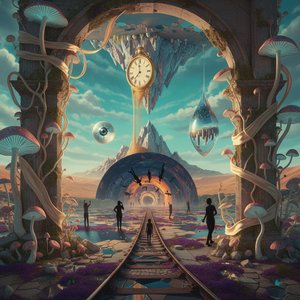
Dreamscapes & Disrupted Realities: Exploring Surrealism's Enduring Influence
Explore the fascinating world of Surrealism! Discover its origins, key artists like Dalí & Magritte, and enduring influence on art & culture. Expert insights & high-quality reproductions at OriginalUniqueArt.
