Menü
Text size

() ·

A painting made for you, by hand

The Ponte Solario

Handgefertigte Ölreproduktion

Handgemaltes Ölgemälde auf Leinwand in Ihrer Wunschgröße und mit Rahmen, auf Bestellung von unseren Künstlern angefertigt. ( Zum Druck wechseln Zum digitalen Bild wechseln)

Beschreibung des Sammlerstücks

Experience Romantic decay with Hubert Robert's 1775 vision of The Ponte Solario, capturing sublime ruins bathed in atmospheric light; discover this masterpiece today.

Künstlerbiografie

Hubert Robert (1733-1808): Französischer Maler der Ruinen & Visionen! Entdecken Sie seine faszinierenden Landschaftsbilder & historischen Darstellungen.

from ·

Chapter 1

How large should it be?

Slide to change the size; the picture on the left shows the frame at its real width. The proportions of the original are kept.

Standardformat
individuell anpassbar
CM
INCH

Wählen Sie aus unseren vordefinierten Formaten, die den ursprünglichen Proportionen des Kunstwerks entsprechen.

Breite
Höhe

Geben Sie die Breite und die Höhe an, die Sie für Ihren Rahmen oder Ihre Wand benötigen. Da dieses Werk handgemalt ist, kann der Künstler bei einer anderen Form etwas mehr um das Bild herum malen oder etwas abschneiden – Sie entscheiden. Wir senden Ihnen ein digitales Mockup zur Freigabe, bevor mit dem Malen begonnen wird. Das auf dieser Seite gezeigte Bild stellt nicht das tatsächliche Ergebnis dar – dies tut nur das Mockup.

Chapter 2

How should it arrive?

Choose the edges of the stretched canvas

Choose your frame

Corner sample of the WhiteWrap canvas edge finish, stretched on Massivholz bars
White €1
Corner sample of the BlurSideWrap canvas edge finish, stretched on Massivholz bars
Blurside €1
Corner sample of the ExtendedWrap canvas edge finish, stretched on Massivholz bars
Extended €1
Corner sample of the P118B picture frame: formgepresstes Polystyrol, 5 cm wide and 3 cm thick
P118B €10
Corner sample of the P118H picture frame: formgepresstes Polystyrol, 5 cm wide and 3 cm thick
P118H €10
Corner sample of the P118W picture frame: formgepresstes Polystyrol, 5 cm wide and 3 cm thick
P118W €10
Corner sample of the P438Z picture frame: formgepresstes Polystyrol, 5.5 cm wide and 3.5 cm thick
P438Z €10
Corner sample of the P508JH picture frame: formgepresstes Polystyrol, 7 cm wide and 3.5 cm thick
P508JH €12
Corner sample of the P508YH picture frame: formgepresstes Polystyrol, 7 cm wide and 3.5 cm thick
P508YH €12
Corner sample of the P805H picture frame: formgepresstes Polystyrol, 5 cm wide and 3.5 cm thick
P805H €10
Corner sample of the P805Z picture frame: formgepresstes Polystyrol, 5 cm wide and 3.5 cm thick
P805Z €10
Corner sample of the P919BZ picture frame: formgepresstes Polystyrol, 7 cm wide and 3.5 cm thick
P919BZ €10
Corner sample of the P919G picture frame: formgepresstes Polystyrol, 7 cm wide and 3.5 cm thick
P919G €10
Corner sample of the P919XJ picture frame: formgepresstes Polystyrol, 7 cm wide and 3.5 cm thick
P919XJ €10
Corner sample of the P959ZH picture frame: formgepresstes Polystyrol, 5 cm wide and 3 cm thick
P959ZH €10
Corner sample of the P968JZ picture frame: formgepresstes Polystyrol, 6 cm wide and 4 cm thick
P968JZ €12
Corner sample of the W106C picture frame: Massivholz, 5 cm wide and 3 cm thick
W106C €8
Corner sample of the W218G picture frame: Massivholz, 5 cm wide and 3 cm thick
W218G €10
Corner sample of the W218JH picture frame: Massivholz, 5 cm wide and 3 cm thick
W218JH €8
Corner sample of the W218Y picture frame: Massivholz, 5 cm wide and 3 cm thick
W218Y €10
Corner sample of the W307PJ picture frame: Massivholz, 6 cm wide and 3 cm thick
W307PJ €10
Corner sample of the W316G picture frame: Massivholz, 6 cm wide and 3 cm thick
W316G €10
Corner sample of the W316PJ picture frame: Massivholz, 6 cm wide and 3 cm thick
W316PJ €8
Corner sample of the W316Y picture frame: Massivholz, 6 cm wide and 3 cm thick
W316Y €10
Corner sample of the W398PJ picture frame: Massivholz, 5 cm wide and 3 cm thick
W398PJ €8
Corner sample of the W4111J picture frame: Massivholz, 6.5 cm wide and 3.5 cm thick
W4111J €10
Corner sample of the W500HY picture frame: Massivholz, 7 cm wide and 5 cm thick
W500HY €15
Corner sample of the W500JH picture frame: Massivholz, 7 cm wide and 5 cm thick
W500JH €15
Corner sample of the W692G picture frame: Massivholz, 8 cm wide and 4 cm thick
W692G €12
Corner sample of the W849H picture frame: Massivholz, 5 cm wide and 3 cm thick
W849H €8
Corner sample of the W940BG picture frame: Massivholz, 7.5 cm wide and 4.5 cm thick
W940BG €15
Corner sample of the W953PJ picture frame: Massivholz, 6 cm wide and 3.5 cm thick
W953PJ €8
Corner sample of the H24-GOLD picture frame: geschnitztes Holz mit Gesso, 10 cm wide and 6 cm thick
H24-GOLD €30
Corner sample of the H24-SILVER picture frame: geschnitztes Holz mit Gesso, 10 cm wide and 6 cm thick
H24-SILVER €30
Corner sample of the H36-GOLD picture frame: geschnitztes Holz mit Gesso, 15 cm wide and 6.5 cm thick
H36-GOLD €45
Corner sample of the H36-SILVER picture frame: geschnitztes Holz mit Gesso, 15 cm wide and 6.5 cm thick
H36-SILVER €45

Moulding: . Overall size with the frame: .

Chapter 3

Who paints it, and should anything change?

Examples of what can be changed: Replace face with customer photo; Add pet (e.g., replace cat with dog); Include hidden message in background; Change background landscape or elements.
After order, OriginalUniqueArt.com team will email client for instructions and provide a mockup preview

Weltweiter Versand () in nur 3 bis 4 Wochen statt der üblichen 5 Wochen. (31 Oktober). Keine Kompromisse bei der Qualität.

Chapter 4

The finishing touches

A nameplate, as in a museum?

Details der gravierten Bronzetafel

This elegant plaque features the artist's name and the title of the artwork, finely engraved for a timeless presentation.

It is made from bronze with a refined, elegant finish. The text is precisely laser-engraved for a sharp and permanent result. Measuring 9x2 cm, the plaque is compact yet easy to read. It's built to be durable and scratch-resistant, offering a professional, museum-quality look. Mounting is simple thanks to the included adhesive backing.

Details zur Acrylglas-Plakette (transparent)

The plaque includes essential engraved details such as the artist's name, the title of the artwork, the date it was created, the type of media used-like oil on canvas or watercolor-a brief description of the piece, and a QR code that links to the complete artwork information.

It is crafted from clear acrylic, offering a sleek, modern appearance. The text is UV-engraved in black to ensure strong visual contrast. With a size of 10x15 cm, it ensures optimal readability. It comes equipped with two metal hooks for secure wall mounting. The plaque is designed to be weather-resistant, making it suitable for various environments, and it includes interactive features that work seamlessly with smartphone scanning.

Details zur schwarzen Acryltafel

This elegant plaque includes engraved information such as the artist's name, the title of the artwork, the date it was created, the type of media used (like oil on canvas or watercolor), a short description of the artwork, and a QR code for quick access to more information.

The plaque itself is made from refined black acrylic with a premium finish. The text is laser-engraved in white for high contrast and readability. Its size is 10x15 cm, designed to be easy to read. It comes with two metal hooks for professional mounting. The design is sleek and fits any interior style. It is also weather-resistant and durable, with built-in digital integration for mobile compatibility.

A protective varnish?

When do you need it?

Chapter 5

Your painting, as you ordered it

The Ponte Solario

Art der Reproduktion

Format der Reproduktion

-

Erstklassige Meisterkünstler

Mehr Detailtiefe, Raffinesse und zusätzliche Produktionszeit

-

Rahmen für Reproduktionen

-

-

Bei Kunstwerken oder Reproduktionen, die an einer Seite größer als 105 cm (ca. 41 Zoll) sind, wird der Rahmen zerlegt als Bausatz geliefert. Diese Methode gewährleistet eine sichere Zustellung und verhindert Schäden während des Transports.

Professionelle Montage erforderlich – dies ist kein DIY-Produkt.
Der Bausatz muss von einem erfahrenen professionellen Rahmenmacher zusammengebaut und die Leinwand gespannt werden. Hierfür werden Holzleim (nicht im Lieferumfang enthalten), eine Leinwandspannzange sowie Klemmen benötigt, um die Keilleisten während des Trocknungsvorgangs rechtwinklig zu halten. Eine unsachgemäße Montage oder eine ungleichmäßige Spannung der Leinwand kann das Kunstwerk dauerhaft beschädigen und ist nicht durch unsere Garantie abgedeckt.

  • Alle Vollholzkomponenten sind enthalten, präzise auf Maß zugeschnitten.

  • Der Zusammenbau erfolgt mit den mitgelieferten Schrauben sowie Holzkleber für die Eckverbindungen, der nicht im Lieferumfang enthalten ist und vom Rahmenbauer selbst beschafft werden muss.

  • Professionelles Werkzeug ist erforderlich und nicht im Lieferumfang enthalten: eine Keilrahmenzange (Spannwerkzeug) sowie Klammern, um die Leisten während der Trocknungszeit des Klebers rechtwinklig zu fixieren.

Wichtiger Hinweis:
Für die Eckverbindungen wird Holzleim benötigt, die Leisten müssen mit Zwingen fixiert werden, bis der Leim vollständig getrocknet ist, und das Spannen der Leinwand auf dem fertigen Rahmen erfordert eine Keilrahmen-Zange. Keines dieser Utensilien ist im Set enthalten. Bitte stellen Sie sicher, dass ein erfahrener Rahmenmacher zur Verfügung steht, bevor Sie diese Größe bestellen.

Beschriftung

-

-

Schutzlackierung

Glanzlack (verstärkt die Farben, schützt vor Licht und Feuchtigkeit)

-

Mein Kunstwerk personalisieren

Beispiele für Anpassungsmöglichkeiten: Gesicht durch Kundenfoto ersetzen; Haustier hinzufügen (z. B. Katze durch Hund ersetzen); Versteckte Nachricht im Hintergrund einfügen; Hintergrundlandschaft oder -elemente ändern.

-

Eilt sehr

Weltweiter Versand () in nur 3 bis 4 Wochen statt der üblichen 5 Wochen. (31 Oktober). Keine Kompromisse bei der Qualität.

-

Expressversand

Weltweiter Versand () innerhalb von 5 Wochen. (7 November).

Inklusive Versand

Endpreis

€ 266

Gesamtpreis € 266

Die Glasoption ist nur für Größen unter 110 cm verfügbar.

Included with every order

  • Kostenloser weltweiter Expressversand
  • Hochwertige Leinenleinwand
  • Umfassender Versicherungsschutz beim Versand
  • Zollgebühren-Rückerstattungsgarantie
  • Garantie für exakte Farbtreue
  • 100 Tage Rückgaberecht (nur bei Mängeln)
  • 100% Geld-zurück-Garantie
  • Mengenrabatt verfügbar

The Ponte Solario: A Vision of Decay Embraced by Romantic Light

Hubert Robert’s “The Ponte Solario,” completed in 1775, stands as a cornerstone of Romantic landscape painting—a genre that prioritized emotion and imagination over strict adherence to classical ideals. More than just a depiction of crumbling stone and weathered timbers, the canvas embodies Robert's fascination with ruins as symbols of time’s relentless passage and the sublime beauty inherent in decay.

Subject Matter and Composition

The painting portrays a magnificent castle perched atop a rocky promontory overlooking a tranquil lake. A graceful bridge spans across the water, connecting the castle to the shore—a deliberate compositional element that reinforces the sense of grandeur juxtaposed with vulnerability. Scattered boats dot the surface of the lake, adding dynamism and hinting at human presence within this desolate landscape.

Style and Technique: Romantic Impressionism

Robert’s approach aligns closely with the burgeoning Romantic movement, anticipating elements of Impressionism decades before its formal emergence. He eschewed meticulous detail in favor of capturing fleeting atmospheric effects—the diffused light filtering through mist, the subtle gradations of color reflecting off the stone surfaces. Robert skillfully employed a technique known as “plein air” painting, venturing outdoors to directly observe and render the natural world, prioritizing immediacy and sensory experience.

Historical Context: The Enlightenment’s Shadow

Robert's work emerged during the waning years of the Enlightenment, a period characterized by rational thought and scientific inquiry. However, Robert actively resisted these dominant intellectual currents, embracing instead the emotional power of imagination and memory—themes central to Romantic aesthetics. He drew inspiration from the ruins of Roman temples and villas, reflecting a broader cultural preoccupation with antiquity and its perceived moral lessons. The painting speaks to a yearning for beauty amidst ruin, mirroring anxieties about mortality and the inevitable decline of civilization.

Symbolism: Decay as Beauty

Robert’s masterful use of light and shadow elevates decay beyond mere physical deterioration; it becomes an emblem of spiritual transformation. The crumbling castle represents not just structural weakness but also the fading glory of aristocratic power—a poignant commentary on societal change. Yet, the pervasive luminescence imbues the scene with a sense of serenity and wonder, suggesting that even in ruin, beauty persists—a profound meditation on the cyclical nature of existence.

Emotional Impact

"The Ponte Solario" evokes a powerful emotional response in viewers. Its melancholic atmosphere invites contemplation on themes of loss, remembrance, and acceptance. The painting’s luminous palette captures the sublime grandeur of nature while simultaneously conveying a sense of poignant solitude—a testament to Robert's ability to translate complex psychological ideas into visually arresting imagery.

Fragen & Antworten

Welche Bedeutung kommt "The Ponte Solario" von Hubert Robert in der Kunstgeschichte zu?

"The Ponte Solario" von Hubert Robert gehört der Strömung des Romantic Landscape innerhalb der – Frühe Neuzeit-Epoche an. Zusammen verleihen sie dem Werk seinen Platz in der Kunstgeschichte.

Welches Format hat "The Ponte Solario"?

"The Ponte Solario" von Hubert Robert ist eine Komposition im Querformat-Format. Die Proportionen sollten vor der Wahl der Druckgröße überprüft werden.

Für wen eignet sich "The Ponte Solario" von Hubert Robert als Geschenk?

"The Ponte Solario" von Hubert Robert wird als Geschenk für Jahrestag empfohlen, insbesondere für Akzentuierung. Eine Reproduktion des Kunstwerks eignet sich hervorragend als Präsent.

More about this painting

Vorschau anzeigen In AR ansehen Zum Druck wechseln Zum digitalen Bild wechseln Versenden
Details anzeigen Leitfaden Zu Favoriten hinzufügen Herunterladen Ähnliche Objekte Röntgenaufnahme Diashow Q&A Statistiken

In numbers

  • 1775the year it was painted
  • 29frames to choose from
  • standard sizes, in its own proportions
  • 5weeks to paint and deliver it
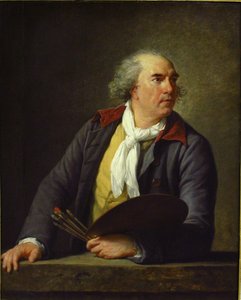
Hubert Robert

Hubert Robert

1733 - 1808, Frankreich

Quick facts about Hubert Robert

  • Bemerkenswerte Werke:
    • Innenraum des Dianatempels
    • Le château de la Roche Guyon
    • Der Künstler zeichnet in den
    • Landschaft mit einer Terrasse
    • Villa Sachetti
    • Ruinen eines Stalls der Villa
  • Einflüsse: ['Giovanni Paolo Panini']
  • Geburtsdatum: 22. Mai 1733
  • Geburtsort: Paris, Frankreich
  • Künstlerische Richtung: Rokoko und Neoklassizismus
  • Nationalität: Französisch
  • Sterbedatum: 15. April 1808
  • Vollständiger Name: Hubert Robert

Künstlerbiografie

Hubert Robert: Maler der Ruinen und Visionen

  • Geboren: 22. Mai 1733, Paris, Frankreich
  • Gestorben: 15. April 1808, Paris, Frankreich

Hubert Robert war ein französischer Maler, der für seine eindringlichen Landschaftsbilder und *Capriccio*-Gemälde – halbfiktive, malerische Darstellungen von Ruinen in Italien und Frankreich – gefeiert wurde. Er gilt als eine zentrale Figur, die die Epochen Rokoko und Neoklassizismus miteinander verbindet und mit seiner Faszination für Verfall, Geschichte und fantasievolle Rekonstruktionen Aspekte des Romantismus vorwegnimmt.

Frühes Leben und künstlerische Ausbildung

Nicolas Robert, Hubert’s Vater, diente François-Joseph de Choiseul, Marquis de Stainville. Robert erhielt eine Jesuitenbildung am Collège de Navarre im Jahr 1751. Anschließend studierte er Bildhauerei bei Michel-Ange Slodtz, der ihn ermutigte, das Malen zu verfolgen. Diese frühe Ausbildung vermittelte ihm ein starkes Fundament in Design und Perspektive, wesentliche Elemente, die später seinen künstlerischen Stil prägten.

Die römischen Jahre und künstlerische Entwicklung (1754-1765)

  • Umzug nach Rom: Im Jahr 1754 reiste Robert mit Étienne-François de Choiseul, dem Sohn seines Arbeitgebers, nach Rom.
  • Elf Jahre in Italien: Er verbrachte elf Jahre in Rom, eine prägende Zeit für seine künstlerische Entwicklung.
  • Unterstützung und Förderung: Er finanzierte sich durch die Schaffung von Werken für reisende Kenner wie den Abbé de Saint-Non.
  • Einfluss von Giovanni Paolo Panini: Robert arbeitete zusammen mit Giovanni Paolo Panini, dessen Einfluss in seinen frühen *Capriccio*-Kompositionen erkennbar ist.
  • Skizzieren und Beobachten: Er skizzierte akribisch römische Ruinen und Landschaften und dokumentierte Stätten wie die Villa d'Este und Caprarola und demonstrierte damit ein scharfes Auge für Details und atmosphärische Perspektive.

Seine Zeit in Rom prägte Roberts künstlerische Vision tiefgreifend. Die Gegenüberstellung antiker römischer Ruinen mit dem zeitgenössischen Leben weckte sein Interesse daran, Verfall neben Vitalität darzustellen – ein wiederkehrendes Thema in seiner gesamten Karriere.

Rückkehr nach Paris und Anerkennung (1765-1790)

  • Rascher Erfolg: Nach seiner Rückkehr nach Paris im Jahr 1765 erlangte Robert schnell Anerkennung.
  • Aufnahme in die Académie Royale de Peinture et de Sculpture: Er wurde mit einem römischen *Capriccio*, „Der Hafen von Rom, geschmückt mit verschiedenen architektonischen Monumenten, antiken und modernen“, in die Académie Royale de Peinture et de Sculpture aufgenommen.
  • Salonausstellungen: Seine Ausstellungen im Salon (beginnend 1767) erregten große Aufmerksamkeit. Denis Diderot bemerkte berühmt die von seinen Darstellungen von Ruinen hervorgerufene Erhabenheit.
  • Bemerkenswerte Werke: Zu den wichtigsten Werken dieser Zeit gehört „Landschaft mit den Ruinen des Rundtempels, mit einer Statue der Venus und einem Denkmal für Marcus Aurelius“, das seine Meisterschaft in der *Capriccio*-Malerei demonstriert.

Roberts Pariser Erfolg beruhte auf seiner Fähigkeit, sowohl die Erhabenheit der klassischen Antike als auch die Lebendigkeit des zeitgenössischen Lebens einzufangen. Seine Werke fanden bei einem Publikum Anklang, das sich für Geschichte, Archäologie und das Beschauliche begeisterte.

Spätere Jahre, Revolution und Vermächtnis (1790-1808)

  • Französische Revolution: Robert erlebte und dokumentierte die Französische Revolution, einschließlich der Zerstörung historischer Monumente.
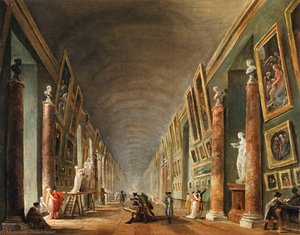
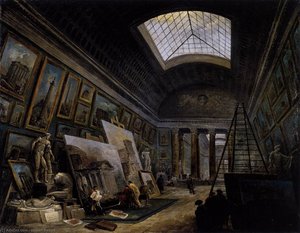
  • Kurator des Muséum Central des Arts: Er diente als Kurator des neu gegründeten Muséum Central des Arts (später das Louvre), was sein Engagement für den Schutz des kulturellen Erbes unterstreicht.
  • Fortsetzung der künstlerischen Produktion: Trotz des turbulenten politischen Klimas malte und zeichnete Robert weiterhin produktiv.
  • Reproduktion und Einfluss: Seine Werke wurden häufig von Künstlern wie dem Abbé de Saint-Non, Châtelain, Linard und Le Veau reproduziert, was auf seinen weitreichenden Einfluss hinweist.

Hubert Roberts Vermächtnis liegt in seiner einzigartigen Fähigkeit, historische Genauigkeit mit fantasievoller Vision zu verbinden. Er begründete ein Genre der Malerei, das sowohl die Schönheit des Verfalls als auch die bleibende Kraft menschlicher Kreativität feierte. Seine Arbeit inspiriert weiterhin Künstler und fesselt das Publikum und festigt damit seinen Platz als bedeutende Figur in der Kunst des 18. Jahrhunderts.