

 In echtem Maßstab anzeigen
 Versenden als Grußkarte
 Teilen
 Details anzeigen
 Leitfaden öffnen

 Herunterladen
 Ähnliche Objekte
 Röntgenaufnahme
 Diashow
 Besucherstatistiken
Ecce Homo
 Acryl auf Leinwand
- Wandkunst
- Late Medieval Symbolism
 1475
1475 71.0 x 61.0 cm
 Städelsches Kunstinstitut Und Städtische Galerie
 Mehr anzeigen
Giclée / Kunstdruck
Giclée- oder Leinwanddruck in Museumsqualität mit schneller Produktion und flexiblen Veredelungsoptionen. ( Handgemalte Reproduktion kaufen Zum digitalen Bild wechseln)




P118B €10

P118H €10

P118W €10

P438Z €10

P508JH €12

P508YH €12

P805H €10

P805Z €10

P919BZ €10

P919G €10

P919XJ €10

P959ZH €10

P968JZ €12

W106C €8

W218G €10

W218JH €8

W218Y €10

W307PJ €10

W316G €10

W316PJ €8

W316Y €10

W398PJ €8

W4111J €10

W500HY €15

W500JH €15

W692G €12

W849H €8

W940BG €15

W953PJ €8




Wählen Sie aus unseren vordefinierten Formaten, die den ursprünglichen Proportionen des Kunstwerks entsprechen.

Geben Sie die Breite und die Höhe an, die Sie benötigen, damit der Druck perfekt in Ihren Rahmen oder an Ihre Wand passt. Ein Druck kann nur beschnitten werden und niemals größer als das Originalbild gemacht werden; daher verliert ein Format mit einer anderen Proportion einen Teil des Bildes. Wir senden Ihnen ein digitales Mockup zur Freigabe, bevor wir den Druck ausführen. Das auf dieser Seite gezeigte Bild zeigt nicht den tatsächlichen Beschnitt – dies ist nur im Mockup ersichtlich.
Weltweiter Versand () innerhalb von 2 Wochen statt der üblichen 4/5 Wochen. (21 Oktober)

Kostenloser weltweiter Expressversand

Hochwertige Leinenleinwand

Vollständiger Versicherungsschutz beim Versand

Zollgebühren-Rückerstattungsgarantie

Garantie für exakte Farbtreue

100-tägiges Rückgaberecht (nur bei Mängeln)

100% Geld-zurück-Garantie

Angebot für Mengenrabatt
 Die Glasoption ist nur für Größen unter 110 cm verfügbar.

Ecce Homo
Giclée / Kunstdruck
Format der Reproduktion
-


Gesamtpreis
€ 70
Die düstere Vision von Leiden und Erlösung: Hieronymus Boschs "Ecce Homo"
Hieronymus Bosch’s “Ecce Homo,” painted in 1475, is not merely a depiction of the crucifixion; it's a profoundly unsettling and psychologically complex meditation on suffering, judgment, and the human condition. This work, rendered in a remarkably intimate scale of 71 x 61 cm, offers a glimpse into the intensely private and often disturbing world of one of art history’s most enigmatic figures. Bosch, born around 1450 in ’s-Hertogenbosch, Netherlands, was already pushing against the established conventions of his time, foreshadowing the surreal and symbolic language that would become his hallmark.
The scene unfolds with a stark realism – a Roman soldier, likely Pontius Pilate himself, presents Jesus Christ to a crowd. However, this seemingly straightforward presentation is immediately undermined by Bosch’s masterful deployment of symbolism. The faces surrounding the cross are not those of pious onlookers; instead, they reveal a spectrum of emotions: fear, disbelief, morbid curiosity, and even a disturbing sense of anticipation. The soldier's expression is ambiguous, suggesting a reluctant acknowledgment of Christ’s fate rather than genuine sympathy. Notice particularly the detail in the eyes – some filled with horror, others with a detached fascination.
Ein Kaleidoskop der Symbolik
Bosch’s genius lies not just in his realistic portrayal of figures but in the dense layering of symbolic elements that permeate every corner of the painting. The brick wall behind the scene is not simply a backdrop; it represents the decaying foundations of societal morality and the inevitable consequences of sin. Scattered swords, a recurring motif in Bosch's work, symbolize violence, conflict, and the inherent brutality of human nature. The presence of animals – a donkey, a dog, and a monkey – adds further layers of interpretation. The donkey, often associated with humility and sacrifice, is juxtaposed against the predatory gaze of the dog, hinting at the duality of good and evil within humanity.
Crucially, Bosch’s use of color contributes significantly to the painting's unsettling atmosphere. Earthy browns, ochres, and muted reds dominate the palette, creating a sense of gloom and foreboding. The stark contrast between these somber tones and the pale flesh of Christ emphasizes his vulnerability and isolation. The subtle variations in shading – particularly around the wounds on Christ’s body – are executed with remarkable sensitivity, conveying both physical pain and spiritual anguish.
Technique und historische Bedeutung
“Ecce Homo” exemplifies Bosch's distinctive artistic technique. He employed a meticulous layering of thin glazes, building up color gradually to achieve incredible depth and luminosity. This method, known as *sfumato*, creates an almost dreamlike quality, blurring the boundaries between reality and illusion. Bosch’s work reflects the late medieval preoccupation with religious themes and anxieties surrounding mortality – a period marked by both fervent faith and growing skepticism. The painting can be interpreted as a commentary on the political machinations of Pilate and the moral failings of Roman society, alongside its profound theological implications.
Ein Ausdruck von Mitgefühl und Melancholie
Despite its unsettling imagery, “Ecce Homo” is ultimately a deeply moving work. It’s not a celebration of triumph or salvation but rather an honest confrontation with suffering and the complexities of human existence. Bosch's ability to evoke such powerful emotions through his carefully constructed symbolism and masterful technique ensures that this painting continues to resonate with viewers centuries after its creation. A reproduction of this extraordinary piece offers a unique opportunity to experience the haunting beauty and profound psychological depth of Hieronymus Bosch’s vision – a timeless testament to the enduring power of art to illuminate the darkest corners of the human soul.
Fragen & Antworten
Inwiefern lässt sich der Stil von "Ecce Homo" mit der Epoche seines Schöpfers in Verbindung bringen?
In "Ecce Homo" von Hieronymus Bosch trifft die Late Medieval Symbolism-Strömung auf die Ära der Renaissance.
Welche Leuchtkraft weist "Ecce Homo" von Hieronymus Bosch auf?
"Ecce Homo" von Hieronymus Bosch weist eine Luminanz von Sanfter Schatten auf. Die Luminanz beschreibt, wie viel Licht die Farben scheinbar reflektieren.
Wo kann ich Kunstwerke finden, die "Ecce Homo" von Hieronymus Bosch ähneln?
Werke, die "Ecce Homo" ähneln, sind auf der Ähnliche Werke-Seite des Kunstwerks aufgelistet.
Biografie des Künstlers
Leben und Karriere
Hieronymus Bosch, ein bedeutender niederländischer/niederländischer Maler aus Brabant, wurde um 1450 in 's-Hertogenbosch, Niederlande, geboren. Sein Leben bleibt einem Mysterium geweiht, mit nur wenigen Aufzeichnungen über seine Existenz. Trotz des Mangels an biografischen Informationen hat sich Boschs Kunst einen tiefgreifenden Einfluss auf die nordeuropäische Kunst erarbeitet, insbesondere im 16. Jahrhundert.Künstlerischer Stil und Einflüsse
Boschs einzigartiger Stil, der durch **surreale und fantasievolle Darstellungen religiöser Themen** gekennzeichnet ist, hat weitreichende Einflüsse ausgeübt. Seine Ölgemälde auf Eichenholz, oft mit **düsteren und traumhaften Visionen der Hölle** ausgestattet, wurden zahlreichen Interpretationen unterzogen. Das Triptychon des letzten Gerichts (ca. 1480-1490) und das Garten der sinnlichen Freuden (ca. 1490-1510) sind zwei seiner bekanntesten Werke, die seine Meisterschaft in der Technik demonstrieren.Bekannte Werke und Sammlungen
* Aufstieg der Seligen (Nordische Renaissance, Öl auf Holzplatte): Ein seltenes Beispiel von Boschs Werk, das eine traumhafte, andereweltliche Szene zeigt. * Epifanie (ca. 1495, Prado Museum, Madrid): Ein Triptychon, das Boschs innovative Verwendung von Öl auf Holz demonstriert. * Kopf eines Halberdiers (Prado Museum, Madrid): Ein feines Beispiel für Boschs Porträtkunst, das seine Detailgenauigkeit zeigt.Museen und Sammlungen mit Boschs Werken
* Das Prado Museum, Madrid: Beherbergt einige seiner berühmtesten Werke, darunter Epifanie und das Triptychon des letzten Gerichts. * Das Philadelphia Museum of Art, Philadelphia: Präsentiert eine Version der Epifanie und bietet so einen einzigartigen Blick auf Boschs künstlerischen Stil.- Erfahren Sie mehr über die Werke von Hieronymus Bosch unter https://OriginalUniqueArt.com/@/hieronymus-bosch
- Entdecken Sie die frühe niederländische Kunstbewegung und ihre wichtigsten Figuren, darunter Jan van Eyck und Pieter Bruegel der Ältere, unter https://OriginalUniqueArt.com/@@/a@d3cpaf-the-erly-netherlandish-art-movement
- Erfahren Sie mehr über das Leben und Werk von Pieter Bruegel dem Älteren unter https://en.wikipedia.org/wiki/pieter_bruegel_the_elder
Vermächtnis
Hieronymus Boschs rätselhafter Stil hat Kunstliebhaber seit Jahrhunderten in seinen Bann gezogen, und sein Einfluss ist auch heute noch bei zahlreichen Künstlern zu sehen. Seine einzigartige Kombination aus **Surrealismus und tiefgründigen Einsichten in die menschliche Natur** hat seine Position als Meister der niederländischen Malerei gefestigt.
Hieronymus Bosch
1450 - 1516 , Niederlande
Eckdaten zum Künstler
- Beeinflusste Künstler: ['Pieter Bruegel d.Ä.']
- Bemerkenswerte Werke:
- Garten der Lüste
- Letztes Gericht Triptychon
- Aufstieg der Seligen
- Epiphanias
- Geburtsdatum: ca. 1450
- Geburtsort: 's-Hertogenbosch, Niederlande
- Künstlerische Einflüsse:
- Jan van Eyck
- Pieter Bruegel d.Ä.
- Künstlerischer Stil: Frühflämische Malerei
- Nationalität: Niederländisch
- Sterbedatum: 1516
- Vollständiger Name: Hieronymus Bosch
Verwandte Artikel
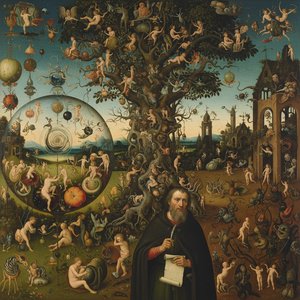
Hieronymus Bosch: Die Entschlüsselung einer visionären Meisterwerk und seiner tiefgründigen Symbolik
Entdecken Sie die faszinierende Welt des Hieronymus Bosch! Unsere Expertenanalyse enthüllt die tiefgründige Symbolik seiner Meisterwerke, von 'Der Garten der Lüste' bis zum Triptychon des Heiligen Antonius. Erfahren Sie mehr über Leben, Werk und bleibenden Einfluss dieses einzigartigen Künstlers.
Spätmittelalterliche Meisterwerke: 10 Kunstwerke für Ihr Zuhause | OriginalUniqueArt
Entdecken Sie die 10 bedeutendsten Meisterwerke des Spätmittelalters! Erfahren Sie die Geschichten hinter Jan van Eyck, Rogier van der Weyden & mehr. Hochwertige Kunst Reproduktionen für Ihr Zuhause – jetzt auf OriginalUniqueArt.com!
Museo del Prado: Die 25 Meisterwerke – Kunst für Ihr Zuhause | OriginalUniqueArt
Entdecken Sie die 25 Meisterwerke des Museo del Prado! Von Velázquez bis Goya – Kunstgeschichte, Techniken & Geschichten berühmter Gemälde. Finden Sie hochwertige Reproduktionen für Ihr Zuhause auf OriginalUniqueArt.com.
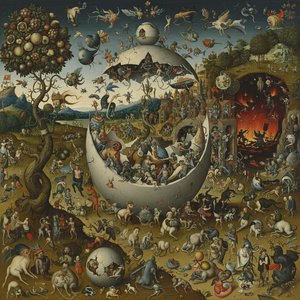
Hieronymus Bosch: Die 25 Meisterwerke des düsteren Genies – Kunst für Ihr Zuhause | OriginalUniqueArt
Entdecken Sie die 25 faszinierendsten Meisterwerke von Hieronymus Bosch! Tauchen Sie ein in die düstere Schönheit niederländischer Malerei, religiöse Symbolik und fantastische Welten. Hochwertige Kunstdrucke & Inspiration für Ihr Zuhause auf OriginalUniqueArt.com.
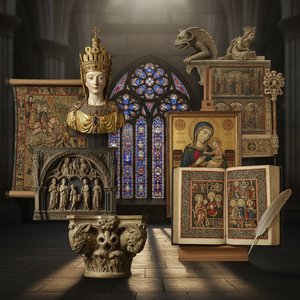
Meisterwerke des Hochmittelalters: 10 Kunstwerke für Ihr Zuhause | OriginalUniqueArt
Entdecken Sie die 10 bedeutendsten Meisterwerke des Hochmittelalters! Erfahren Sie Geschichten von Romanik, Gotik & berühmten Künstlern. Finden Sie hochwertige Reproduktionen für Ihr Zuhause auf OriginalUniqueArt.com.


