

 In echtem Maßstab anzeigen
 Versenden als Grußkarte
 Teilen
 Details anzeigen
 Leitfaden öffnen

 Herunterladen
 Ähnliche Objekte
 Röntgenaufnahme
 Diashow
 Besucherstatistiken
The Bird Trap
 Oil On Canvas
- WallArt
- Contemporary Realism
 1851
1851- 19th Century
 56.0 x 45.0 cm
 Towner
 Mehr anzeigen
Handgefertigte Ölreproduktion
Handgemaltes Ölgemälde auf Leinwand in Ihrer Wunschgröße und mit Rahmen, auf Bestellung von unseren Künstlern angefertigt. ( Zum Druck wechseln Zum digitalen Bild wechseln)




P118B €10

P118H €10

P118W €10

P438Z €10

P508JH €12

P508YH €12

P805H €10

P805Z €10

P919BZ €10

P919G €10

P919XJ €10

P959ZH €10

P968JZ €12

W106C €8

W218G €10

W218JH €8

W218Y €10

W307PJ €10

W316G €10

W316PJ €8

W316Y €10

W398PJ €8

W4111J €10

W500HY €15

W500JH €15

W692G €12

W849H €8

W940BG €15

W953PJ €8




Wählen Sie aus unseren vordefinierten Formaten, die den ursprünglichen Proportionen des Kunstwerks entsprechen.

Geben Sie die Breite und die Höhe an, die Sie für Ihren Rahmen oder Ihre Wand benötigen. Da dieses Werk handgemalt ist, kann der Künstler bei einer anderen Form etwas mehr um das Bild herum malen oder etwas abschneiden – Sie entscheiden. Wir senden Ihnen ein digitales Mockup zur Freigabe, bevor mit dem Malen begonnen wird. Das auf dieser Seite gezeigte Bild stellt nicht das tatsächliche Ergebnis dar – dies tut nur das Mockup.
Nach der Bestellung wird das OriginalUniqueArt.com-Team dem Kunden Anweisungen per E-Mail zusenden und eine Mockup-Vorschau bereitstellen.
Weltweiter Versand () in nur 3 bis 4 Wochen statt der üblichen 5 Wochen. (22 Oktober). Keine Kompromisse bei der Qualität.

Kostenloser weltweiter Expressversand

Hochwertige Leinenleinwand

Vollständiger Versicherungsschutz beim Versand

Zollgebühren-Rückerstattungsgarantie

Garantie für exakte Farbtreue

100-tägiges Rückgaberecht (nur bei Mängeln)

100% Geld-zurück-Garantie

Angebot für Mengenrabatt
 Die Glasoption ist nur für Größen unter 110 cm verfügbar.

The Bird Trap
Reproduktionsmedium
Format der Reproduktion
-


Gesamtpreis
€ 327
A Pastoral Symphony of Innocence
In the quietude of 1851, Henry Thomas Dawson captured a moment of profound simplicity in his evocative masterpiece, The Bird Trap. This tender work invites the viewer into a sun-drenched pastoral realm, where the frantic pace of the modern world dissolves into the gentle rhythms of rural life. The composition centers on a group of four children, their youthful forms arranged with a balanced grace that guides the eye through a landscape of quiet discovery. A kneeling child, perhaps lost in the focused task of the hunt, serves as the emotional anchor of the piece, surrounded by companions whose interactions suggest a shared secret or a communal game. Behind them, a modest cottage and the soft silhouettes of trees emerge from the hazy background, grounding this fleeting moment of play within the enduring stability of the countryside.
The painting is a quintessential example of 19th-century Realism, infused with the soulful, atmospheric qualities that would later define Dawson’s broader body of work. Rather than relying on dramatic spectacle, the artist employs a delicate, linear precision to define the figures and the architecture, while allowing organic, rounded shapes to dominate the natural elements. The technique is one of masterful layering; through careful brushstrokes, Dawson builds a tactile surface where the rough texture of the earth meets the soft, diffused light of a summer afternoon. This interplay of light and shadow creates a sense of depth that, while somewhat flattened in the tradition of earlier romantic styles, possesses a luminous quality that makes the scene feel as though it is breathing.
Symbolism and the Nostalgic Gaze
Beyond its surface beauty, The Bird Trap serves as a poignant meditation on the fleeting nature of childhood. The act of trapping a bird—a delicate, winged creature—can be read as a subtle metaphor for the capture of ephemeral moments in time. There is an inherent vulnerability in the kneeling child, a mirroring of the fragility of innocence itself. For the contemporary collector or interior designer, this work offers more than mere decoration; it provides a window into a vanished era of tranquility. The emotional resonance of the piece lies in its ability to evoke nostalgia, transporting the observer to a state of serene contemplation where the only concerns are the movement of the clouds and the success of a childhood endeavor.
For those seeking to integrate fine art into a curated space, this reproduction offers an unparalleled opportunity to introduce warmth and historical depth. The muted palette and soft illumination make it a versatile centerpiece for a variety of sophisticated interiors, from classical studies to modern living rooms that crave a touch of organic soul. To possess such a work is to hold a fragment of the Victorian spirit—a reminder of the beauty found in the most humble of human interactions and the enduring allure of the natural world.
Fragen & Antworten
Welche Atmosphäre verleiht "The Bird Trap" von Henry Thomas Dawson einem Raum?
Mit seiner Nostalgic Stimmung wird „The Bird Trap“ für ein Children's Room empfohlen.
Welche Farbsättigung weist "The Bird Trap" von Henry Thomas Dawson auf?
Die Farben von "The Bird Trap" von Henry Thomas Dawson weisen eine Clear Color Presence Sättigung auf. Die Sättigung beschreibt, wie lebhaft oder gedämpft die Farben sind.
Wie verbinden sich Medium und Bewegung in "The Bird Trap"?
"The Bird Trap" ist in Oil On Canvas im Stil der Contemporary Realism-Epoche gefertigt.
Biografie des Künstlers
Henry Thomas Dawson: A Master of Maritime Visions
Henry Thomas Dawson, a name perhaps less familiar than those of his contemporaries, nevertheless holds a significant place in 19th-century British art. Born in the bustling port city of Hull in 1842, and later residing primarily in Nottinghamshire, Dawson’s artistic journey was largely self-directed, shaped by an innate fascination with the sea and the dramatic landscapes of his native England. While formal training remained elusive – he received only a handful of lessons from J.B. Pyne – this lack of structured instruction arguably fueled his unique vision and allowed him to develop a strikingly individual style. His work, predominantly focused on marine scenes and coastal views, offers a captivating glimpse into the world as he perceived it: a realm of shifting light, turbulent waters, and the enduring beauty of the natural world.Early Life and Artistic Beginnings
Dawson’s early life was marked by modest circumstances. He began his career not in a formal studio, but within the confines of a Nottingham lace factory, a far cry from the artistic circles he would later navigate. However, even amidst the demanding labor, Dawson continued to pursue his passion for painting, selling small works – often at around half-a-crown each – to local patrons. This early dedication demonstrated an unwavering commitment to his craft and laid the foundation for his future success. His family’s move to London in 1851 provided him with access to a wider audience and further opportunities for artistic development, though he continued to maintain strong ties to Nottinghamshire.Influences and Artistic Style
Dawson's artistic style is often described as deeply influenced by the Romanticism of J.M.W. Turner, although it’s crucial to note that Dawson never truly emulated his predecessor. Instead, he absorbed Turner’s atmospheric techniques – particularly his masterful use of light and color – and applied them to his own subject matter with a distinctly personal touch. He possessed an exceptional ability to capture the fleeting effects of weather on water, creating paintings that are both dramatic and serene. His compositions frequently feature expansive vistas, emphasizing the scale and power of nature. Dawson’s works are characterized by a remarkable realism combined with a sensitivity to mood and atmosphere, resulting in images that resonate deeply with viewers.Major Works and Exhibitions
Throughout his career, Dawson exhibited his paintings at several prestigious venues, including the Liverpool Academy, the British Institution, and the Royal Academy. Among his most celebrated works are “The Harbour, Evening,” a stunning depiction of a coastal scene bathed in twilight; "London at Sunrise," capturing the city’s awakening with vibrant hues; and numerous landscapes showcasing the beauty of Nottinghamshire's countryside. His paintings were highly sought after by collectors and institutions alike, contributing to his growing reputation as a talented and insightful artist. Notably, his work was included in a significant exhibition held in Nottingham in 1878, which brought him widespread recognition.Legacy and Historical Significance
Henry Thomas Dawson’s legacy is one of quiet brilliance. While he may not be as widely celebrated as some of his contemporaries, his paintings offer a valuable window into the artistic sensibilities of Victorian England. His masterful depictions of maritime scenes and coastal landscapes continue to captivate viewers today, demonstrating his exceptional skill and profound understanding of light, color, and composition. Dawson’s work is now held in several public collections, including those of Leicester and Richmond Town Halls, ensuring that his art will be enjoyed by generations to come. He represents a significant, if often overlooked, voice within the broader narrative of British landscape painting.
Henry Thomas Dawson
1844 - 1878 , Vereinigtes Königreich
Eckdaten zum Künstler
- Artistic Movement Or Style: Marine & Landschaftsart
- Artists Or Movements Influenced By This Artist: ['Turner']
- Artists Who Influenced This Artist: ['Turner']
- Date Of Birth: 1842
- Full Name: Henry Thomas Dawson
- Nationality: Britisch
- Notable Artworks:
- Der Hafen, Abend
- London bei Sonnenaufgang
- Place Of Birth: Hull, Vereinigtes Königreich
Verwandte Artikel

Idyllic Visions: Exploring the Pastoral Scene in Art History – From Arcadia to Modern Interpretations
Explore the captivating history of pastoral art from classical Arcadia to modern masterpieces. Discover key artists like Millet & Cole at OriginalUniqueArt. Find serene landscape paintings for your home.

Meisterwerke des 19. Jahrhunderts: Kunst für Ihr Zuhause | OriginalUniqueArt
Entdecken Sie die 10 bedeutendsten Kunstwerke des 19. Jahrhunderts! Von Impressionismus bis Realismus – erleben Sie die Geschichten berühmter Maler und ihre Meisterwerke. Hochwertige Reproduktionen für Ihr Zuhause auf OriginalUniqueArt.com.
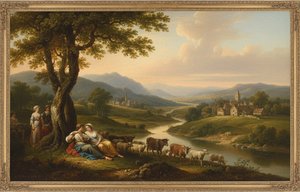
Idyllic Visions: Exploring the Pastoral Tradition in Western Art – Themes, Techniques & Enduring Appeal
Explore the rich history of pastoral art from classical Arcadia to contemporary interpretations. Discover key artists, themes & collecting tips at OriginalUniqueArt.
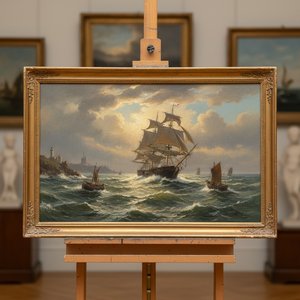
Henry Thomas Dawson: Navigating Light, Sea & Sentiment in Victorian Marine Painting
Explore the captivating world of Henry Thomas Dawson (1811-1878), a master of Victorian marine painting. Discover his evocative coastal scenes, landscapes & lasting artistic legacy. Learn about collecting Dawson's work and find reproductions at OriginalUniqueArt.

Henri Matisse: Die 25 Meisterwerke des Farbgenies – Kunst für Ihr Zuhause | OriginalUniqueArt
Entdecken Sie die 25 Meisterwerke von Henri Matisse! Tauchen Sie ein in die Welt des Fauvismus, der leuchtenden Farben und ikonischen Formen. Kunstreproduktionen & Inspiration für Ihr Zuhause – exklusiv auf OriginalUniqueArt.com.