Zum Druck wechseln
 Weiterlesen







































 Bei Kunstwerken oder Reproduktionen, die an einer Seite größer als 105 cm (ca. 41 Zoll) sind, wird der Rahmen zerlegt als Bausatz geliefert. Diese Methode gewährleistet eine sichere Zustellung und verhindert Schäden während des Transports.


Luxembourg Gardens: A Fauvist Vision of Parisian Tranquility
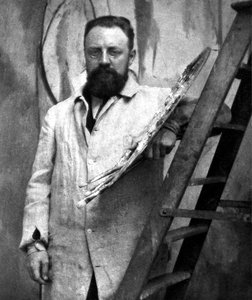
Henri Matisse, a French visual artist renowned for his innovative use of color and fluid draughtsmanship, left an indelible mark on modern art. Among his notable works is Luxembourg Gardens, a painting that encapsulates the essence of Fauvism, a style characterized by vivid colors and energetic brushstrokes.Background and Context
Painted in 1903, Luxembourg Gardens is a testament to Matisse’s early experimentation with color. The painting measures 46 x 55 cm and is executed in oil on canvas. It features a colorful landscape of trees with yellow leaves, bushes, flowers, and a person enjoying the surroundings. This work reflects Matisse's ability to capture the beauty of everyday life through his unique artistic lens. He was part of the Fauvist movement, which emphasized bold colors and spontaneous brushstrokes.Artistic Style and Influence
Matisse’s approach to color—a deliberate departure from Impressionism—was central to Fauvism’s aesthetic principles. Luxembourg Gardens exemplifies this style with its vibrant foliage and lively atmosphere. The painting's composition is characterized by flattened forms and decorative patterns, elements that would become hallmarks of Matisse’s later work. Matisse was a pioneer in simplifying shapes and reducing detail to convey emotion directly—a technique he perfected throughout his prolific career. Pablo Picasso, alongside Matisse, redefined the revolutionary developments in visual arts during the early 20th century. His mastery of color and drawing inspired many artists, including those associated with Cubism and Expressionism.Legacy and Recognition
Today, Matisse’s works are celebrated for their contribution to modern art. Luxembourg Gardens is a prime example of his early Fauvist period, showcasing his innovative approach to color and composition. The painting is part of the collection at the Musée National d'Art Moderne in Paris, France, a museum renowned for its extensive holdings of modern and contemporary art. For those interested in exploring more of Matisse’s works or learning about other influential artists, Henri Matisse: Luxembourg Gardens is available on OriginalUniqueArt. Additionally, the museum's collection can be discovered through Discover the Masterpieces of Musée National d’Art Moderne (Paris, France).Conclusion
Luxembourg Gardens by Henri Matisse is a vibrant representation of Fauvism and an early example of his distinctive style. The painting’s colorful landscape and lively atmosphere make it a captivating piece that continues to inspire art lovers today. As part of the Musée National d'Art Moderne’s collection, it stands as a testament to Matisse’s enduring influence on modern art.- Artist: Henri Matisse
- Painting Title: Luxembourg Gardens
- Year: 1903
- Style: Fauvism
- Museum: Musée National d'Art Moderne, Paris, France
Fragen & Antworten
Wer ist der Künstler hinter "Luxembourg Gardens"?
"Luxembourg Gardens" wurde von Henri Matisse geschaffen. Die Informationen auf dieser Seite beschreiben das Originalwerk von Henri Matisse.
Welche Druckgröße wird für "Luxembourg Gardens" von Henri Matisse empfohlen?
Die empfohlene Druckgröße für "Luxembourg Gardens" von Henri Matisse ist Großformatig.
Wie fügt sich „Luxembourg Gardens“ in die Themen und den Stil von Henri Matisse ein?
"Luxembourg Gardens" teilt mit anderen Werken von Henri Matisse den Stil der Fauvism sowie die wiederkehrenden Themen: early fauvist experimentation, color as emotional expression, classical tradition revisited, celebrating everyday beauty, symbolic landscape imagery, influenced by impressionism, iconic representation of matisse's vision.
 Vorschau anzeigen
 Versenden
 Teilen
 Details anzeigen
 Leitfaden

 Herunterladen
 Ähnliche Objekte
 Röntgenaufnahme
 Diashow
 Q&A
Q&A Statistiken