Vorschau anzeigen
 Versenden
 Teilen
 Details anzeigen
 Leitfaden

 Herunterladen
 Ähnliche Objekte
 Röntgenaufnahme
 Diashow
 Statistiken
Goats


 Weiterlesen
Handgefertigte Ölreproduktion
Handgemaltes Ölgemälde auf Leinwand in Ihrer Wunschgröße und mit Rahmen, auf Bestellung von unseren Künstlern angefertigt. ( Zum Druck wechseln Zum digitalen Bild wechseln)




P118B €10

P118H €10

P118W €10

P438Z €10

P508JH €12

P508YH €12

P805H €10

P805Z €10

P919BZ €10

P919G €10

P919XJ €10

P959ZH €10

P968JZ €12

W106C €8

W218G €10

W218JH €8

W218Y €10

W307PJ €10

W316G €10

W316PJ €8

W316Y €10

W398PJ €8

W4111J €10

W500HY €15

W500JH €15

W692G €12

W849H €8

W940BG €15

W953PJ €8




Wählen Sie aus unseren vordefinierten Formaten, die den ursprünglichen Proportionen des Kunstwerks entsprechen.

Geben Sie die Breite und die Höhe an, die Sie für Ihren Rahmen oder Ihre Wand benötigen. Da dieses Werk handgemalt ist, kann der Künstler bei einer anderen Form etwas mehr um das Bild herum malen oder etwas abschneiden – Sie entscheiden. Wir senden Ihnen ein digitales Mockup zur Freigabe, bevor mit dem Malen begonnen wird. Das auf dieser Seite gezeigte Bild stellt nicht das tatsächliche Ergebnis dar – dies tut nur das Mockup.
Nach der Bestellung wird das OriginalUniqueArt.com-Team dem Kunden Anweisungen per E-Mail zusenden und eine Mockup-Vorschau bereitstellen.
Weltweiter Versand () in nur 3 bis 4 Wochen statt der üblichen 5 Wochen. (25 Oktober). Keine Kompromisse bei der Qualität.

Kostenloser weltweiter Expressversand

Hochwertige Leinenleinwand

Umfassender Versicherungsschutz beim Versand

Zollgebühren-Rückerstattungsgarantie

Garantie für exakte Farbtreue

100 Tage Rückgaberecht (nur bei Mängeln)

100% Geld-zurück-Garantie

Mengenrabatt verfügbar
 Die Glasoption ist nur für Größen unter 110 cm verfügbar.

Goats
Art der Reproduktion
Format der Reproduktion
-


Endpreis
€ 263
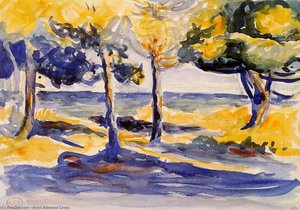
A Symphony of Light and Rural Tranquility: Henri Edmond Cross’s “Goats”
Henri Edmond Cross's "Goats," painted in 1895, is more than just a depiction of livestock; it’s an immersive experience of light, color, and the serene beauty of rural life. This captivating work, currently residing at the Musee du Petit Palais in Geneva, exemplifies the artist’s profound engagement with Post-Impressionism and his relentless pursuit of capturing the ephemeral qualities of nature. Cross, born Henri-Edmond-Joseph Delacroix in Douai, France, was a pivotal figure in the Neo-Impressionist movement, a group dedicated to exploring the scientific theories of color – particularly those championed by Michel Eugène Chevreul – to achieve unprecedented vibrancy and luminosity within their paintings. “Goats” stands as a testament to this dedication, showcasing his masterful manipulation of pigment and brushstroke to evoke a palpable sense of atmosphere.
- Subject Matter: The painting centers around a peaceful scene of goats grazing in a lush green pasture under a brilliant blue sky. Their white coats provide a striking contrast against the vibrant hues surrounding them, drawing the viewer’s eye and anchoring the composition.
- Style & Technique: Cross employs the techniques of Neo-Impressionism, utilizing small, distinct brushstrokes – known as “pointillé” – to build up color and create an optical mixing effect. This method allows the colors to vibrate and shimmer when viewed from a distance, intensifying the sense of light and atmosphere.
- Medium: Executed in chalk, a relatively uncommon medium for landscape painting at the time, adds a unique textural quality to the work. The chalk’s granular surface captures and reflects light differently than traditional oil paints, contributing to the painting's luminous effect.
Decoding the Palette: Color as Philosophy
Cross’s use of color is central to understanding “Goats.” He meticulously applied shades of blue, purple, and green, not merely for representational accuracy but as a deliberate philosophical statement. Inspired by Chevreul's theories on simultaneous contrast, Cross aimed to create an optical illusion – the colors appear brighter and more intense when viewed together than they would if seen individually. The twisted branches of the large tree in the background, painted in complementary blues and purples, further amplify this effect, creating a dynamic interplay of color that draws the eye across the canvas. This wasn’t simply about painting what he *saw*; it was about painting how he *felt* – a deep appreciation for the transformative power of light and color.
Historical Context & Symbolism
"Goats" was created during a period of significant artistic experimentation in France, marked by the rise of Neo-Impressionism and its challenge to traditional academic styles. The painting reflects the broader cultural shift towards valuing subjective experience and embracing new scientific discoveries about color. While seemingly straightforward in its subject matter – a rural scene – “Goats” can be interpreted as a meditation on themes of innocence, tranquility, and the harmony between humanity and nature. The goats themselves, symbols of pastoral life and fertility, evoke a sense of timelessness and connection to the earth.
Emotional Impact & Artistic Legacy
The enduring appeal of “Goats” lies in its ability to transport the viewer to a place of quiet contemplation. Cross’s masterful use of light and color creates an atmosphere of profound serenity, inviting us to pause and appreciate the simple beauty of the natural world. As a key work within Cross's oeuvre, "Goats" offers a valuable insight into the artist's artistic journey and his contribution to the development of modern art. A hand-painted reproduction allows one to experience this captivating artwork in its entirety, bringing its luminous qualities and evocative atmosphere directly into your space.
Fragen & Antworten
Welche Technik und welches Entstehungsdatum haben "Goats" von Henri Edmond Cross?
"Goats" von Henri Edmond Cross ist eine Acrylic, die auf 1895 datiert wird.
Sind die Farben von "Goats" von Henri Edmond Cross leuchtend oder eher dezent?
Die Farbsättigung von "Goats" beträgt Balanced Soft bei einer Intensität von Balanced.
Aus welchen Materialien besteht "Goats" und in welchem Stil ist es gehalten?
"Goats" ist in Acrylic im Stil der Post-Impressionist Neo-Impressionism-Epoche gefertigt.
Künstlerbiografie
Frühes Leben und Ausbildung
- Geboren: Douai, Frankreich (1856)
- Gestorben: 1910
- Henri-Edmond-Joseph Delacroix wurde in Douai, einer Gemeinde im Departement Nord im Norden Frankreichs, geboren. Seine Eltern waren Alcide Delacroix und die Britin Fanny Woollett.
- Im Jahr 1865 zog die Familie nach Lille. Er erhielt eine frühe künstlerische Ausbildung von Dr. Auguste Soins, der sein Talent erkannte und ihm ein Jahr lang Unterricht bei Carolus-Duran finanzierte.
- Er studierte an der École des Beaux-Arts und schrieb sich 1878 an den Écoles Académiques de Dessin et d’Architecture ein, wo er unter Alphonse Colas studierte. Seine Ausbildung setzte sich mit Émile Dupont-Zipcy fort, nachdem er 1881 nach Paris gezogen war.
Frühe künstlerische Karriere und Namensänderungen
- Erstellte zunächst Porträts und Stillleben, die von Realismus beeinflusst waren.
- Um sich von Eugène Delacroix zu unterscheiden, änderte er 1881 seinen Namen in "Henri Cross".
- Mitbegründete 1884 die Société des Artistes Indépendants, die Künstler präsentierte, die mit dem offiziellen Salon unzufrieden waren.
- Seine frühen Werke zeigten Einflüsse von Jules Bastien-Lepage und Édouard Manet.
- Um sich etwa ab 1886 von Henri Cros zu unterscheiden, nahm er den Namen "Henri-Edmond Cross" an.
Entwicklung des Neo-Impressionismus und wichtige Werke
- Ab etwa 1886 begann er unter dem Einfluss von Georges Seurat und Paul Signac, den Neo-Impressionismus zu erforschen.
- Er verbrachte Winter ab 1883 im südlichen Frankreich und zog schließlich 1891 aufgrund von Rheuma dauerhaft dorthin.
- Er entwickelte eine "zweite Generation" des Neo-Impressionismus mit größeren, quadratischen Pinselstrichen anstelle von Pointillismus-Punkten.
- Bemerkenswerte Werke sind:
- Selbstporträt (um 1881 gemalt) – Zeigt frühe Einflüsse des Realismus und eine Hommage an Gustave Courbet.
- Porträts von Madame Hector France, née Irma Clare (um 1891) – Veranschaulicht seine Annahme des Neo-Impressionismus.
- Seine Arbeit beeinflusste maßgeblich Henri Matisse und andere Künstler bei der Entwicklung des Fauvismus.
Einflüsse und historische Bedeutung
- Einflüsse: Jules Bastien-Lepage, Édouard Manet, Claude Monet, Camille Pissarro, Georges Seurat, Paul Signac.
- Auswirkung auf den Fauvismus: Cross' Verwendung von nicht-lokalen Farben und verzerrten Formen ebnete den Weg für die lebhaften Paletten und ausdrucksstarken Pinselstriche, die für die fauvistische Malerei charakteristisch sind.
- Anarchistische Ideologie: Seine anarchistischen Überzeugungen spiegeln sich in seinen Darstellungen idyllischer ländlicher Szenen wider und fördern eine Vision des harmonischen Zusammenlebens.
Spätere Jahre und Vermächtnis
- Hielt 1905 seine erste Einzelausstellung in der Galerie Druet ab.
- Eine Retrospektive seiner Arbeit wurde 1908 von Félix Fénéon in der Galerie Bernheim-Jeune organisiert.
- Starb 1910 an Krebs in Saint-Clair.
- Henri Edmond Cross wird als eine entscheidende Figur im Neo-Impressionismus und ein bedeutender Vorläufer des Fauvismus in Erinnerung behalten, der einen bleibenden Eindruck von der Entwicklung der modernen Kunst hinterlassen hat.

Henri Edmond Cross
1856 - 1910 , Frankreich
Kurzinfos
- Beeinflusste Künstler:
- Claude Monet
- Camille Pissarro
- Georges Seurat
- Paul Signac
- Bemerkenswerte Werke:
- Selbstporträt (ca. 1881)
- Porträts von Madame Hector France
- Geburtsdatum: 20. Mai 1856
- Geburtsort: Douai, Frankreich
- Künstlerische Bewegung: Neo-Impressionismus
- Nationalität: Französisch
- Todatum: 16. Mai 1910
- Vollständiger Name: Henri Edmond Cross
- Von Künstlern Beeinflusst:
- Jules Bastien-Lepage
- Édouard Manet
Ähnliche Artikel

Henri Matisse: Die 25 Meisterwerke des Farbgenies – Kunst für Ihr Zuhause | OriginalUniqueArt
Entdecken Sie die 25 Meisterwerke von Henri Matisse! Tauchen Sie ein in die Welt des Fauvismus, der leuchtenden Farben und ikonischen Formen. Kunstreproduktionen & Inspiration für Ihr Zuhause – exklusiv auf OriginalUniqueArt.com.
Jenseits des Impressionismus: Die emotionale Tiefe der postimpressionistischen Malerei
Entdecken Sie die emotionale Tiefe des Postimpressionismus! Analysieren Sie Cézanne, van Gogh, Gauguin & Seurat. Expertenwissen über Kunstgeschichte und Einfluss auf die Moderne.
Postimpressionismus: Die 10 Meisterwerke, die eine Ära prägten –
Entdecken Sie die 10 Meisterwerke des Postimpressionismus! Van Gogh, Cézanne & Co. – ihre Geschichten, Techniken und zeitlose Schönheit. Kunstdrucke in Museumsqualiät auf . Jetzt entdecken!

Henri Edmond Cross: Pionier des Neoimpressionismus und Ästhetik der Division – Eine künstlerische Revolution im französischen Raum
Entdecken Sie Henri Edmond Cross, einen Pionier des Neoimpressionismus! Erfahren Sie alles über seine revolutionäre Farbbtheorie, seinen Einfluss auf die moderne Kunst und seine beeindruckenden Werke. Jetzt lesen!

Impressionismus und Postimpressionismus: Eine vergleichende Analyse
Entdecken Sie die Welt des Impressionismus und Postimpressionismus! Expertenwissen über Künstler wie Monet, Van Gogh & Cézanne. Jetzt lesen!