

 In echtem Maßstab anzeigen
 Versenden als Grußkarte
 Teilen
 Details anzeigen
 Leitfaden öffnen

 Herunterladen
 Ähnliche Objekte
 Röntgenaufnahme
 Diashow
 Besucherstatistiken
Minerva
 Oil On Panel
- WallArt
- Northern Mannerism
 1611
1611- Early Modern
 214.0 x 120.0 cm
 Frans Halsmuseum
 Mehr anzeigen
Handgefertigte Ölreproduktion
Handgemaltes Ölgemälde auf Leinwand in Ihrer Wunschgröße und mit Rahmen, auf Bestellung von unseren Künstlern angefertigt. ( Zum Druck wechseln Zum digitalen Bild wechseln)




P118B €10

P118H €10

P118W €10

P438Z €10

P508JH €12

P508YH €12

P805H €10

P805Z €10

P919BZ €10

P919G €10

P919XJ €10

P959ZH €10

P968JZ €12

W106C €8

W218G €10

W218JH €8

W218Y €10

W307PJ €10

W316G €10

W316PJ €8

W316Y €10

W398PJ €8

W4111J €10

W500HY €15

W500JH €15

W692G €12

W849H €8

W940BG €15

W953PJ €8




Wählen Sie aus unseren vordefinierten Formaten, die den ursprünglichen Proportionen des Kunstwerks entsprechen.

Geben Sie die Breite und die Höhe an, die Sie für Ihren Rahmen oder Ihre Wand benötigen. Da dieses Werk handgemalt ist, kann der Künstler bei einer anderen Form etwas mehr um das Bild herum malen oder etwas abschneiden – Sie entscheiden. Wir senden Ihnen ein digitales Mockup zur Freigabe, bevor mit dem Malen begonnen wird. Das auf dieser Seite gezeigte Bild stellt nicht das tatsächliche Ergebnis dar – dies tut nur das Mockup.
Nach der Bestellung wird das OriginalUniqueArt.com-Team dem Kunden Anweisungen per E-Mail zusenden und eine Mockup-Vorschau bereitstellen.
Weltweiter Versand () in nur 3 bis 4 Wochen statt der üblichen 5 Wochen. (22 Oktober). Keine Kompromisse bei der Qualität.

Kostenloser weltweiter Expressversand

Hochwertige Leinenleinwand

Vollständiger Versicherungsschutz beim Versand

Zollgebühren-Rückerstattungsgarantie

Garantie für exakte Farbtreue

100-tägiges Rückgaberecht (nur bei Mängeln)

100% Geld-zurück-Garantie

Angebot für Mengenrabatt
 Die Glasoption ist nur für Größen unter 110 cm verfügbar.

Minerva
Reproduktionsmedium
Format der Reproduktion
-


Gesamtpreis
€ 263
A Symphony of Wisdom and Power: The Allure of Goltzius’s Minerva
In the quiet halls of the Frans Halsmuseum in Haarlem, there exists a window into the intellectual fervor of the early seventeenth century. Hendrick Goltzius’s "Minerva," completed in 1611, is far more than a mere mythological portrait; it is a cornerstone of Dutch Baroque Mannerism that continues to command attention through its refined elegance and psychological depth. As a masterpiece of Northern Mannerism, the painting captures the Roman goddess of wisdom and warfare not as a distant deity, but as a presence that feels both monumental and intimately human. For the discerning collector or interior designer, this work offers a profound sense of gravitas, bringing an atmosphere of classical sophistication and timeless intellect to any curated space.
The composition is a masterclass in the deliberate tension characteristic of the Mannerist style. Eschewing the overly idealized forms of the High Renaissance, Golt_zius embraced a more expressive, almost unsettling realism. The goddess is depicted with a regal yet relaxed posture, her figure possessing a dynamic energy that seems to pulse beneath the surface of the oil on panel. Through the masterful application of chiaroscuro, the artist orchestrates a dramatic interplay between light and shadow; pools of luminous light wash over Minerva’s face and torso, while deep, velvety shadows retreat into the folds of her drapery. This technique does more than create volume—it imbues the goddess with an ethereal, almost supernatural glow, making her appear to emerge from the very fabric of history.
Symbolic Resonance and Technical Mastery
Every element within this monumental work serves a higher narrative purpose, weaving a complex tapestry of humanist philosophy. Perched upon Minerva’s arm, the owl—the traditional emblem of nocturnal vigilance and prophetic insight—gazes toward the viewer, acting as a silent sentinel of wisdom. The presence of the spear in her hand reminds us of her role in strategic warfare, yet it is her serene expression that dominates the emotional landscape. Goltzius utilized sophisticated glazing techniques, applying thin, translucent layers of pigment to achieve a luminous skin tone and a rich, tactile quality in the fabrics. This meticulous attention to detail ensures that even a high-quality reproduction retains the sense of luxury and historical weight found in the original.
For those seeking to infuse a room with inspiration, "Minerva" provides an unparalleled focal point. The subtle earth tones and the antique feel of the palette allow it to integrate seamlessly into both classical and contemporary interiors, acting as a conversation piece that invites deep contemplation. To possess a reproduction of this caliber is to invite the spirit of the Dutch Golden Age into one's home—a celebration of the enduring triumph of wisdom over chaos, and the breathtaking beauty of technical perfection.
Fragen & Antworten
Was sind die Technik und das Entstehungsdatum von "Minerva" von Hendrik Goltzius?
"Minerva" entstand im Jahr 1611 in Oil On Panel.
In welche Phase von Hendrik Goltziuss Schaffen lässt sich "Minerva" einordnen?
„Minerva“ entstammt der Northern Mannerism von Hendrik Goltzius. Diese Einordnung setzt das Werk in Bezug zur künstlerischen Entwicklung des Künstlers.
Welche Technik und welcher Stil charakterisieren "Minerva" von Hendrik Goltzius?
"Minerva" ist in Oil On Panel im Stil der Northern Mannerism-Epoche gefertigt.
Biografie des Künstlers
early life and training
hendrick goltzius (* januar oder februar 1558 in bracht, heute ortsteil von Brüggen im kreis viersen – bei venlo; † 29. dezember 1616 oder 1. januar 1617 in haarlem) war ein niederländischer maler, zeichner und kupferstecher. sein werk stand unter dem einfluss der durch die nachahmung italienischer meister hervorgerufenen manieristischen strömung, welche damals die holländische kunst beherrschte. gemäß a. hyatt mayor, goltzius "war der letzte professionelle engraver, der mit der autorität eines guten malers zeichnete und der letzte, der viele bilder für andere zu kopieren versuchte". seine familie zog nach duisburg, als er 3 jahre alt war, und nachdem er kunst auf glas unter seinem vater studierte, lernte er kupferstechern von dirck volkertszoon coornhert und dem austausch an der haarlemer akademie, der auch bartholomeus spranger, cornelis van haarlem und karel van mander angehörten. ab 1577 zog goltzius mit coornhert nach haarlem in die dutch republik und blieb dort für den rest seines lebens. er wurde außerdem von philip galle angestellt, um eine serie von drucken über die geschichte von lucretia zu gravieren. sein rechter hand war durch ein feuer als baby missgestaltet, was sich besonders gut zum halten des burin eignete. dieses einzigartige körperliche charakteristik ermöglichte ihm, einen beherrschenden schwung der linie zu meistern und machte seine gravüren somit hoch individuell. goltzius begann malerei mit vierzig jahren; einige seiner gemälde können im vienna gefunden werden. er führte auch ein paar chiaroscuro holzschnitte durch.artistic career
in 1577, goltzius moved with coornhert to haarlem in the dutch republic, where he remained based for the rest of his life. he was also employed by philip galle to engrave a set of prints of the history of lucretia. goltzius had a malformed right hand from a fire when he was a baby, which turned out to be especially well-suited to holding the burin. this unique physical characteristic allowed him to master a commanding swing of line, making his engravings highly distinctive. goltzius brought to an unprecedented level the use of the "swelling line", where the burin is manipulated to make lines thicker or thinner to create a tonal effect from a distance. he began painting at the age of forty-two; some of his paintings can be found in vienna. he also executed a few chiaroscuro woodcuts.technique and style
goltzius was a pioneer of the "dot and lozenge" technique, where dots are placed in the middle of lozenge-shaped spaces created by crosshatching to further refine tonal shading. his command of the burin is said to rival dürer, and he made engravings of bartholomeus spranger's paintings, thus increasing the fame of the latter – and his own. goltzius was a pioneer of the "dot and lozenge" technique, where dots are placed in the middle of lozenge-shaped spaces created by crosshatching to further refine tonal shading. his command of the burin is said to rival dürer, and he made engravings of bartholomeus spranger's paintings, thus increasing the fame of the latter – and his own.public collections and legacy
most major print rooms will have a group of goltzius's many engravings, including the museum boijmans van beuningen, rijksmuseum amsterdam, and the metropolitan museum of art. his legacy can be seen in the works of other artists, such as jacques bellange, who was also a master of northern mannerist printmaking. goltzius's engravings and paintings continue to inspire art lovers and scholars alike, and his work can be found on OriginalUniqueArt.com and in the wikipedia article dedicated to his life and work.
Hendrik Goltzius
1558 - 1617 , Deutschland
Eckdaten zum Künstler
- Artistic Movement Or Style: Nordmanierismus & Barockdruckkunst
- Artists Or Movements Influenced By This Artist: ['Jacques Bellange']
- Artists Who Influenced This Artist:
- Dirck Volckertszoon Coornhert
- Bartholomeus Spranger
- Date Of Birth: Januar oder Februar 1558
- Date Of Death: bei Venlo; † Dezember 1616 oder Januar 1617
- Full Name: Hendrick Goltzius
- Nationality: Niederländisch
- Notable Artworks:
- Der Prophet Jeremia
- Die Hochzeit des Amor und Psyche
- Herkules und zwei Beobachter
- Place Of Birth: Braunschweig, Italien
Verwandte Artikel

Barock Meisterwerke: Die 10 prägendsten Kunstwerke für Ihr Zuhause |
Entdecken Sie die 10 prägendsten Meisterwerke des Barock! Caravaggio, Rembrandt & Co. – Erfahren Sie die Geschichten hinter ikonischen Gemälde und finden Sie hochwertige Kunst Reproduktionen für Ihr Zuhause auf .
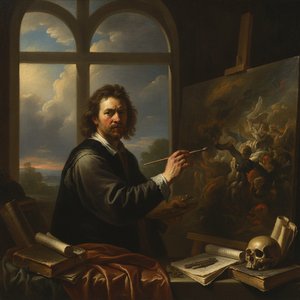
Dutch Baroque Unlocked: Mastering Chiaroscuro, Epic Drama, and the High-Impact Legacy of Rembrandt
Explore the dramatic power of Dutch Baroque art. Master the secrets of Rembrandt’s chiaroscuro, discover the epic scale of the Golden Age, and learn how to bring high-impact, hand-painted historical masterpieces into your modern collection with expert precision.

Hendrick Goltzius: Meister der Linie und des Manierismus – Ein niederländischer Virtuose
Entdecken Sie Hendrick Goltzius, den niederländischen Meister des Manierismus und virtuosen Kupferstechers! Erfahren Sie mehr über sein Leben, seine Technik und seinen Einfluss auf die Kunstgeschichte. Jetzt lesen!

Golden Age Reflections: Dutch Baroque Painting & Cultural Innovation
Explore the Dutch Golden Age of painting! Discover key artists like Vermeer & ter Borch, their innovative techniques, and the rich cultural context behind these Baroque masterpieces. Learn about collecting & appreciating this iconic art period.

Die 10 Meisterwerke der niederländischen Barockmalerei – Kunst für Ihr Zuhause | OriginalUniqueArt
Entdecken Sie die 10 prägendsten Meisterwerke der niederländischen Barockmalerei! Von Rembrandt bis Vermeer – erleben Sie Kunstgeschichte, Techniken & Emotionen. Hochwertige Reproduktionen für Ihr Zuhause auf OriginalUniqueArt.com.


