Menü
Text size

() ·

A painting made for you, by hand

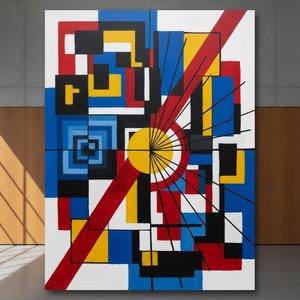
Metaesquema n.225

Handgefertigte Ölreproduktion

Handgemaltes Ölgemälde auf Leinwand in Ihrer Wunschgröße und mit Rahmen, auf Bestellung von unseren Künstlern angefertigt. ( Zum Druck wechseln Zum digitalen Bild wechseln)

Beschreibung des Sammlerstücks

Explore 'Metaesquema n.225' by Helio Oiticica – an iconic Neo-Concrete painting featuring intricate lines and vibrant colors, reflecting Brazilian modernism & sensory experience.

Künstlerbiografie

Entdecken Sie die außergewöhnliche Kunst von Helio Oiticica! Seine Umweltkunst und kinetische Gemälde prägten die brasilianische Neo-Konkrete Bewegung und inspirieren Künstler weltweit.

from ·

Chapter 1

How large should it be?

Slide to change the size; the picture on the left shows the frame at its real width. The proportions of the original are kept.

Standardformat
individuell anpassbar
CM
INCH

Wählen Sie aus unseren vordefinierten Formaten, die den ursprünglichen Proportionen des Kunstwerks entsprechen.

Breite
Höhe

Geben Sie die Breite und die Höhe an, die Sie für Ihren Rahmen oder Ihre Wand benötigen. Da dieses Werk handgemalt ist, kann der Künstler bei einer anderen Form etwas mehr um das Bild herum malen oder etwas abschneiden – Sie entscheiden. Wir senden Ihnen ein digitales Mockup zur Freigabe, bevor mit dem Malen begonnen wird. Das auf dieser Seite gezeigte Bild stellt nicht das tatsächliche Ergebnis dar – dies tut nur das Mockup.

Chapter 2

How should it arrive?

Choose the edges of the stretched canvas

Choose your frame

Corner sample of the WhiteWrap canvas edge finish, stretched on Massivholz bars
White €1
Corner sample of the BlurSideWrap canvas edge finish, stretched on Massivholz bars
Blurside €1
Corner sample of the ExtendedWrap canvas edge finish, stretched on Massivholz bars
Extended €1
Corner sample of the P118B picture frame: formgepresstes Polystyrol, 5 cm wide and 3 cm thick
P118B €10
Corner sample of the P118H picture frame: formgepresstes Polystyrol, 5 cm wide and 3 cm thick
P118H €10
Corner sample of the P118W picture frame: formgepresstes Polystyrol, 5 cm wide and 3 cm thick
P118W €10
Corner sample of the P438Z picture frame: formgepresstes Polystyrol, 5.5 cm wide and 3.5 cm thick
P438Z €10
Corner sample of the P508JH picture frame: formgepresstes Polystyrol, 7 cm wide and 3.5 cm thick
P508JH €12
Corner sample of the P508YH picture frame: formgepresstes Polystyrol, 7 cm wide and 3.5 cm thick
P508YH €12
Corner sample of the P805H picture frame: formgepresstes Polystyrol, 5 cm wide and 3.5 cm thick
P805H €10
Corner sample of the P805Z picture frame: formgepresstes Polystyrol, 5 cm wide and 3.5 cm thick
P805Z €10
Corner sample of the P919BZ picture frame: formgepresstes Polystyrol, 7 cm wide and 3.5 cm thick
P919BZ €10
Corner sample of the P919G picture frame: formgepresstes Polystyrol, 7 cm wide and 3.5 cm thick
P919G €10
Corner sample of the P919XJ picture frame: formgepresstes Polystyrol, 7 cm wide and 3.5 cm thick
P919XJ €10
Corner sample of the P959ZH picture frame: formgepresstes Polystyrol, 5 cm wide and 3 cm thick
P959ZH €10
Corner sample of the P968JZ picture frame: formgepresstes Polystyrol, 6 cm wide and 4 cm thick
P968JZ €12
Corner sample of the W106C picture frame: Massivholz, 5 cm wide and 3 cm thick
W106C €8
Corner sample of the W218G picture frame: Massivholz, 5 cm wide and 3 cm thick
W218G €10
Corner sample of the W218JH picture frame: Massivholz, 5 cm wide and 3 cm thick
W218JH €8
Corner sample of the W218Y picture frame: Massivholz, 5 cm wide and 3 cm thick
W218Y €10
Corner sample of the W307PJ picture frame: Massivholz, 6 cm wide and 3 cm thick
W307PJ €10
Corner sample of the W316G picture frame: Massivholz, 6 cm wide and 3 cm thick
W316G €10
Corner sample of the W316PJ picture frame: Massivholz, 6 cm wide and 3 cm thick
W316PJ €8
Corner sample of the W316Y picture frame: Massivholz, 6 cm wide and 3 cm thick
W316Y €10
Corner sample of the W398PJ picture frame: Massivholz, 5 cm wide and 3 cm thick
W398PJ €8
Corner sample of the W4111J picture frame: Massivholz, 6.5 cm wide and 3.5 cm thick
W4111J €10
Corner sample of the W500HY picture frame: Massivholz, 7 cm wide and 5 cm thick
W500HY €15
Corner sample of the W500JH picture frame: Massivholz, 7 cm wide and 5 cm thick
W500JH €15
Corner sample of the W692G picture frame: Massivholz, 8 cm wide and 4 cm thick
W692G €12
Corner sample of the W849H picture frame: Massivholz, 5 cm wide and 3 cm thick
W849H €8
Corner sample of the W940BG picture frame: Massivholz, 7.5 cm wide and 4.5 cm thick
W940BG €15
Corner sample of the W953PJ picture frame: Massivholz, 6 cm wide and 3.5 cm thick
W953PJ €8
Corner sample of the H24-GOLD picture frame: geschnitztes Holz mit Gesso, 10 cm wide and 6 cm thick
H24-GOLD €30
Corner sample of the H24-SILVER picture frame: geschnitztes Holz mit Gesso, 10 cm wide and 6 cm thick
H24-SILVER €30
Corner sample of the H36-GOLD picture frame: geschnitztes Holz mit Gesso, 15 cm wide and 6.5 cm thick
H36-GOLD €45
Corner sample of the H36-SILVER picture frame: geschnitztes Holz mit Gesso, 15 cm wide and 6.5 cm thick
H36-SILVER €45

Moulding: . Overall size with the frame: .

Chapter 3

Who paints it, and should anything change?

Examples of what can be changed: Replace face with customer photo; Add pet (e.g., replace cat with dog); Include hidden message in background; Change background landscape or elements.
After order, OriginalUniqueArt.com team will email client for instructions and provide a mockup preview

Weltweiter Versand () in nur 3 bis 4 Wochen statt der üblichen 5 Wochen. (30 Oktober). Keine Kompromisse bei der Qualität.

Chapter 4

The finishing touches

A nameplate, as in a museum?

Details der gravierten Bronzetafel

This elegant plaque features the artist's name and the title of the artwork, finely engraved for a timeless presentation.

It is made from bronze with a refined, elegant finish. The text is precisely laser-engraved for a sharp and permanent result. Measuring 9x2 cm, the plaque is compact yet easy to read. It's built to be durable and scratch-resistant, offering a professional, museum-quality look. Mounting is simple thanks to the included adhesive backing.

Details zur Acrylglas-Plakette (transparent)

The plaque includes essential engraved details such as the artist's name, the title of the artwork, the date it was created, the type of media used-like oil on canvas or watercolor-a brief description of the piece, and a QR code that links to the complete artwork information.

It is crafted from clear acrylic, offering a sleek, modern appearance. The text is UV-engraved in black to ensure strong visual contrast. With a size of 10x15 cm, it ensures optimal readability. It comes equipped with two metal hooks for secure wall mounting. The plaque is designed to be weather-resistant, making it suitable for various environments, and it includes interactive features that work seamlessly with smartphone scanning.

Details zur schwarzen Acryltafel

This elegant plaque includes engraved information such as the artist's name, the title of the artwork, the date it was created, the type of media used (like oil on canvas or watercolor), a short description of the artwork, and a QR code for quick access to more information.

The plaque itself is made from refined black acrylic with a premium finish. The text is laser-engraved in white for high contrast and readability. Its size is 10x15 cm, designed to be easy to read. It comes with two metal hooks for professional mounting. The design is sleek and fits any interior style. It is also weather-resistant and durable, with built-in digital integration for mobile compatibility.

A protective varnish?

When do you need it?

Chapter 5

Your painting, as you ordered it

Metaesquema n.225

Art der Reproduktion

Format der Reproduktion

-

Erstklassige Meisterkünstler

Mehr Detailtiefe, Raffinesse und zusätzliche Produktionszeit

-

Rahmen für Reproduktionen

-

-

Bei Kunstwerken oder Reproduktionen, die an einer Seite größer als 105 cm (ca. 41 Zoll) sind, wird der Rahmen zerlegt als Bausatz geliefert. Diese Methode gewährleistet eine sichere Zustellung und verhindert Schäden während des Transports.

Professionelle Montage erforderlich – dies ist kein DIY-Produkt.
Der Bausatz muss von einem erfahrenen professionellen Rahmenmacher zusammengebaut und die Leinwand gespannt werden. Hierfür werden Holzleim (nicht im Lieferumfang enthalten), eine Leinwandspannzange sowie Klemmen benötigt, um die Keilleisten während des Trocknungsvorgangs rechtwinklig zu halten. Eine unsachgemäße Montage oder eine ungleichmäßige Spannung der Leinwand kann das Kunstwerk dauerhaft beschädigen und ist nicht durch unsere Garantie abgedeckt.

  • Alle Vollholzkomponenten sind enthalten, präzise auf Maß zugeschnitten.

  • Der Zusammenbau erfolgt mit den mitgelieferten Schrauben sowie Holzkleber für die Eckverbindungen, der nicht im Lieferumfang enthalten ist und vom Rahmenbauer selbst beschafft werden muss.

  • Professionelles Werkzeug ist erforderlich und nicht im Lieferumfang enthalten: eine Keilrahmenzange (Spannwerkzeug) sowie Klammern, um die Leisten während der Trocknungszeit des Klebers rechtwinklig zu fixieren.

Wichtiger Hinweis:
Für die Eckverbindungen wird Holzleim benötigt, die Leisten müssen mit Zwingen fixiert werden, bis der Leim vollständig getrocknet ist, und das Spannen der Leinwand auf dem fertigen Rahmen erfordert eine Keilrahmen-Zange. Keines dieser Utensilien ist im Set enthalten. Bitte stellen Sie sicher, dass ein erfahrener Rahmenmacher zur Verfügung steht, bevor Sie diese Größe bestellen.

Beschriftung

-

-

Schutzlackierung

Glanzlack (verstärkt die Farben, schützt vor Licht und Feuchtigkeit)

-

Mein Kunstwerk personalisieren

Beispiele für Anpassungsmöglichkeiten: Gesicht durch Kundenfoto ersetzen; Haustier hinzufügen (z. B. Katze durch Hund ersetzen); Versteckte Nachricht im Hintergrund einfügen; Hintergrundlandschaft oder -elemente ändern.

-

Eilt sehr

Weltweiter Versand () in nur 3 bis 4 Wochen statt der üblichen 5 Wochen. (30 Oktober). Keine Kompromisse bei der Qualität.

-

Expressversand

Weltweiter Versand () innerhalb von 5 Wochen. (6 November).

Inklusive Versand

Endpreis

€ 265

Gesamtpreis € 265

Die Glasoption ist nur für Größen unter 110 cm verfügbar.

Included with every order

  • Kostenloser weltweiter Expressversand
  • Hochwertige Leinenleinwand
  • Umfassender Versicherungsschutz beim Versand
  • Zollgebühren-Rückerstattungsgarantie
  • Garantie für exakte Farbtreue
  • 100 Tage Rückgaberecht (nur bei Mängeln)
  • 100% Geld-zurück-Garantie
  • Mengenrabatt verfügbar

A Symphony of Lines: Deconstructing Reality with Helio Oiticica’s Metaesquema n.225

Helio Oiticica, a pivotal figure in Brazilian art and a pioneer of environmental art, invites us into a world where the boundaries between painting, space, and perception dissolve within Metaesquema n.225 (1957). This captivating work, housed at the Centro Cultural Banco do Brasil Rio de Janeiro, isn’t merely a painting; it's an orchestrated exploration of interconnectedness, a visual meditation on the very act of seeing. Oiticica, deeply influenced by both European modernism and the vibrant traditions of his native Brazil – particularly the rhythmic movements of the batuque dances – sought to move beyond traditional artistic constraints, creating art that actively engages with the viewer’s experience.

Metaesquema n.225 by Helio Oiticica

Image: Metaesquema n.225 by Helio Oiticica (WikiArt)

Neo-Concrete and the Embrace of Phenomenology

Oiticica’s work is firmly rooted in the Neo-Concrete movement, a Brazilian artistic response to the rigid formalism of Concrete Art. Unlike its predecessor, which prioritized objective geometric forms, Neo-Concrete sought to capture the subjective experience of reality – the way we perceive and interact with our surroundings. Metaesquema n.225 exemplifies this philosophy perfectly. The intricate network of lines isn’t intended to represent a fixed image but rather to evoke a state of being, a dynamic interplay between order and chaos, structure and fluidity. Oiticica believed that art should be more than just representation; it should actively shape the viewer's perception.

The Language of Ink: Technique and Process

Executed in ink on cardstock, Metaesquema n.225 reveals a remarkable control over line and form. The artist’s hand guides the ink with deliberate precision, creating a dense tapestry of interconnected lines that seem to pulse with energy. Notice how the varying thicknesses and densities of the lines contribute to the overall sense of depth and complexity. Oiticica's meticulous approach suggests a deep understanding of color theory and spatial relationships – principles he explored extensively in his later “Invencao” monochromes, where he sought to embody light itself. The choice of cardstock provides a subtle textural contrast to the smooth flow of the ink, further enhancing the work’s tactile quality.

Symbolism and Emotional Resonance

While seemingly abstract, Metaesquema n.225 is rich in symbolic meaning. The interconnected lines can be interpreted as representing the complex web of relationships that connect us to one another and to the world around us. The overall composition evokes a sense of dynamism and movement – a feeling of being caught within a swirling vortex of ideas and emotions. Oiticica’s work invites contemplation, prompting viewers to consider their own place within this intricate network. It's not simply a visual puzzle but an invitation to engage in a deeply personal dialogue with the artwork.

A Legacy of Environmental Art

Metaesquema n.225 stands as a crucial precursor to Oiticica’s later, more immersive environmental works, such as his “Penetrables” and “Parangolés.” These pieces – often involving large-scale installations that viewers could physically enter or interact with – pushed the boundaries of artistic practice even further, blurring the lines between art and life. Oiticica's exploration of color, space, and human interaction continues to resonate today, solidifying his position as a visionary artist who fundamentally reshaped the landscape of contemporary art.

Fragen & Antworten

Sind die Farben von "Metaesquema n.225" von Hélio Oiticica leuchtend oder eher dezent?

Die Farben von "Metaesquema n.225" von Hélio Oiticica bestechen durch eine Balanced Soft Sättigung und eine Vivid Intensität.

Welcher Phase der Karriere von Hélio Oiticica ist „Metaesquema n.225“ (1957) zuzuordnen?

"Metaesquema n.225", entstanden im Jahr 1957, stammt aus der Neo-Concrete Period von Hélio Oiticica.

Wofür wird eine Reproduktion von "Metaesquema n.225" von Hélio Oiticica empfohlen?

Die empfohlene Verwendung eines Drucks von „Metaesquema n.225“ ist Statement.

More about this painting

Vorschau anzeigen In AR ansehen Zum Druck wechseln Zum digitalen Bild wechseln Versenden
Details anzeigen Leitfaden Zu Favoriten hinzufügen Herunterladen Ähnliche Objekte Röntgenaufnahme Diashow Q&A Statistiken

In numbers

  • 1957the year it was painted
  • 29frames to choose from
  • standard sizes, in its own proportions
  • 5weeks to paint and deliver it

About the original

Hélio Oiticica

Hélio Oiticica

1937 - 1980, Brasil

Quick facts about Hélio Oiticica

  • Artistic Movement Or Style: Neo-Konkrete Kunst
  • Artists Who Influenced This Artist: ['Adriano leite ribeiro']
  • Date Of Birth: Rio de Janeiro, Brasil (1937)
  • Date Of Death: 1980
  • Full Name: Hélio Oiticica
  • Nationality: Brasilianisch
  • Notable Artworks:
    • Metaesquema n.225
    • Tropicália
  • Place Of Birth: Rio de Janeiro

Künstlerbiografie

Der Architekt der Erfahrung: Das Leben und die Vision von Hélio Oiticica

Das Werk von Hélio Oiticica zu begegnen bedeutet nicht bloß, ein Objekt zu betrachten, sondern in eine lebendige, atmende Welt einzutreten. Geboren 1937 in der pulsierenden, kulturell dichten Landschaft von Rio de Janeiro, entsprang Oiticica einer intellektuellen Linie, die ihn darauf vorbereitete, die Grenzen der Leinwand selbst zu sprengen. Als Sohn eines Fotografen und Entomologen sowie Enkel eines prominenten Anarchisten-Anführers wuchs er in einem Geist der Neugier und des sozialen Wandels auf. Seine frühe künstlerische Ausbildung bei Ivan Serpa im Museum für Moderne Kunst in Rio verschaffte ihm ein Fundament in der geometrischen Abstraktion, doch Oiticicas Bestimmung war es nie, innerhalb der Grenzen der zweidimensionalen Tradition zu verharren. Er suchte stattdessen nach einem Weg, die Kluft zwischen der sterilen Perfektion des europäischen Konstruktivismus und dem rohen, rhythmischen Puls des brasilianischen Lebens zu überbrücken.

Als zentrale Figur der neo-konkreten Bewegung beteiligte sich Oiticica an einer radikalen Rebellion gegen die starren, mathematischen Zwänge früherer Avantgarde-Bewegungen. Gemeinsam mit Weggefährten wie Lygiente Clark half er dabei, eine Ästhetik zu formen, die Poesie, Subjektivität und die physische Präsenz des Betrachters in den Vordergrund stellte. Er löste sich von der Vorstellung der Kunst als einem Fenster, durch das man blickt, und schlug stattdessen vor, dass Kunst eine Umgebung sein sollte, die man bewohnt. Dieser Wandel war tief geprägt von seiner Faszination für die batuques – die rituellen afro-brasilianischen Tänze Bahias – und der sinnlichen Fülle der Straßen von Rio. Für Oiticica war Farbe nicht nur ein Pigment auf einer Oberfläche; sie war eine räumliche Kraft, ein Gewicht und eine Textur, die den menschlichen Körper umhüllen konnte.

Von Metaesquemas bis zum immersiven Tropicália

Die Evolution von Oiticicas Technik ist eine Reise vom Kontrollierten zum Chaotischen, vom Raster zum Rhythmus. Seine frühen Metaesquemas (1957–1958) zeigten eine Meisterschaft in Farbe und Form, wobei er Gouachen nutzte, in denen Farbtöne in unregelmäßige Formen innerhalb eines strukturierten Gitters aufgebrochen wurden. Doch diese formalistische Präzision wich bald viel kühneren Erkundungen. Er begann, seine Penetráveis (Penetrierbare) zu entwickeln – großformatige Installationen, die das Publikum dazu einluden, physisch durch das Kunstwerk zu schreiten, es zu berühren und zu bewohnen. Diese Strukturen verwandelten den Betrachter von einem passiven Beobachter in einen aktiven Teilnehmer, ein Konzept, das er als „Supersensorialität“ bezeichnete.

Sein vielleicht bleibendstes Vermächtnis ist das Konzept der Tropicália, ein Begriff, den er 1967 prägte, um ein Kunstwerk zu beschreiben, das die kaleidoskopische, oft widersprüchliche Essenz der brasilianischen Identität einfing. Diese Bewegung war nicht nur ein ästhetischer Stil, sondern ein kulturelles Manifest, das Hochmodernismus mit dem Populären, dem Kitsch und dem Viszeralen verband. Seine Parangolés – lebendige, tragbare Skulpturen aus Stoff, Kunststoff und Fundstücken – verlangten vom Träger, zu tanzen, um die Kunst zu aktivieren. In diesen Werken löste sich die Unterscheidung zwischen Schöpfer und Konsument auf; die Kunst existierte erst wahrhaftig im Moment der Bewegung, des Rhythmus und der menschlichen Interaktion.

Ein Vermächtnis der Freiheit und Partizipation

Oiticicas Karriere war geprägt von einem unermüdlichen Streben nach Freiheit, sowohl künstlerisch als auch politisch. Während seiner Zeit im Exil in New York, infolge der brasilianischen Militärdiktatur, setzte er die Grenzüberschreitung von Medium und Botschaft fort. Seine Cosmococa-Serie, die in Zusammenarbeit mit Neville D’Almeida entstand, nutzte Diaprojektionen, Musik und interaktive Objekte, um eine sensorische Collage zu erschaffen, welche die Grenzen von Erinnerung und Wahrnehmung herausforderte. Selbst als seine Arbeit komplexer und multimedialer wurde, blieb die fundamentale Konstante bestehen: ein unerschütterliches Bekenntnis zur physischen Natur der Farbe und ihrer Fähigkeit, tiefe emotionale Reaktionen auszulösen.

Obwohl sein Leben 1980 tragischerweise zu früh endete, bleibt Oiticicas Einfluss auf die zeitgenössische Kunst unermesslich. Er ebnete den Weg für die Installationskunst, die Performancekunst und die relationale Ästhetik und lehrte Generationen von Künstlern, dass das mächtigste Medium die menschliche Erfahrung selbst ist. Sein Werk steht als Zeugnis für die Idee, dass Kunst kein statisches Monument der Vergangenheit sein sollte, sondern eine dynamische, partizipative Kraft, die fähig ist, unsere Wahrnehmung von Raum, Gesellschaft und uns selbst neu zu gestalten.

Eckdaten

  • Movement: Neo-Concretism
  • Medium: Ink on cardstock
  • Influences: Brazilian art
  • Year: 1957
  • Location: Centro Cultural Banco do Brasil

Kunst-Quiz

Jede Frage hat nur eine richtige Antwort.

Frage 1:
What artistic movement is Hélio Oiticica most closely associated with?
Frage 2:
The painting 'Metaesquema n.225' prominently features:
Frage 3:
In what year was 'Metaesquema n.225' created?
Frage 4:
Where is 'Metaesquema n.225' currently displayed?
Frage 5:
Hélio Oiticica's work often explored the relationship between: