

 Vorschau anzeigen
 Versenden
 Teilen
 Details anzeigen
 Leitfaden

 Herunterladen
 Ähnliche Objekte
 Röntgenaufnahme
 Diashow
 Statistiken
Honorable Mr. Cat
 Acrylic On Canvas
- WallArt
- Japonism
 1903
1903 21.0 x 9.0 cm
 Smithsonian American Art Museum
 Weiterlesen
Handgefertigte Ölreproduktion
Handgemaltes Ölgemälde auf Leinwand in Ihrer Wunschgröße und mit Rahmen, auf Bestellung von unseren Künstlern angefertigt. ( Zum Druck wechseln Zum digitalen Bild wechseln)




P118B €10

P118H €10

P118W €10

P438Z €10

P508JH €12

P508YH €12

P805H €10

P805Z €10

P919BZ €10

P919G €10

P919XJ €10

P959ZH €10

P968JZ €12

W106C €8

W218G €10

W218JH €8

W218Y €10

W307PJ €10

W316G €10

W316PJ €8

W316Y €10

W398PJ €8

W4111J €10

W500HY €15

W500JH €15

W692G €12

W849H €8

W940BG €15

W953PJ €8




Wählen Sie aus unseren vordefinierten Formaten, die den ursprünglichen Proportionen des Kunstwerks entsprechen.

Geben Sie die Breite und die Höhe an, die Sie für Ihren Rahmen oder Ihre Wand benötigen. Da dieses Werk handgemalt ist, kann der Künstler bei einer anderen Form etwas mehr um das Bild herum malen oder etwas abschneiden – Sie entscheiden. Wir senden Ihnen ein digitales Mockup zur Freigabe, bevor mit dem Malen begonnen wird. Das auf dieser Seite gezeigte Bild stellt nicht das tatsächliche Ergebnis dar – dies tut nur das Mockup.
Nach der Bestellung wird das OriginalUniqueArt.com-Team dem Kunden Anweisungen per E-Mail zusenden und eine Mockup-Vorschau bereitstellen.
Weltweiter Versand () in nur 3 bis 4 Wochen statt der üblichen 5 Wochen. (28 Oktober). Keine Kompromisse bei der Qualität.

Kostenloser weltweiter Expressversand

Hochwertige Leinenleinwand

Umfassender Versicherungsschutz beim Versand

Zollgebühren-Rückerstattungsgarantie

Garantie für exakte Farbtreue

100 Tage Rückgaberecht (nur bei Mängeln)

100% Geld-zurück-Garantie

Mengenrabatt verfügbar
 Die Glasoption ist nur für Größen unter 110 cm verfügbar.

Honorable Mr. Cat
Art der Reproduktion
Format der Reproduktion
-


Endpreis
€ 264
A Moment Frozen in Time: Helen Hyde’s “Honorable Mr. Cat”
Helen Hyde's "Honorable Mr. Cat," painted in 1903, isn’t merely a charming depiction of a feline; it’s a poignant window into the burgeoning Japonism movement and a subtle commentary on Victorian social dynamics. This color woodcut, rendered with exquisite detail on paper, captures a fleeting moment of quiet observation – a gentleman cat, impeccably dressed in a miniature suit and tie, pausing his pursuits to regard the viewer with an air of dignified curiosity. Hyde’s masterful use of line and shading imbues the scene with a remarkable sense of depth and texture, transforming what could have been a simple illustration into a richly layered work of art.
The piece belongs firmly within the late 19th and early 20th-century aesthetic landscape, a period profoundly influenced by European artistic trends, particularly those emanating from France and Japan. Hyde’s journey to Europe – specifically Berlin and Paris – was pivotal in shaping her style. She studied under renowned instructors like Franz Skarbina, Raphael Collin, and Félix Régamey, absorbing the techniques of etching and printmaking while simultaneously encountering the captivating aesthetics of Japonism. This movement, which celebrated Japanese art forms—woodblock prints, ink painting, and decorative arts—introduced a new emphasis on asymmetry, flattened perspective, and a focus on naturalistic detail, all of which are subtly reflected in “Honorable Mr. Cat.” The influence of Régamey’s extensive collection of Japanese art is particularly evident in the composition's delicate balance and the subject’s serene demeanor.
The Language of Symbolism
Beyond its technical brilliance, "Honorable Mr. Cat" resonates with layers of symbolic meaning. The cat itself, a recurring motif in Victorian art and literature, often represented domesticity, grace, and even a touch of mischievousness. Here, however, Hyde presents the feline as something more refined – an “honorable” gentleman, suggesting a quiet dignity and perhaps a subtle critique of the rigid social conventions of the era. The miniature suit and tie are not simply decorative; they’re a visual shorthand for societal expectations and the constraints placed upon men during that time. The cat's pose—a deliberate pause, a direct gaze—invites the viewer to contemplate his thoughts, prompting us to question what he might be observing or considering.
Furthermore, the setting – a simple street scene with a fence in the background – is deliberately understated. It’s not a grand vista or an elaborate composition; rather, it focuses our attention entirely on the central figure. This minimalist approach reinforces the painting's contemplative mood and elevates the cat to a position of importance. The subtle use of color—primarily muted browns, grays, and blues—contributes to the overall sense of quietness and formality.
Technique and Artistic Process
Hyde’s skill as an etcher is immediately apparent in the intricate detail of “Honorable Mr. Cat.” She employed a complex color woodcut technique, meticulously carving into blocks of linoleum or wood to create varying shades and tones. This process demanded immense patience and precision, resulting in a remarkably nuanced image. The subtle gradations of tone—achieved through careful manipulation of line weight and pressure—give the cat’s fur a tangible quality, while the background elements are rendered with a delicate sense of atmosphere. Her work demonstrates a mastery of light and shadow, creating a three-dimensional effect that draws the viewer into the scene.
The painting's small size (21 x 9 cm) further emphasizes its intimacy and immediacy. It’s a piece designed to be savored—a quiet moment captured on paper. Hyde’s dedication to capturing subtle details and her ability to imbue a simple subject with such profound emotion are hallmarks of her distinctive artistic style.
A Legacy of Quiet Elegance
"Honorable Mr. Cat" stands as a testament to Helen Hyde's remarkable talent and her unique vision. It’s a work that transcends its humble size and unassuming subject matter, offering viewers a glimpse into a bygone era and inviting them to contemplate the complexities of human nature. Reproductions of this captivating artwork offer an opportunity to bring this moment of quiet elegance into any space, serving as a reminder of the beauty found in simplicity and the power of observation.
Fragen & Antworten
Welche Druckgröße von "Honorable Mr. Cat" von Helen Hyde passt in den empfohlenen Raum?
Für einen Living Room wird für „Honorable Mr. Cat“ ein Druckformat von Medium empfohlen.
Für wen eignet sich "Honorable Mr. Cat" von Helen Hyde als Geschenk?
Die Geschenkempfehlung für "Honorable Mr. Cat" von Helen Hyde verbindet Birthday mit Statement.
Welche Farbpalette und welche Stimmung vereint "Honorable Mr. Cat"?
In "Honorable Mr. Cat" begleiten Neutrals-Farbtöne ein Reflective Gefühl.
Künstlerbiografie
Frühes Leben und Ausbildung
- Geboren: Lima, New York (6. April 1868)
- Gestorben: Pasadena, Kalifornien (13. Mai 1919)
- Helen Hydes künstlerische Reise begann früh. Sie erhielt bereits im Alter von zwölf Jahren ersten Unterricht von Ferdinand Richardt.
- Ihre Familie zog nach San Francisco, wo sie ihre Ausbildung an der California School of Design fortsetzte.
- Weitere Studien führten sie nach Europa, unter anderem nach Berlin und Paris, wo sie bei Franz Skarbina, Raphael Collin und Félix Régamey studierte.
- Régameys umfangreiche Sammlung japanischer Kunst beeinflusste Hydes künstlerische Richtung maßgeblich und führte sie in den Japonismus ein.
Künstlerische Entwicklung und Einflüsse
- Nach ihrer Rückkehr nach Kalifornien experimentierte Hyde mit Farbholzschnitten und begann, Szenen aus San Franciscos Chinatown darzustellen.
- Ein entscheidender Moment war ihre Reise nach Japan im Jahr 1899, wo sie in die japanische Kultur und künstlerischen Techniken eintauchte.
- Sie studierte traditionelle Tuschemalerei bei Kano Tomonobu und lernte Holzschnitttechniken von Emil Carlsen.
- Wichtige Einflüsse: Japonismus, Mary Cassatts Drucke und die traditionellen japanischen Kunstformen, denen sie während ihres Aufenthalts in Japan begegnete.
- Ihr Stil verband westliche künstlerische Ausbildung mit japanischer Ästhetik und schuf so eine einzigartige visuelle Sprache.
Hauptwerke und Techniken
- Bemerkenswerte Werke: "A Monarch of Japan" (1901), "Baby Talk" (1909), "Sausalito", "Footbridge" und "Her Bit".
- Techniken: Hyde war vor allem für ihre Farbholzschnitte und Holzdrucke bekannt. Sie verwendete in Japan ein System der Arbeitsteilung und nutzte japanische Schnitzer und Drucker.
- “A Monarch of Japan” gewann 1901 den ersten Preis bei der Ausstellung des Nihon Kaiga Kyokai.
- "Baby Talk" erhielt 1909 eine Goldmedaille auf der Alaska–Yukon–Pacific Exposition.
- Ihre Drucke zeigten oft japanische Frauen und Kinder, was ihre Faszination für ihr tägliches Leben und ihre kulturellen Traditionen widerspiegelte.
Auszeichnungen und Anerkennung
- Ausstellungen: Hydes Werke wurden sowohl national als auch international ausgiebig ausgestellt.
- Auszeichnungen: Sie erhielt zahlreiche Auszeichnungen für ihre Drucke, darunter Medaillen auf der Alaska–Yukon–Pacific Exposition und der Panama-Pacific International Exposition.
- Sammlungen: Ihre Werke befinden sich in renommierten Sammlungen wie dem Brooklyn Museum, dem Art Institute of Chicago, der Library of Congress und dem Smithsonian American Art Museum.
- Mitgliedschaften: Sie war Mitglied verschiedener Kunstgesellschaften, darunter der Chicago Society of Etchers und der Printmakers Society of California.
Historische Bedeutung
- Helen Hyde spielte eine bedeutende Rolle bei der Verbindung westlicher und japanischer künstlerischer Traditionen.
- Ihre innovative Verwendung von Farbholzschnitt- und Holzdrucktechniken trug zur Entwicklung des amerikanischen Druckgrafikwesens bei.
- Sie gilt als eine der führenden amerikanischen Künstlerinnen, die im Japonismus tätig waren.
- Hydes Darstellungen des japanischen Lebens geben wertvolle Einblicke in eine Zeit des kulturellen Austauschs und künstlerischer Innovationen.
- Ihr Vermächtnis inspiriert bis heute zeitgenössische Künstler und Sammler, wobei ihre Werke weiterhin sehr begehrt sind.

Helen Hyde
1868 - 1919 , Vereinigte Staaten von Amerika
Kurzinfos
- Beeinflusste Künstler:
- Franz Skarbina
- Raphael Collin
- Félix Régamey
- Emil Carlsen
- Kano Tomonobu
- Bemerkenswerte Werke:
- Ein Monarch von Japan
- Baby Talk
- Sausalito
- Fußbrücke
- Ihr Stück
- Geburtsdatum: 6. April 1868
- Geburtsort: Lima, Vereinigte Staaten
- Künstlerische Bewegung: Japonismus, Farbätztechnik
- Nationalität: Amerikanerin
- Todatum: 13. Mai 1919
- Vollständiger Name: Helen Hyde
Ähnliche Artikel

Helen Hyde: Narrative & Symbolism in Contemporary Botanical Illustration
Explore the captivating world of Helen Hyde (1868-1919), a pioneering American artist renowned for her exquisite Japanese woodblock prints and evocative botanical illustrations. Discover her legacy & symbolism.

Hablot Knight Browne: Phiz und die viktorianische Gesellschaft – Ein kritisches Erbe
Entdecken Sie das faszinierende Werk von Hablot Knight Browne (Phiz), dem Meisterillustrator der viktorianischen Ära! Analysieren Sie seine Kunst, die Partnerschaft mit Dickens und die kritische Darstellung der Gesellschaft. Jetzt lesen!
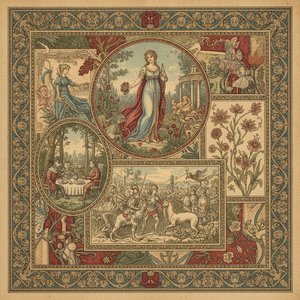
Victorian Illustration: The Golden Age of Narrative Art and Intricate Detail
Explore the exquisite world of Victorian Illustration. Discover the masters of the Golden Age, from Arthur Rackham to Edmund Dulac, through an in-depth historical journey into the era's unparalleled detail and narrative artistry.

Angelo Chiacchio: A Mid-Century American Illustration Master & the Rise of Commercial Art
Explore the captivating world of Angelo Chiacchio, a master of mid-century American illustration. Discover his evolution, signature style, and lasting impact on commercial art & design. Learn about his legacy at the Museum of American Illustration.

The Refined Aesthetic of Victorian Illustration: A Study in Narrative & Technique
Explore the captivating world of Victorian illustration! Discover Pre-Raphaelite influences, key artists like Rossetti & Stephens, and the era's rich narrative detail. A deep dive for art enthusiasts.
