Modernism · 1950
Torso retangular IV (Carybé, 1950)
Carybé (1911–1997) schuf Torso retangular IV. Es stammt aus dem Jahr 1950. Es gehört zur Modernism-Strömung. Es ist aus Painting gefertigt. Es befindet sich im Museu de Arte da Bahia in Salvador, Brasilien. Die Maße sind 30 × 25 cm.
- 1950
- Painting
- 30 × 25 cm
- Museu de Arte da Bahia, Salvador

 Vorschau anzeigen

 Handgemaltes Ölgemälde
 Versenden
 Teilen
 Datenblatt


 Herunterladen
 Ähnliche Objekte
 Röntgenaufnahme
 Diashow
 Fragen & Antworten

 Statistiken
Torso retangular IV im Überblick
- Titel
- Torso retangular IV
- Künstler
- Carybé (1911–1997)
- Geburtsjahr des Künstlers
- Lanús, Argentinien
- Datum
- 1950
- Medium
- Painting
- Maße
- 30 × 25 cm
- Ausstellungsort
- Museu de Arte da Bahia, Salvador, Brasilien
- Bewegung
- Modernism
- Epoche
- Modern
- Motiv
- portrait, women, headbands, hairstyles, figures, modernism
Was stellt Torso retangular IV dar?
A Glimpse into the Soul of Carybé
In the evocative realm of mid-century Latin American modernism, few names resonate with as much cultural depth and rhythmic grace as Héctor Julio Páride Bernabó, known affectionately to the world as Carybé. His work, Torso retangular IV, serves as a profound window into a period of intense artistic exploration. Created in 1950, this piece captures a moment where form and identity converge. The composition presents a captivating study of femininity, focusing on the delicate yet structured arrangement of women adorned with headbands and elegant buns. Through his masterful hand, the artist does not merely depict figures; he weaves a narrative of shared grace and communal presence that transcends the boundaries of the canvas.
The technique employed in this work reflects the artist's unique ability to balance structural rigidity with fluid movement. While the title suggests a certain geometric constraint—the "rectangular" torso—the essence of the painting lies in its organic softness. The interplay of light and shadow across the subjects' features creates a sense of depth that invites the viewer to linger on every detail, from the precise curve of a hairstyle to the subtle texture of a headband. This mastery of form allows the artwork to function as both a formalist study and an emotional portrait, making it an exquisite choice for those who appreciate art that possesses both intellectual rigor and visual warmth.
Cultural Resonance and Aesthetic Elegance
To understand Torso retangular IV is to understand the spirit of Carybé’s broader legacy. As an Argentine-Brazilian artist, his work often acted as a bridge between different cultural landscapes, blending the structural influences of modernism with the vibrant, rhythmic pulse of Brazilian life. In this specific piece, there is a quiet dignity in the subjects' gazes and postures that speaks to a timeless sense of poise. The repetition of motifs—the headbands, the buns, the recurring silhouettes—creates a visual rhythm akin to a musical cadence, drawing the eye through the composition in a continuous, melodic loop.
For the discerning collector or interior designer, this artwork offers more than mere decoration; it provides a focal point of sophisticated storytelling. The monochromatic essence captured in historical records of this work highlights its sculptural quality, suggesting that it would integrate seamlessly into a contemporary space seeking an air of classic elegance. Whether placed in a sunlit gallery or a curated private study, the painting radiates a serene energy. It is a piece that invites contemplation, offering a sense of peace and a connection to the rich, historical tapestry of mid-20th-century artistry.
In welchem Museum befindet sich Torso retangular IV?
Museu de Arte da Bahia
Salvador, Brasilien
Eine Bastion bahianischer Identität: Die Seele von Salvador Das Museu de Arte da Bahia zu betreten bedeutet, in eine lebendige Chronik der Seele Salvadors einzutauchen, wo die Echos kolonialer Pracht auf den pulsierenden Rhythmus zeitgenössischer Innovation treffen. Eingebettet in den historischen Vitória-Palast, ist das Museum – liebevoll als MAB bekannt – weit mehr als nur ein Depot für Artefakt; es ist eine immersive Reise durch die facettenreiche Kulturlandschaft Brasiliens. Die Institution wurde 1918 von einer visionären Gruppe von Intellektuellen gegründet, die sich dem Schutz des kostbaren Erbes Bahias verschrieben hatten, und hat sich zu einem führenden Bewahrer der brasilianischen Identität entwickelt.


Hochauflösende Bilder von Torso retangular IV

Protected by copyright: these files are for personal reference, not a licence to republish.
Carybé, Torso retangular IV (1950), Museu de Arte da Bahia.
Fragen zu Torso retangular IV, beantwortet
Wo kann ich das Original von "Torso retangular IV" von Carybé sehen?
"Torso retangular IV" von Carybé wird im Museu de Arte da Bahia, Salvador, Brasilien ausgestellt. Die Museumsangabe bezieht sich auf das Originalwerk, nicht auf Reproduktionen.
In welchem Jahr wurde "Torso retangular IV" von Carybé geschaffen?
"Torso retangular IV" von Carybé entstand im Jahr 1950.
Mit welcher Technik wurde "Torso retangular IV" erstellt?
Das Medium von "Torso retangular IV" von Carybé ist Painting. Die Reproduktionen zielen darauf ab, die Optik dieser Technik wiederzugeben.
Welche Maße hat "Torso retangular IV" von Carybé im Original?
Das Originalwerk "Torso retangular IV" hat die Maße 30 x 25 cm. Die Originalmaße dienen als hilfreiche Orientierungshilfe bei der Wahl der Reproduktionsgröße.
Was stellt "Torso retangular IV" von Carybé dar?
"Torso retangular IV" von Carybé zeigt: portrait, women, headbands, hairstyles, figures, modernism.
Ist "Torso retangular IV" gemeinfrei?
Was das Urheberrecht betrifft, so ist "Torso retangular IV" noch urheberrechtlich geschützt.
Wer hat "Torso retangular IV" geschaffen?
"Torso retangular IV" wird Carybé zugeschrieben.
Welcher Kunstrichtung lässt sich "Torso retangular IV" von Carybé zuordnen?
"Torso retangular IV" von Carybé lässt sich der Strömung des Modernism zuordnen. Diese Stilrichtung bildet den künstlerischen Kontext des Werkes.
Welcher Phase in der künstlerischen Entwicklung von Carybé lässt sich "Torso retangular IV" zuordnen?
"Torso retangular IV" repräsentiert die Early Period von Carybé.
Über den Künstler, Carybé

1911–1997, Argentinien
Carybé
early life and career Héctor Julio Páride Bernabó, known artistically as Carybé (Argentina, 1911 - Brazil, 1997), was a multifaceted Argentinian-Brazilian artist whose oeuvre spanned painting, engraving, illustration, sculpture, mural art, research, historical scholarship, and journalism. Born in Buenos Aires on February 7th, 1911, Carybé’s formative years were steeped in artistic exploration and intellectual curiosity—a passion that would define his entire life's trajectory. From a young age, he demonstrated an exceptional talent for visual arts, honing his skills through self-study and experimentation before embarking on formal artistic training. His early works showcased a distinctive style characterized by bold lines and vibrant colors, hinting at the stylistic innovations that would characterize his mature oeuvre.
Ebenfalls von Carybé
 Baiana Sambando - Série Bonfim1950
 Baiana e Pescador1950
 Baianas Chegando Para a Lavagem1950
 Jangadas ao Mar - Série Pesca do Xaréu1950
Essays zu Torso retangular IV
 Radical Rhythm: The Bold Impact of Brazilian Modernism and Tropicália ArtExplore the radical energy of Brazilian Modernism and Tropicália art. Dive into this bold cultural revolution now.
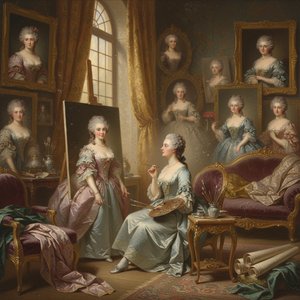 Élisabeth Vigée Le Brun: Porträtkunst, Mäzenatentum und weibliche Identität im Frankreich des 18. JahrhundertsEntdecken Sie das Leben und Werk von Élisabeth Vigée Le Brun – der Porträtmalerin Marie Antoinettes! Erfahren Sie mehr über ihren einzigart…
 Die 25 besten Meisterwerke von Henri de Toulouse-Lautrec: Die Seele des Pariser NachtlebensEntdecken Sie die 25 Meisterwerke von Toulouse-Lautrec und den Postimpressionismus. Alle Klassiker auf OriginalUniqueArt.com erleben.