Zum Druck wechseln
 Weiterlesen







































 Bei Kunstwerken oder Reproduktionen, die an einer Seite größer als 105 cm (ca. 41 Zoll) sind, wird der Rahmen zerlegt als Bausatz geliefert. Diese Methode gewährleistet eine sichere Zustellung und verhindert Schäden während des Transports.


A Window into Grief and Devotion: Examining Hans Multscher’s “The Death of the Virgin”
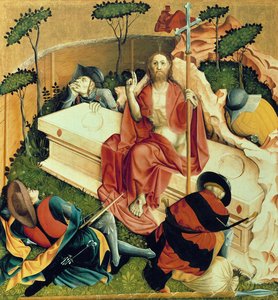
Hans Multscher's "The Death of the Virgin," completed in 1437, stands as a cornerstone of German Renaissance art—a poignant meditation on mortality rendered with breathtaking realism and imbued with profound religious significance. Currently housed at Staatliche Museen Berlin, this panel painting transcends mere depiction; it invites contemplation about faith, loss, and the enduring power of artistic expression.
Stylistic Innovation: Embracing Early Netherlandish Influence
Multscher’s work distinguishes itself from its Gothic predecessors through a conscious adoption of stylistic elements originating in Northern France and the Netherlands. These influences—particularly the meticulous attention to detail characteristic of Early Netherlandish painting—are evident throughout “The Death of the Virgin.” The artist skillfully employs chiaroscuro, manipulating light and shadow to sculpt form and heighten emotional impact, mirroring techniques pioneered by artists like Rogier van der Weyden.
Detailed Composition: Narrative Depth Within Ornamentation
The composition itself is deliberately layered with symbolic gestures. At its center lies the figure of Mary, draped in a stark white headdress and black robe—a visual shorthand for purity and sorrow—resting upon a crimson bedcover adorned with intricate geometric patterns that speak to wealth and status. Surrounding her are mourners, one holding a book open, perhaps reciting prayers or reading scripture, while another cradles a statue of Mary, representing fervent devotion.
Symbolism and Emotional Resonance: Reflecting Renaissance Spirituality
"The Death of the Virgin" isn’t simply a portrait; it's an embodiment of Christian theology. The depiction of Christ gently taking Mary’s soul symbolizes divine compassion and underscores the universality of suffering within God’s plan. Multscher’s masterful rendering captures not only the physical reality of death but also the emotional weight of grief—a testament to the artist’s ability to convey profound spiritual truths through visual artistry.
Technical Mastery: Precision and Texture
Multscher's technique showcases remarkable precision. The artist meticulously builds up texture using thin glazes of pigment, creating a luminous surface that captures subtle nuances of color and form. This painstaking process—a hallmark of Renaissance painting—results in an image brimming with palpable atmosphere and conveying the solemn beauty of religious contemplation. As seen in detail reproductions available at OriginalUniqueArt.com, every brushstroke contributes to the overall impact of this unforgettable artwork.
Fragen & Antworten
Welches Gefühl wird mit "Der Tod Mariens (Detail)" assoziiert?
Die für "Der Tod Mariens (Detail)" von Hans Multscher festgelegte emotionale Stimmung ist Melancholisch. Sie fasst das Gefühl zusammen, das das Werk ausdrückt.
Ist "Der Tod Mariens (Detail)" gemeinfrei?
"Der Tod Mariens (Detail)" von Hans Multscher ist gemeinfrei – das Urheberrecht ist abgelaufen. Dieser Status bestimmt, wie das Bild des Werkes vervielfältigt werden darf.
Welche nationale Herkunft spiegelt sich in der Frühniederländische Renaissance von „Der Tod Mariens (Detail)“ wider?
"Der Tod Mariens (Detail)" verbindet die Frühniederländische Renaissance-Bewegung durch den Geburtsort ihres Schöpfers mit Deutschland.
 Vorschau anzeigen
 Versenden
 Teilen
 Details anzeigen
 Leitfaden

 Herunterladen
 Ähnliche Objekte
 Röntgenaufnahme
 Diashow
 Fragen & Antworten
 Statistiken