
 Vorschau anzeigen
 Versenden
 Teilen
 Details anzeigen
 Leitfaden

 Herunterladen
 Ähnliche Objekte
 Röntgenaufnahme
 Diashow
 Fragen & Antworten
 Statistiken
Christus before Pilate (detail)


 Weiterlesen
Giclée / Kunstdruck
Giclée- oder Leinwanddruck in Museumsqualität mit schneller Produktion und flexiblen Veredelungsoptionen. ( Handgemalte Reproduktion bestellen Zum digitalen Bild wechseln)




P118B €10

P118H €10

P118W €10

P438Z €10

P508JH €12

P508YH €12

P805H €10

P805Z €10

P919BZ €10

P919G €10

P919XJ €10

P959ZH €10

P968JZ €12

W106C €8

W218G €10

W218JH €8

W218Y €10

W307PJ €10

W316G €10

W316PJ €8

W316Y €10

W398PJ €8

W4111J €10

W500HY €15

W500JH €15

W692G €12

W849H €8

W940BG €15

W953PJ €8




Wählen Sie aus unseren vordefinierten Formaten, die den ursprünglichen Proportionen des Kunstwerks entsprechen.

Geben Sie die benötigte Breite und Höhe an, damit der Druck perfekt in Ihren Rahmen oder an Ihre Wand passt. Ein Druck kann nur beschnitten, aber niemals größer als das Originalbild angefertigt werden; daher verliert ein Format mit anderen Proportionen einen Teil des Bildes. Wir senden Ihnen ein digitales Mockup zur Freigabe, bevor wir den Druck ausführen. Das auf dieser Seite gezeigte Bild zeigt nicht den tatsächlichen Beschnitt – dies ist nur im Mockup ersichtlich.
Weltweiter Versand () innerhalb von 2 Wochen statt der üblichen 4/5 Wochen. (5 November)

Kostenloser weltweiter Expressversand

Hochwertige Leinenleinwand

Umfassender Versicherungsschutz beim Versand

Zollgebühren-Rückerstattungsgarantie

Garantie für exakte Farbtreue

100 Tage Rückgaberecht (nur bei Mängeln)

100% Geld-zurück-Garantie

Mengenrabatt verfügbar
 Die Glasoption ist nur für Größen unter 110 cm verfügbar.

Christus before Pilate (detail)
Giclée / Kunstdruck
Format der Reproduktion
-


Endpreis
€ 72
A Divine Encounter in the Northern Renaissance
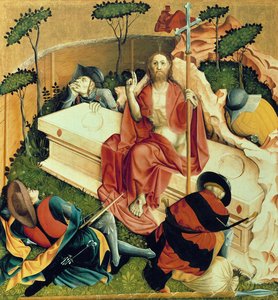
In the quiet intensity of Hans Multscher’s 1437 masterpiece, Christus before Pilate (detail), we are invited to witness one of the most profound confrontations in human history. This exquisite detail from the Wurzach Altar does not merely depict a biblical event; it captures the very breath held between two worlds: the eternal and the temporal. As Jesus Christ stands before the Roman governor, the canvas vibrates with the tension of a trial that would alter the course of civilization. Multscher, a pioneer of German realism, moves beyond the flat, symbolic gestures of the Gothic era to present a scene where every furrowed brow and heavy fold of fabric tells a story of spiritual weight and earthly consequence.
The artistry of this piece lies in its breathtaking commitment to Northern Renaissance Realism. Utilizing the delicate medium of oil paint on fir wood, Multscher achieved a level of textural nuance that was revolutionary for his time. One can almost feel the heavy, tactile quality of the garments worn by the gathered crowd—the rougher textures of commoners contrasted against the more refined attire of those in positions of authority. This meticulous attention to detail serves a higher purpose than mere decoration; it grounds the divine narrative in a palpable, physical reality, making the miraculous feel disturbingly present and human.
Symbolism and the Language of Light
Every element within this composition is imbued with deep theological significance, designed to guide the viewer toward spiritual contemplation. The central figure of Christ is marked by a subtle yet unmistakable halo, a luminous emblem of his divine nature that pierces through the surrounding earthly chaos. Around him, the faces of the onlookers form a mosaic of human emotion—fear, doubt, skepticism, and apprehension. These expressions serve as a mirror for the viewer's own soul, reflecting the universal struggle to recognize truth amidst the noise of worldly judgment.
The interplay of light and shadow, or chiaroscuro, plays a vital role in directing the narrative flow. Light falls upon Christ with a clarity that suggests an inner radiance, while the deeper shadows enveloping the periphery represent the uncertainty and moral ambiguity of Pilate’s court. For the collector or the interior designer, this painting offers more than just visual beauty; it provides a focal point of profound intellectual and emotional depth. It is a piece that commands attention, inviting long periods of study and reflection, making it an ideal centerpiece for spaces dedicated to thought, heritage, and the appreciation of fine classical art.
A Legacy of Faith and Humanism
To look upon this work is to step into the cultural heart of 15th-century Ulm. Created during a period of intense religious fervor and the burgeoning movement of Northern Humanism, Multscher’s work embodies the era's desire to find the sacred within the natural world. His travels through France and the Netherlands clearly left an indelible mark on his technique, allowing him to bring a sophisticated, international realism to the German landscape. This painting is not just a relic of the past; it is a living testament to the moment when art began to look more closely at the human condition.
Whether displayed in a private gallery or as a sophisticated element of a curated interior, a high-quality reproduction of this detail allows the timeless drama of Multscher’s vision to inhabit modern spaces. It brings with it an atmosphere of historical gravity and artistic excellence, offering anyone who appreciates the masters a window into a period where every brushstroke was an act of devotion.
Fragen & Antworten
Wie ist die Farbkomposition von "Christus before Pilate (detail)" von Hans Multscher aufgebaut?
Die Farbkomposition von "Christus before Pilate (detail)" von Hans Multscher vereint einen Statement Kontrast mit einer Softly Mixed Palette Harmonie.
Welche Atmosphäre vermittelt "Christus before Pilate (detail)"?
"Christus before Pilate (detail)" verströmt eine Dramatic Atmosphäre.
Was stellt "Christus before Pilate (detail)" dar?
"Christus before Pilate (detail)" von Hans Multscher zeigt: religious art, medieval painting, christian iconography, pilate trial, crucifixion scene, renaissance style, german sculpture.
Künstlerbiografie
Einführung in Hans Multscher
Hans Multscher, ein renommierter Maler und Bildhauer aus Deutschland, wurde um 1400 in Reichenhofen (heute Leutkirch im Allgäu) geboren. Er ist bekannt für seine außergewöhnliche Arbeit auf dem Gebiet der Kunst, insbesondere in den Regionen Nordfrankreich und den Niederlanden.Frühes Leben und Ausbildung
Multscher machte sich mit neuen künstlerischen Stilen aus Nordfrankreich und den Niederlanden vertraut, die seinen Werk einen bedeutenden Einfluss hatten. Im Jahr 1427 wurde er ein freier Bürger der Stadt Ulm, wo er Adelheid Kitzin heiratete. Er betrieb zusammen mit seinem Bruder Heinrich Multscher ein eigenes Unternehmen als Maler und Bildhauer.Wichtige Werke und Stilentwicklung
Zu seinen bemerkenswertesten Werken gehören Heilige Maria Magdalena, die sich heute im Liebieghaus in Frankfurt am Main befindet. Ein weiteres berühmtes Werk ist der Mann der Schmerzen, von dem eine Kopie im Ulmer Münster zu finden ist. Darüber hinaus kann man seine Gruppe der Kaiser am östlichen Fenster des Rathauses von Ulm sehen. Multschers Stil wird als typisch für die Spätgotik betrachtet, zeigt aber auch Einflüsse der beginnenden Renaissance. Seine Werke zeichnen sich durch eine realistische Darstellung und detaillierte Ausarbeitung aus, wobei er religiöse Themen bevorzugte.Museumsbestände und Vermächtnis
Die Gemäldegalerie Alte Meister in Dresden, Deutschland, ist ein weltbekanntes Museum, das eine beeindruckende Sammlung europäischer Gemälde vom 15. bis zum 18. Jahrhundert beherbergt. Für weitere Informationen über OriginalUniqueArts handbemalte Ölreproduktionen und Kunstdrucke auf Leinwand von der Gemäldegalerie Alte Meister besuchen Sie: https://OriginalUniqueArt.com/@@/9avdsj-painting-process--looking-over-the-artist’s-shoulder-–-2/2. Das Museum veranstaltet außerdem temporäre Ausstellungen und besondere Veranstaltungen im Laufe des Jahres, die Möglichkeiten bieten, seltene Werke zu sehen und mehr über die alten Meister zu erfahren. Hans Multschers Werk zeugt von seinem außergewöhnlichen Talent als Maler und Bildhauer. Seine Beiträge zur Kunstwelt inspirieren weiterhin Künstler und Kunstliebhaber gleichermaßen.- Für einen umfassenden Leitfaden zur Gemäldegalerie Alte Meister besuchen Sie: /de/art/show/art-d3b9x3-de/
- Erfahren Sie mehr über Hans Multschers Leben und Werk auf Wikipedia: https://en.wikipedia.org/wiki/hans_multscher
- Entdecken Sie die Kunst von Hans Multscher bei OriginalUniqueArt: https://OriginalUniqueArt.com/@/hans-multscher
Hans Multscher
1400 - 1467 , Deutschland
Kurzinfos
- Bemerkenswerte Kunstwerke:
- Heilige Maria Magdalena
- Man des Schmerzes
- Gruppe der Kaiser
- Geburtsdatum: um 1400
- Geburtsort (Stadt Und Land): Reichenbach im Baumes, Deutschland
- Künstlerische Bewegung Oder Stil: Spätgotik, Renaissance
- Museen Und Sammlungen: ['Gemäldegalerie Alte Meister']
- Nationalität: Deutsch
- Sterbedatum: 1467
- Vollständiger Name: Hans Multscher
Ähnliche Artikel

Öl auf Leinwand: Eine historische und technische Erkundung eines zeitlosen künstlerischen Mediums
Entdecken Sie die faszinierende Welt der Ölmalerei! Von historischen Techniken bis zur modernen Anwendung – wir bieten Expertenwissen, Restaurierungstipps und hochwertige Reproduktionen. Jetzt informieren!

The Enduring Power of Painting: A Historical & Contemporary Exploration of Form and Emotion
Explore the rich history & enduring techniques of oil painting with OriginalUniqueArt. Discover masterpieces, learn about art collecting, and find authentic handmade reproductions crafted by skilled artists.
The Northern Awakening: Artistic Innovation & Cultural Transformation in the German Renaissance
Explore the artistic innovation of the German Renaissance! Discover Dürer, the Danube School & Reformation art. Learn about techniques, materials & lasting influence. Find museum-quality reproductions at OriginalUniqueArt.
The Northern Renaissance: A Masterclass in Hyper-Realism, Oil Innovation, and Symbolic Depth
Explore the profound mastery of Northern Renaissance art. Discover the technical brilliance of Flemish oil painting, the intricate symbolism of Bosch and Bruegel, and the revolutionary realism that redefined European art history through an expert historical lens.

The Enduring Legacy of Oil on Canvas: Technique, History & Aesthetic Impact
Explore the rich history & techniques of oil painting – from Renaissance masters to Impressionism. Discover pigments, layering methods, and why this timeless medium endures. Expert insights for artists & art enthusiasts.


