In echtem Maßstab anzeigen
 Versenden als Grußkarte
 Teilen
 Details anzeigen
 Leitfaden öffnen

 Herunterladen
 Ähnliche Objekte
 Röntgenaufnahme
 Diashow
 Besucherstatistiken
Young Woman and Death
 Tempera On Panel
- WallArt
- Mannerism
 1517
1517- Renaissance
 15.0 x 30.0 cm
 Kunstmuseum Basel
 Mehr anzeigen
Giclée / Kunstdruck
Giclée- oder Leinwanddruck in Museumsqualität mit schneller Produktion und flexiblen Veredelungsoptionen. ( Handgemalte Reproduktion kaufen Zum digitalen Bild wechseln)




P118B $10

P118H $10

P118W $10

P438Z $10

P508JH $12

P508YH $12

P805H $10

P805Z $10

P919BZ $10

P919G $10

P919XJ $10

P959ZH $10

P968JZ $12

W106C $8

W218G $10

W218JH $8

W218Y $10

W307PJ $10

W316G $10

W316PJ $8

W316Y $10

W398PJ $8

W4111J $10

W500HY $15

W500JH $15

W692G $12

W849H $8

W940BG $15

W953PJ $8




Wählen Sie aus unseren vordefinierten Formaten, die den ursprünglichen Proportionen des Kunstwerks entsprechen.

Sie können Ihre eigenen Maße eingeben, um ein bestimmtes Format oder einen speziellen Platz einzupassen. Wenn das von Ihnen gewählte Format nicht den Proportionen des Originalbildes entspricht, werden wir das Kunstwerk entweder beschneiden oder das Bild mit einem gespiegelten oder einfarbigen Rand erweitern. Ein digitaler Entwurf wird Ihnen zur Genehmigung zugesandt, bevor die Produktion beginnt.
Bitte beachten Sie, dass die Vorschau auf dem Bildschirm nicht den tatsächlichen Zuschnitt oder die Erweiterung widerspiegelt. Nur der Entwurf zeigt die endgültige Komposition präzise an.
Obwohl Sondermaße verfügbar sind, empfehlen wir die Auswahl eines Maßes aus der vordefinierten Liste, um die ursprünglichen Proportionen zu bewahren.
Weltweiter Versand () innerhalb von 2 Wochen statt der üblichen 4/5 Wochen. (27 September)

Kostenloser weltweiter Expressversand

Hochwertige Leinenleinwand

Vollständiger Versicherungsschutz beim Versand

Zollgebühren-Rückerstattungsgarantie

Garantie für exakte Farbtreue

100-tägiges Rückgaberecht (nur bei Mängeln)

100% Geld-zurück-Garantie

Angebot für Mengenrabatt
 Die Glasoption ist nur für Größen unter 110 cm verfügbar.

Young Woman and Death
Giclée / Kunstdruck
Format der Reproduktion
-


Gesamtpreis
$ 80
A Haunting Encounter: The Intimacy of Mortality
In the quiet, shadowed corners of art history, few images possess the visceral, unsettling power of Hans Baldung’s 1517 masterpiece, Young Woman and Death. This painting is not merely a depiction of a scene; it is an immersive psychological experience that pulls the viewer into a claustrophobic embrace with the inevitable. At its heart, the work presents a striking, almost paradoxical intimacy: a beautiful young woman entwined with the skeletal personification of Death. There is no struggle here in the traditional sense, but rather a profound, heavy stillness—a moment frozen between the vitality of youth and the cold certainty of decay. The composition utilizes converging lines and subtle, masterful shading to draw the eye inward, creating a space that feels both deeply personal and cosmically significant.
For the discerning collector or lover of fine art, the emotional resonance of this piece lies in its ability to confront the viewer with the memento mori tradition. It serves as a poignant meditation on the precariousness of human existence, making it an ideal centerpiece for those who appreciate art that provokes deep thought and conversation. The way the figures are positioned defies conventional anatomical ease, opting instead for a stylized tension that heightens the sense of impending doom and spiritual transition.
Mastery of Mannerist Expression and Technique
To look closely at Baldung’s technique is to witness the brilliance of the Northern Renaissance transitioning into the expressive distortions of Mannerism. The artist rejects the serene, idealized beauty of his predecessors, choosing instead to employ a meticulous layering of oil paint on panel that builds an incredible sense of texture and depth. One can almost feel the weight of the pigments as they are applied in multiple layers, creating a surface that is both rich and ruggedly expressive. His brushstrokes, far from being hidden, contribute to an overall impression of deliberate imperfection—a stylistic choice that breathes life and raw emotion into the figures.
The color palette is a masterclass in dramatic contrast. Warm, earthy tones of ochre, gold, and deep reddish hues dominate the flesh of the young woman, suggesting warmth, blood, and life. These are sharply set against the stark, achromatic skeletal form and a dark, receding background. This use of directional lighting creates profound shadows that sculpt the musculature of the figures, lending them a sculptural presence. For interior designers seeking to add drama to a sophisticated space, the interplay of light and shadow in this work offers a timeless elegance that complements both classical and contemporary settings.
A Legacy of Symbolism and Historical Depth
Born from the intellectual ferment of the Reformation era in Basel, Switzerland, this painting is steeped in the spiritual anxieties of its time. The early 16th century was a period of immense social upheaval, where questions of faith, human psychology, and the afterlife were at the forefront of the European consciousness. Baldung Grien, a student of the legendary Albrecht Dürer, infused his work with this pervasive preoccupation with mortality. The embrace between the maiden and the skeleton can be interpreted through various lenses—as a symbol of lost love, the fleeting nature of beauty, or even an eroticized confrontation with the end of all earthly desires.
The symbolism is layered and complex, making every viewing a new discovery. The skeletal figure does not merely represent death as an external predator, but as an inescapable companion to the human condition. This profound depth ensures that a high-quality reproduction of Young Woman and Death remains more than just decoration; it becomes a window into the soul of the Renaissance. It is a piece designed for those who seek art that transcends the decorative, offering instead a hauntingly beautiful reflection on the very essence of what it means to be alive.
Biografie des Künstlers
Frühe Jahre und Ausbildung
Hans Baldung, ein deutscher Maler und Grafiker, wurde um 1484 in Schwäbisch Gmünd (damals eine freie Reichsstadt) geboren. Er war der erste Mann seiner Familie, der kein Universitätsstudium aufnahm, sondern sich stattdessen dem künstlerischen Beruf widmete. Seine Ausbildung begann gegen 1500 im Oberrheinland bei einem Straßburger Künstler.Meisterlehre bei Albrecht Dürer
Im Jahr 1503 wurde Hans Baldung Lehrling in der Werkstatt von Albrecht Dürer in Nürnberg. Diese Zeit hatte einen tiefgreifenden Einfluss auf seine künstlerische Entwicklung. Er eignete sich schnell Dürers Stil und Techniken an und die beiden wurden enge Freunde. Während Dürers zweiter Reise nach Venedig leitete Baldung dessen Werkstatt.Künstlerischer Stil und Themen
Hans Baldung entwickelte einen unverwechselbaren Stil, der sich durch Farbenreichtum, Ausdruckskraft und Vorstellungskraft auszeichnete. Seine Talente waren vielfältig, und er schuf eine große Bandbreite an Werken, darunter:- Porträts
- Holzschnitte
- Altarbilder
- Zeichnungen
- Tapestries
- Allegorien
- mythologische Motive
Hauptwerke und Vermächtnis
Viele von Hans Baldungs Gemälden sind kleinformatig und zeigen rätselhafte, oft erotische Allegorien und mythologische Szenen. Seine Arbeit am Hochaltar in Münster zeigt seine Unterstützung für die Reformation.Museen und Sammlungen
Die Gemäldegalerie Alte Meister in Deutschland beherbergt eine bedeutende Sammlung europäischer Gemälde aus dem 15. bis 18. Jahrhundert. Sie bietet einen Kontext für das Verständnis der Epoche, in der Baldung lebte und wirkte. erfahren Sie mehr über die Gemäldegalerie Alte Meister auf OriginalUniqueArtSchlussfolgerung
Hans Baldung Grien oder Grün bleibt eine bedeutende Figur in der deutschen Kunstgeschichte, dank seiner einzigartigen Mischung aus Farbe, Ausdruckskraft und Vorstellungskraft. Seine Auseinandersetzung mit Themen wie Hexerei und dem Übernatürlichen verleiht seinem Werk eine faszinierende Dimension.
Hans Baldung
1485 - 1545 , Deutschland
Eckdaten zum Künstler
- Beeinflusste Künstler: ['Albrecht Dürer']
- Bemerkenswerte Werke:
- Tod und die Weise
- Grien Johannes auf Patmos
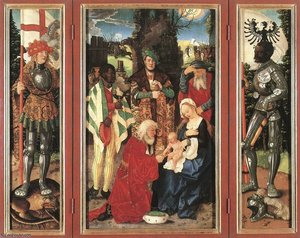
- Dreikönigsaltar (offen)
- Geburtsdatum: ca. 1484
- Geburtsort: Schwäbisch Gmünd, Deutschland
- Künstlerische Bewegung: Deutsche Renaissance
- Nationalität: Deutsch
- Todatum: 1545
- Vollständiger Name: Hans Baldung Grien
Verwandte Artikel
Die 10 Meisterwerke der Nordischen Renaissance: Kunst für Ihr Zuhause |
Entdecken Sie die 10 prägendsten Meisterwerke der Nordischen Renaissance! Von Jan van Eyck bis Dürer – Kunstgeschichte, Techniken & Geschichten. Hochwertige Reproduktionen für Ihr Zuhause auf
Hans Baldung Grien: Allegorie, Innovation und das Groteske – Ein Renaissance-Meister zwischen Reformation und Mystik
Entdecken Sie das faszinierende Werk von Hans Baldung Grien! Analysieren Sie mit uns die allegorischen Gemälde, grotesken Motive und den einzigartigen Stil dieses Renaissance-Meisters. Expertenwissen zur deutschen Kunstgeschichte.

Hans Holbein der Jüngere: Realismus, Psychologie und die Meisterschaft des Renaissance-Porträts
Entdecken Sie das Werk von Hans Holbein dem Jüngeren! Erfahren Sie mehr über seinen revolutionären Realismus, die psychologische Tiefe seiner Porträts und seine Meistertechnik. Jetzt lesen!
Hans von Aachen: Mannerism's Courtly Visionary & Imperial Portraiture
Explore the captivating world of Hans von Aachen, a leading Mannerist painter renowned for his exquisite imperial portraits & mythological scenes. Discover his legacy and influence on 16th-century European art.

Timeless Innocence: An Expert Exploration of the Most Iconic Portraits of Young Girls in Art History
Journey through art history with an expert exploration of iconic portraits of young girls. From Mary Cassatt to Renoir, uncover the profound beauty of childhood in art. Discover museum-quality, hand-painted oil reproductions and bespoke commissions for the discerning collector.