In echtem Maßstab anzeigen
 Versenden als Grußkarte
 Teilen
 Details anzeigen
 Leitfaden öffnen

 Herunterladen
 Ähnliche Objekte
 Röntgenaufnahme
 Diashow
 Besucherstatistiken
Three Ages of Man


 Mehr anzeigen
Giclée / Kunstdruck
Giclée- oder Leinwanddruck in Museumsqualität mit schneller Produktion und flexiblen Veredelungsoptionen. ( Handgemalte Reproduktion kaufen Zum digitalen Bild wechseln)




P118B $10

P118H $10

P118W $10

P438Z $10

P508JH $12

P508YH $12

P805H $10

P805Z $10

P919BZ $10

P919G $10

P919XJ $10

P959ZH $10

P968JZ $12

W106C $8

W218G $10

W218JH $8

W218Y $10

W307PJ $10

W316G $10

W316PJ $8

W316Y $10

W398PJ $8

W4111J $10

W500HY $15

W500JH $15

W692G $12

W849H $8

W940BG $15

W953PJ $8




Wählen Sie aus unseren vordefinierten Formaten, die den ursprünglichen Proportionen des Kunstwerks entsprechen.

Sie können Ihre eigenen Maße eingeben, um ein bestimmtes Format oder einen speziellen Platz einzupassen. Wenn das von Ihnen gewählte Format nicht den Proportionen des Originalbildes entspricht, werden wir das Kunstwerk entweder beschneiden oder das Bild mit einem gespiegelten oder einfarbigen Rand erweitern. Ein digitaler Entwurf wird Ihnen zur Genehmigung zugesandt, bevor die Produktion beginnt.
Bitte beachten Sie, dass die Vorschau auf dem Bildschirm nicht den tatsächlichen Zuschnitt oder die Erweiterung widerspiegelt. Nur der Entwurf zeigt die endgültige Komposition präzise an.
Obwohl Sondermaße verfügbar sind, empfehlen wir die Auswahl eines Maßes aus der vordefinierten Liste, um die ursprünglichen Proportionen zu bewahren.
Weltweiter Versand () innerhalb von 2 Wochen statt der üblichen 4/5 Wochen. (25 September)

Kostenloser weltweiter Expressversand

Hochwertige Leinenleinwand

Vollständiger Versicherungsschutz beim Versand

Zollgebühren-Rückerstattungsgarantie

Garantie für exakte Farbtreue

100-tägiges Rückgaberecht (nur bei Mängeln)

100% Geld-zurück-Garantie

Angebot für Mengenrabatt
 Die Glasoption ist nur für Größen unter 110 cm verfügbar.

Three Ages of Man
Giclée / Kunstdruck
Format der Reproduktion
-


Gesamtpreis
$ 80
The Eternal Cycle: A Journey Through Hans Baldung's Three Ages of Man
In the profound depths of the Northern Renaissance, few artists possessed the ability to weave the threads of mortality and human experience as masterfully as Hans Baldung. His painting, "Three Ages of Man," stands as a hauntingly beautiful meditation on the inevitable passage of time. Through a composition that is both intimate and universal, Baldung invites the viewer into a silent dialogue with the self, presenting three naked figures that represent the fundamental stages of human existence: childhood, adulthood, and old age. There is an undeniable vulnerability in these figures, stripped of all worldly status, leaving only the raw essence of life as it unfolds from the first breath to the twilight years.
The artist’s technique serves to heighten this emotional resonance. A student of the legendary Albrecht Dürer, Baldung utilized a style characterized by vivid, saturated colors and an expressive anatomical precision that bridges the gap between stark realism and the ethereal realms of imagination. Each figure is meticulously rendered with distinct physical characteristics—the soft, unformed potential of the infant, the robust vitality of the adult, and the weathered, fragile dignity of the elderly. This careful attention to detail ensures that the viewer does not merely observe a painting, but witnesses a biological and spiritual progression that feels deeply personal.
Symbolism and the Memento Mori
Beyond the central figures, Baldung embeds a rich tapestry of symbolism that transforms the canvas into a complex allegory. The composition is punctuated by objects that act as silent narrators of our fleeting existence. A bird perched delicately on the left side introduces a touch of the natural world, perhaps representing the lightness of youth or the soul's flight. Near the center, a clock serves as a poignant memento mori, its steady movement a rhythmic reminder that time is an unstoppable force, consuming all things in its path. The presence of two swords, positioned with strategic weight towards the middle and right, introduces themes of strength, protection, and the inevitable conflicts faced throughout one's journey.
This interplay of symbols creates a profound psychological depth. For the collector or the art enthusiast, the painting offers more than mere aesthetic pleasure; it provides a space for contemplation on the human condition. The tension between the vitality of the flesh and the encroaching shadow of mortality is palpable, making the work an enduring masterpiece of German Renaissance thought. It is a piece that does not just decorate a room but commands the spirit, prompting reflections on legacy, memory, and the beauty found within the transient nature of life.
A Timeless Addition to the Curated Space
For interior designers and connoisseurs of fine art, "Three Ages of Man" represents an unparalleled opportunity to introduce a sense of historical gravity and intellectual depth into a collection. Whether placed in a quiet study, a grand gallery, or a thoughtfully designed living space, this work acts as a focal point that sparks conversation and evokes emotion. The dramatic interplay of light and shadow, combined with the profound thematic weight, makes it an ideal centerpiece for those seeking to curate environments that are both sophisticated and soulful.
Owning a high-quality, hand-painted reproduction of this masterpiece allows one to bring the legacy of the Northern Renaissance into the modern era. These meticulous recreations capture the very essence of Baldung’s brushwork—the expressive textures, the nuanced skin tones, and the symbolic complexity—ensuring that the emotional impact of the original is preserved. To display such a work is to celebrate the enduring power of art to capture the infinite within the finite, making it a profound investment for any lover of classical beauty.
Biografie des Künstlers
Frühe Jahre und Ausbildung
Hans Baldung, ein deutscher Maler und Grafiker, wurde um 1484 in Schwäbisch Gmünd (damals eine freie Reichsstadt) geboren. Er war der erste Mann seiner Familie, der kein Universitätsstudium aufnahm, sondern sich stattdessen dem künstlerischen Beruf widmete. Seine Ausbildung begann gegen 1500 im Oberrheinland bei einem Straßburger Künstler.Meisterlehre bei Albrecht Dürer
Im Jahr 1503 wurde Hans Baldung Lehrling in der Werkstatt von Albrecht Dürer in Nürnberg. Diese Zeit hatte einen tiefgreifenden Einfluss auf seine künstlerische Entwicklung. Er eignete sich schnell Dürers Stil und Techniken an und die beiden wurden enge Freunde. Während Dürers zweiter Reise nach Venedig leitete Baldung dessen Werkstatt.Künstlerischer Stil und Themen
Hans Baldung entwickelte einen unverwechselbaren Stil, der sich durch Farbenreichtum, Ausdruckskraft und Vorstellungskraft auszeichnete. Seine Talente waren vielfältig, und er schuf eine große Bandbreite an Werken, darunter:- Porträts
- Holzschnitte
- Altarbilder
- Zeichnungen
- Tapestries
- Allegorien
- mythologische Motive
Hauptwerke und Vermächtnis
Viele von Hans Baldungs Gemälden sind kleinformatig und zeigen rätselhafte, oft erotische Allegorien und mythologische Szenen. Seine Arbeit am Hochaltar in Münster zeigt seine Unterstützung für die Reformation.Museen und Sammlungen
Die Gemäldegalerie Alte Meister in Deutschland beherbergt eine bedeutende Sammlung europäischer Gemälde aus dem 15. bis 18. Jahrhundert. Sie bietet einen Kontext für das Verständnis der Epoche, in der Baldung lebte und wirkte. erfahren Sie mehr über die Gemäldegalerie Alte Meister auf OriginalUniqueArtSchlussfolgerung
Hans Baldung Grien oder Grün bleibt eine bedeutende Figur in der deutschen Kunstgeschichte, dank seiner einzigartigen Mischung aus Farbe, Ausdruckskraft und Vorstellungskraft. Seine Auseinandersetzung mit Themen wie Hexerei und dem Übernatürlichen verleiht seinem Werk eine faszinierende Dimension.
Hans Baldung
1485 - 1545 , Deutschland
Eckdaten zum Künstler
- Beeinflusste Künstler: ['Albrecht Dürer']
- Bemerkenswerte Werke:
- Tod und die Weise
- Grien Johannes auf Patmos
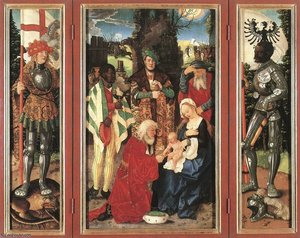
- Dreikönigsaltar (offen)
- Geburtsdatum: ca. 1484
- Geburtsort: Schwäbisch Gmünd, Deutschland
- Künstlerische Bewegung: Deutsche Renaissance
- Nationalität: Deutsch
- Todatum: 1545
- Vollständiger Name: Hans Baldung Grien
Verwandte Artikel

Golden Age Reflections: Dutch Baroque Painting & Cultural Innovation
Explore the Dutch Golden Age of painting! Discover key artists like Vermeer & ter Borch, their innovative techniques, and the rich cultural context behind these Baroque masterpieces. Learn about collecting & appreciating this iconic art period.

Die 10 Meisterwerke des Goldenen Zeitalters der niederländischen Malerei |
Entdecken Sie die 10 Meisterwerke des Niederländischen Goldenen Zeitalters! Von Rembrandt bis Vermeer – erleben Sie Kunstgeschichte, Techniken & Emotionen. Hochwertige Gemäldereproduktionen für Ihr Zuhause auf .
The Gilded Age Revisited: Art Deco's Modernity & Luxury
Explore the captivating world of Art Deco paintings & the Gilded Age's enduring legacy. Discover iconic artists like Tamara de Lempicka & invest in museum-quality reproductions with OriginalUniqueArt.
Fernand Léger: Die 25 Meisterwerke des Kubismus für Ihr Zuhause | OriginalUniqueArt
Entdecken Sie die 25 Meisterwerke von Fernand Léger! Tauchen Sie ein in die Welt des Kubismus, Tubismus & der Avantgarde. Hochwertige Kunstreproduktionen für Ihr Zuhause – jetzt auf OriginalUniqueArt.com!
Hans Baldung Grien: Allegorie, Innovation und das Groteske – Ein Renaissance-Meister zwischen Reformation und Mystik
Entdecken Sie das faszinierende Werk von Hans Baldung Grien! Analysieren Sie mit uns die allegorischen Gemälde, grotesken Motive und den einzigartigen Stil dieses Renaissance-Meisters. Expertenwissen zur deutschen Kunstgeschichte.