Vorschau anzeigen
 Versenden
 Teilen
 Details anzeigen

 Herunterladen
 Ähnliche Objekte
 Röntgenaufnahme
 Diashow
 Statistiken
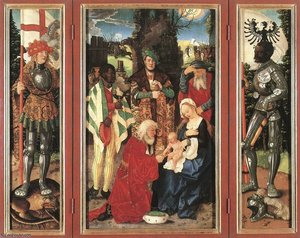
Nativity
 Oil On Panel
- German Renaissance
 1510
1510- Renaissance
 125.0 x 166.0 cm
 Weiterlesen
Handgefertigte Ölreproduktion
Handgemaltes Ölgemälde auf Leinwand in Ihrer Wunschgröße und mit Rahmen, auf Bestellung von unseren Künstlern angefertigt. ( Zu Druck wechseln Zum digitalen Bild wechseln)




P118B $10

P118H $10

P118W $10

P438Z $10

P508JH $12

P508YH $12

P805H $10

P805Z $10

P919BZ $10

P919G $10

P919XJ $10

P959ZH $10

P968JZ $12

W106C $8

W218G $10

W218JH $8

W218Y $10

W307PJ $10

W316G $10

W316PJ $8

W316Y $10

W398PJ $8

W4111J $10

W500HY $15

W500JH $15

W692G $12

W849H $8

W940BG $15

W953PJ $8




Wählen Sie aus unseren vordefinierten Formaten, die den ursprünglichen Proportionen des Kunstwerks entsprechen.

Sie können Ihre eigenen Maße eingeben, um einen bestimmten Rahmen oder Platz auszufüllen. Wenn die gewählte Größe nicht den Proportionen des Originalbildes entspricht, werden wir das Kunstwerk entweder beschneiden oder das Gemälde durch zusätzliche, handgemalte Elemente erweitern. Ein digitales Mockup wird Ihnen zur Genehmigung zugesandt, bevor die Produktion beginnt.
Bitte beachten Sie, dass die Bildschirmvorschau nicht die tatsächliche Beschneidung oder Erweiterung widerspiegelt. Nur das Mockup zeigt die endgültige Komposition exakt an.
Obwohl Sondermaße verfügbar sind, empfehlen wir, eine Größe aus der vordefinierten Liste zu wählen, um die ursprünglichen Proportionen beizubehalten.
Nach der Bestellung wird das OriginalUniqueArt.com-Team dem Kunden Anweisungen per E-Mail zusenden und eine Mockup-Vorschau bereitstellen.
Weltweiter Versand () in nur 3 bis 4 Wochen statt der üblichen 5 Wochen. (12 September). Keine Kompromisse bei der Qualität.

Kostenloser weltweiter Expressversand

Hochwertige Leinenleinwand

Umfassender Versicherungsschutz beim Versand

Zollgebühren-Rückerstattungsgarantie

Garantie für exakte Farbtreue

100-Tage-Rückgaberecht (nur bei Mängeln)

100% Geld-zurück-Garantie

Mengenrabatt verfügbar
 Die Glasoption ist nur für Größen unter 110 cm verfügbar.

Nativity
Art der Reproduktion
Format der Reproduktion
-


Gesamtpreis
$ 300
A Divine Encounter in the German Renaissance
In the quiet, evocative depths of Hans Baldung’s Nativity, painted around 1510, we are invited into a moment of profound stillness and sacred intimacy. This masterpiece serves as a window into the soul of the German Renaissance, capturing the tender arrival of Christ with a level of detail that transcends mere religious iconography. The composition centers on the Virgin Mary, whose gentle strength is palpable as she cradles the infant Jesus. Beside her stands Joseph, a silent guardian in this holy tableau. The scene is not merely a depiction of a biblical event but an immersive atmosphere where the divine intersects with the earthly, rendered through Baldung’s masterful command of light and form.
The artist, often known as Hans Baldung Grien, brings a unique, almost enigmatic energy to this sacred subject. While many of his contemporaries focused on rigid, formal compositions, Baldung infuses this work with a sense of living, breathing reality. The presence of the surrounding figures—witnesses to the miracle—alongside a menagerie of animals creates a tapestry of life that feels both humble and monumental. A cow rests on the periphery, a horse stands near the center, and a small sheep huddles in the corner, each element contributing to a sense of cosmic harmony. Even the birds, one soaring above and another perched quietly, suggest that all of creation is in attendance at this celestial birth.
Symbolism and the Texture of Devotion
Every brushstroke in this work serves a narrative purpose, weaving together symbols of peace, humility, and the cycle of life. The brick wall in the background provides a grounded, architectural stability to the scene, contrasting with the ethereal nature of the holy family. This juxtaposition of the permanent, man-made structure against the fleeting, miraculous moment of birth invites the viewer to contemplate the eternal within the temporal. The inclusion of various animals is not merely decorative; it represents the universality of the Nativity, suggesting that the message of Christ extends to every living creature on earth.
For the discerning collector or interior designer, this painting offers more than just visual beauty; it provides a profound emotional anchor. The technique employed by Baldung—likely utilizing the rich, layered possibilities of oil on wood—allows for a subtle play of shadows and highlights that gives the figures a sculptural presence. This depth creates an incredible sense of movement within a static scene, making the artwork feel as though it is breathing alongside the viewer. It is a piece that demands contemplation, offering a sanctuary of peace in any curated space.
A Timeless Addition to the Sophisticated Collection
Owning a high-quality reproduction of this Nativity means bringing a piece of German art history into the modern home. The painting’s palette and composition are remarkably versatile, capable of anchoring a traditional gallery wall or serving as a soulful focal point in a contemporary, minimalist setting. Its ability to evoke feelings of warmth, reverence, and quietude makes it an ideal choice for those looking to infuse their environment with a sense of historical weight and spiritual grace.
As we look back at the legacy of Hans Baldung, we see an artist who could navigate the complexities of the Reformation era while maintaining a deep connection to the emotive power of religious art. This Nativity stands as a testament to his ability to blend the scholarly precision of his lineage with a raw, expressive passion. To display this work is to celebrate the enduring power of the human spirit and the timeless beauty of the Renaissance masters.
Über den Künstler
Frühe Jahre und Ausbildung
Hans Baldung, ein deutscher Maler und Grafiker, wurde um 1484 in Schwäbisch Gmünd (damals eine freie Reichsstadt) geboren. Er war der erste Mann seiner Familie, der kein Universitätsstudium aufnahm, sondern sich stattdessen dem künstlerischen Beruf widmete. Seine Ausbildung begann gegen 1500 im Oberrheinland bei einem Straßburger Künstler.Meisterlehre bei Albrecht Dürer
Im Jahr 1503 wurde Hans Baldung Lehrling in der Werkstatt von Albrecht Dürer in Nürnberg. Diese Zeit hatte einen tiefgreifenden Einfluss auf seine künstlerische Entwicklung. Er eignete sich schnell Dürers Stil und Techniken an und die beiden wurden enge Freunde. Während Dürers zweiter Reise nach Venedig leitete Baldung dessen Werkstatt.Künstlerischer Stil und Themen
Hans Baldung entwickelte einen unverwechselbaren Stil, der sich durch Farbenreichtum, Ausdruckskraft und Vorstellungskraft auszeichnete. Seine Talente waren vielfältig, und er schuf eine große Bandbreite an Werken, darunter:- Porträts
- Holzschnitte
- Altarbilder
- Zeichnungen
- Tapestries
- Allegorien
- mythologische Motive
Hauptwerke und Vermächtnis
Viele von Hans Baldungs Gemälden sind kleinformatig und zeigen rätselhafte, oft erotische Allegorien und mythologische Szenen. Seine Arbeit am Hochaltar in Münster zeigt seine Unterstützung für die Reformation.Museen und Sammlungen
Die Gemäldegalerie Alte Meister in Deutschland beherbergt eine bedeutende Sammlung europäischer Gemälde aus dem 15. bis 18. Jahrhundert. Sie bietet einen Kontext für das Verständnis der Epoche, in der Baldung lebte und wirkte. erfahren Sie mehr über die Gemäldegalerie Alte Meister auf OriginalUniqueArtSchlussfolgerung
Hans Baldung Grien oder Grün bleibt eine bedeutende Figur in der deutschen Kunstgeschichte, dank seiner einzigartigen Mischung aus Farbe, Ausdruckskraft und Vorstellungskraft. Seine Auseinandersetzung mit Themen wie Hexerei und dem Übernatürlichen verleiht seinem Werk eine faszinierende Dimension.
Hans Baldung
1485 - 1545 , Deutschland
Kurzinfos
- Beeinflusste Künstler: ['Albrecht Dürer']
- Bemerkenswerte Werke:
- Tod und die Weise
- Grien Johannes auf Patmos
- Dreikönigsaltar (offen)
- Geburtsdatum: ca. 1484
- Geburtsort: Schwäbisch Gmünd, Deutschland
- Künstlerische Bewegung: Deutsche Renaissance
- Nationalität: Deutsch
- Todatum: 1545
- Vollständiger Name: Hans Baldung Grien
Ähnliche Artikel
Jacob Henricus Maris: Meister des niederländischen Stimmungsrealismus und der intimen Landschaft
Entdecken Sie das Werk von Jacob Henricus Maris, einem Meister des niederländischen Stimmungsrealismus! Erfahren Sie mehr über seine Landschaftsmalerei, Einflüsse und berühmte Gemälde. Jetzt lesen & inspirieren lassen!

Deutsche Expressionismus Meisterwerke: Die 10 wichtigsten Kunstwerke für Ihr Zuhause
Entdecken Sie die 10 bedeutendsten Werke des Deutschen Expressionismus! Kirchner, Nolde & Co. – ihre Geschichten, Techniken und zeitlose Schönheit. Hochwertige Kunstdrucke auf OriginalUniqueArt.com kaufen und Ihr Zuhause mit emotionaler Kunst bereichern. Jetzt entdecken!
The Northern Awakening: Artistic Innovation & Cultural Transformation in the German Renaissance
Explore the artistic innovation of the German Renaissance! Discover Dürer, the Danube School & Reformation art. Learn about techniques, materials & lasting influence. Find museum-quality reproductions at OriginalUniqueArt.
Hans Baldung Grien: Allegorie, Innovation und das Groteske – Ein Renaissance-Meister zwischen Reformation und Mystik
Entdecken Sie das faszinierende Werk von Hans Baldung Grien! Analysieren Sie mit uns die allegorischen Gemälde, grotesken Motive und den einzigartigen Stil dieses Renaissance-Meisters. Expertenwissen zur deutschen Kunstgeschichte.

Sacred Narratives Embodied: A Comprehensive Exploration of Religious Iconography in Art History
Explore the rich history of religious iconography in art! Discover symbolism, movements & masterpieces from Byzantine to Renaissance periods. Expert insights for collectors and enthusiasts at OriginalUniqueArt.