Vorschau anzeigen
 Versenden
 Teilen
 Details anzeigen

 Herunterladen
 Ähnliche Objekte
 Röntgenaufnahme
 Diashow
The Canoes
 Oil On Canvas
- WallArt
- Impressionist Style
 1878
1878- 19th Century
 156.0 x 109.0 cm
 Weiterlesen
Handgefertigte Ölreproduktion
Handgemaltes Ölgemälde auf Leinwand in Ihrer Wunschgröße und mit Rahmen, auf Bestellung von unseren Künstlern angefertigt. ( Druck bestellen Bild kaufen)




P118B $10

P118H $10

P118W $10

P438Z $10

P508JH $12

P508YH $12

P805H $10

P805Z $10

P919BZ $10

P919G $10

P919XJ $10

P959ZH $10

P968JZ $12

W106C $8

W218G $10

W218JH $8

W218Y $10

W307PJ $10

W316G $10

W316PJ $8

W316Y $10

W398PJ $8

W4111J $10

W500HY $15

W500JH $15

W692G $12

W849H $8

W940BG $15

W953PJ $8




Wählen Sie aus unseren vordefinierten Formaten, die den ursprünglichen Proportionen des Kunstwerks entsprechen.

Sie können Ihre eigenen Maße eingeben, um einen bestimmten Rahmen oder Platz auszufüllen. Wenn die gewählte Größe nicht den Proportionen des Originalbildes entspricht, werden wir das Kunstwerk entweder beschneiden oder das Gemälde durch zusätzliche, handgemalte Elemente erweitern. Ein digitales Mockup wird Ihnen zur Genehmigung zugesandt, bevor die Produktion beginnt.
Bitte beachten Sie, dass die Bildschirmvorschau nicht die tatsächliche Beschneidung oder Erweiterung widerspiegelt. Nur das Mockup zeigt die endgültige Komposition exakt an.
Obwohl Sondermaße verfügbar sind, empfehlen wir, eine Größe aus der vordefinierten Liste zu wählen, um die ursprünglichen Proportionen beizubehalten.
Nach der Bestellung wird das OriginalUniqueArt.com-Team dem Kunden Anweisungen per E-Mail zusenden und eine Mockup-Vorschau bereitstellen.
Weltweiter Versand () in nur 3 bis 4 Wochen statt der üblichen 5 Wochen. (18 August). Keine Kompromisse bei der Qualität.

Kostenloser weltweiter Expressversand

Hochwertige Leinenleinwand

Umfassender Versicherungsschutz beim Versand

Zollgebühren-Rückerstattungsgarantie

Garantie für exakte Farbtreue

60 Tage Rückgaberecht (nur bei Mängeln)

100% Geld-zurück-Garantie

Mengenrabatt verfügbar
 Die Glasoption ist nur für Größen unter 110 cm verfügbar.

The Canoes
Art der Reproduktion
Format der Reproduktion
-


Gesamtpreis
$ 300
Beschreibung des Kunstwerks
A Moment of Tranquility: Caillebotte's "The Canoes"
Gustave Caillebotte’s “The Canoes,” painted in 1878, is more than just a depiction of two men navigating a tranquil waterway; it’s a carefully constructed tableau that embodies the burgeoning Impressionist movement and captures a fleeting moment of quiet contemplation within the rapidly changing landscape of late 19th-century Paris. Measuring 156 x 109 cm, this oil on canvas work invites viewers into a world where light and atmosphere hold as much significance as the subjects themselves.
- Subject Matter: The painting centers around two men engaged in a simple activity – canoeing – a scene remarkably ordinary yet imbued with an extraordinary sense of serenity.
- Impressionist Technique: Caillebotte’s masterful use of broken brushstrokes and vibrant color reflects the core tenets of Impressionism, prioritizing the immediate sensation of light and its effect on form rather than meticulous detail.
- Composition: The composition is deliberately balanced, drawing the eye across the canvas with a subtle diagonal created by the canoes' movement and the implied flow of the water.
The Artist’s Vision: Caillebotte and the Rise of Impressionism
Gustave Caillebotte (1848-1894) emerged as a pivotal figure in the Parisian art scene, profoundly influenced by both his privileged upbringing and his keen observation of modern life. Born into a wealthy family involved in the textile trade, he possessed the financial freedom to pursue his artistic passions without the constraints of commercial necessity. This afforded him access to exceptional training – initially under Léon Bonnat – and, crucially, an early fascination with photography. As you can see from the painting, Caillebotte’s exposure to photographic techniques—particularly its ability to capture fleeting moments and precise perspectives—directly shaped his artistic approach. He wasn't simply painting what he saw; he was meticulously constructing a visual experience, much like a photographer composing a shot.
His work reflects the anxieties and excitement of a city undergoing rapid transformation – industrialization, urbanization, and the rise of new social classes. “The Canoes” can be interpreted as a quiet resistance to this upheaval, a yearning for simplicity and connection with nature within the heart of a bustling metropolis.
Decoding the Details: Light, Color, and Symbolism
Caillebotte’s palette is dominated by muted greens, blues, and browns, creating an atmosphere of cool tranquility. The artist skillfully employs light to model the canoes and the figures, suggesting movement and depth through subtle variations in tone and color. Note the way the sunlight glints off the water's surface – a hallmark of Impressionist technique. The inclusion of a bird soaring above adds a layer of symbolic richness, representing freedom, aspiration, or perhaps a connection to the natural world amidst the urban environment.
- Color Palette: Muted greens, blues, and browns evoke tranquility and reflect the natural setting.
- Light & Shadow: Caillebotte’s use of light creates depth and suggests movement within the scene.
- Symbolism: The bird adds a layer of meaning, potentially representing freedom or connection to nature.
A Legacy of Impressionistic Beauty
"The Canoes" stands as a testament to Gustave Caillebotte’s artistic vision and his pivotal role in the development of Impressionism. This painting is not merely a beautiful image; it's an invitation to pause, reflect, and appreciate the subtle beauty of everyday moments – a timeless message that continues to resonate with art lovers today. Its meticulous detail and masterful execution make it a superb subject for a hand-painted reproduction, allowing you to bring this serene scene into your own space.
Über den Künstler
Frühes Leben und Ausbildung
Gustave Caillebotte, ein französischer Maler, wurde am 19. August 1848 in Paris aus einer wohlhabenden Familie geboren. Sein Vater, Martial Caillebotte, war Erbe der Familienfirma für Militärtuchstoffe und diente auch als Richter am Tribunal de Commerce des Départements Seine. Gustave’s frühes Interesse an Fotografie als Kunstform beeinflusste später seinen Malstil.Künstlerische Karriere
Gustave erwarb 1868 einen Jurabachelor und 1870 eine Zulassung zur Rechtsausübung, doch seine wahre Leidenschaft galt der Kunst. Er begann, das Atelier des Malers Léon Bonnat zu besuchen, wo er ernsthaft Malerei studierte. Caillebotte’s Stil, der durch seinen Realismus gekennzeichnet ist, wurde von seinen impressionistischen Kollegen beeinflusst, darunter Edgar Degas und Giuseppe de Nittis.Bemerkenswerte Werke und Stil
- Les Raboteurs de Parquet (Die Bodenabroller) (1875): Dieses frühe Meisterwerk, das sich heute im Musée d'Orsay befindet, zeigt Caillebotte’s einzigartige Mischung aus Realismus und impressionistischen Einflüssen.
- Vue de toits (Effet de neige) (Aussicht auf Dächer (Schneeeffekt)) (1878): Demonstriert seine Verwendung von erhöhten Perspektiven, eine Technik, die möglicherweise durch japanische Drucke und Fotografie beeinflusst wurde.
Vermächtnis und Einfluss
Caillebotte’s Stil, obwohl Teil der Schule des Realismus, wurde stark von seinen impressionistischen Kollegen beeinflusst. Seine Werke zeichnen sich durch eine präzise Beobachtungsgabe und eine detailgetreue Wiedergabe der Wirklichkeit aus. Er trug dazu bei, die Wahrnehmung des Alltagslebens in der Kunst zu verändern und neue Wege der Darstellung urbaner Szenen aufzuzeigen. Obwohl er zu Lebzeiten nicht immer Anerkennung fand, wird Caillebotte heute als ein bedeutender Vertreter des Impressionismus und Realismus gewürdigt.Weitere Werke
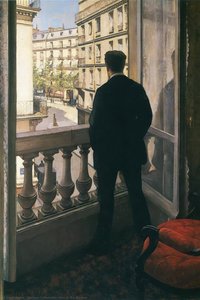
- Mann am Fenster (1875)
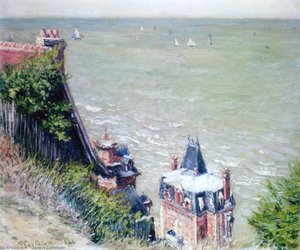
- Pink Villas at Trouville (1884)
- Pariser Straße, Regentag

Gustave Caillebotte
1848 - 1894 , Frankreich
Kurzinfos
- Beeinflusste Künstler:
- Edgar Degas
- Giuseppe De Nittis
- Bemerkenswerte Werke:
- Les Raboteurs de Parquet
- Vue de toits (Effet de neige)
- Boulevard vu d'en haut
- Geburtsdatum: 19. August 1848
- Geburtsort: Paris, Frankreich
- Künstlerische Richtung: Realismus, Impressionismus
- Nationalität: Französisch
- Sterbedatum: 1894
- Vollständiger Name: Gustave Caillebotte
Ähnliche Artikel
The Soul of Impressionism: Why Oil on Canvas Captures Eternal Light and Timeless Emotion
Discover the enchanting alchemy of Impressionism. Explore how the mastery of oil on canvas, through glazing and impasto, captures eternal light and emotion. Perfect for lovers of Monet and Van Gogh seeking the profound depth of hand-painted fine art.

The Enduring Legacy of Oil on Canvas: Technique, History & Aesthetic Impact
Explore the rich history & techniques of oil painting – from Renaissance masters to Impressionism. Discover pigments, layering methods, and why this timeless medium endures. Expert insights for artists & art enthusiasts.

Öl auf Leinwand: Eine historische und technische Erkundung eines zeitlosen künstlerischen Mediums
Entdecken Sie die faszinierende Welt der Ölmalerei! Von historischen Techniken bis zur modernen Anwendung – wir bieten Expertenwissen, Restaurierungstipps und hochwertige Reproduktionen. Jetzt informieren!

Das bleibende Erbe der Ölmalerei: Technik, Geschichte und zeitgenössische Praxis
Entdecken Sie die faszinierende Geschichte der Ölmalerei – von den frühen Techniken bis zur modernen Kunst. Expertenwissen, detaillierte Analysen und Inspiration für Sammler & Kunstliebhaber.
Öl auf Leinwand: Die 10 Meisterwerke, die Kunst für immer veränderten |
Entdecken Sie die 10 legendärsten Öl auf Leinwand Meisterwerke! Von Van Gogh bis Monet – erfahren Sie die Geschichten hinter ikonischen Gemälden und lassen Sie sich von Kunstgeschichte inspirieren. Hochwertige Reproduktionen für Ihr Zuhause finden Sie auf .