- Startseite

- Auf Leinwand drucken
- Gustav Klimt
- Dame mit Kapuze

 Preview
 Versenden
 Teilen
 Details anzeigen

 Herunterladen
 Ähnliche Objekte
 Röntgenaufnahme
 Diashow anzeigen
Dame mit Kapuze


 Weiterlesen
Giclée / Kunstdruck
Giclée- oder Leinwanddruck in Museumsqualität mit schneller Produktion und flexiblen Veredelungsoptionen. ( Switch to hand made Painting Switch to Image)




P118B $10

P118H $10

P118W $10

P438Z $10

P508JH $12

P508YH $12

P805H $10

P805Z $10

P919BZ $10

P919G $10

P919XJ $10

P959ZH $10

P968JZ $12

W106C $8

W218G $10

W218JH $8

W218Y $10

W307PJ $10

W316G $10

W316PJ $8

W316Y $10

W398PJ $8

W4111J $10

W500HY $15

W500JH $15

W692G $12

W849H $8

W940BG $15

W953PJ $8




Wählen Sie aus unseren vordefinierten Größen, die den ursprünglichen Proportionen des Kunstwerks entsprechen.

Sie können Ihre eigenen Maße eingeben, um ein bestimmtes Format oder einen speziellen Platz einzupassen. Wenn das von Ihnen gewählte Format nicht den Proportionen des Originalbildes entspricht, werden wir das Kunstwerk entweder beschneiden oder das Bild mit einem gespiegelten oder einfarbigen Rand erweitern. Ein digitaler Entwurf wird Ihnen zur Genehmigung zugesandt, bevor die Produktion beginnt.
Bitte beachten Sie, dass die Vorschau auf dem Bildschirm nicht den tatsächlichen Zuschnitt oder die Erweiterung widerspiegelt. Nur der Entwurf zeigt die endgültige Komposition präzise an.
Obwohl Sondermaße verfügbar sind, empfehlen wir die Auswahl eines Maßes aus der vordefinierten Liste, um die ursprünglichen Proportionen zu bewahren.
Weltweiter Versand () innerhalb von 2 Wochen statt der üblichen 4/5 Wochen. (29 Juli)

Kostenloser weltweiter Expressversand

Hochwertige Leinenleinwand

Umfassender Versicherungsschutz beim Versand

Zollsteuer-Rückerstattungsgarantie

Garantie für echte Farbtreue

60-Tage-Rückgaberecht (nur bei Mängeln)

100% Geld-zurück-Garantie

Mengenrabatt verfügbar
 Die Glasoption ist nur in Größen unter 110 cm verfügbar.

Dame mit Kapuze
Giclée / Kunstdruck
Größe der Reproduktion
-


Endpreis aller Optionen
$ 80
Beschreibung des Sammlerstücks
A Vision of Femininity: Unveiling Klimt’s ‘Lady with Cape’
Gustav Klimt's *Lady with Cape*, painted in 1916, stands as a poignant example of his mature style – a captivating synthesis of Symbolism, Art Nouveau, and the burgeoning Vienna Secession movement. Created during a period of personal and societal upheaval leading up to and including World War I, this portrait transcends mere representation; it’s an exploration of female identity, inner strength, and the anxieties of a changing world.Subject and Composition: A Study in Intimacy
The painting presents a close-up view of a woman draped in an opulent cape, her face occupying the central focus. Klimt deliberately crops the figure, omitting any contextual background beyond suggestions of interior space. This compositional choice intensifies the intimacy between viewer and subject, drawing us into her private world. The woman’s gaze is averted, lending an air of mystery and introspection. Her expression isn't one of overt emotion but rather a quiet contemplation, inviting speculation about her thoughts and feelings.Style and Technique: The Golden Touch
*Lady with Cape* exemplifies Klimt’s celebrated “Golden Phase.” He masterfully employs gold leaf – a technique inspired by Byzantine mosaics he encountered during his travels – to create a shimmering, otherworldly effect. This isn't merely decorative; the gold symbolizes wealth, spirituality, and an idealized realm beyond everyday reality. The cape itself is not rendered realistically but as a tapestry of geometric patterns and vibrant colors, echoing motifs found in Japanese art which greatly influenced Klimt. His brushwork is loose and expressive, prioritizing texture and emotional impact over precise detail. The layering of paint creates depth and luminosity, particularly within the folds of the fabric.Symbolism and Interpretation: Layers of Meaning
The symbolism embedded within *Lady with Cape* is rich and multi-layered. The cape can be interpreted as a protective shield, concealing yet simultaneously revealing the woman’s inner self. It suggests both vulnerability and resilience. Some scholars believe that Klimt's preoccupation with mortality and the fleeting nature of beauty, themes prevalent in his work during this period. The intricate patterns adorning the cape may represent the complexities of female identity or the constraints imposed by societal expectations. The averted gaze hints at a hidden interior life, a realm inaccessible to the outside world.Historical Context: Vienna on the Brink
1916 was a pivotal year in European history. World War I raged across the continent, casting a long shadow over Viennese society. Klimt’s art, while seemingly detached from immediate political concerns, subtly reflects the anxieties and uncertainties of the time. The opulent beauty of *Lady with Cape* can be seen as both an escape from reality and a defiant assertion of artistic values in the face of destruction. Klimt's work challenged traditional academic norms and embraced new forms of expression, aligning him with the progressive spirit of the Vienna Secession.Emotional Impact: A Resonance of Mystery
*Lady with Cape* evokes a sense of quiet melancholy and enigmatic beauty. It’s a painting that invites prolonged contemplation, prompting viewers to project their own emotions and interpretations onto the subject. The combination of luxurious materials, symbolic imagery, and expressive brushwork creates a powerful emotional resonance. It is not simply a portrait; it's an atmosphere, a mood, a glimpse into the soul.- Experience the allure of Klimt: Explore our collection of meticulously hand-painted reproductions of *Lady with Cape* at OriginalUniqueArt.com, crafted by skilled artists to capture the essence and beauty of the original.
- Discover more Klimt treasures: Browse our extensive selection of Gustav Klimt reproductions at /art/list/?Filter=GustaveKlimt.
- Immerse yourself in Viennese art: Visit the Leopold Museum in Vienna, Austria, to view Klimt’s masterpieces firsthand, including *Death and Life*.
Early Life and Artistic Beginnings
Gustav Klimt, born July 14, 1862, in Baumgarten near Vienna, emerged from a family touched by both artistic inclination and financial hardship. His father, Ernst Klimt, was a gold engraver, a profession that would subtly yet profoundly influence the young Gustav’s aesthetic sensibilities—the allure of gold leaf, the meticulous detail, the sheer opulence. The family's struggles meant frequent moves within Vienna, a transient upbringing that perhaps fostered in Klimt a keen observation of his surroundings and a sensitivity to human experience. Even as a child, his drawing skills were remarkable, nurtured by his father’s profession and an innate talent that quickly became apparent. In 1876, he entered the Vienna Kunstgewerbeschule (School of Applied Arts), embarking on formal training in architectural painting under Ferdinand Laufberger. This provided him with a solid technical foundation, but also exposed him to the prevailinBiografie des Künstlers
Gustav Klimt: Leben, Kunst und Vermächtnis
Frühes Leben und Ausbildung (1862-1883)
- Geboren am 14. Juli 1862 in Baumgarten, nahe Wien, Österreich.
- Sohn von Ernst Klimt, einem Goldschmied, und Anna Finster. Die Familie sah sich mit finanziellen Schwierigkeiten konfrontiert, was zu häufigen Umzügen innerhalb Wiens führte.
- Früben Talent: Zeigte schon früh zeichnerische Fähigkeiten, die durch den Beruf seines Vaters und familiäre künstlerische Neigungen gefördert wurden.
- Er studierte 1876 an der Wiener Kunstgewerbeschule (Schule für Angewandte Künste) Architekturmalerei bei Ferdinand Laufberger. Dies bot eine solide technische Ausbildung, aber auch die Exposition gegenüber traditionellen akademischen Stilen.
- Im Jahr 1877 gründete er mit seinem Bruder Ernst und Franz von Matsch die „Gesellschaft der Künstler“ und sichere Aufträge für dekorative Wandmalereien und Decken.
Die Gesellschaft der Künstler und Früher Erfolg (1883-1900)
- Arbeitete weiterhin mit der „Gesellschaft der Künstler“ nach dem Verlassen der Kunstgewerbeschule und erhielt Anerkennung für dekorative Projekte wie Wandmalereien im Theater von Karlsbad und Treppenhäuser im Burgtheater in Wien.
- Tragte zur Dekoration des Kunsthistorischen Museums in Wien bei, demonstrierte technische Fertigkeit, deutete aber auch auf ein Verlangen hin, künstlerische Zwänge zu brechen.
Die Decke der Universität Wien und Kontroversen (1900)
- Erfuhr um 1900 eine prestigeträchtige Beauftragung, Deckenmalereien für den Großen Saal der Universität Wien zu malen, die Philosophie, Jurisprudenz und Theologie darstellten.
- Kontroverse Werke: Die Wandmalereien, insbesondere *Philosophie*, wurden von Kritikern als provokativ und sogar pornografisch angesehen, was zu öffentlicher Empörung führte.
- Klimt lehnte nach der Kontroverse weitere öffentliche Aufträge ab und markierte damit einen Wendepunkt in seiner Karriere.
Die „Goldene Phase“ und künstlerische Reife (1901-1918)
- Betrat seine „goldene Phase“, die durch den luxuriösen Einsatz von Blattgold inspiriert vom byzantinischen Mosaik und mittelalterlichen illuminierten Handschriften gekennzeichnet war.
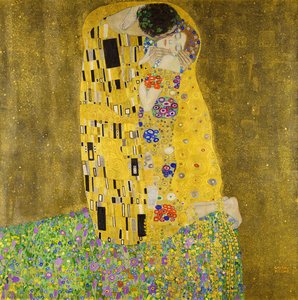
- Wichtige Werke: *Der Kuss* (1907-1908) veranschaulicht den opulenten Stil und die symbolische Fülle dieser Ära.
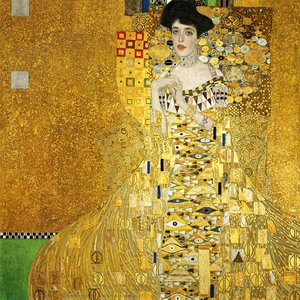
- *Porträts:* Porträts wie *Portrait of Adele Bloch-Bauer I* (1907) wurden sehr begehrt und zeigten seine Fähigkeit, sowohl physische Erscheinung als auch psychologische Tiefe einzufangen.
- Integriert zunehmend dekorative Elemente in Kompositionen und verwischte die Grenzen zwischen Malerei und Ornamentik.
Einflüsse und künstlerischer Stil
- Hans Makart: Frühe Bewunderung für den führenden Historienmaler Wiens beeinflusste seine anfängliche akademische Ausbildung.
- Japanische Kunst (Japonismus): Wurde tief von japanischen Holzschnitten beeinflusst, insbesondere durch ihre flache Perspektive, dekorative Muster und Betonung der Linie.
- Byzantinische Kunst: Der Einsatz von Blattgold und reicher Ornamentik in byzantinischen Mosaiken hatte einen tiefgreifenden Einfluss auf seine „goldene Phase.”
- Stilmerkmale: Ein einzigartiges Zusammenspiel von Symbolismus, Jugendstil und dekorativen Elementen; kräftige Farben, komplizierte Muster und sinnliche Darstellungen der weiblichen Form.
Späte Jahre und Vermächtnis (1918)
- Malte weiterhin produktiv bis zu seinem Tod am 6. Februar 1918 durch einen Schlaganfall.
- Seine späteren Werke erforschten abstraktere Formen und Landschaften und zeigten eine kontinuierliche künstlerische Entwicklung.
- Historische Bedeutung: Wird als eine der wichtigsten Figuren in der österreichischen Kunstgeschichte und als einer führenden Vertreter des Wiener Secessions anerkannt. Seine Gemälde erzielen hohe Preise auf Auktionen, und sein Einfluss ist in der zeitgenössischen Kunst und im Design zu sehen.
- Das Kunsthistorische Museum Wien beherbergt eine bedeutende Sammlung seiner Werke und sichert so das Vermächtnis, das weiterhin inspiriert.

Gustav Klimt
1862 - 1918 , Österreich
Kurzinfos
- Beeinflusste Künstler: ['Egon Schiele']
- Bemerkenswerte Werke:
- Der Kuss
- Adele Bloch-Bauer I
- Geburtsdatum: 1862-07-14
- Geburtsort: Baumgarten, Österreich
- Künstlerische Einflüsse:
- Hans Makart
- Japanische Kunst
- Byzantinische Kunst
- Künstlerische Richtung: Wiener Secession
- Nationalität: Österreichisch
- Todatum: 1918-02-06
- Vollständiger Name: Gustav Klimt
Ähnliche Artikel

Gustav Klimt: Die 25 Meisterwerke des Wiener Jugendstils | OriginalUniqueArt
Entdecken Sie die 25 ikonischsten Gemälde von Gustav Klimt! Tauchen Sie ein in die Welt der Wiener Secession, des Jugendstils und der goldenen Phase. Hochwertige Reproduktionen & Inspiration für Ihr Zuhause auf OriginalUniqueArt.com.
Art Nouveau Meisterwerke: Die 10 prägendsten Kunstwerke für Ihr Zuhause |
Entdecken Sie die 10 prägendsten Art Nouveau Meisterwerke! Von Mucha bis Klimt – erfahren Sie die Geschichten hinter ikonischen Gemälde & dekorativer Kunst. Hochwertige Kunstdrucke online kaufen auf
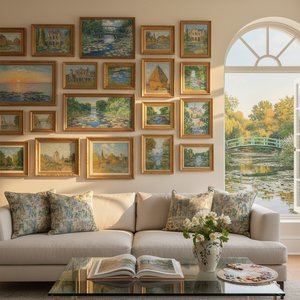
Claude Monet: Die 25 Meisterwerke des Impressionismus für Ihr Zuhause | OriginalUniqueArt
Entdecken Sie die 25 Meisterwerke von Claude Monet! Tauchen Sie ein in die Welt des Impressionismus, erleben Sie Seerosen, Sonnenaufgänge & Kathedralen. Hochwertige Reproduktionen für Ihr Zuhause – exklusiv auf OriginalUniqueArt.com.
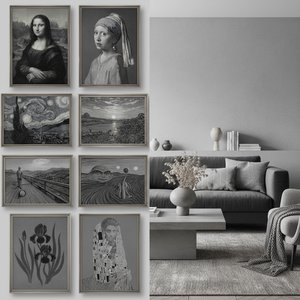
Graue Meisterwerke: Die 10 berühmtesten Gemälde im Farbton der Stille |
Entdecken Sie die 10 berühmtesten Gemälde, dominiert von grauen Tönen! Von Monet bis Hopper – erfahren Sie die Geschichten hinter den Meisterwerken und lassen Sie sich für Ihre Wohnideen inspirieren. Hochwertige Reproduktionen auf
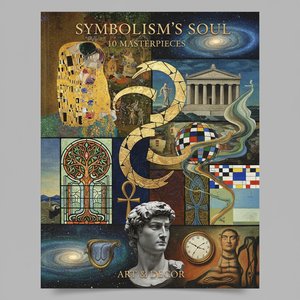
Symbolismus in der Kunst: Die 10 Meisterwerke, die eine Ära prägten | OriginalUniqueArt
Entdecken Sie die 10 Meisterwerke des Symbolismus! Von Klimt bis Munch – erfahren Sie die Geschichten hinter ikonischen Gemälden, ihre Techniken & Bedeutung. Finden Sie Ihre perfekte Reproduktion auf OriginalUniqueArt.com.