

 In echtem Maßstab anzeigen
 Versenden als Grußkarte
 Teilen
 Details anzeigen
 Leitfaden öffnen

 Herunterladen
 Ähnliche Objekte
 Röntgenaufnahme
 Diashow
 Besucherstatistiken
Bildnis einer Dame
 Öl auf Leinwand
- Wandkunst
- Symbolism
 1917
1917- Moderne
 60.0 x 55.0 cm
 Mehr anzeigen
Handgefertigte Ölreproduktion
Handgemaltes Ölgemälde auf Leinwand in Ihrer Wunschgröße und mit Rahmen, auf Bestellung von unseren Künstlern angefertigt. ( Zum Druck wechseln Zum digitalen Bild wechseln)




P118B €10

P118H €10

P118W €10

P438Z €10

P508JH €12

P508YH €12

P805H €10

P805Z €10

P919BZ €10

P919G €10

P919XJ €10

P959ZH €10

P968JZ €12

W106C €8

W218G €10

W218JH €8

W218Y €10

W307PJ €10

W316G €10

W316PJ €8

W316Y €10

W398PJ €8

W4111J €10

W500HY €15

W500JH €15

W692G €12

W849H €8

W940BG €15

W953PJ €8




Wählen Sie aus unseren vordefinierten Formaten, die den ursprünglichen Proportionen des Kunstwerks entsprechen.

Geben Sie die Breite und die Höhe an, die Sie für Ihren Rahmen oder Ihre Wand benötigen. Da dieses Werk handgemalt ist, kann der Künstler bei einer anderen Form etwas mehr um das Bild herum malen oder etwas abschneiden – Sie entscheiden. Wir senden Ihnen ein digitales Mockup zur Freigabe, bevor mit dem Malen begonnen wird. Das auf dieser Seite gezeigte Bild stellt nicht das tatsächliche Ergebnis dar – dies tut nur das Mockup.
Nach der Bestellung wird das OriginalUniqueArt.com-Team dem Kunden Anweisungen per E-Mail zusenden und eine Mockup-Vorschau bereitstellen.
Weltweiter Versand () in nur 3 bis 4 Wochen statt der üblichen 5 Wochen. (24 Oktober). Keine Kompromisse bei der Qualität.

Kostenloser weltweiter Expressversand

Hochwertige Leinenleinwand

Vollständiger Versicherungsschutz beim Versand

Zollgebühren-Rückerstattungsgarantie

Garantie für exakte Farbtreue

100-tägiges Rückgaberecht (nur bei Mängeln)

100% Geld-zurück-Garantie

Angebot für Mengenrabatt
 Die Glasoption ist nur für Größen unter 110 cm verfügbar.

Bildnis einer Dame
Reproduktionsmedium
Format der Reproduktion
-


Gesamtpreis
€ 264
Portrait of a Lady – A Symbolist Masterpiece Revisited
Gustav Klimt’s *Portrait of a Lady*, painted in 1917 during his prolific Symbolist period, remains an enduring emblem of artistic innovation and sensual beauty. This captivating artwork transcends mere representation; it delves into the depths of emotion and explores intricate visual metaphors that continue to fascinate scholars and collectors alike. Let's unravel the layers of meaning embedded within this iconic piece.The Painting’s Details: A Delicate Balance
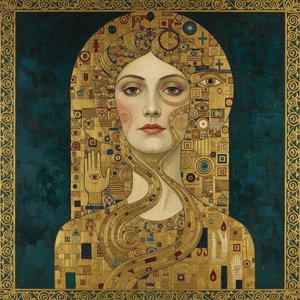
Measuring 60 x 55 cm, *Portrait of a Lady* exemplifies Klimt’s signature style—a masterful fusion of Art Nouveau influences with Byzantine mosaics. The canvas is adorned with shimmering gold leaf, meticulously applied to create an opulent surface that reflects the artist's fascination with decorative arts and spiritual symbolism. At its core lies a portrait of a woman whose gaze meets the viewer with unwavering intensity. Her brown hair is interwoven with floral motifs—a deliberate reference to the natural world and the cyclical rhythms of life—while a necklace encircles her neck, symbolizing protection and femininity. Klimt’s meticulous brushwork captures subtle nuances of expression, conveying both serenity and contemplation.Artistic Style and Influence: Beyond Decoration
Klimt's artistic vision was profoundly shaped by movements like Art Nouveau and Byzantine art. The flowing lines and organic forms characteristic of Art Nouveau permeate the composition, mirroring Klimt’s desire to escape academic conventions. Simultaneously, he draws inspiration from the mosaics of Byzantium—particularly those found in Hagia Sophia—incorporating geometric patterns and tessellated surfaces into the background, creating a visual dialogue between tradition and modernity. This stylistic blend underscores Klimt's commitment to exploring universal themes through innovative artistic techniques.Historical Context: The Vienna Secession and Artistic Rebellion
The painting emerged during the turbulent years of the early 20th century—a period marked by significant social and intellectual upheaval. Klimt was a founding member of the Vienna Secession, an avant-garde movement that challenged the conservative aesthetic standards of Viennese society. Rejecting realism and embracing abstraction, Secession artists sought to express inner emotions and spiritual truths through unconventional forms. *Portrait of a Lady* embodies this spirit of rebellion—a refusal to conform to established norms and a bold assertion of artistic individuality.Relevance in Modern Art: An Eternal Appeal
Despite its creation over a century ago, *Portrait of a Lady* continues to resonate with contemporary audiences. Its masterful use of gold leaf and intricate patterns elevates it beyond mere decorative art—transforming it into an emotionally charged meditation on femininity, beauty, and contemplation. Klimt’s exploration of symbolism—particularly the interplay between light and darkness—invites viewers to engage in a profound dialogue about human experience. It stands as a testament to Klimt's enduring legacy as one of the most influential artists of his time, inspiring generations of creatives who strive to capture the essence of emotion and form.- Artist: Gustav Klimt
- Born Year: 1862
- Death Year: 1918
- Birth City: Baumgarten
- Birth Country: Austria
- Gustav Klimt: Portrait of a Lady
- Gustav Klimt: Full-face Portrait of a Lady
- Gustav Klimt: Portrait of a Lady (unfinished)
- Gustav Klimt: Portrait of a Lady
- Gustav Klimt: Portrait of a Lady
- Gustav Klimt: Full-face Portrait of a Lady
- Gustav Klimt: Portrait of a Lady (unfinished)
- Gustav Klimt: Portrait of a Lady
- Gustav Klimt: Portrait of a Lady
- Gustav Klimt: Full-face Portrait of a Lady
- Gustav Klimt: Portrait of a Lady (unfinished)
- Gustav Klimt: Portrait of a Lady
Fragen & Antworten
Wo finde ich Statistiken zu "Bildnis einer Dame" von Gustav Klimt?
Die Seite Statistiken von "Bildnis einer Dame" von Gustav Klimt präsentiert öffentliche Besucherstatistiken: die monatlichen Aufrufe dieses Kunstwerks, einen Vergleich mit den meistbesuchten Werken des Künstlers sowie die Herkunft der Besucher.
Welcher künstlerischen Strömung ist "Bildnis einer Dame" von Gustav Klimt zuzuordnen?
Die mit "Bildnis einer Dame" von Gustav Klimt verbundene Stilrichtung ist Symbolism. Diese Klassifizierung ordnet das Werk in den Kontext verwandter Künstler und Kunstwerke ein.
Welche Emotion vermittelt "Bildnis einer Dame" von Gustav Klimt?
Die für "Bildnis einer Dame" von Gustav Klimt festgelegte emotionale Stimmung ist Geheimnisvoll. Sie fasst das Gefühl zusammen, das das Werk ausdrückt.
Biografie des Künstlers
Gustav Klimt: Leben, Kunst und Vermächtnis
Frühes Leben und Ausbildung (1862-1883)
- Geboren am 14. Juli 1862 in Baumgarten, nahe Wien, Österreich.
- Sohn von Ernst Klimt, einem Goldschmied, und Anna Finster. Die Familie sah sich mit finanziellen Schwierigkeiten konfrontiert, was zu häufigen Umzügen innerhalb Wiens führte.
- Früben Talent: Zeigte schon früh zeichnerische Fähigkeiten, die durch den Beruf seines Vaters und familiäre künstlerische Neigungen gefördert wurden.
- Er studierte 1876 an der Wiener Kunstgewerbeschule (Schule für Angewandte Künste) Architekturmalerei bei Ferdinand Laufberger. Dies bot eine solide technische Ausbildung, aber auch die Exposition gegenüber traditionellen akademischen Stilen.
- Im Jahr 1877 gründete er mit seinem Bruder Ernst und Franz von Matsch die „Gesellschaft der Künstler“ und sichere Aufträge für dekorative Wandmalereien und Decken.
Die Gesellschaft der Künstler und Früher Erfolg (1883-1900)
- Arbeitete weiterhin mit der „Gesellschaft der Künstler“ nach dem Verlassen der Kunstgewerbeschule und erhielt Anerkennung für dekorative Projekte wie Wandmalereien im Theater von Karlsbad und Treppenhäuser im Burgtheater in Wien.
- Tragte zur Dekoration des Kunsthistorischen Museums in Wien bei, demonstrierte technische Fertigkeit, deutete aber auch auf ein Verlangen hin, künstlerische Zwänge zu brechen.
Die Decke der Universität Wien und Kontroversen (1900)
- Erfuhr um 1900 eine prestigeträchtige Beauftragung, Deckenmalereien für den Großen Saal der Universität Wien zu malen, die Philosophie, Jurisprudenz und Theologie darstellten.
- Kontroverse Werke: Die Wandmalereien, insbesondere *Philosophie*, wurden von Kritikern als provokativ und sogar pornografisch angesehen, was zu öffentlicher Empörung führte.
- Klimt lehnte nach der Kontroverse weitere öffentliche Aufträge ab und markierte damit einen Wendepunkt in seiner Karriere.
Die „Goldene Phase“ und künstlerische Reife (1901-1918)
- Betrat seine „goldene Phase“, die durch den luxuriösen Einsatz von Blattgold inspiriert vom byzantinischen Mosaik und mittelalterlichen illuminierten Handschriften gekennzeichnet war.
- Wichtige Werke: *Der Kuss* (1907-1908) veranschaulicht den opulenten Stil und die symbolische Fülle dieser Ära.
- *Porträts:* Porträts wie *Portrait of Adele Bloch-Bauer I* (1907) wurden sehr begehrt und zeigten seine Fähigkeit, sowohl physische Erscheinung als auch psychologische Tiefe einzufangen.
- Integriert zunehmend dekorative Elemente in Kompositionen und verwischte die Grenzen zwischen Malerei und Ornamentik.
Einflüsse und künstlerischer Stil
- Hans Makart: Frühe Bewunderung für den führenden Historienmaler Wiens beeinflusste seine anfängliche akademische Ausbildung.
- Japanische Kunst (Japonismus): Wurde tief von japanischen Holzschnitten beeinflusst, insbesondere durch ihre flache Perspektive, dekorative Muster und Betonung der Linie.
- Byzantinische Kunst: Der Einsatz von Blattgold und reicher Ornamentik in byzantinischen Mosaiken hatte einen tiefgreifenden Einfluss auf seine „goldene Phase.”
- Stilmerkmale: Ein einzigartiges Zusammenspiel von Symbolismus, Jugendstil und dekorativen Elementen; kräftige Farben, komplizierte Muster und sinnliche Darstellungen der weiblichen Form.
Späte Jahre und Vermächtnis (1918)
- Malte weiterhin produktiv bis zu seinem Tod am 6. Februar 1918 durch einen Schlaganfall.
- Seine späteren Werke erforschten abstraktere Formen und Landschaften und zeigten eine kontinuierliche künstlerische Entwicklung.
- Historische Bedeutung: Wird als eine der wichtigsten Figuren in der österreichischen Kunstgeschichte und als einer führenden Vertreter des Wiener Secessions anerkannt. Seine Gemälde erzielen hohe Preise auf Auktionen, und sein Einfluss ist in der zeitgenössischen Kunst und im Design zu sehen.
- Das Kunsthistorische Museum Wien beherbergt eine bedeutende Sammlung seiner Werke und sichert so das Vermächtnis, das weiterhin inspiriert.

Gustav Klimt
1862 - 1918 , Österreich
Eckdaten zum Künstler
- Beeinflusste Künstler: ['Egon Schiele']
- Bemerkenswerte Werke:
- Der Kuss
- Adele Bloch-Bauer I
- Geburtsdatum: 1862-07-14
- Geburtsort: Baumgarten, Österreich
- Künstlerische Einflüsse:
- Hans Makart
- Japanische Kunst
- Byzantinische Kunst
- Künstlerische Richtung: Wiener Secession
- Nationalität: Österreichisch
- Todatum: 1918-02-06
- Vollständiger Name: Gustav Klimt
Verwandte Artikel

The Allure of Gold in Art History: Symbolism, Technique & Cultural Significance
Explore the rich history of gold in art! Discover symbolism, techniques & cultural significance from ancient civilizations to Klimt's masterpieces. Expert insights for collectors at OriginalUniqueArt.

Goldene Meisterwerke: Die Top 10 berühmtesten Gemälde mit Blattgold – OriginalUniqueArt
Entdecken Sie die Top 10 Gemälde, die von Blattgold verzaubern! Von Klimt bis zur Renaissance – erfahren Sie die Geschichten hinter ikonischen Kunstwerke & lassen Sie sich für Ihre Wohnraumgestaltung inspirieren. Hochwertige Reproduktionen auf OriginalUniqueArt.com.
Art Nouveau Meisterwerke: Die 10 prägendsten Kunstwerke für Ihr Zuhause |
Entdecken Sie die 10 prägendsten Art Nouveau Meisterwerke! Von Mucha bis Klimt – erfahren Sie die Geschichten hinter ikonischen Gemälde & dekorativer Kunst. Hochwertige Kunstdrucke online kaufen auf
Gustav Klimt: Eine goldene Ära der Sinnlichkeit und Symbolik in der Wiener Kunst
Entdecken Sie Gustav Klimts faszinierende Welt! Erfahren Sie mehr über die Wiener Secession, seine sinnlichen Porträts und die 'Goldene Phase'. Expertenwissen & hochwertige Reproduktionen auf OriginalUniqueArt.

Gustav Klimt: Die 25 Meisterwerke des Wiener Jugendstils | OriginalUniqueArt
Entdecken Sie die 25 ikonischsten Gemälde von Gustav Klimt! Tauchen Sie ein in die Welt der Wiener Secession, des Jugendstils und der goldenen Phase. Hochwertige Reproduktionen & Inspiration für Ihr Zuhause auf OriginalUniqueArt.com.


