

 In echtem Maßstab anzeigen
 Versenden als Grußkarte
 Teilen
 Details anzeigen
 Leitfaden öffnen

 Herunterladen
 Ähnliche Objekte
 Röntgenaufnahme
 Diashow
 Besucherstatistiken
Susanna and the Elders
 Acrylic On Canvas
- WallArt
- Baroque Painting
 133.0 x 181.0 cm
 Palazzo della Pilotta
 Mehr anzeigen
Handgefertigte Ölreproduktion
Handgemaltes Ölgemälde auf Leinwand in Ihrer Wunschgröße und mit Rahmen, auf Bestellung von unseren Künstlern angefertigt. ( Zum Druck wechseln Zum digitalen Bild wechseln)




P118B €10

P118H €10

P118W €10

P438Z €10

P508JH €12

P508YH €12

P805H €10

P805Z €10

P919BZ €10

P919G €10

P919XJ €10

P959ZH €10

P968JZ €12

W106C €8

W218G €10

W218JH €8

W218Y €10

W307PJ €10

W316G €10

W316PJ €8

W316Y €10

W398PJ €8

W4111J €10

W500HY €15

W500JH €15

W692G €12

W849H €8

W940BG €15

W953PJ €8




Wählen Sie aus unseren vordefinierten Formaten, die den ursprünglichen Proportionen des Kunstwerks entsprechen.

Sie können Ihre eigenen Maße eingeben, um einen bestimmten Rahmen oder Platz auszufüllen. Wenn die gewählte Größe nicht den Proportionen des Originalbildes entspricht, werden wir das Kunstwerk entweder beschneiden oder das Gemälde durch zusätzliche, handgemalte Elemente erweitern. Ein digitales Mockup wird Ihnen zur Genehmigung zugesandt, bevor die Produktion beginnt.
Bitte beachten Sie, dass die Bildschirmvorschau nicht die tatsächliche Beschneidung oder Erweiterung widerspiegelt. Nur das Mockup zeigt die endgültige Komposition exakt an.
Obwohl Sondermaße verfügbar sind, empfehlen wir, eine Größe aus der vordefinierten Liste zu wählen, um die ursprünglichen Proportionen beizubehalten.
Nach der Bestellung wird das OriginalUniqueArt.com-Team dem Kunden Anweisungen per E-Mail zusenden und eine Mockup-Vorschau bereitstellen.
Weltweiter Versand () in nur 3 bis 4 Wochen statt der üblichen 5 Wochen. (7 Oktober). Keine Kompromisse bei der Qualität.

Kostenloser weltweiter Expressversand

Hochwertige Leinenleinwand

Vollständiger Versicherungsschutz beim Versand

Zollgebühren-Rückerstattungsgarantie

Garantie für exakte Farbtreue

100-tägiges Rückgaberecht (nur bei Mängeln)

100% Geld-zurück-Garantie

Angebot für Mengenrabatt
 Die Glasoption ist nur für Größen unter 110 cm verfügbar.

Susanna and the Elders
Reproduktionsmedium
Format der Reproduktion
-


Gesamtpreis
€ 258
The Dramatic Narrative of Susanna and the Elders
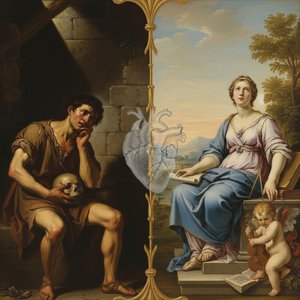
Guercino’s “Susanna and the Elders,” painted around 1650, isn't merely a biblical scene; it’s a visceral exploration of virtue under duress, a masterful demonstration of Baroque drama, and a testament to the artist’s profound understanding of human psychology. The painting depicts a pivotal moment from the Book of Daniel – Susanna, a young woman renowned for her innocence and beauty, is falsely accused by two lecherous elders who have been captivated by her modest bathing habits. The composition immediately plunges the viewer into a world of heightened emotion: Susanna, rendered in a luminous white gown, sits poised on a simple stone ledge, her gaze directed heavenward with an expression of serene dignity and quiet apprehension. The stark contrast between her purity and the shadowed figures looming above her creates an immediate tension, hinting at the impending threat to her reputation and life.
- The Story’s Roots: The narrative itself is a potent allegory – Susanna represents chastity and virtue, while the elders embody lust and deceit. The story's enduring appeal lies in its exploration of moral temptation and the vulnerability of innocence against manipulative forces.
- Baroque Drama: Guercino was a master of dramatic lighting and composition, techniques central to the Baroque style. Notice how he uses chiaroscuro – the sharp contrast between light and dark – to sculpt Susanna’s form and emphasize her isolation within the scene. The deep shadows enveloping the elders heighten their sinister presence, while the soft glow illuminating Susanna underscores her virtue.
A Study in Technique: Guercino's Distinctive Style
Guercino’s artistic approach is immediately recognizable – a blend of meticulous detail and expressive dynamism. He was known for his incredibly detailed drawings, which informed his painting style, resulting in figures with remarkably realistic musculature and drapery. Observe the intricate folds of Susanna's gown, rendered with painstaking precision, as well as the subtle textures of the stone ledge beneath her. The artist’s use of color is equally noteworthy; he employs a palette dominated by muted earth tones – ochres, browns, and grays – punctuated by flashes of white for Susanna’s dress and the vibrant reds of the elders' robes. This restrained palette amplifies the emotional impact of the scene, creating a sense of solemnity and gravity.
Key Characteristics:- Detailed Draftsmanship: Guercino was renowned for his preparatory drawings, which demonstrate an extraordinary command of line and form.
- Chiaroscuro Mastery: His skillful manipulation of light and shadow creates a dramatic and emotionally charged atmosphere.
- Expressive Figures: The figures are not merely representations but embodiments of their emotions – Susanna’s serenity, the elders' lustful intent.
Symbolism and Interpretation
Beyond the straightforward narrative, “Susanna and the Elders” is rich in symbolic meaning. The setting itself—a simple stone ledge overlooking a tranquil pool—suggests vulnerability and exposure. The presence of the two elders, shrouded in shadow, represents the forces of temptation that threaten to corrupt innocence. Notably, the scene draws upon the Apocrypha – biblical texts not included in the Hebrew Bible – adding layers of complexity to its interpretation. The inclusion of the skull, a memento mori (reminder of death), subtly underscores the precariousness of Susanna’s situation and the ultimate triumph of virtue over mortality. The phrase “Et in Arcadia ego” (“Also in Paradise I am”) reinforces this theme, reminding us that even in idyllic settings, death is ever-present.
A Timeless Masterpiece: Guercino's Enduring Legacy
“Susanna and the Elders” remains a profoundly moving work of art, captivating viewers with its dramatic intensity, technical brilliance, and enduring moral themes. Guercino’s ability to convey complex emotions through carefully rendered figures and evocative lighting is truly remarkable. Reproductions of this painting continue to inspire admiration for its artistic merit and its poignant exploration of human nature. It stands as a powerful testament to the artist's skill and his profound understanding of the human condition, ensuring its place as a cornerstone of Baroque art.
Fragen & Antworten
Ist "Susanna and the Elders" von Guercino ein bekanntes Kunstwerk?
"Susanna and the Elders" von Guercino weist ein Recognized Popularitätsniveau auf. Diese Klassifizierung spiegelt die weite Verbreitung und Bekanntheit des Werkes wider.
Welchem Künstler wird "Susanna and the Elders" zugeschrieben?
Der Künstler hinter „Susanna and the Elders“ ist Guercino. Das Werk ist unter dem Namen von Guercino katalogisiert.
Welche Druckgröße wird für "Susanna and the Elders" von Guercino empfohlen?
Für "Susanna and the Elders" wird ein Druckformat von Large empfohlen. Weitere Größen sind im gleichen Seitenverhältnis verfügbar.
Für welchen Raum wird "Susanna and the Elders" von Guercino empfohlen?
"Susanna and the Elders" von Guercino wird für ein Living Room empfohlen. Dieser Vorschlag basiert auf dem Motiv, den Farben und der Stimmung des Werkes.
Wo kann ich eine handgemalte Reproduktion von "Susanna and the Elders" von Guercino kaufen?
Eine handgemalte Reproduktion von "Susanna and the Elders" von Guercino können Sie direkt auf diese Seite bestellen: eine handgemalte Ölreproduktion auf Leinenleinwand, auf Bestellung gefertigt.
Befindet sich "Susanna and the Elders" im Land seines Schöpfers?
Ja – das Kunstwerk befindet sich im Heimatland der Künstlerin / des Künstlers. Der Künstler wurde in Italien geboren; das Originalwerk befindet sich in Italien.
Ist "Susanna and the Elders" als Kunstdruck erhältlich?
Um einen Druck von "Susanna and the Elders" von Guercino zu erhalten, bestellen Sie ihn einfach auf diese Seite: ein Fine Art Print auf Baumwollkanvas oder Archiv-Leinwandpapier.
Biografie des Künstlers
Frühes Leben und Ausbildung
Giovanni Francesco Barbieri, besser bekannt als Il Guercino, wurde 1591 in Cento, nahe Ferrara, geboren. Seine künstlerische Reise begann unter der Anleitung von Ludovico Carracci, einem renommierten Bologneser Maler. Diese Lehrzeit legte den Grundstein für Guercinos späteren Erfolg.Künstlerischer Stil und Bekannte Werke
Guercinos Stil ist gekennzeichnet durch dramatische Beleuchtung, intensive Emotionen und eine Mischung aus Realismus und Idealismus – Kennzeichen der Barockperiode. Zu seinen bemerkenswertesten Werken zählen:- Ammon und Tamar (Öl auf Leinwand, Barock) – eine ergreifende Darstellung der biblischen Geschichte.
- Die Rückkehr des verlorenen Sohnes (Öl auf Leinwand, Barock) – eine kraftvolle Darstellung von Reue und Vergebung.
- Die Berufung des Heiligen Aloisius (Luigi) Gonzaga (Öl auf Leinwand, Barock) – ein Meisterwerk, das Guercinos Geschick in der Darstellung religiöser Erzählungen demonstriert.
Entwicklung und Einflüsse
Guercino entwickelte seinen Stil im Laufe seines Lebens weiter. Anfänglich beeinflusst von Domenichino und Guido Reni, wandte er sich später einem klassizierenden Idiom zu, das durch die kurze Amtszeit von Papst Gregor XV in Rom verstärkt wurde. Sein frühes Werk zeichnete sich durch einen Naturalismus aus, der sich allmählich zu einer leichteren Palette und einem blauen Himmel im Hintergrund wandelte – eine Reaktion auf Beschwerden von Auftraggebern über die Schattenrisse in seinen Figuren. Benedetto Gennari der Jüngere war ein wichtiger Schüler Guercinos.Bedeutung und Vermächtnis
Guercinos Einfluss auf die Barockmalerei ist unbestreitbar. Seine dramatische Verwendung von Licht und Schatten, gepaart mit seiner Fähigkeit, kraftvolle Emotionen hervorzurufen, hat Generationen von Künstlern inspiriert. Guercino gilt als eine bedeutende Figur der italienischen Kunst, und sein Vermächtnis wird durch seine Werke fortgesetzt, die heute Teil der renommiertesten Museumsbestände weltweit sind. Museen wie das Palazzo Brignole-Sale in Italien tragen zur Bewahrung seines künstlerischen Erbes bei.
Guercino
1591 - 1666 , Italien
Eckdaten zum Künstler
- Beeinflusste Künstler: ['Benedetto Gennari der Jüngere']
- Bemerkenswerte Werke:
- Ammon und Tamar
- Die Rückkehr des verlorenen Sohnes
- Die Berufung des Heiligen Aloysius
- Einflussreiche Künstler: ['Ludovico Carracci']
- Geburtsdatum: 8. Februar 1591
- Geburtsort: Cento, Italien
- Künstlerische Bewegung: Barock
- Nationalität: Italiener
- Spitzname: Il Guercino
- Sterbedatum: 22. Dezember 1666
- Vollständiger Name: Giovanni Francesco Barbieri
Verwandte Artikel

The Visceral Stage: Exploring Dramatic Narratives & Emotional Intensity in Baroque Art
Explore the dramatic world of Baroque art! Discover iconic masters like Caravaggio & Rembrandt, their techniques, and the movement's lasting impact. Expert insights for collectors & enthusiasts at OriginalUniqueArt.

Barock Meisterwerke: Die 10 prägendsten Kunstwerke für Ihr Zuhause |
Entdecken Sie die 10 prägendsten Meisterwerke des Barock! Caravaggio, Rembrandt & Co. – Erfahren Sie die Geschichten hinter ikonischen Gemälde und finden Sie hochwertige Kunst Reproduktionen für Ihr Zuhause auf .
Guercino: Ein Barockmeister zwischen Caravaggismus und Klassizismus – Innovation und emotionale Tiefe
Entdecken Sie Guercinos revolutionäre Barockmalerei! Analysieren Sie seine einzigartige Verbindung von Caravaggismus und Klassizismus, innovative Techniken & emotionale Tiefe. Kunsthistorische Expertise für Sammler & Liebhaber.

The Dramatic Flourish: Exploring the Baroque Movement's Enduring Legacy in Art History
Explore the dramatic world of Baroque art! Discover iconic artists like Caravaggio & Rubens, defining techniques, and its lasting impact on art history. Expert insights for collectors & enthusiasts at OriginalUniqueArt.

Barocke Pracht: Wie Sie Opulenz und Emotionen in zeitgenössische Innenräume bringen
Entdecken Sie die Pracht des Barock! Expertenratgeber für luxuriöse Innenräume mit barocken Elementen. Inspiration, Tipps & hochwertige Kunst bei .
