

 In echtem Maßstab anzeigen
 Versenden als Grußkarte
 Teilen
 Details anzeigen
 Leitfaden öffnen

 Herunterladen
 Ähnliche Objekte
 Röntgenaufnahme
 Diashow
 Besucherstatistiken
Madonna and Child
 Baroque Painting
 1622
1622 50.0 x 64.0 cm
 Städel Museum
 Mehr anzeigen
Handgefertigte Ölreproduktion
Handgemaltes Ölgemälde auf Leinwand in Ihrer Wunschgröße und mit Rahmen, auf Bestellung von unseren Künstlern angefertigt. ( Zum Druck wechseln Zum digitalen Bild wechseln)




P118B $10

P118H $10

P118W $10

P438Z $10

P508JH $12

P508YH $12

P805H $10

P805Z $10

P919BZ $10

P919G $10

P919XJ $10

P959ZH $10

P968JZ $12

W106C $8

W218G $10

W218JH $8

W218Y $10

W307PJ $10

W316G $10

W316PJ $8

W316Y $10

W398PJ $8

W4111J $10

W500HY $15

W500JH $15

W692G $12

W849H $8

W940BG $15

W953PJ $8




Wählen Sie aus unseren vordefinierten Formaten, die den ursprünglichen Proportionen des Kunstwerks entsprechen.

Sie können Ihre eigenen Maße eingeben, um einen bestimmten Rahmen oder Platz auszufüllen. Wenn die gewählte Größe nicht den Proportionen des Originalbildes entspricht, werden wir das Kunstwerk entweder beschneiden oder das Gemälde durch zusätzliche, handgemalte Elemente erweitern. Ein digitales Mockup wird Ihnen zur Genehmigung zugesandt, bevor die Produktion beginnt.
Bitte beachten Sie, dass die Bildschirmvorschau nicht die tatsächliche Beschneidung oder Erweiterung widerspiegelt. Nur das Mockup zeigt die endgültige Komposition exakt an.
Obwohl Sondermaße verfügbar sind, empfehlen wir, eine Größe aus der vordefinierten Liste zu wählen, um die ursprünglichen Proportionen beizubehalten.
Nach der Bestellung wird das OriginalUniqueArt.com-Team dem Kunden Anweisungen per E-Mail zusenden und eine Mockup-Vorschau bereitstellen.
Weltweiter Versand () in nur 3 bis 4 Wochen statt der üblichen 5 Wochen. (27 September). Keine Kompromisse bei der Qualität.

Kostenloser weltweiter Expressversand

Hochwertige Leinenleinwand

Vollständiger Versicherungsschutz beim Versand

Zollgebühren-Rückerstattungsgarantie

Garantie für exakte Farbtreue

100-tägiges Rückgaberecht (nur bei Mängeln)

100% Geld-zurück-Garantie

Angebot für Mengenrabatt
 Die Glasoption ist nur für Größen unter 110 cm verfügbar.

Madonna and Child
Reproduktionsmedium
Format der Reproduktion
-


Gesamtpreis
$ 300
The Madonna and Child: A Window into Renaissance Devotion
Guercino’s “Madonna and Child,” painted in 1622, isn't merely a depiction of the Virgin Mary cradling her infant son; it’s a profound meditation on faith, motherhood, and the delicate balance between earthly beauty and divine grace. Born Giovanni Francesco Barbieri in Cento, Italy, Guercino – a name ironically derived from “squinter,” meaning squint-eyed – forged a distinctive artistic path, diverging sharply from the prevailing classical ideals of his time. Unlike many of his contemporaries striving for idealized perfection, Guercino embraced a raw, intensely emotional realism, channeling the turbulent spiritual atmosphere of 17th-century Italy into every brushstroke. This painting exemplifies that approach, offering a glimpse into a world where piety and passion intertwine.
The scene unfolds within a modestly furnished interior – a simple wall adorned with a clock, a subtle detail suggesting the passage of time and the fleeting nature of earthly existence. Mary, rendered in rich, warm tones, is presented not as an ethereal goddess but as a deeply human mother, her gaze fixed intently on her child. The baby Jesus, nestled securely within her arms, exudes an innocent charm that belies the weighty theological significance of the image. Guercino masterfully employs *chiaroscuro*, the dramatic interplay of light and shadow, to draw the viewer’s eye directly to the central figures, creating a sense of intimacy and immediacy. The use of deep shadows around Mary's face and hands emphasizes her maternal role, while the soft illumination on the infant highlights his purity and vulnerability.
A Masterclass in Baroque Technique
Guercino’s technical prowess is immediately evident in the painting’s dynamic composition and meticulous detail. He was a highly skilled draftsman, and this skill translates seamlessly into the painted surface. The drapery of Mary's robes flows with an almost sculptural quality, rendered with remarkable precision and attention to texture. Notice the subtle variations in color and tone – the deep crimson of the cloth contrasted against the lighter background—a testament to his understanding of light and shadow. His brushwork is characterized by a loose, expressive style that conveys both energy and control. The figures are not idealized; they possess a tangible physicality, reflecting Guercino’s commitment to portraying human emotion with unflinching honesty.
The painting's palette leans towards earthy tones – browns, ochres, and reds—creating a sense of groundedness and realism. However, these muted colors are punctuated by flashes of vibrant color in the infant Jesus’s garments, drawing attention to his divine nature. The artist skillfully employs *sfumato*, a technique popularized by Leonardo da Vinci, to soften edges and create a hazy atmosphere, contributing to the painting's overall sense of depth and mystery.
Symbolism and Spiritual Resonance
Beyond its aesthetic qualities, “Madonna and Child” is rich in symbolic meaning. The pose itself—Mary nursing her child—is a direct reference to the biblical story of breastfeeding, symbolizing nourishment, protection, and divine grace. The clock on the wall serves as a poignant reminder of mortality, suggesting that Mary’s role as mother transcends earthly concerns. The inclusion of two additional figures in the background – a man on the left and another on the right—adds an element of narrative complexity, perhaps hinting at the broader context of Mary's life and her connection to the wider world.
Furthermore, Guercino’s style aligns with the Counter-Reformation’s emphasis on emotional engagement in religious art. Unlike the static, idealized Madonnas of earlier periods, Guercino’s depiction is imbued with a palpable sense of warmth and compassion. It invites viewers to connect with Mary's maternal love and contemplate the profound mysteries of faith. The painting speaks not just to the eye but also to the heart, resonating with viewers across centuries.
A Timeless Icon: Reproduction Possibilities
Reproductions of Guercino’s “Madonna and Child” offer a remarkable opportunity to bring this powerful work of art into any setting. The meticulous detail and expressive brushwork are faithfully captured in high-quality prints, allowing viewers to appreciate the artist's genius even without experiencing the original firsthand. Whether adorning a private study or gracing a grand salon, this iconic image continues to evoke feelings of serenity, devotion, and timeless beauty. Consider a hand-painted reproduction for an authentic touch that captures the essence of Guercino’s masterpiece.
Biografie des Künstlers
Frühes Leben und Ausbildung
Giovanni Francesco Barbieri, besser bekannt als Il Guercino, wurde 1591 in Cento, nahe Ferrara, geboren. Seine künstlerische Reise begann unter der Anleitung von Ludovico Carracci, einem renommierten Bologneser Maler. Diese Lehrzeit legte den Grundstein für Guercinos späteren Erfolg.Künstlerischer Stil und Bekannte Werke
Guercinos Stil ist gekennzeichnet durch dramatische Beleuchtung, intensive Emotionen und eine Mischung aus Realismus und Idealismus – Kennzeichen der Barockperiode. Zu seinen bemerkenswertesten Werken zählen:- Ammon und Tamar (Öl auf Leinwand, Barock) – eine ergreifende Darstellung der biblischen Geschichte.
- Die Rückkehr des verlorenen Sohnes (Öl auf Leinwand, Barock) – eine kraftvolle Darstellung von Reue und Vergebung.
- Die Berufung des Heiligen Aloisius (Luigi) Gonzaga (Öl auf Leinwand, Barock) – ein Meisterwerk, das Guercinos Geschick in der Darstellung religiöser Erzählungen demonstriert.
Entwicklung und Einflüsse
Guercino entwickelte seinen Stil im Laufe seines Lebens weiter. Anfänglich beeinflusst von Domenichino und Guido Reni, wandte er sich später einem klassizierenden Idiom zu, das durch die kurze Amtszeit von Papst Gregor XV in Rom verstärkt wurde. Sein frühes Werk zeichnete sich durch einen Naturalismus aus, der sich allmählich zu einer leichteren Palette und einem blauen Himmel im Hintergrund wandelte – eine Reaktion auf Beschwerden von Auftraggebern über die Schattenrisse in seinen Figuren. Benedetto Gennari der Jüngere war ein wichtiger Schüler Guercinos.Bedeutung und Vermächtnis
Guercinos Einfluss auf die Barockmalerei ist unbestreitbar. Seine dramatische Verwendung von Licht und Schatten, gepaart mit seiner Fähigkeit, kraftvolle Emotionen hervorzurufen, hat Generationen von Künstlern inspiriert. Guercino gilt als eine bedeutende Figur der italienischen Kunst, und sein Vermächtnis wird durch seine Werke fortgesetzt, die heute Teil der renommiertesten Museumsbestände weltweit sind. Museen wie das Palazzo Brignole-Sale in Italien tragen zur Bewahrung seines künstlerischen Erbes bei.
Guercino
1591 - 1666 , Italien
Eckdaten zum Künstler
- Beeinflusste Künstler: ['Benedetto Gennari der Jüngere']
- Bemerkenswerte Werke:
- Ammon und Tamar
- Die Rückkehr des verlorenen Sohnes
- Die Berufung des Heiligen Aloysius
- Einflussreiche Künstler: ['Ludovico Carracci']
- Geburtsdatum: 8. Februar 1591
- Geburtsort: Cento, Italien
- Künstlerische Bewegung: Barock
- Nationalität: Italiener
- Spitzname: Il Guercino
- Sterbedatum: 22. Dezember 1666
- Vollständiger Name: Giovanni Francesco Barbieri
Verwandte Artikel
Fra Angelico: Die 25 Meisterwerke des italienischen Frührenaissance-Malers | OriginalUniqueArt
Entdecken Sie die 25 schönsten Meisterwerke von Fra Angelico! Erleben Sie religiöse Kunst der italienischen Renaissance, himmlische Fresken & Panelgemälde. Finden Sie hochwertige Kunstdrucke und Reproduktionen für Ihr Zuhause auf OriginalUniqueArt.com.
Divine Love: A Curated Guide to the Most Iconic Madonna and Child Masterpieces in Art History
Embark on a sophisticated journey through art history with our curated guide to the most iconic Madonna and Child masterpieces. Discover the profound beauty, theological depth, and enduring legacy of these sacred Renaissance treasures.
Die 25 Meisterwerke der Eremitage: Kunst für Ihr Zuhause | OriginalUniqueArt
Entdecken Sie die 25 berühmtesten Kunstwerke der Eremitage! Von Rembrandt bis Leonardo da Vinci – erfahren Sie die Geschichten hinter Meisterwerken, Techniken & Farben. Hochwertige Kunstdrucke für Ihr Zuhause auf OriginalUniqueArt.com.
Die 25 Meisterwerke der Uffizien: Kunstgeschichte für Ihr Zuhause | OriginalUniqueArt
Entdecken Sie die 25 berühmtesten Meisterwerke der Uffizien, Florenz! Von Botticelli bis Leonardo da Vinci – Kunstgeschichte erleben. Hochwertige Reproduktionen & Inspiration für Ihr Zuhause auf OriginalUniqueArt.com.
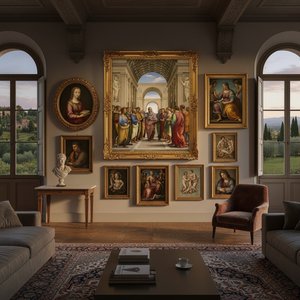
Raphael: Die 25 Meisterwerke des Renaissance-Genies – Kunst für Ihr Zuhause
Entdecken Sie die 25 schönsten Meisterwerke von Raphael! Tauchen Sie ein in die Welt der Renaissance-Kunst, erfahren Sie faszinierende Geschichten und lassen Sie sich von den Farben und Kompositionen inspirieren. Hochwertige Reproduktionen auf OriginalUniqueArt.com.
