 Vorschau anzeigen
 Versenden
 Teilen
 Details anzeigen
 Leitfaden

 Herunterladen
 Ähnliche Objekte
 Röntgenaufnahme
 Diashow
 Fragen & Antworten
 Statistiken
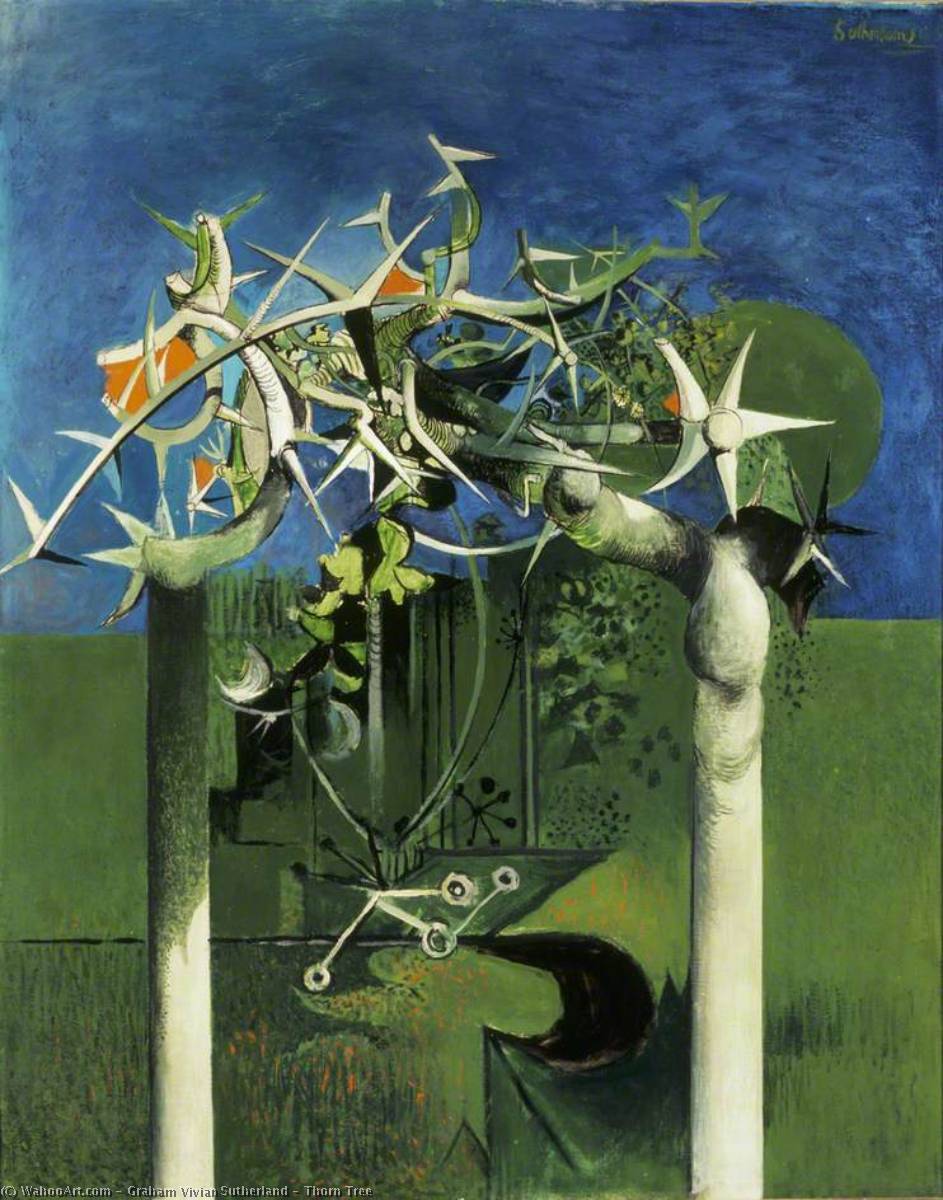
Thorn Tree

- 127.0 x 102.0 cm


 Weiterlesen
Die auf dieser Seite dargestellten Kunstwerke sind urheberrechtlich geschützt, was bedeutet, dass wir keine identische Reproduktion rechtmäßig erstellen oder verkaufen dürfen. Dieser Schutz wird durch internationale Abkommen wie die Berner Übereinkunft und durch nationale Gesetze, einschließlich derer, die von den US-Urheberrecht – Titel 17.
Diese Methode entspricht vollumfänglich den Urheberrechtsbestimmungen, da sie keine Kopie oder Vervielfältigung des geschützten Kunstwerks darstellt. Stattdessen handelt es sich um eine kreative Neuinterpretation – ein neues Gemälde, das vom Original inspiriert, aber nicht identisch mit ihm ist.
Giclée / Kunstdruck
Giclée- oder Leinwanddruck in Museumsqualität mit schneller Produktion und flexiblen Veredelungsoptionen. ( Handgemalte Reproduktion bestellen Zum digitalen Bild wechseln)




P118B €10

P118H €10

P118W €10

P438Z €10

P508JH €12

P508YH €12

P805H €10

P805Z €10

P919BZ €10

P919G €10

P919XJ €10

P959ZH €10

P968JZ €12

W106C €8

W218G €10

W218JH €8

W218Y €10

W307PJ €10

W316G €10

W316PJ €8

W316Y €10

W398PJ €8

W4111J €10

W500HY €15

W500JH €15

W692G €12

W849H €8

W940BG €15

W953PJ €8




Wählen Sie aus unseren vordefinierten Formaten, die den ursprünglichen Proportionen des Kunstwerks entsprechen.

Geben Sie die benötigte Breite und Höhe an, damit der Druck perfekt in Ihren Rahmen oder an Ihre Wand passt. Ein Druck kann nur beschnitten, aber niemals größer als das Originalbild angefertigt werden; daher verliert ein Format mit anderen Proportionen einen Teil des Bildes. Wir senden Ihnen ein digitales Mockup zur Freigabe, bevor wir den Druck ausführen. Das auf dieser Seite gezeigte Bild zeigt nicht den tatsächlichen Beschnitt – dies ist nur im Mockup ersichtlich.
Weltweiter Versand () innerhalb von 2 Wochen statt der üblichen 4/5 Wochen. (5 November)

Kostenloser weltweiter Expressversand

Hochwertige Leinenleinwand

Umfassender Versicherungsschutz beim Versand

Zollgebühren-Rückerstattungsgarantie

Garantie für exakte Farbtreue

100 Tage Rückgaberecht (nur bei Mängeln)

100% Geld-zurück-Garantie

Mengenrabatt verfügbar
 Die Glasoption ist nur für Größen unter 110 cm verfügbar.

Thorn Tree
Giclée / Kunstdruck
Format der Reproduktion
-


Endpreis
€ 72
A Vision of Verdant Mystery: Graham Vivian Sutherland’s “Thorn Tree”
Graham Vivian Sutherland's "Thorn Tree," painted in 1946, isn’t merely a landscape; it’s an immersion into the heart of Pembrokeshire’s rugged beauty, filtered through the uniquely perceptive eye of one of Britain’s most significant modern artists. This oil on canvas work transcends simple representation, offering instead a deeply layered exploration of nature's inherent strangeness and the quiet drama of the natural world. Sutherland, a master of Neo-Romanticism, skillfully blends the traditional English landscape tradition with the subtle influences of Surrealism and Expressionism – a combination that resulted in powerfully evocative and often unsettling images.
The painting immediately draws the viewer into a dense, almost claustrophobic woodland scene. Towering trees dominate the composition, their branches intertwining to create a complex network of shadows and light. The leaves themselves are rendered with meticulous detail, yet they possess an unnerving quality – not quite realistic, but hinting at something beyond the purely botanical. Birds, perched precariously amongst the foliage, add to the sense of unease and suggest a hidden life within this seemingly still landscape. Sutherland’s use of color is particularly striking; predominantly greens—ranging from deep emerald to muted olive—create an atmosphere of both lushness and melancholy. Subtle hints of brown and grey ground the scene, anchoring it in the earth while simultaneously emphasizing its isolation.
The Painter's Process: Technique and Style
Sutherland’s technique is characterized by a remarkable sensitivity to light and texture. He employed a broken brushstroke method, layering thin washes of paint to build up form and create a shimmering effect that captures the dappled sunlight filtering through the trees. The canvas itself appears almost alive with movement – not in a frenetic way, but rather through the careful manipulation of color and tone. The painting’s surface is rich with impasto—thickly applied paint—particularly around the branches and leaves, giving them a tangible presence. This tactile quality invites the viewer to reach out and touch the scene, blurring the line between observation and participation.
Notably, Sutherland's work during this period reflects his deep connection to Pembrokeshire, a region he revisited repeatedly throughout his career. He wasn’t simply documenting the landscape; he was attempting to capture its essence—its mood, its mystery, and its inherent sense of solitude. The painting embodies a shift in artistic focus away from purely representational art towards a more subjective interpretation of reality.
Symbolism and Interpretation
“Thorn Tree” is rich with symbolic potential. The thorns themselves are a potent motif—representing both defense and pain, beauty and danger. They suggest a world where nature isn’t always benevolent, but rather holds its own secrets and challenges. The birds, often associated with freedom and spirituality, seem trapped within the dense foliage, hinting at a longing for escape. The overall composition can be interpreted as an allegory of the human condition—a struggle to find meaning and connection in a world that is both beautiful and unsettling.
Furthermore, the painting’s creation coincided with post-war Britain, a period marked by uncertainty and social upheaval. Sutherland's exploration of nature’s complexities can be seen as a reflection of this broader sense of disorientation—a search for stability and meaning amidst chaos. The painting’s enduring appeal lies in its ability to resonate with viewers on multiple levels, prompting contemplation about the relationship between humanity and the natural world.
A Timeless Masterpiece: Reproduction and Display
"Thorn Tree" is a captivating work that would be an exceptional addition to any art collection or interior space. Reproductions of this painting capture much of its original power, offering a way to bring Sutherland’s vision into your home. When selecting a reproduction, consider the quality of the print and the canvas material—a fine-art giclée on archival canvas will best preserve the artwork's colors and detail. The painting’s evocative atmosphere would complement a variety of interior styles, from modern minimalist spaces to more traditional settings. Its subtle color palette and complex composition create a focal point that invites contemplation and adds a touch of understated elegance to any room.
Fragen & Antworten
Welche Platzierung passt zum Format von "Thorn Tree" von Graham Vivian Sutherland?
Das Format Portrait von "Thorn Tree" von Graham Vivian Sutherland wird für ein Living Room empfohlen. Format und Raumgestaltung leiten gemeinsam die Platzierung einer Reproduktion.
Wo finde ich einen Leitfaden zu „Thorn Tree“?
Der Leitfaden zu „Thorn Tree“ ist die Leitfaden-Seite des Kunstwerks – ein druckbares Infoblatt, das das Werk mit Bildunterschrift, Urhebervermerk und einer Identifikationstabelle (Künstler, Daten, Medium, Originalgröße, Sammlung) darstellt.
Für welche Verwendung wird ein Druck von "Thorn Tree" empfohlen?
Die empfohlene Verwendung für "Thorn Tree" von Graham Vivian Sutherland ist Statement. Es kann jedoch auch für andere Zwecke genutzt werden.
Künstlerbiografie
Die visionären Landschaften von Graham Vivian Sutherland
Graham Vivian Sutherland, ein Titan der britischen Moderne, besaß die seltene Fähigkeit, die vertrauten Konturen der natürlichen Welt in etwas zutiefst Beunruhigendes und tief Spirituelles zu verwandeln. Geboren 1903 in Streatham, London, war Sutherlands Weg von ständiger Metamorphose geprägt. Während seine frühen Jahre durch eine klassische Ausbildung am Epsom College geformt wurden, trat seine wahre Berufung weit abseits der juristischen Kreise seiner Familie zutage. Sein erster Vorstoß in die technische Welt einer Lehre in den Midland Railway Locomotive Works schuf ein Fundament der Präzision, das sich später in seinen komplizierter Druckgrafik und seinen texturierten Ölgemälden manifestieren sollte. Mit dem Wechsel an die Goldsmiths' School of Art begann Sutherland, sich von der traditionellen Darstellung zu entfernen und fühlte sich der evokativen Kraft des Kupferstichs und der Radierung zugewandt.
Die frühe Ästhetik des Künstlers war tief in der Romantik eines Samuel Palmer verwurzelt, doch er weigerte sich, an der Vergangenheit festzuhalten. Stattdessen fungierte Sutherland als Brücke zwischen der englischen pastoralen Tradition und der radikalen Energie der europäischen Avantgarde-Bewegungen. Indem er die traumhafte Logik des Surrealismus und die rohe Emotionalität des Expressionismus in sich aufnahm, entwickelte er eine visuelle Sprache, die sowohl die physische Landschaft als auch den psychischen Zustand einfangen konnte. Seine frühen Drucke, die durch ein Gefühl von Mysterium und organischen Formen charakterisiert waren, legten den Grundstein für eine Karriere, die von einer Obsession mit der „Fremdartigkeit“ der Natur definiert war – ein Thema, das sein beständigstes Vermächtnis werden sollte.
Der Schatten der Natur und die Kriegsjahre
Die 1940er Jahre markierten eine entscheidende Ära in Sutherlands Entwicklung, als sich sein Fokus von dem feinen Medium der Druckgrafik hin zu den viszeralen, pastosen Texturen der Ölmalerei verschob. In dieser Zeit wurden die rauen, windgepeitschten Landschaften von Pembrokeschaft zu seiner primären Muse. In Werken wie Thorn Tree kann man die Meisterschaft des Künstlers erleben, botanische Realität mit surrealistischer Verzerrung zu verschmelzen. Er malte nicht bloß Bäume; er malte die Spannung, den Kampf und die skelettartige Architektur des Lebens selbst. Diese Periode führte ihn zu einer abstrakteren, aber zutiefst symbolischen Sichtweise, in der Dornen, Wurzeln und verdrehte Zweige als Metaphern für menschliche Verletzlichkeit und Widerstandsfähigkeit dienten.
Der Zweite Weltkrieg brachte eine andere, düsterere Dimension in sein Schaffen. In seiner Funktion als offizieller Kriegskünstler richtete Sutherland seinen Blick auf die industriellen und oft eindringlichen Szenen der britischen Heimatfront. Seine Gemälde aus dieser Ära, wie etwa Flying Bomb Depot The Caunverns, sind Meisterwerke der Atmosphäre. Durch schwere Texturen und eine Palette, die sowohl Verfall als auch Grauen evoziert, fing er die unheimliche Trostlosigkeit der Kriegsinterieurs ein. Diese Werke waren nicht bloße Dokumentation; sie waren psychologische Porträts einer Ära, die von Angst und der drohenden Präsenz der Zerstörung geprägt war und die zerbrochene Realität einer Welt im Krieg widerspiegelten.
Ein Vermächtnis aus Symbolismus und Erhabenheit
In den Nachkriegsjahren stiegen Sutherlands Arbeiten zu neuen Höhen spiritueller und öffentlicher Bedeutung auf. Er begann, religiöse Symbolik mit seinen organischen Motiven zu integrieren und schuf so eine kraftvolle Synthese aus dem Heiligen und dem Natürlichen. Dies gipfelte in einer seiner monumentalsten Errungenschaften: dem Entwurf des gewaltigen zentralen Wandteppichs für die neue Kathedrale von Coventry mit dem Titel Christ in Glory in the Tetramorph. Dieses Werk, das seine Fähigkeit zur Manipulation von Form und Farbe in großem Maßstab nutzte, steht als Zeugnis für seine Rolle beim kulturellen Wiederaufbau des Nachkriegsbritanniens.
Im Laufe seiner produktiven Karriere ermöglichte Sutherland seine Vielseitigkeit, einen unauslöschlichen Eindruck in mehreren Disziplinen zu hinterlassen:
- Porträtmalerei: Seine Fähigkeit, die psychologische Tiefe öffentlicher Persönlichkeiten einzufangen, wie etwa in seinem würdevollen und melancholischen Somerset Maugham.
- Druckgrafik: Eine lebenslange Hingabe an die Präzision von Radierung und Kupferstich, die sein Verständnis von Linie und Struktur prägte.
- Dekorative Kunst: Seine Beiträge zum Teppichdesign und zur Glaskunst, die moderne Abstraktion in den Bereich der funktionalen Schönheit brachten.
Letztendlich bleibt Graham Sutherland ein Eckpfeiler der Kunst des 20. Jahrhunderts, weil er es wagte, unter die Oberfläche der Landschaft zu blicken. Er fand das Surreale im Realen und das Göttliche im Organischen. Sein Vermächtnis findet sich nicht nur in Museen, sondern in der Art und Weise, wie wir die verborgene, oft gezackte Schönheit der Welt um uns herum wahrnehmen – eine Welt, in der jeder Dorn eine Geschichte birgt und jeder Schatten ein Geheimnis enthält.

Graham Vivian Sutherland
1903 - 1980 , Vereinigtes Königreich
Kurzinfos
- Artistic Movement Or Style: Surrealism
- Artists Or Movements Influenced By This Artist: ['Paul Nash']
- Artists Who Influenced This Artist:
- Samuel Palmer
- F.L. Griggs
- Date Of Birth: August 24, 1903
- Date Of Death: February 17, 1980
- Full Name: Graham Vivian Sutherland
- Nationality: British
- Notable Artworks:
- Flying Bomb Depot
- Entrance to a Lane
- Place Of Birth: London, England
Ähnliche Artikel
Arboreal Echoes: A Historical & Artistic Exploration of Trees in Painting
Explore the rich history of trees in painting! Discover symbolism, Romantic masterpieces by Caspar David Friedrich & beyond. A curated journey for art enthusiasts.

Die 25 besten Kunstwerke von John Constable: Meisterwerke der englischen Landschaft
Entdecken Sie die 25 besten Werke von John Constable. Erleben Sie englische Romantik auf OriginalUniqueArt.com. Jetzt Meisterwerke online entdecken!

Romantische Landschaften: Die 10 Meisterwerke, die eine Epoche prägten | OriginalUniqueArt
Entdecken Sie die 10 Meisterwerke der Romantischen Landschaftsmalerei! Von Caspar David Friedrich bis Turner – erleben Sie die Kunst, Emotion & Natur. Hochwertige Reproduktionen auf OriginalUniqueArt.com

Evocations of Place: A Historical Journey Through Landscape Art
Explore the rich history of landscape art with OriginalUniqueArt. Discover renowned artists, movements like Impressionism & Romanticism, and expert guidance for collecting timeless pieces. Find your perfect serene escape today!

Arboreal Echoes: A Historical & Artistic Exploration of Trees in Painting
Explore the rich history of trees in painting! Discover symbolism, Romantic masterpieces by Caspar David Friedrich & beyond. A curated journey for art enthusiasts.