In echtem Maßstab anzeigen
 Versenden als Grußkarte
 Teilen
 Details anzeigen
 Leitfaden öffnen

 Herunterladen
 Ähnliche Objekte
 Röntgenaufnahme
 Diashow
 Besucherstatistiken
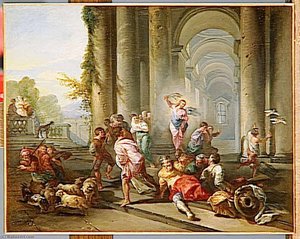
Ruins with St Paul Preaching
 Acryl auf Leinwand
- Wandkunst
- 18th Century Roman Visions
 1735
1735 63.0 x 48.0 cm
 Museo del Prado
 Mehr anzeigen
Giclée / Kunstdruck
Giclée- oder Leinwanddruck in Museumsqualität mit schneller Produktion und flexiblen Veredelungsoptionen. ( Handgemalte Reproduktion kaufen Zum digitalen Bild wechseln)




P118B $10

P118H $10

P118W $10

P438Z $10

P508JH $12

P508YH $12

P805H $10

P805Z $10

P919BZ $10

P919G $10

P919XJ $10

P959ZH $10

P968JZ $12

W106C $8

W218G $10

W218JH $8

W218Y $10

W307PJ $10

W316G $10

W316PJ $8

W316Y $10

W398PJ $8

W4111J $10

W500HY $15

W500JH $15

W692G $12

W849H $8

W940BG $15

W953PJ $8




Wählen Sie aus unseren vordefinierten Formaten, die den ursprünglichen Proportionen des Kunstwerks entsprechen.

Sie können Ihre eigenen Maße eingeben, um ein bestimmtes Format oder einen speziellen Platz einzupassen. Wenn das von Ihnen gewählte Format nicht den Proportionen des Originalbildes entspricht, werden wir das Kunstwerk entweder beschneiden oder das Bild mit einem gespiegelten oder einfarbigen Rand erweitern. Ein digitaler Entwurf wird Ihnen zur Genehmigung zugesandt, bevor die Produktion beginnt.
Bitte beachten Sie, dass die Vorschau auf dem Bildschirm nicht den tatsächlichen Zuschnitt oder die Erweiterung widerspiegelt. Nur der Entwurf zeigt die endgültige Komposition präzise an.
Obwohl Sondermaße verfügbar sind, empfehlen wir die Auswahl eines Maßes aus der vordefinierten Liste, um die ursprünglichen Proportionen zu bewahren.
Weltweiter Versand () innerhalb von 2 Wochen statt der üblichen 4/5 Wochen. (26 September)

Kostenloser weltweiter Expressversand

Hochwertige Leinenleinwand

Vollständiger Versicherungsschutz beim Versand

Zollgebühren-Rückerstattungsgarantie

Garantie für exakte Farbtreue

100-tägiges Rückgaberecht (nur bei Mängeln)

100% Geld-zurück-Garantie

Angebot für Mengenrabatt
 Die Glasoption ist nur für Größen unter 110 cm verfügbar.

Ruins with St Paul Preaching
Giclée / Kunstdruck
Format der Reproduktion
-


Gesamtpreis
$ 80
A Window into Roman Memory: Panini’s “Ruins with St Paul Preaching”
Giovanni Paolo Panini's "Ruins with St Paul Preaching," painted in 1735, isn’t merely a depiction of ancient ruins; it’s a meticulously constructed illusion, a testament to the artist’s profound understanding of perspective and his deep fascination with Rome’s layered history. This captivating work transports us to a carefully orchestrated scene – a gathering of figures amidst the evocative remains of a Roman temple or civic building. The painting immediately draws the eye with its dramatic use of light and shadow, characteristic of Panini's signature *veduta* style, which he perfected as one of the foremost landscape painters in Rome.
The composition is remarkably complex, achieved through masterful application of linear perspective. Panini doesn’t simply record a view; he actively shapes it, guiding the viewer’s eye through a series of receding planes and architectural details. Notice how the figures in the foreground are rendered with greater clarity and detail than those further back, creating an illusion of depth that is both convincing and subtly theatrical. The arrangement of these individuals – some engaged in animated conversation, others observing the ruins with contemplative expressions – adds to the sense of a vibrant, living scene within this timeless setting.
The Artist as Architect: Panini’s Unique Approach
Panini's artistic journey began far from the grand vistas he would later capture. Initially a decorator for palaces, he honed his skills under Francesco Galli-Bibiena, absorbing the principles of theatrical design and illusionistic space. This early training profoundly influenced his approach to landscape painting; he wasn’t simply interested in representing reality but in creating an *experience* of it. His meticulous study of Roman architecture, combined with a keen eye for detail and a mastery of perspective, allowed him to reconstruct entire cities within his canvases – not as they were in the present day, but as they might have appeared through the lens of memory and imagination.
The inclusion of elements like the horse and the dogs adds an intriguing layer of narrative. These details suggest a journey, perhaps an excursion into the ruins by a group of travelers or scholars. The presence of handbags hints at a contemporary audience, inviting us to consider how these ancient sites were perceived and appreciated during Panini’s time. The painting is not just about the ruins themselves; it's about the human interaction with them – the desire to understand, to explore, and perhaps even to romanticize the past.
Symbolism and Historical Context
“Ruins with St Paul Preaching” speaks volumes about 18th-century Rome’s fascination with its own history. The depiction of St. Paul preaching amidst these crumbling structures reflects a broader cultural trend – a renewed interest in classical antiquity and the Roman Empire. This era witnessed a fervent desire to recapture the grandeur and ideals of the past, often through the lens of idealized memory. Panini's work embodies this sentiment perfectly, transforming ruins into symbols of enduring beauty and intellectual significance.
Furthermore, the choice of St. Paul as the central figure is particularly resonant. As a pivotal apostle and arguably the most influential figure in the spread of Christianity, his presence elevates the scene beyond a simple depiction of ruins. It suggests a connection between the ancient world and the burgeoning Christian faith – a dialogue across centuries that resonated deeply with 18th-century artists and intellectuals. The painting invites us to contemplate the continuity of human experience, the enduring power of belief, and the timeless allure of the past.
Bringing Panini’s Vision Home: A OriginalUniqueArt Reproduction
OriginalUniqueArt is proud to offer a meticulously crafted hand-painted reproduction of “Ruins with St Paul Preaching.” Our skilled artisans replicate Panini's intricate details, vibrant colors, and masterful use of perspective with the utmost care. This reproduction captures not only the visual beauty of the original but also its emotional depth and historical significance. Whether you’re an art collector, an interior designer seeking a touch of timeless elegance, or simply someone captivated by the allure of Roman history, this reproduction offers a stunning way to bring Panini's vision into your home or office.
Biografie des Künstlers
Giovanni Paolo Panini (1691–1765): Master of Roman Vedute & Architectural Fantasies
Giovanni Paolo Panini, a name synonymous with the grandeur and romantic allure of 18th-century Rome, was more than just a painter; he was a visual architect of memory. Born in Piacenza in 1691, his artistic journey began under the tutelage of Giuseppe Natali and Andrea Galluzzi, but it was his exposure to the theatrical designs of Francesco Galli-Bibiena that truly ignited his imagination. This early immersion in stagecraft would profoundly influence his later work, imbuing it with a sense of dramatic composition and illusionistic space. In 1711, he relocated to Rome, a city already steeped in artistic history, where he honed his skills under the guidance of Benedetto Luti, mastering the art of drawing and laying the foundation for his future mastery of perspective.From Frescoes to Vedute: The Evolution of an Artistic Style
Panini’s initial success came not as a canvas painter but as a decorator of palaces. His frescoes adorned the walls of prominent Roman residences, including the Villa Patrizi (1719–1725), Palazzo de Carolis (1720) and Seminario Romano (1721–1722). These early commissions allowed him to develop his technical prowess and establish a reputation within Rome’s artistic circles. However, it was his embrace of the *veduta*, or view painting, that would ultimately define his legacy. Unlike earlier topographical artists who focused on precise documentation, Panini infused his depictions of Rome with a sense of imaginative reconstruction. He didn't merely record what he saw; he re-imagined it, blending existing structures with fragments of ancient ruins and fanciful architectural elements. This approach, often referred to as *capriccio*, allowed him to create scenes that were both recognizable and dreamlike, capturing the spirit of Rome’s layered history. His 1719 admission into the Congregazione dei Virtuosi al Pantheon signaled his growing recognition within the Roman art world, and he soon became a sought-after artist among Grand Tourists – wealthy young Europeans traveling Italy to complete their education.- Notable Techniques: Panini’s distinctive style was characterized by meticulous attention to detail—particularly in rendering perspective—combined with an expressive use of light and shadow. He skillfully employed the *Panini Projection*, a revolutionary technique that enabled him to accurately represent panoramic views, establishing himself as a pioneer in architectural painting.
- Influences: Panini’s artistic sensibilities were shaped by several prominent artists of his time, including Giuseppe Natali, Andrea Galluzzi and Jan van Goyen. Van Goyen's mastery of atmospheric perspective served as an inspiration for Panini’s own landscapes, while Francesco Galli-Bibiena’s theatrical stage designs instilled in him a sense of dramatic composition.
The Pantheon Interior View & Other Masterpieces
Panini achieved international renown through his monumental depiction of the Pantheon's interior—a masterpiece that exemplifies his artistic vision. Completed in 1747, this fresco captures the grandeur and solemn beauty of the temple with remarkable precision, utilizing subtle gradations of light to convey a sense of depth and atmosphere. Beyond the Pantheon, Panini produced numerous other celebrated works, including *Rome Views*, which showcase his ability to synthesize architectural elements and imaginative embellishments into captivating panoramas. His depictions of ancient ruins—particularly those found in Rome—were particularly innovative, reflecting a broader intellectual preoccupation with classical antiquity and its influence on artistic expression.- Iconic Paintings: Among Panini’s most enduring achievements are his views of the Roman Forum and Circus Maximus, which capture the dynamism of urban life while simultaneously conveying a sense of timelessness. These paintings demonstrate Panini's exceptional skill in capturing fleeting moments of light and color—a hallmark of Baroque painting.
- The Role of Imagination: Unlike many artists of his era who prioritized faithful representation, Panini deliberately manipulated perspective to heighten the emotional impact of his compositions. This imaginative approach—characteristic of *capriccio*—allowed him to transcend mere observation and create scenes that resonated with viewers on a deeper level.
A Legacy Enduring Through Time
Giovanni Paolo Panini’s influence extended far beyond his own lifetime. He was a respected teacher at both the Accademia di San Luca and the Académie de France in Rome, shaping the artistic sensibilities of a generation of artists. Among his pupils was Hubert Robert, who would become equally renowned for his depictions of ruins, though with a more overtly romantic sensibility. Panini’s style also resonated with other *vedutisti*, including Antonio Joli and Charles-Louis Clérisseau, inspiring them to explore the possibilities of architectural painting. His works are now held in prestigious collections worldwide, including the Prado Museum, the Louvre, and the Museo Nazionale di Capodimonte, testament to his enduring appeal. He remains a pivotal figure in art history—a testament to the transformative power of imagination and meticulous technique.- Rediscovery & Recognition: Panini’s reputation had waned considerably after his death, but he was revived by late 18th-century British collectors who championed his work. Today, Panini is celebrated as one of the foremost painters of Roman vedute—a genre that continues to fascinate art historians and viewers alike.

Giovanni Paolo Pannini
1691 - 1765 , Italien
Eckdaten zum Künstler
- Artistic Movement Or Style: Barock, Vedutismo
- Artists Or Movements Influenced By This Artist: ['Hubert Robert']
- Artists Who Influenced This Artist:
- Giuseppe Natali
- Andrea Galluzzi
- F.Galli-Bibiena
- Date Of Birth: 1691
- Date Of Death: 1765
- Full Name: Giovanni Paolo Panini
- Nationality: Italienisch
- Notable Artworks:
- Pantheon Innenansicht
- Romische Ansichten
- Capricci
- Place Of Birth: Piacenza, Italien
Verwandte Artikel

El Greco: Die 25 Meisterwerke – Kunst für Ihr Zuhause | OriginalUniqueArt
Entdecken Sie die 25 bedeutendsten Meisterwerke von El Greco! Erleben Sie die spirituelle Tiefe und den dramatischen Stil des griechischen Malers. Hochwertige Kunstdrucke & Inspiration für Ihr Zuhause auf OriginalUniqueArt.com.

Paul Cézanne: Die 25 Meisterwerke des Impressionismus | OriginalUniqueArt
Entdecken Sie die 25 Meisterwerke von Paul Cézanne! Tauchen Sie ein in die Welt des Impressionismus und Postimpressionismus. Erfahren Sie mehr über seine Stillleben, Landschaften & berühmten Gemälde – jetzt hochwertige Kunstdrucke auf OriginalUniqueArt.com.

Hubert Robert und die Romantik der Ruinen: Eine Studie zur künstlerischen Innovation und Antikenbegeisterung
Entdecken Sie die faszinierende Welt von Hubert Robert und seiner Ruinenmalerei! Expertenanalyse zu Techniken, Motiven & Investitionspotenzial für anspruchsvolle Kunstsammler. OriginalUniqueArt bietet hochwertige Reproduktionen.

Paul Klee: Die 25 Meisterwerke des Abstrakten – Kunst für Ihr Zuhause | OriginalUniqueArt
Entdecken Sie die 25 Meisterwerke von Paul Klee! Tauchen Sie ein in seine abstrakte Welt, voller Expressionismus und Bauhaus-Einflüsse. Hochwertige Kunst für Ihr Zuhause – jetzt bei OriginalUniqueArt entdecken!

Giovanni Paolo Panini: Capturing Roman Grandeur – A Vedute Master's Legacy
Explore the captivating world of Giovanni Paolo Panini, master of Roman vedute painting. Discover his technique, iconic works, influence on art history & collecting advice from experts at OriginalUniqueArt.