Vorschau anzeigen
 Versenden
 Teilen
 Details anzeigen
 Leitfaden

 Herunterladen
 Ähnliche Objekte
 Röntgenaufnahme
 Diashow
 Q&A
Q&A Statistiken
St Ansanus Baptizing

- 31.0 x 32.0 cm


 Weiterlesen
Giclée / Kunstdruck
Giclée- oder Leinwanddruck in Museumsqualität mit schneller Produktion und flexiblen Veredelungsoptionen. ( Handgemalte Reproduktion bestellen Zum digitalen Bild wechseln)




P118B €10

P118H €10

P118W €10

P438Z €10

P508JH €12

P508YH €12

P805H €10

P805Z €10

P919BZ €10

P919G €10

P919XJ €10

P959ZH €10

P968JZ €12

W106C €8

W218G €10

W218JH €8

W218Y €10

W307PJ €10

W316G €10

W316PJ €8

W316Y €10

W398PJ €8

W4111J €10

W500HY €15

W500JH €15

W692G €12

W849H €8

W940BG €15

W953PJ €8




Wählen Sie aus unseren vordefinierten Formaten, die den ursprünglichen Proportionen des Kunstwerks entsprechen.

Geben Sie die benötigte Breite und Höhe an, damit der Druck perfekt in Ihren Rahmen oder an Ihre Wand passt. Ein Druck kann nur beschnitten, aber niemals größer als das Originalbild angefertigt werden; daher verliert ein Format mit anderen Proportionen einen Teil des Bildes. Wir senden Ihnen ein digitales Mockup zur Freigabe, bevor wir den Druck ausführen. Das auf dieser Seite gezeigte Bild zeigt nicht den tatsächlichen Beschnitt – dies ist nur im Mockup ersichtlich.
Weltweiter Versand () innerhalb von 2 Wochen statt der üblichen 4/5 Wochen. (1 November)

Kostenloser weltweiter Expressversand

Hochwertige Leinenleinwand

Umfassender Versicherungsschutz beim Versand

Zollgebühren-Rückerstattungsgarantie

Garantie für exakte Farbtreue

100 Tage Rückgaberecht (nur bei Mängeln)

100% Geld-zurück-Garantie

Mengenrabatt verfügbar
 Die Glasoption ist nur für Größen unter 110 cm verfügbar.

St Ansanus Baptizing
Giclée / Kunstdruck
Format der Reproduktion
-


Endpreis
€ 71
A Moment of Grace: Giovanni di Paolo's "St Ansanus Baptizing"
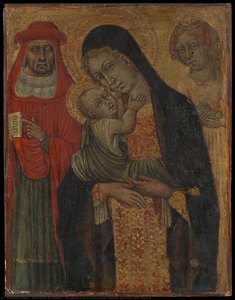
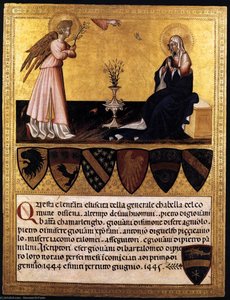
Giovanni di Paolo’s “St Ansanus Baptizing,” painted in Siena around 1440, is more than just a depiction of a religious ritual; it’s a window into the soul of early fifteenth-century Italy. This intimate scene, measuring 31 x 32 cm, captures a pivotal moment – the baptism – with a quiet solemnity that speaks volumes about faith and community. The painting immediately draws the eye to St. Ansanus himself, positioned on the left, his posture radiating authority as he prepares to pour water over those being cleansed in the river. His presence is both deliberate and compassionate, embodying the spiritual significance of this sacrament.
- Subject Matter: The central theme revolves around the baptism of individuals, a cornerstone of Christian belief representing purification and entry into the faith.
- Composition: Di Paolo masterfully employs a pyramidal composition, directing the viewer’s gaze towards St. Ansanus while subtly incorporating other figures within the scene.
- Setting: The outdoor setting, complete with a simple wooden chair, adds to the realism and reinforces the sense of a genuine, unadorned ceremony.
A Glimpse into Giovanni di Paolo’s Unique Style
Giovanni di Paolo was a singular voice within the burgeoning artistic landscape of Siena during this period. While other artists were embracing the revolutionary naturalism championed by Masaccio and Donatello, Di Paolo remained firmly rooted in the traditions of Gothic art, particularly its emphasis on lyrical beauty and symbolic richness. His work is characterized by an almost dreamlike quality, achieved through a meticulous attention to detail and a vibrant palette—a hallmark of his training as a manuscript illuminator. The use of rich blues, reds, and golds, typical of Sienese painting at the time, contributes significantly to the painting’s luminous effect.
The artist's technique is notable for its delicate rendering of fabrics and textures, evident in the flowing robes of the figures and the shimmering surface of the water. This meticulous approach, combined with a slightly stylized representation of human forms, creates an atmosphere that is both realistic and imbued with spiritual significance.
Symbolism and Context
Baptism held profound symbolic weight within the medieval Christian world. The immersion in water represented cleansing from sin and rebirth into Christ. In “St Ansanus Baptizing,” each figure participating in the ceremony carries a specific meaning – representing the faithful receiving God’s grace. St. Ansanus, as a prominent bishop, symbolizes spiritual guidance and authority. The scene reflects the importance of community rituals within the religious life of the time, emphasizing shared faith and devotion.
Painted around 1440, this work sits squarely within the late Gothic period, a transitional moment in Italian art history. It demonstrates the continued influence of medieval artistic conventions while hinting at the emerging Renaissance interest in naturalism and human emotion – a subtle foreshadowing of the dramatic shifts to come.
Emotional Impact & Reproduction
“St Ansanus Baptizing” evokes a powerful sense of serenity and reverence. The painting’s quiet intensity invites contemplation on themes of faith, purity, and renewal. OriginalUniqueArt offers a meticulously crafted hand-painted reproduction of this captivating artwork, allowing you to bring its beauty and historical significance into your home or office. Our skilled artisans faithfully recreate Di Paolo's unique style, ensuring that every detail – from the shimmering fabrics to the nuanced expressions of the figures – is reproduced with exceptional accuracy. This reproduction provides a tangible connection to a pivotal moment in art history, offering an unparalleled opportunity for artistic appreciation and contemplation.
Fragen & Antworten
Welche Technik und welcher Stil charakterisieren "St Ansanus Baptizing" von Giovanni di Paolo?
"St Ansanus Baptizing" ist in Oil On Canvas im Stil der Early Gothic-Epoche gefertigt.
Zählt "St Ansanus Baptizing" von Giovanni di Paolo zu den begehrten Kunstwerken der Early Gothic-Epoche?
"St Ansanus Baptizing" von Giovanni di Paolo wird als Recognized klassifiziert und gehört zur Early Gothic-Strömung.
Welcher Raum eignet sich aufgrund der Farben von "St Ansanus Baptizing" von Giovanni di Paolo am besten?
Aufgrund seiner Dark-Palette wird "St Ansanus Baptizing" von Giovanni di Paolo für ein Dining Room empfohlen; die Farbstimmung ist einer der Gründe für diese Empfehlung.
Künstlerbiografie
Giovanni di Paolo: Ein Sieneser Maler der Träume
- Geboren: um 1403, Siena, Italien
- Gestorben: 1482, Siena
Frühes Leben und künstlerische Entwicklung
Giovanni di Paolo di Grazia entwickelte sich im frühen 15. Jahrhundert zu einer bedeutenden Figur in der Sieneser Kunstszene. Obwohl die genauen Details seines frühen Lebens etwas verschwommen sind, wird angenommen, dass er möglicherweise bei Taddeo di Bartolo oder Martino di Bartolomeo in die Lehre ging, beides prominente Sieneser Meister. Seine anfängliche Ausbildung umfasste wahrscheinlich die Illumination von Manuskripten, was sich aus seiner dokumentierten Arbeit für die Dominikanische Ordnung in Siena seit etwa 1417 ergibt. Diese Zeit schärfte seine Fähigkeiten in Detail- und Farbgebung, entscheidende Elemente, die später seinen künstlerischen Stil definieren sollten.
Künstlerischer Stil und Einflüsse
Giovanni di Paolos Kunst zeichnet sich durch eine einzigartige Mischung aus gotischen Traditionen und aufkommenden Renaissance-Sensibilitäten aus. Seine frühen Werke spiegeln den Einfluss früherer Sieneser Meister wider, doch im Laufe seiner Karriere entwickelte er eine unverwechselbare visuelle Sprache, die sich durch langgestreckte Figuren, kalte, harte Farben und oft surreale Atmosphäre auszeichnete. Ein wichtiger Einfluss war Gentile da Fabriano, dessen Besuch in Siena um 1420 Giovanni’s künstlerische Vision tiefgreifend beeinflusste. Er übernahm Elemente von Gentiles Stil, insbesondere die Einarbeitung naturalistischer Details wie blühende Pflanzen in religiöse Szenen – eine Abweichung von den konventionelleren Darstellungen stehender Heiliger.
- Gotischer Einfluss: Deutlich erkennbar an seinen langgestreckten Figuren und dekorativen Mustern.
- Einfluss Gentile da Fabrianos: Übernahme naturalistischer Elemente und Fokus auf Details.
- Einzigartige, traumähnliche Qualität: Viele Werke besitzen eine ungewöhnliche, surreale Atmosphäre.
Hauptwerke und Themen
Giovanni di Paolos Œuvre umfasst zahlreiche Altarbilder, Tafeln und illuminierte Manuskripte. Seine bekanntesten Werke demonstrieren seine Fähigkeit, traditionelle religiöse Erzählungen in fesselnde visuelle Erlebnisse zu verwandeln. Das *Wunder des Heiligen Nikolaus von Tolentino* (um 1455) veranschaulicht seinen surrealen Stil mit seiner fantastischen Landschaft und traumartigen Komposition. Die Serie, die Szenen aus dem Leben der Heiligen Katharina von Siena darstellt, die heute in verschiedenen Museen verstreut sind, zeugt von seiner Meisterschaft im Erzählmalerei und ausdrucksstarken Charakterdarstellung.
- Das Wunder des Heiligen Nikolaus von Tolentino (um 1455): Ein Paradebeispiel für seinen surrealen Stil.
- Serie über die Heilige Katharina von Siena: Demonstriert erzählerisches Geschick und Charakterdarstellung.
- Illuminierte Manuskripte: Insbesondere Dantes *Göttliche Komödie*, die komplizierte Details und lebendige Farben zeigen.
Historische Bedeutung und Vermächtnis
Giovanni di Paolos Ruf erlebte nach seinem Tod im Jahr 1482 einen Rückgang, doch seine künstlerische Bedeutung wurde im 20. Jahrhundert wiederentdeckt. Er gilt heute als eine zentrale Figur der Sieneser Schule, die die Brücke zwischen spätgotischer Kunst und Frührenaissance schlägt. Seine Bereitschaft, mit Form und Farbe zu experimentieren, verbunden mit seiner einzigartigen, traumähnlichen Vision, unterschied ihn von seinen Zeitgenossen und etablierte ihn als eine unverwechselbare Stimme in der italienischen Kunstgeschichte.
- Übergangsfigur: Vermittelte zwischen Gotik und Renaissance.
- Wiederentdeckte Bedeutung: Im 20. Jahrhundert für seinen innovativen Ansatz anerkannt.
- Einzigartige künstlerische Vision: Seine traumähnliche Qualität unterscheidet ihn von anderen Sieneser Malern.
Giovanni di Paolo
1403 - 1482 , Italien
Kurzinfos
- Bemerkenswerte Werke:
- Mirakel des Hl. Nikolaus
- Leben der Katharina von Siena
- Göttliche Komödie (Illuminationen)
- Einflussreiche Künstler:
- Gentile da Fabriano
- Taddeo di Bartolo
- Geburtsdatum: ca. 1403
- Geburtsort: Siena, Italien
- Künstlerische Richtung: Sienese Schule, Gotik
- Nationalität: Italienisch
- Sterbedatum: 1482
- Vollständiger Name: Giovanni di Paolo
Ähnliche Artikel

Die Präzision des Pigmentdrucks: Giclée-Reproduktionen und ihre technischen Standards
Erfahren Sie alles über die technische Präzision von Giclée-Drucken und Pigmenttinten. Vertiefen Sie jetzt Ihr Wissen über Archivqualität.

Giclée Prints: Archival Quality & Aesthetic Nuances for the Discerning Collector
Explore the world of giclée prints with OriginalUniqueArt. Learn about archival quality, aesthetic nuances & investment potential. Expert guidance for discerning art collectors seeking museum-quality reproductions and lasting value.
Reproduktionsmedien im Vergleich: Handgemalte Ölgemälde, Leinwanddrucke und gerahmte Papierdrucke
Expertenrat für Innenarchitekten: Vergleichen Sie handgemalte Ölgemälde, Leinwanddrucke & Papierdrucke. Finden Sie die perfekte Kunstreproduktion für Ihr Projekt!

25 Meisterwerke der Biennale di Venezia: Eine Reise durch Venedigs Kunstseele
Entdecke 25 Ikonen der Biennale di Venezia. Von Grosse bis Simpson – Meisterwerke auf OriginalUniqueArt.com erleben.

Die 25 besten Meisterwerke von Giotto di Bondone: Der Vater der Renaissance
Entdecken Sie die 25 Meisterwerke von Giotto di Bondone. Erleben Sie die Geburtsstunde der Renaissance auf OriginalUniqueArt.com.