

 Vorschau anzeigen
 Versenden
 Teilen
 Details anzeigen
 Leitfaden

 Herunterladen
 Ähnliche Objekte
 Röntgenaufnahme
 Diashow
 Statistiken
Christ Blessing
 Öl auf Leinwand
- Wandkunst
- Renaissance Italian
 1500
1500 59.0 x 47.0 cm
 Kimbell Art Museum
 Weiterlesen
Giclée / Kunstdruck
Giclée- oder Leinwanddruck in Museumsqualität mit schneller Produktion und flexiblen Veredelungsoptionen. ( Handgemalte Reproduktion bestellen Zum digitalen Bild wechseln)




P118B €10

P118H €10

P118W €10

P438Z €10

P508JH €12

P508YH €12

P805H €10

P805Z €10

P919BZ €10

P919G €10

P919XJ €10

P959ZH €10

P968JZ €12

W106C €8

W218G €10

W218JH €8

W218Y €10

W307PJ €10

W316G €10

W316PJ €8

W316Y €10

W398PJ €8

W4111J €10

W500HY €15

W500JH €15

W692G €12

W849H €8

W940BG €15

W953PJ €8




Wählen Sie aus unseren vordefinierten Formaten, die den ursprünglichen Proportionen des Kunstwerks entsprechen.

Geben Sie die benötigte Breite und Höhe an, damit der Druck perfekt in Ihren Rahmen oder an Ihre Wand passt. Ein Druck kann nur beschnitten, aber niemals größer als das Originalbild angefertigt werden; daher verliert ein Format mit anderen Proportionen einen Teil des Bildes. Wir senden Ihnen ein digitales Mockup zur Freigabe, bevor wir den Druck ausführen. Das auf dieser Seite gezeigte Bild zeigt nicht den tatsächlichen Beschnitt – dies ist nur im Mockup ersichtlich.
Weltweiter Versand () innerhalb von 2 Wochen statt der üblichen 4/5 Wochen. (26 Oktober)

Kostenloser weltweiter Expressversand

Hochwertige Leinenleinwand

Umfassender Versicherungsschutz beim Versand

Zollgebühren-Rückerstattungsgarantie

Garantie für exakte Farbtreue

100 Tage Rückgaberecht (nur bei Mängeln)

100% Geld-zurück-Garantie

Mengenrabatt verfügbar
 Die Glasoption ist nur für Größen unter 110 cm verfügbar.

Christ Blessing
Giclée / Kunstdruck
Format der Reproduktion
-


Endpreis
€ 70
A Moment of Grace: Giovanni Bellini’s “Christ Blessing”
Giovanni Bellini's "Christ Blessing," painted around 1500 in Venice, isn’t merely a depiction of the resurrected Christ; it’s an immersive meditation on faith, redemption, and the profound mystery at the heart of Christian belief. This intimate devotional panel, now housed within the hallowed halls of the Kimbell Art Museum in Fort Worth, Texas, transcends simple portraiture to become a powerful visual sermon, inviting contemplation long after the initial viewing. Bellini masterfully blends Byzantine tradition with the burgeoning humanism of the Renaissance, creating an image that is both deeply spiritual and remarkably accessible.
The scene unfolds with arresting immediacy. Christ, rendered in a strikingly realistic manner for his time – yet retaining a distinctly serene and almost youthful quality – faces the viewer directly. His level gaze establishes a palpable connection, drawing us into this sacred moment. He raises his right hand in blessing, a gesture of profound grace and offering, while his left grips the vibrant red staff of the Resurrection banner, a potent symbol of triumph over death. The subtle yet unmistakable wounds on his hand and chest – barely visible, yet undeniably present – serve as poignant reminders of his sacrifice, grounding the divine with an undeniable human reality.
Symbolism Woven into the Landscape
Bellini’s genius lies not just in the central figure but also in the richly layered symbolism embedded within the background landscape. This isn't a distant, ethereal vista; it’s a carefully constructed allegory designed to illuminate the narrative of salvation. The withered tree with a solitary bird on the left side of the panel represents the Old Covenant, gradually giving way to the promise of the New. The pair of rabbits – a recurring motif in Bellini’s work – symbolize regeneration and new life, echoing the transformative power of Christ's resurrection. Even the shepherd tending his flock is imbued with meaning: he embodies Christ as the Good Shepherd (drawing directly from John 10:14), guiding and protecting his people.
The distant bell tower, a prominent feature in the background, speaks to the Church’s role in facilitating salvation. And subtly, yet powerfully, the three robed figures hurrying towards the tomb – undoubtedly the Three Marys – convey the urgency of the news: the empty tomb and the promise of resurrection. The entire landscape becomes a visual roadmap of redemption, guiding the viewer through the complex journey from earthly suffering to eternal glory.
Technique and Light: A Masterclass in Venetian Painting
Bellini’s mastery is evident in his exquisite use of color and light. The painting is suffused with a warm, golden radiance emanating from Christ's head – a technique borrowed from the Byzantine tradition – signifying his divinity. This luminosity contrasts beautifully with the cooler tones used for the landscape, creating a dynamic interplay between earthly and heavenly realms. The artist’s brushwork is remarkably smooth and controlled, particularly in the rendering of Christ’s flesh, demonstrating a deep understanding of anatomy and form.
Bellini's skill in layering glazes – applying thin, translucent layers of paint to build up color and depth – contributes significantly to the painting’s luminous quality. This technique, perfected over decades of practice, allows light to penetrate through the pigments, creating a sense of atmosphere and realism that was revolutionary for its time. The subtle shadows cast by Christ's arm further emphasize the reality of his resurrection, grounding the divine in tangible form.
A Timeless Testament to Faith
"Christ Blessing" is more than just a beautiful painting; it’s a profound meditation on faith and humanity. Bellini’s ability to seamlessly blend religious symbolism with artistic skill creates an image that continues to resonate with viewers centuries after its creation. It's a testament to the enduring power of art to communicate complex ideas and evoke deep emotions, inviting us to contemplate our own relationship with faith, hope, and redemption. A reproduction captures this essence beautifully, bringing this masterpiece into any home or space as a constant reminder of its timeless message.
Fragen & Antworten
Für welche Verwendung und welchen Raum wird "Christ Blessing" von Giovanni Bellini (Giambellino) empfohlen?
"Christ Blessing" wird für Statement-Piece empfohlen; der ideale Ort dafür ist ein Wohnzimmer.
Welche Technik und welche Maße hat "Christ Blessing" von Giovanni Bellini (Giambellino)?
Das Originalwerk "Christ Blessing" von Giovanni Bellini (Giambellino) ist ein Öl auf Leinwand mit den Maßen 59 x 47 cm. Technik und Größe beziehen sich auf das Originalobjekt.
Welchem Künstler wird "Christ Blessing" zugeschrieben?
"Christ Blessing" wurde von Giovanni Bellini (Giambellino) geschaffen. Die Informationen auf dieser Seite beschreiben das Originalwerk von Giovanni Bellini (Giambellino).
Künstlerbiografie
Frühes Leben und Karriere
Giovanni Bellini, ein bedeutender italienischer Renaissancemaler, wurde um 1433 in Venedig geboren. Er wuchs im Haushalt von Jacopo Bellini auf, der früher als sein Vater galt, aber nun als sein älterer Bruder angesehen wird. Giovannis frühe Werke zeichnen sich durch eine tiefe religiöse Gefühlswelt und menschliche Pathos aus, wie man an seiner Darstellung des St. Hieronymus in der Wüste (jetzt in der National Gallery, London) erkennen kann.Aufstieg zur Prominenz
Giovannis künstlerischer Stil entwickelte sich im Laufe der Zeit weiter, und er wurde schließlich für seine üppige Farbgebung und fließende, atmosphärische Landschaftsdarstellungen bekannt. Seine Arbeit hatte einen bedeutenden Einfluss auf die venezianische Malerschule, insbesondere auf seine Schüler Giorgione und Tizian. Giovanni erhielt 1470 seine erste Anstellung, um zusammen mit seinem Bruder Gentile Bellini und anderen Künstlern in der Scuola di San Marco zu arbeiten.Bemerkenswerte Werke und Vermächtnis
- Die Verklärung (jetzt im Museo Nazionale di Capodimonte in Neapel) zeigt Giovannis reifen Stil, geprägt von einem ruhigen Geist und ausgereiften Kräften.
- Die Krönung der Jungfrau (in Pesaro) demonstriert seinen frühen Versuch in einer Kunstform, die zuvor vom rivalisierenden Vivarini-Stil dominiert wurde.
- Giovannis Pflichten als Konservator der Gemälde in der Großen Halle des Dogenpalastes (1479–1480) festigten weiter seinen Ruf als Meistermaler.
Künstlerischer Stil und Einfluss
Giovanni’s Verwendung klarer, langsam trocknender Ölfarben schuf tiefe, satte Farbtöne und detaillierte Schattierungen, was die venezianische Malerei revolutionierte. Seine Arbeit kann durch Folgendes charakterisiert werden:- Sensueller und farbintensiver Stil
- Üppige Farbgebung und fließende, atmosphärische Landschaften
- Einfluss auf die venezianische Malerschule und seine Schüler Giorgione und Tizian
Referenzen

Giovanni Bellini (Giambellino)
1433 - 1516 , Italien
Kurzinfos
- Bemerkenswerte Kunstwerke:
- St. Hieronymus in der Wüste
- Die Verklärung
- Coronation of the Virgin
- Madonna del Prato
- Barbarigo-Altarbild
- Madonna degli Alberetti
- Geburtsdatum: ca. 1433
- Geburtsort (Stadt Und Land): Venedig, Italien
- Künstler Oder Bewegungen, Die Von Diesem Künstler Beeinflusst Wurden:
- Giorgione
- Titian
- Künstlerische Bewegung Oder Stil: Venezianische Renaissance
- Nationalität: Italienisch
- Todatum: 1516
- Vollständiger Name: Giovanni Bellini
Ähnliche Artikel

The Golden Light of Innovation: Exploring the Venetian Renaissance Art Movement (1430–1580)
Explore the Golden Age of Venetian art (1430–1580). Discover Giorgione, Titian & Tintoretto's techniques, the 'colorito' revolution, and lasting influence. Expert insights for collectors & enthusiasts.

Jacopo Tintoretto: Die 25 Meisterwerke des venezianischen Dramatikers | OriginalUniqueArt
Entdecken Sie die 25 Meisterwerke von Jacopo Tintoretto! Tauchen Sie ein in die dramatische Welt der venezianischen Renaissance. Hochwertige Kunst-Reproduktionen & Inspiration für Ihr Zuhause – jetzt auf OriginalUniqueArt.com.
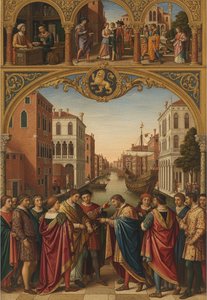
Vittore Carpaccio: Venezianische Renaissance und die Poetik des Details
Entdecken Sie die faszinierende Welt Vittore Carpaccios! Analysieren Sie mit uns seine einzigartige venezianische Renaissance-Malerei, den St.-Georgs-Zyklus und seinen Einfluss auf die Kunstgeschichte. Expertenwissen & Detailreichtum.

Venetian Renaissance: The Mastery of Color, Light, and the Art of Colorito
Explore the luminous mastery of the Venetian Renaissance. Discover how masters like Titian and Giorgione revolutionized art through colorito, light, and atmosphere. An expert guide to the golden age of Italian painting for collectors and enthusiasts.
Venetian Renaissance: The Golden Age of Color, Light, and Luminous Artistry
Embark on a journey through the Venetian Renaissance. Discover how masters like Giorgione and Titian revolutionized art through luminous color and light. Explore the profound legacy of the Venetian School and its enduring influence on the world of fine art.


