 Vorschau anzeigen
 Versenden
 Teilen
 Details anzeigen
 Leitfaden

 Herunterladen
 Ähnliche Objekte
 Röntgenaufnahme
 Diashow
 Fragen & Antworten
 Statistiken
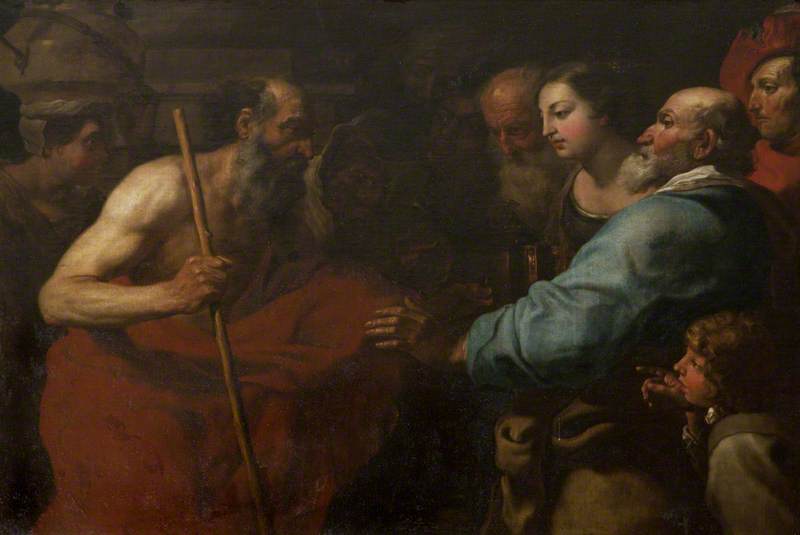
Diogenes with His Lantern

- 115.0 x 163.0 cm

 Weiterlesen
Erhalten Sie eine druckfertige Datei, die weit über die Web-Vorschau hinausgeht. Jedes von uns verkaufte digitale Bild basiert auf einem hochauflösenden Master aus unserer Datenbank – in der Regel 5.000 bis 15.000 Pixel breit –, sodass Sie mit Vertrauen großformatig drucken, eng ausschneiden oder feinste Details reproduzieren können.
Keine Datei verlässt unser Studio unberührt. Ein Digitalexperte gleicht die Farben mit dem Originalgemälde ab und korrigiert sie bei Bedarf, um anschließend Klarheit und Details mit professionellen Retuschewerkzeugen zu optimieren – dabei stets der Pinselführung und dem Stil des Künstlers treu bleibend. Das Ergebnis ist ein Bild, das wie das Gemälde selbst wirkt und nicht wie ein gefilterter Scan.
Sie entscheiden über das Endergebnis: Unser Experte sendet Ihnen das Bild innerhalb von 72 Stunden zur Ansicht per E-Mail zu. Nicht zufrieden? Fordern Sie Verbesserungen oder Korrekturen an oder verlangen Sie eine Rückerstattung, falls die Qualität nicht Ihren Erwartungen entspricht.
Dies ist die Qualität, auf die sich Verlage, Designstudios, Galerien und Druckereien verlassen.
Digitales Kunstwerk
Laden Sie eine hochauflösende Datei für die persönliche Präsentation, den Druck und kreative Projekte herunter. ( Zum Druck wechseln Handgemalte Reproduktion bestellen)
In jeder Bestellung digitaler Bilder enthalten
Professionelle digitale Bereitstellung, garantiert
Wenn Sie sich für OriginalUniqueArt.com entscheiden, erhalten Sie nicht nur ein Bild – Sie erhalten ein professionell aufbereitetes digitales Kunstwerk, das mit höchster Präzision erstellt und durch eine Zufriedenheitsgarantie abgesichert wird. Hier ist alles, was automatisch mit Ihrer Bestellung geliefert wird:

Schnelle E-Mail-Zustellung
Ihre hochauflösende digitale Bilddatei wird Ihnen innerhalb von 72 Stunden nach der Bestellung per E-Mail zugestellt – bereit zur sofortigen Verwendung.

KI-optimierte digitale Datei
Ihre Kunstwerke werden professionell mithilfe fortschrittlicher KI-Tools und manueller Bearbeitung optimiert, um maximale Detailtreue, Klarheit und Farbgenauigkeit zu gewährleisten.

Kostenloser lebenslanger Neudruckservice
Datei versehentlich gelöscht oder verloren? Keine Sorge – wir senden sie Ihnen jederzeit kostenlos erneut zu.

Keine Einfuhrgebühren – jemals
Genießen Sie Ihr Kunstwerk sofort ohne Zollgebühren, Einfuhrabgaben oder Versandkosten – digitale Downloads sind immer steuerfrei.

Garantierte Farbtreue
Wir garantieren, dass Ihr digitales Bild mithilfe professioneller Werkzeuge und Farbmanagement die Originalfarben so präzise wie möglich wiedergibt.

100-Tage-Zufriedenheitsgarantie
Sollten Sie mit Ihrem digitalen Bild nicht zufrieden sein, werden wir es überarbeiten oder 100% innerhalb von 100 Tagen erstatten – ohne Wenn und Aber.

100% Geld-zurück-Garantie
Nicht zufrieden? Erhalten Sie innerhalb von 100 Tagen nach Erhalt Ihrer digitalen Datei eine vollständige Rückerstattung – ohne Wenn und Aber.

Rabatte bei Großbestellungen
3 Bilder kaufen, 10% sparen – 5 Bilder kaufen, 15% sparen – Ab 10 Bildern 20% sparen. Ideal für kreative Projekte, Galerien und Agenturen.
Biografie des Künstlers
Frühes Leben und Ausbildung in Genua
Gioacchino Assereto, geboren um 1600 in Genua, trat als eine zentrale Figur in der künstlerischen Landschaft der Stadt während des frühen Barock hervor. Seine Reise begann bereits im zarten Alter von zwölf Jahren, als er die Werkstatt von Luciano Borzone betrat, einem angesehenen Maler, der für seine religiösen Werke und dynamischen Kompositionen bekannt war. Diese anfängliche Lehre legte den Grundstein für Asseretos technisches Können, doch erst seine darauffolgende Ausbildung bei Giovanni Andrea Ansaldo, die um 1614 begann, prägte seine künstlerische Richtung wahrhaftig. Ansoldos Atelier bot ein strengeres Umfeld, das ein tieferes Verständnis von Anatomie, Perspektive und den Nuancen der Ölmalerei förderte. Entscheidend war auch Asseretos Teilnahme an der Accademia del Nudo, einer von Giancarlo Doria gegründeten Institution, die sich dem Studium der menschlichen Form durch Aktzeichnen widmete – eine Praxis, die für die Beherrschung der realistischen Darstellung von Figuren unerlässlich war, die später zum Markenzeichen seines Stils werden sollte. Genua war in dieser Ära eine geschäftige Hafenstadt, ein Kreuzweg der Kulturen und Ideen, und Asseretos frühe Begegnung mit vielfältigen Einflüssen trug zweifellos zu seiner sich entwickelnden künstlerischen Sensibilität bei. Er etablierte sich schnell als vielversprechendes Talent innerhalb der genuesischen Kunstszene, indem er die vorherrschenden Trends absorbierte und gleichzeitig seinen eigenen, einzigartigen Weg einschlug.Der römische Aufenthalt und die Hinwendung zum Caravaggismus
Bis 1639 war Asseretos Ruf so weit gewachsen, dass er eine Reise nach Rom rechtfertigte – eine Pilgerreise, die viele aufstrebende Künstler jener Zeit unternahmen, um Inspiration von den Meistern zu suchen und neuen künstlerischen Strömungen zu begegnamen. Dieser Trip erwies sich für den genuesischen Maler als transformativ. Er tauchte in die Ateliers verschiedener römischer Künstler ein und begegnete Werken, die seinen Horizont erweiterten und seine bestehenden ästhetischen Prinzipien herausforderten. Bemerkenswerterweise knüpfte er Kontakte zu Mitstreitern aus Genua, die bereits in Rom tätig waren, darunter Luca Saltarello, Giovanni Maria Bottalla, Giovanni Benedetto Castiglione und Giovanni Andrea Podestà, wodurch ein Netzwerk des künstlerischen Austauschs entstand. Den tiefgreifendsten Einfluss hatte jedoch die Auseinandersetzung mit dem aufstrebenden Realismus der Caravaggisten. Der dramatische Einsatz von Chiaroscuro – dem starken Kontrast zwischen Licht und Schatten – und die intensiv naturalistische Darstellung von Figuren faszinierten Assereto. Er begann, diese Elemente in sein eigenes Werk zu integrieren und bewegte sich weg von den idealisierteren Formen der früheren Barockmalerei hin zu einem raueren, emotional resonanteren Stil. Diese Hinwendung zum Caravaggismus war nicht bloß stilistischer Natur; sie spiegelte einen breiteren Wandel künstlerischer Prioritäten wider, der die direkte Beobachtung und psychologische Tiefe über opulente Ornamentik stellte.Reifer Stil und genuesische Aufträge
Nach seiner Rückkehr nach Genua begann Assereto eine Phase intensiver Tätigkeit und sicherte sich zahlreiche Aufträge, die seine Position als führender Historienmaler der Stadt festigten. In den 1640er Jahren widmete er sich besonders der Freskomalerei und schmückte Kirchen und Palazzi mit großformatigen Kompositionen, die religiöse Erzählungen und historische Ereignisse darstellten. Seine Gemälde aus diesem Jahrzehnt zeugen von einer meisterhaften Beherrschung sowohl des Chiaroscuro als auch des Sfumato, wodurch eine Dramatik und Atmosphäre geschaffen wurde, die den Betrachter förmlich in die Szene hineinzieht. Er replizierte jedoch nicht einfach die Techniken Caravaggios; Assereto verlieh seinem Werk eine ganz eigene genuesische Sensibilität – eine gesteigerte Aufmerksamkeit für Details in Kostümen und Settings, die die merkantile Kultur der Stadt und ihre Wertschätzung für materiellen Reichtum widerspiegelte. Sein Erfolg war so groß, dass er ein geschäftiges Atelier unterhielt, in dem zahlreiche Kopien seiner Werke entstanden, oft unter der Anleitung seines Sohnes Giuseppe Assereto. Diese Vervielfältigung spricht nicht nur für die Nachfrage nach seinen Gemälden, sondern auch für deren inhärente Anziehungskraft – sie fanden bei den Zeitgenossen Anklang, die sowohl technisches Geschick als auch emotionale Wirkung schätzten.Vermächtnis und historische Bedeutung
Raffaele Soprani, ein bedeutender genuesischer Biograf, der zu Asseretos Lebzeiten schrieb, pries ihn als „unvergleichlich“, ein Zeugnis für die weitreichende Anerkennung und den Einfluss des Künstlers. Auch wenn dies eine Übertreibung sein mag, spiegelt Sopranis Lob die echte Hochachtung wider, die Assereto von seinen Kollegen und Auftraggebern entgegengebracht wurde. Seine Gemälde stehen als eindrucksvolle Beispiele der Barockkunst in Genua und schlagen die Brücke zwischen älteren Traditionen und den radikaleren Innovationen des Caravaggismus. Er brillierte in der Darstellung sowohl religiöser als auch historischer Themen, doch es waren seine Porträts, die oft einen scharfen psychologischen Einblick in seine Dargestellten gewährten. Asseretos Beitrag liegt nicht nur in seiner technischen Virtuosität – seiner Fähigkeit, Texturen, Licht und Schatten mit bemerkenswerter Präzision wiederzugeben – sondern auch in seiner Kapazität, seinen Bildern Emotion und erzählerische Kraft einzuhauchen. Er hinterließ ein umfangreiches Werk, das die Betrachter bis heute fesselt und einen Einblick in das künstlerische und kulturelle Leben des Genua des 17. Jahrhunderts bietet. Sein Einfluss ist in den Werken nachfolgender genuesischer Maler zu sehen, die die dramatischen Möglichkeiten von Chiaroscuro und Realismus weiter erforschten. Asseretos Gemälde bleiben essenziell für das Verständnis der Entwicklung der Barockkunst in Italien, da sie eine einzigartige Mischung aus lokalen Traditionen und internationalen Einflüssen präsentieren.
Gioacchino Assereto
1600 - 1649 , Italien
Auf einen Blick
- Artistic Movement Or Style: Barock, Caravaggismus
- Artists Or Movements Influenced By This Artist: ['Giuseppe Assereto']
- Artists Who Influenced This Artist:
- Luciano Borzone
- Giovanni Andrea Ansaldo
- Date Of Birth: 1600
- Date Of Death: 1649
- Full Name: Gioacchino Assereto
- Nationality: Italienisch
- Notable Artworks: ['Die Beweinung Christi']
- Place Of Birth: Genua, Italien