

 Vorschau anzeigen
 Versenden
 Teilen
 Details anzeigen

 Herunterladen
 Ähnliche Objekte
 Röntgenaufnahme
 Diashow
 Stats
StatsJohn Shaw
 Acrylic On Canvas
- WallArt
- Romanticism
 1793
1793 91.0 x 71.0 cm
 Metropolitan Museum of Art
 Weiterlesen
Handgefertigte Ölreproduktion
Handgemaltes Ölgemälde auf Leinwand in Ihrer Wunschgröße und mit Rahmen, auf Bestellung von unseren Künstlern angefertigt. ( Switch to Print Switch to Digital Image)




P118B $10

P118H $10

P118W $10

P438Z $10

P508JH $12

P508YH $12

P805H $10

P805Z $10

P919BZ $10

P919G $10

P919XJ $10

P959ZH $10

P968JZ $12

W106C $8

W218G $10

W218JH $8

W218Y $10

W307PJ $10

W316G $10

W316PJ $8

W316Y $10

W398PJ $8

W4111J $10

W500HY $15

W500JH $15

W692G $12

W849H $8

W940BG $15

W953PJ $8




Wählen Sie aus unseren vordefinierten Formaten, die den ursprünglichen Proportionen des Kunstwerks entsprechen.

Sie können Ihre eigenen Maße eingeben, um einen bestimmten Rahmen oder Platz auszufüllen. Wenn die gewählte Größe nicht den Proportionen des Originalbildes entspricht, werden wir das Kunstwerk entweder beschneiden oder das Gemälde durch zusätzliche, handgemalte Elemente erweitern. Ein digitales Mockup wird Ihnen zur Genehmigung zugesandt, bevor die Produktion beginnt.
Bitte beachten Sie, dass die Bildschirmvorschau nicht die tatsächliche Beschneidung oder Erweiterung widerspiegelt. Nur das Mockup zeigt die endgültige Komposition exakt an.
Obwohl Sondermaße verfügbar sind, empfehlen wir, eine Größe aus der vordefinierten Liste zu wählen, um die ursprünglichen Proportionen beizubehalten.
Nach der Bestellung wird das OriginalUniqueArt.com-Team dem Kunden Anweisungen per E-Mail zusenden und eine Mockup-Vorschau bereitstellen.
Weltweiter Versand () in nur 3 bis 4 Wochen statt der üblichen 5 Wochen. (8 September). Keine Kompromisse bei der Qualität.

Kostenloser weltweiter Expressversand

Hochwertige Leinenleinwand

Umfassender Versicherungsschutz beim Versand

Zollgebühren-Rückerstattungsgarantie

Garantie für exakte Farbtreue

100-Tage-Rückgaberecht (nur bei Mängeln)

100% Geld-zurück-Garantie

Mengenrabatt verfügbar
 Die Glasoption ist nur für Größen unter 110 cm verfügbar.

John Shaw
Art der Reproduktion
Format der Reproduktion
-


Gesamtpreis
$ 300
A Portrait of Quiet Dignity: John Shaw by Gilbert Stuart Newton
Gilbert Stuart Newton’s “John Shaw” isn't merely a likeness; it’s a carefully constructed tableau of 18th-century English life, imbued with the subtle grace and contemplative spirit characteristic of the Romantic movement. Completed in 1793, this oil painting captures a gentleman of considerable standing – though his precise identity remains somewhat shrouded in historical mystery – seated within a richly appointed interior, radiating an aura of quiet dignity and intellectual curiosity. Newton’s skill lies not just in replicating physical features but in conveying a profound sense of character through gesture, expression, and the meticulous rendering of textures and light.
Newton's artistic lineage is deeply intertwined with that of his uncle, the celebrated Gilbert Stuart, though he forged his own distinct path. Trained initially for a commercial career, Newton’s apprenticeship under Stuart proved transformative, introducing him to the Neoclassical techniques favored by the elder master while simultaneously nurturing a burgeoning interest in capturing emotional depth and narrative complexity. This dual influence is evident in “John Shaw,” where the formal structure of portraiture—the carefully arranged pose, the precise detailing of clothing—is subtly infused with a Romantic sensibility, particularly in the painting’s evocative use of light and shadow to create an atmosphere of intimacy and reflection.
The Language of Form and Texture
Newton's technique is characterized by a remarkable sensitivity to detail and a masterful command of oil paint. He employs a layered approach, building up color gradually through numerous thin glazes, creating a luminous surface that seems to shimmer with reflected light. The rich velvet of Shaw’s coat, the intricate embroidery on his waistcoat, and the subtle sheen of the polished wood paneling all contribute to an overwhelming sense of tactile realism. Notice particularly the way Newton captures the play of light across Shaw's face—the delicate highlights on his forehead, the shadowed recesses beneath his eyes—revealing a wealth of emotion hidden beneath a composed exterior.
The composition itself is carefully balanced, drawing the eye to Shaw’s central figure while simultaneously establishing a sense of depth and spatial awareness. The arrangement of objects within the room – the books on the shelves, the writing desk, the partially obscured landscape visible through the window—suggests a life devoted to intellectual pursuits and quiet contemplation. These elements aren't merely decorative; they serve as symbolic anchors, grounding Shaw’s character within a specific social and cultural context.
Symbolism and Historical Context
“John Shaw” is more than just a portrait; it’s a window into the world of 18th-century England. The gentleman depicted likely represents a member of the landed gentry or perhaps a prominent merchant, judging by his attire and surroundings. The inclusion of books and writing implements speaks to the importance of education and intellectual discourse during this period. Furthermore, the painting’s overall mood—a blend of serenity, sophistication, and subtle melancholy—reflects the prevailing sensibilities of the Romantic era, which emphasized emotion, imagination, and the beauty of nature.
Interestingly, the identity of “John Shaw” remains elusive. While scholars have proposed various possibilities – including a member of the aristocracy or a prominent literary figure – his true identity has never been definitively established. This ambiguity adds to the painting’s enduring appeal, inviting viewers to project their own interpretations and emotions onto the subject's face.
Bringing “John Shaw” Home
OriginalUniqueArt offers high-quality reproductions of Gilbert Stuart Newton’s “John Shaw,” allowing you to bring this captivating work of art into your home or office. Whether you are an art collector, a design enthusiast, or simply someone seeking to add a touch of timeless elegance to your space, our meticulously crafted prints and canvases will faithfully capture the painting's original beauty and emotional resonance. Explore our range of sizes and framing options to find the perfect way to display this remarkable portrait—a testament to Newton’s artistic skill and a poignant glimpse into the world of 18th-century England.
Über den Künstler
Gilbert Stuart Newton: Leben & Erbe
Frühes Leben und familiärer Hintergrund
- Geburt und Herkunft: Gilbert Stuart Newton wurde am 2. September 1795 in Halifax, Nova Scotia, geboren. Er war das jüngste von zwölf Kindern.
- Frühe Jahre & Rückkehr nach Amerika: Die Familie lebte zunächst in Boston, kehrte jedoch im Jahr 1803 nach Charlestown bei Boston zurück, nachdem sein Vater verstorben war.
Künstlerische Ausbildung und Einflüsse
- Anfänglicher Weg & Anleitung durch den Onkel: Obwohl ursprünglich eine kommerzielle Karriere für ihn vorgesehen war, wurde Newton als Lehrling bei seinem Onkel Gilbert Stuart aufgenommen, was den Beginn seiner künstlerischen Reise markierte.
- Europäische Studien: Er reiste gemeinsam mit einem älteren Bruder nach Europa und studierte die Malerei in Florenz. Spätere Aufenthalte in Paris (1817) führten ihn mit Künstlern wie Charles Robert Leslie, Washington Allston und David Wilkie zusammen.
- Royal Academy & Formale Ausbildung: Nach einer Zeit in den Niederlanden setzte Newton seine Ausbildung an der Royal Academy in London fort.
Künstlerischer Stil und Hauptthemen
- Romantische Sensibilitäten: Newtons Werk wird allgemein der Romantik zugeordnet, einer Epoche, die durch emotionale Intensität und dramatische Erzählungen geprägt ist.
- Literarische & Poetische Inspirationen: Er erlangte besondere Berühmtheit durch Gemälde, die von der Literatur und Poesie inspiriert waren. Motive aus Werken wie Don Quijote und den Schriften Shakespeares nahmen in seinem Œuvre einen prominenten Platz ein.
- Porträtmalerei & Genreszenen: Während er Porträts bedeutender Persönlichkeiten wie Washington Irving schuf, brillierte Newton ebenso sehr in Genreszenen, die flüchtige Momente aus literarischen Erzählungen einfingen.
Wichtige Erfolge und Anerkennung
- Mitgliedschaft in der Royal Academy: Newton wurde 1827 zum Ehrenakademiker der National Academy of Design, 1829 zum Associate der Royal Academy und schließlich 1832 zum vollwertigen Akademiker gewählt.
- Ausstellungen & Mäzenatentum: Ab 1818 stellte er regelmäßig an der Royal Academy aus, gewann an Anerkennung und zog bedeutende Mäzene wie den Marquis of Lansdowne an.
- Öffentliche Sammlungen: Seine Werke fanden Eingang in bedeutende öffentliche Sammlungen, darunter die National Gallery und das South Kensington Museum (heute V&A).
Späteres Leben und Vermächtnis
- Psychische Gesundheit & letzte Jahre: Kurz nach seiner Wahl in die Royal Academy begann Newton, an einer psychischen Erkrankung zu leiden. Er wurde in einer Anstalt in Chelsea untergebracht, wo er bis zu seinem Tod am 5. August 1835 weiter malte.
- Grabstätte: Er liegt auf dem Friedhof der St Mary’s Church in Wimbledon, London, begraben.
- Historische Bedeutung: Obwohl er im Schatten seines Onkels Gilbert Stuart stand, schuf sich Newton eine eigene Nische als geschickter und fantasievoller Künstler der Romantik. Seine literarisch inspirierten Gemälde bieten tiefe Einblicke in den kulturellen Geschmack und die künstlerischen Strömungen des britischen 19. Jahrhunderts.

Gilbert Stuart Newton
1795 - 1835 , Nova Scotia
Kurzinfos
- Movement: Romantik
- Name: Gilbert Stuart Newton
- Nationality: Britisch
Ähnliche Artikel
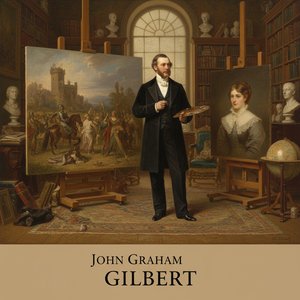
John Graham Gilbert: Rediscovering a Victorian Master of Narrative & Portraiture
Discover the captivating world of John Graham Gilbert, a Victorian master! Explore his portraits, genre scenes & illustrations. Learn about his influences, legacy & find high-quality reproductions at OriginalUniqueArt.
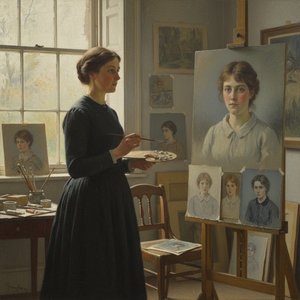
Gwen John: Intimität, Moderne und die stille Kraft der walisischen Porträtkunst
Entdecken Sie das faszinierende Werk von Gwen John – einer Pionierin der walisischen Moderne. Erfahren Sie mehr über ihre einzigartigen Porträts, ihren Stil und ihr Vermächtnis in der Kunstgeschichte.

John Singer Sargent: Die 25 Meisterwerke des Porträts – Kunst für Ihr Zuhause | OriginalUniqueArt
Entdecken Sie die 25 Meisterwerke von John Singer Sargent! Tauchen Sie ein in die Welt der Porträtmalerei, des Impressionismus & der Belle Époque. Hochwertige Kunstdrucke & Reproduktionen für Ihr Zuhause – jetzt auf OriginalUniqueArt.com!

John Gilbert: A Comprehensive Exploration of Technique, Context, and Enduring Legacy in Victorian Genre Painting
Explore the life & art of John Gilbert, a prolific Victorian painter renowned for his captivating genre scenes and Venetian-inspired style. Discover his legacy with OriginalUniqueArt.

John Constable: Die 25 Meisterwerke des englischen Landschaftsgenies – OriginalUniqueArt
Entdecken Sie die 25 Meisterwerke von John Constable! Erleben Sie englische Landschaftsmalerei vom Hay Wain bis zur Stour Valley. Hochwertige Reproduktionen & Kunst für Ihr Zuhause auf OriginalUniqueArt.com.

